Khukuri - Khasimar
Name/Title
Khukuri - KhasimarEntry/Object ID
87; Full Code: 87.39.33-DG-NBTags
Forward edge, Dagger, KhukuriDescription
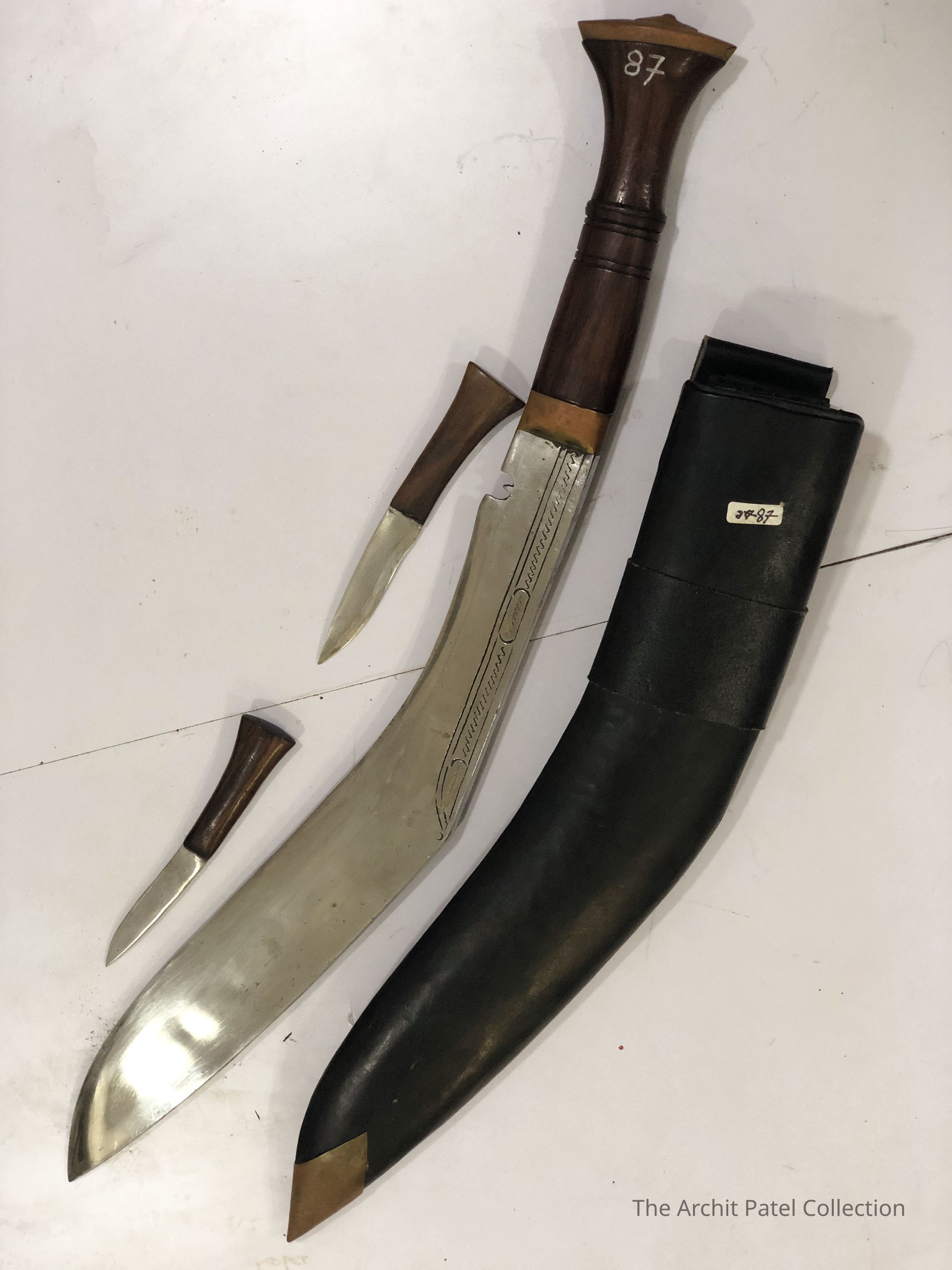
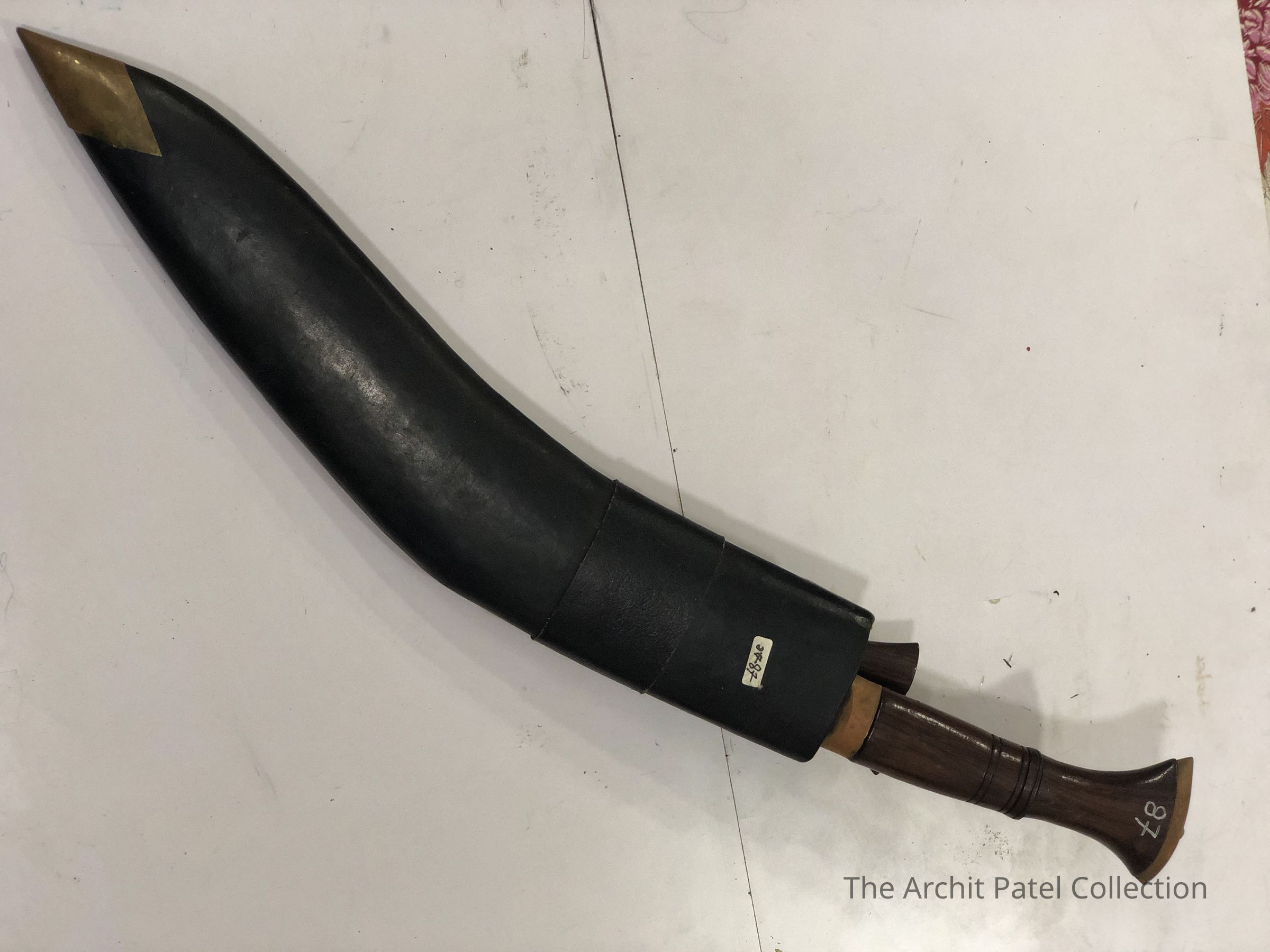
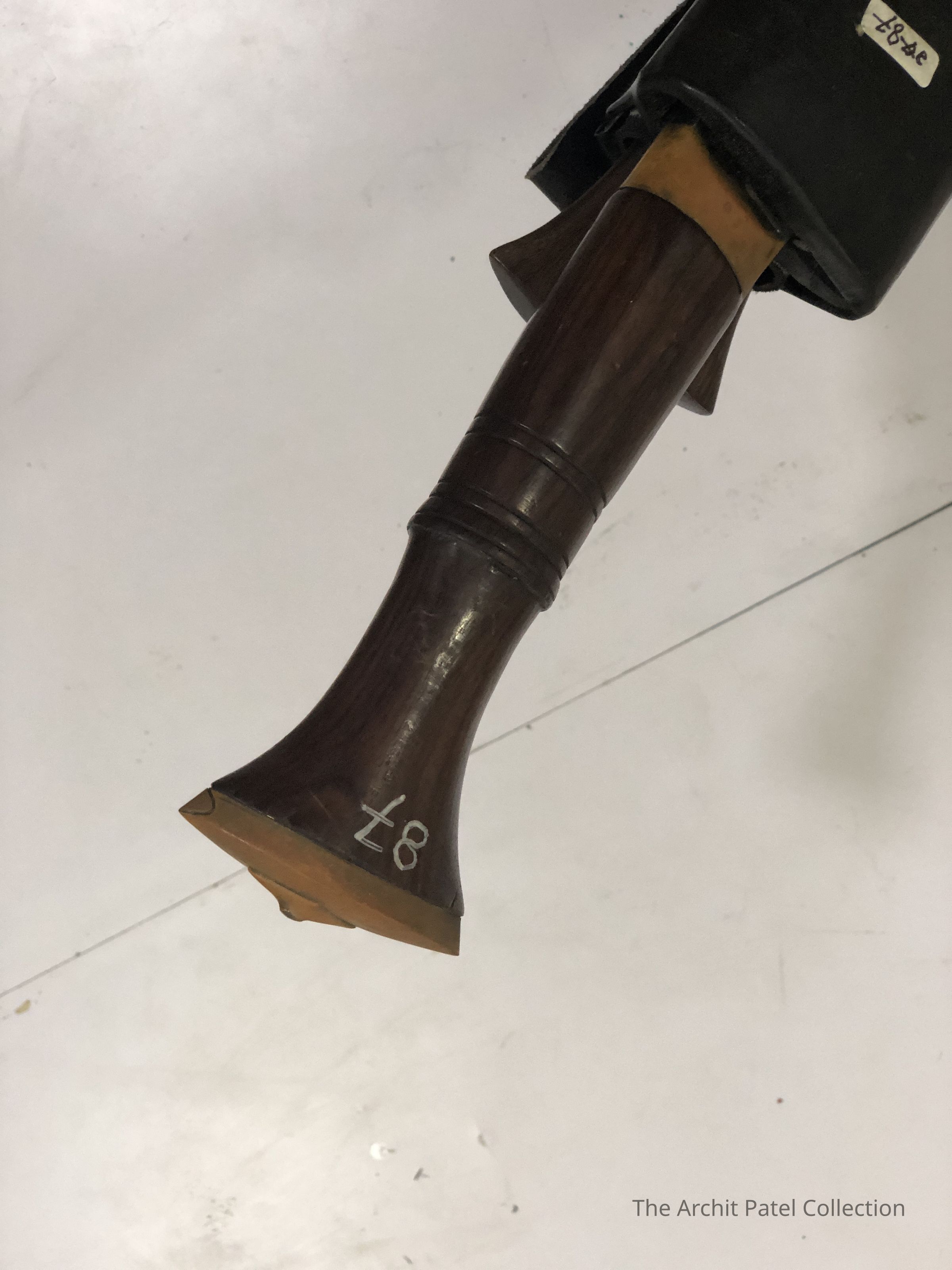
This artifact is a heavy-duty Kukri, a traditional Nepalese forward-curved utility and defensive tool. It represents a masterclass in Rotational Momentum and Angular Kinetic Energy. This specific specimen is an oversized variant, documenting an engineering focus on Maximum Chopping Yield and "Administrative Dominance" over high-density organic materials. Core Components & Engineering The Blade (Forward-Curve Geometry): A massive 20-inch carbon steel blade. Geometry: Features the iconic "Falcon Wing" curve. Unlike a straight sword, the Kukri's edge is angled forward of the handle's axis. Mechanical Logic: This geometry shifts the Center of Percussion toward the widest part of the blade (the "belly"). This ensures that upon impact, the blade acts as a mechanical wedge, multiplying the wielder's downward force through Angular Momentum. The Cho (Kaudi): A small, semicircular notch at the base of the blade near the hilt. This documents a functional "Administrative Redirect," preventing blood or fluids from running down the blade and onto the handle, maintaining grip integrity. The Hilt (Hardwood and Brass): Architecture: A traditional "Flare-Pommel" handle made of polished hardwood. Ergonomics: The central ridge and flared pommel create a mechanical lock with the palm. This provides the "Certainty" that the heavy blade will not fly out of the hand during high-velocity swings. The Scabbard (Dap) and Accessory Tools: The Sheath: Wood-core leather-wrapped scabbard with a brass tip (Chape). The Small Knives: Includes the Karda (small utility knife) and the Chakmak (blunt steel tool for sharpening or striking sparks). This documents a "Complete Survival SOP," where the primary tool is supported by specialized maintenance assets. This is a large type of kukri used for sacrificing animals during festival, therefore the name 18" sacrificial. Dashain, the main festival of Nepalese, which mostly falls in October, is celebrated by sacrificing animals (buffalo/goats) after necessary rituals are done on a special day called Maar. It is a tradition in Nepal that families celebrate the festival by purchasing domestic animal from locals and sacrificing it at home or mostly at temples as an offer to the goddess Kali Maata. It is a myth that the whole community where the ceremony is performed will suffer misfortune if the beheading is not done in one clean stroke. It is a very special knife as it carries a religious background. All the making and building of the kukri is done by hand using only conventional domestic tool. It takes three men a complete day to finish this kukri.Made/Created
Manufacturer
Khukuri House NepalDate made
circa 2004Ethnography
Cultural Region
Country
NepalCulture/Tribe
Gurkha