Name/Title
KhyberEntry/Object ID
24; Full Code: 24.25.17-SW-IATags
Sword, IvoryDescription
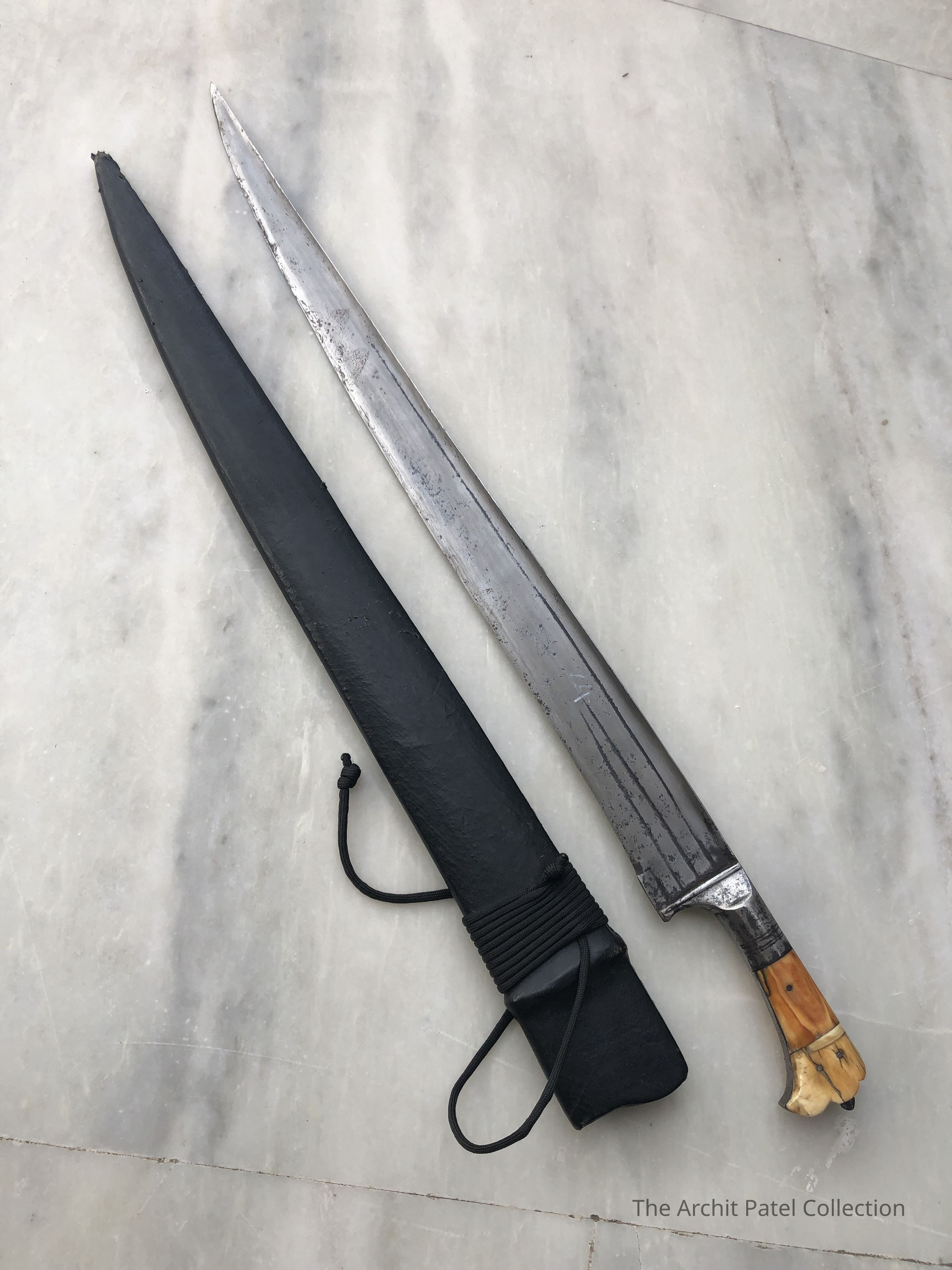
This is an authentic Antique Khyber Knife, traditionally known as a Salawar Yataghan. Dating to the 19th century, this specimen is a high-status variant of the iconic sword of the Pashtun tribes of Afghanistan and the Northwest Frontier. It is distinguished by its classic "T-spine" architecture and a rare, aged ivory hilt.
Core Components & Engineering
The Blade: The blade is long, straight, and single-edged, tapering dramatically from a broad forte to a needle-sharp point. It features the hallmark T-section spine—a structural engineering "process" that acts as a longitudinal I-beam. This provides the immense rigidity required to concentrate the force of a thrust or a heavy hack without the blade flexing or snapping.
Fullering: Multiple parallel fullers run along the upper third of the blade, serving to reduce overall mass while maintaining the structural "ribs" necessary for stiffness.
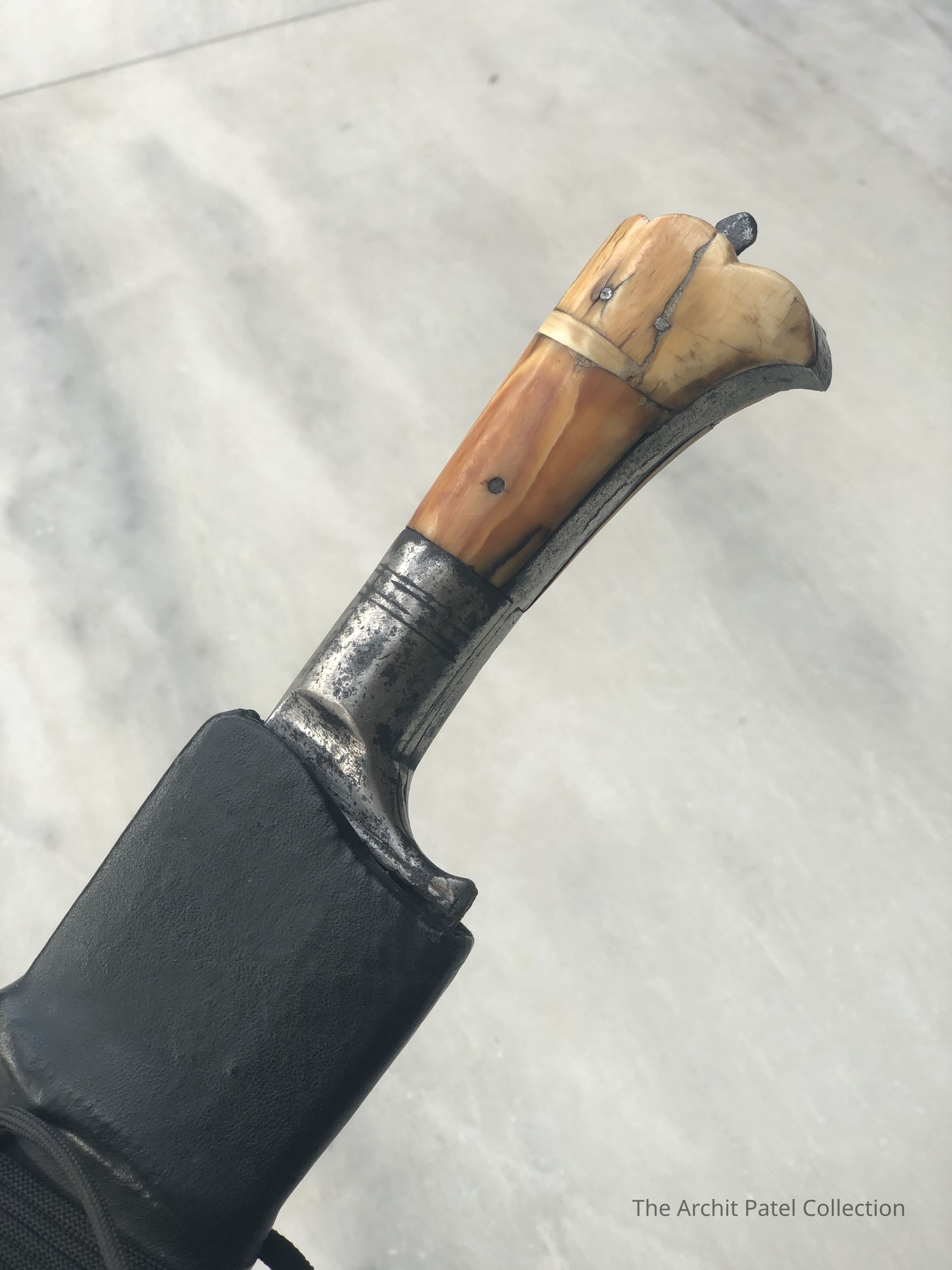
The Hilt (Ivory): The handle consists of two massive ivory scales (likely elephant ivory) secured to a full tang. The ivory has developed a deep, "honeyed" amber patina, indicative of over a century of age and handling. The hilt is shaped with the traditional hooked or "bird's head" pommel, ensuring the weapon remains locked in the hand during the high centrifugal force of a swing.
Bolster & Tang: A robust steel bolster reinforces the junction between the blade and hilt. The steel tang is exposed between the ivory scales and is secured by heavy metal pins.
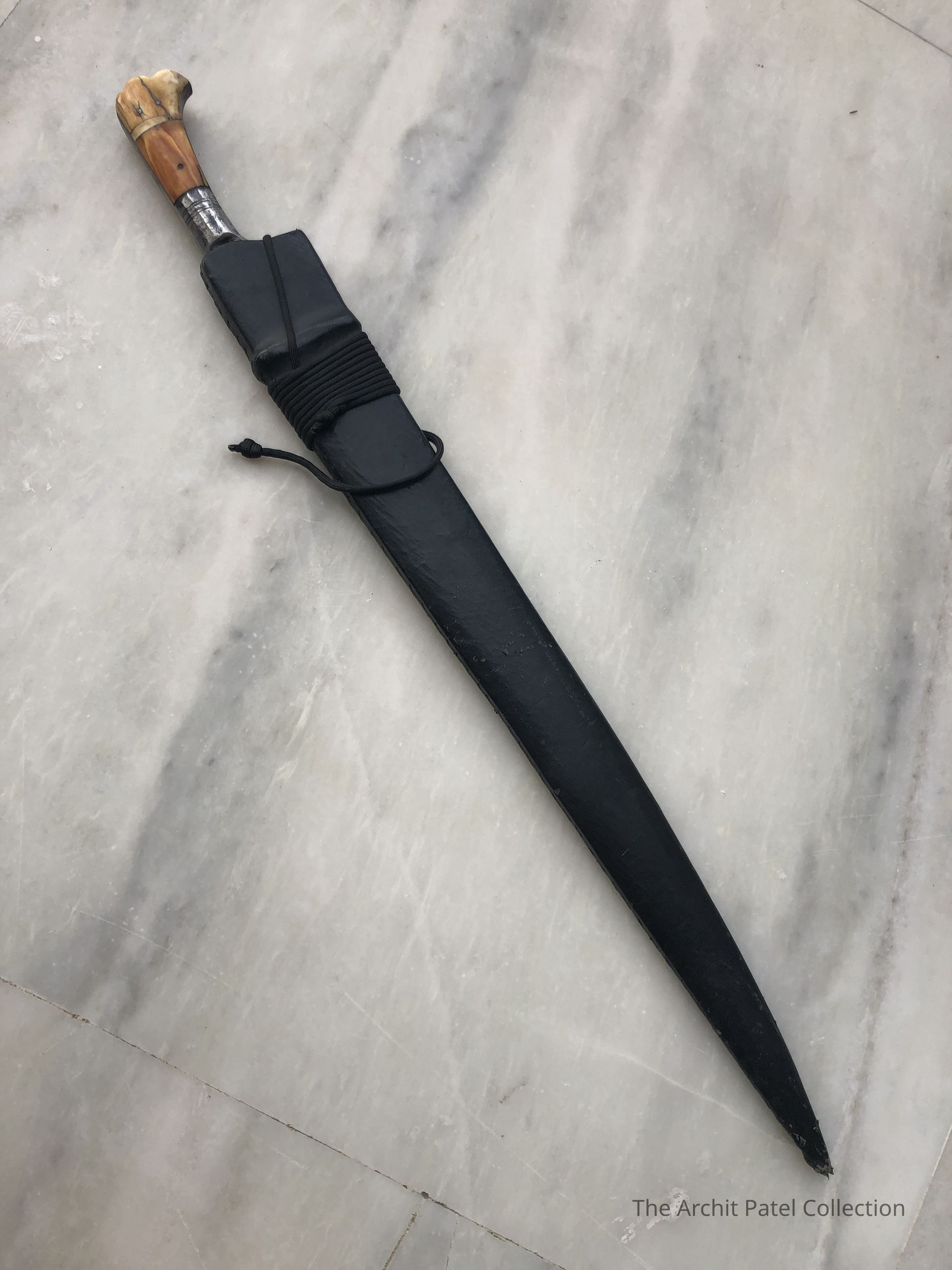
Scabbard: Housed in its original wooden-core scabbard wrapped in black leather. Notably, the throat of the scabbard is wrapped in braided cord, featuring tactical knots that mirror your interest in paracord weaving.
Historical & Mechanical SignificanceMade/Created
Manufacturer
Unknown ArtisanDate made
circa 1850 - circa 1900Time Period
19th CenturyDimensions
Dimension Description
24"Length
18 inAcquisition
Acquisition Method
PurchasePlace
City
HyderabadRegion
South India