Khyber
Name/Title
KhyberEntry/Object ID
25; Full Code: 25.26.18-SW-IATags
Sword, Stag HornDescription
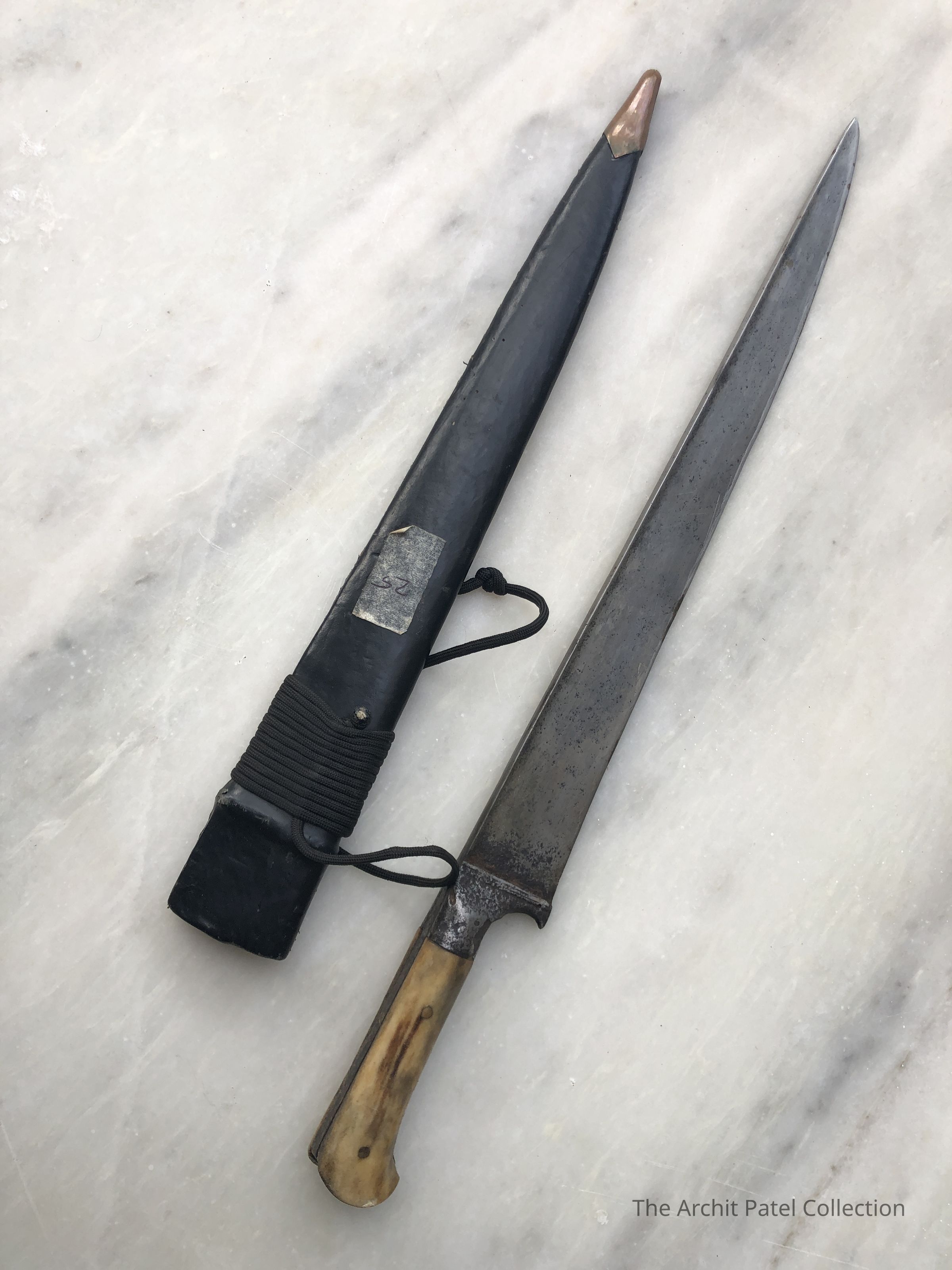
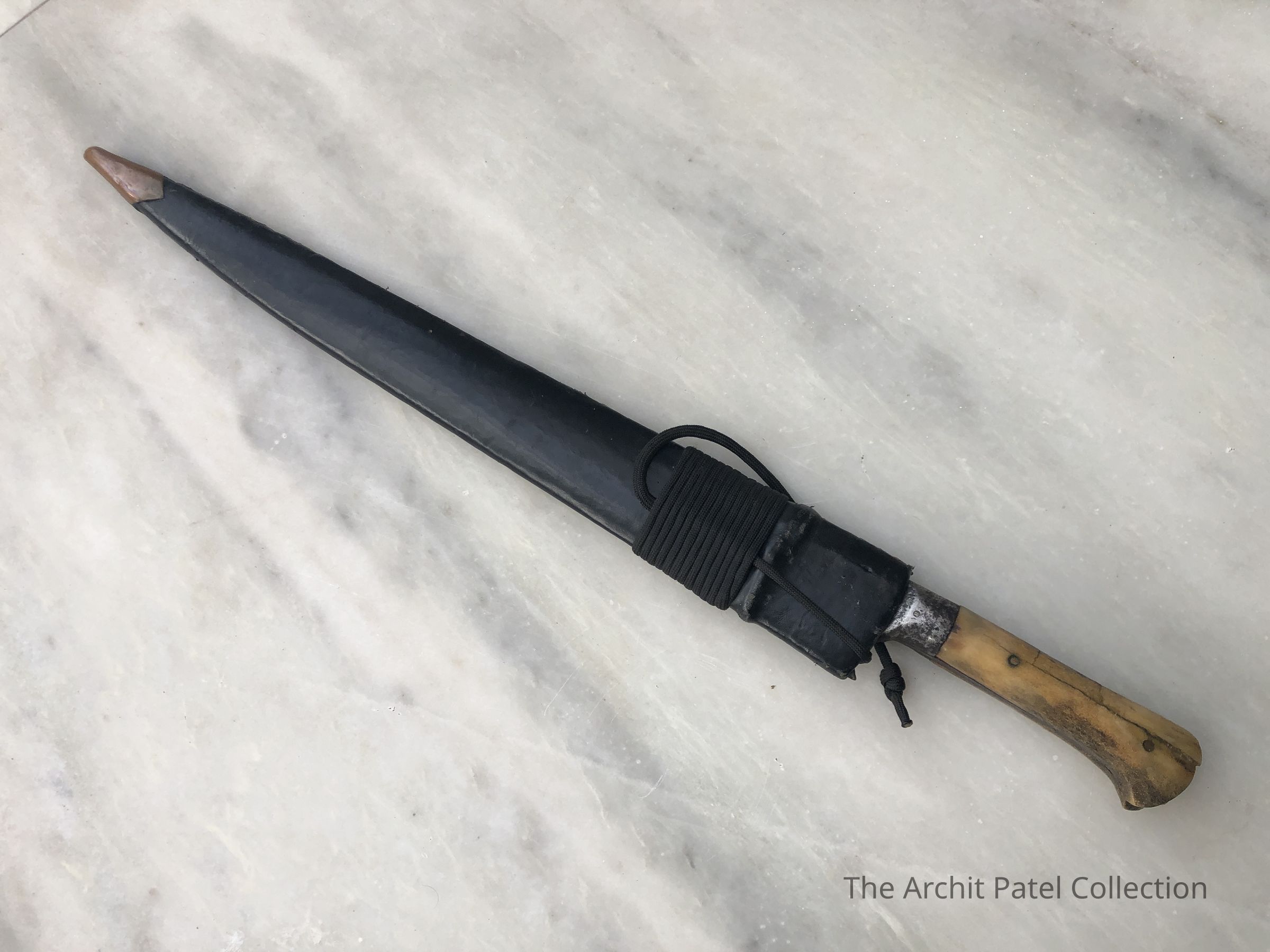
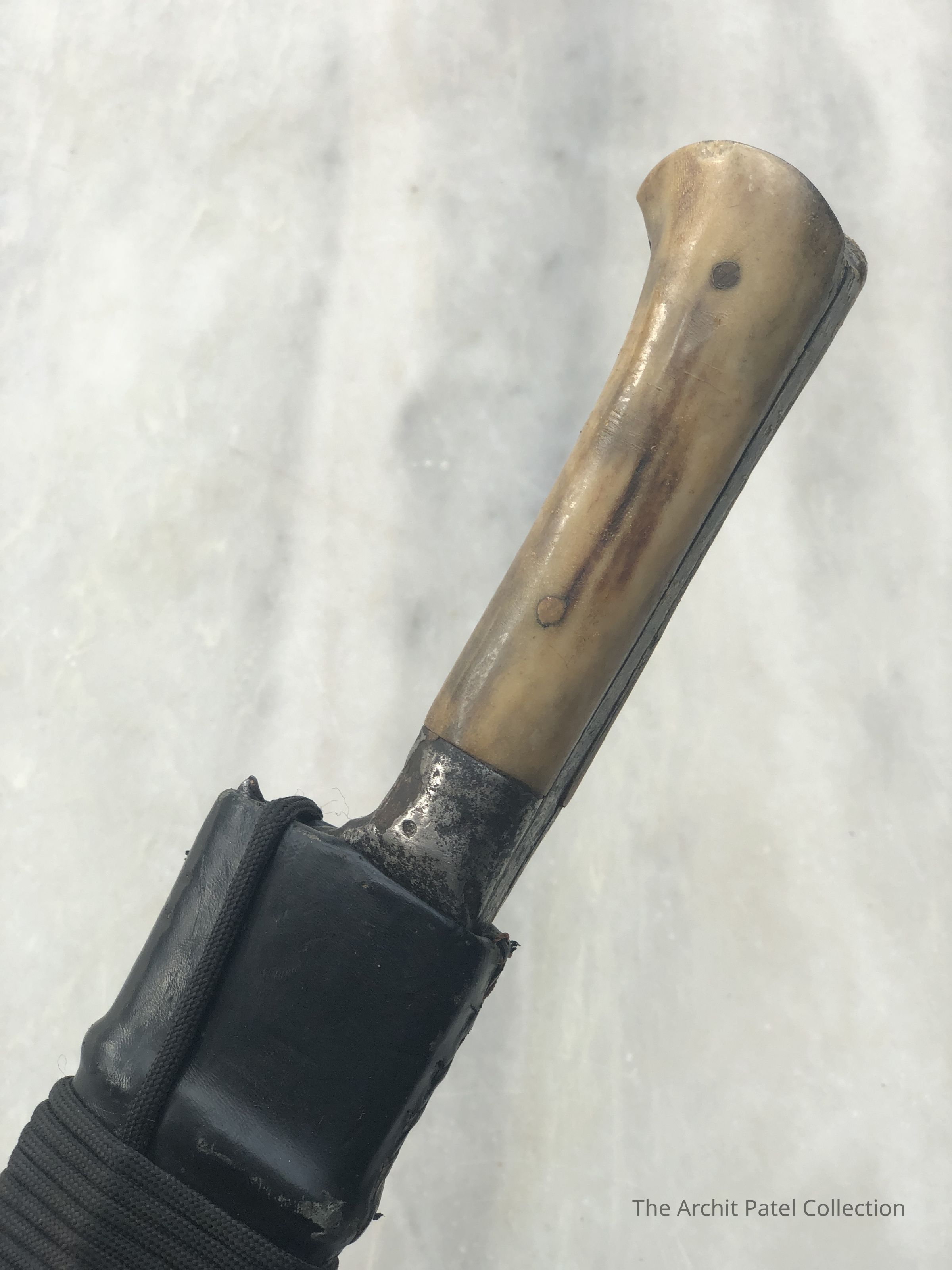
This is another authentic Antique Khyber Knife, dating to the 19th century. While it shares the same lethal DNA as your ivory-hilted specimen, this version features a hilt crafted from aged bone or water buffalo horn, representing the standard, rugged sidearm carried by the Pashtun tribes of the Northwest Frontier and Afghanistan.Core Components & EngineeringThe Blade: Features the classic, single-edged profile that tapers from a massive forte to a reinforced point. It is built with the iconic T-section spine. In your professional context of "Process reliant" engineering, this is a perfect example of structural optimization: the "T" acts as a spine-reinforcing beam, allowing the blade to remain slim and lightning-fast while possessing the longitudinal strength to punch through armor or heavy winter clothing without bending.Hilt Material: The handle scales are made of aged bone or horn, secured to the full tang with steel pins. Unlike the smooth amber of ivory, this material shows a more fibrous, weathered texture and a darker patina, indicative of a "user's weapon" that has seen significant field use.Ergonomics: It retains the characteristic hooked pommel, which mechanically locks the hand into the weapon. This is essential for the "fly-by" slashing attacks used by mountain skirmishers, where the momentum of the swing might otherwise pull the sword from the wielder's grip.Scabbard: Housed in a wooden-core scabbard wrapped in black leather, terminating in a simple metal chape. Like your other specimen, the scabbard throat is reinforced with a braided cord wrap, providing a tactile, non-slip surface for the "process" of drawing the weapon.Mechanical Comparison: Ivory vs. Bone/HornFeatureIvory Hilt SpecimenBone/Horn Hilt SpecimenStatusChieftain / High Rank (Khan)Tribal Warrior / Regular InfantryGrip TextureSmooth, develops "tackiness" with moistureNaturally textured, high-friction gripThermal PropertiesSlow to change temperatureAdapts quickly to ambient cold/heatEngineeringIdentical T-Spine ProcessIdentical T-Spine ProcessMade/Created
Manufacturer
Unknown ArtisanDate made
circa 1850 - circa 1850Time Period
19th CenturyEthnography
Cultural Region
Region
North IndiaCulture/Tribe
Afghan, Sikh