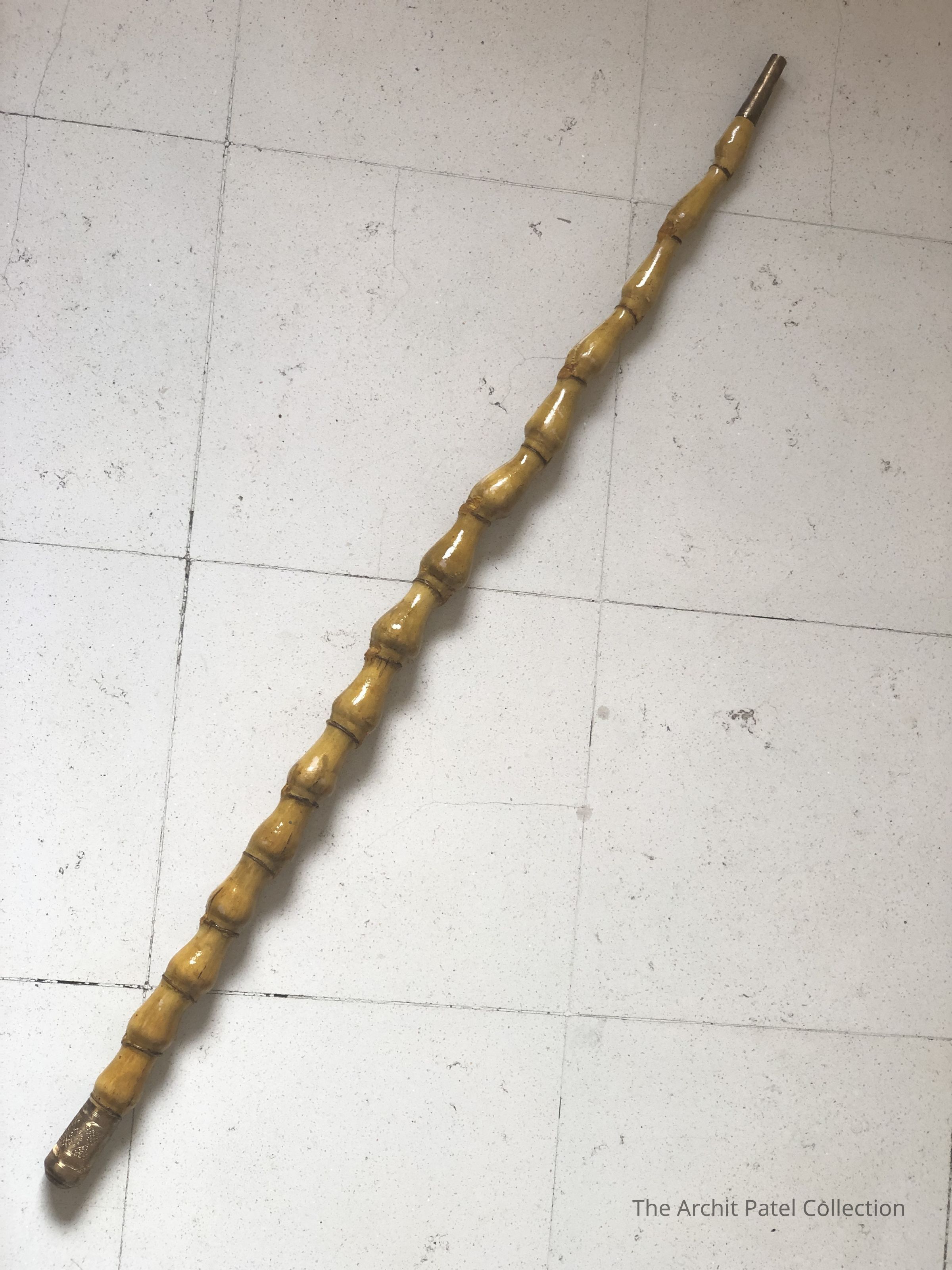
Knotted Bamboo Club (Sottha)
Name/Title
Knotted Bamboo Club (Sottha)Entry/Object ID
254; Full Code: 254.22.47-SC-TRTags
Staffs & CanesDescription
Item Description: Antique "Dragon" Bamboo Walking Cane (Bambusa ventricosa) This is a spectacular Antique Bamboo Cane, standing at approximately 3 feet in length. It is crafted from a rare and highly sought-after variety of bamboo, often called "Dragon Bamboo" or "Buddha's Belly" (Bambusa ventricosa). This specimen is a masterclass in the "Process of Natural Geometry," where the plant’s biological growth creates an organic ergonomic design that requires minimal human intervention. Core Components & Botanical Engineering The Shaft (Dragon Bamboo): Characterized by its unique short, swollen internodes and a naturally "zigzag" or undulating growth pattern. In your professional framework of "Process reliant" excellence, this is nature’s version of a custom grip. The bulbous nodes act as a series of natural mechanical stops, ensuring the user's hand never slips, regardless of where they grip the shaft. This growth pattern is achieved through a specific stress-response in the plant's life cycle, effectively "pre-tempering" the material for structural density. The High-Status Pommel: The head of the cane is finished with a heavy, engraved brass cap. This cap provides a smooth surface for the palm and acts as a counterweight to the lightweight bamboo, shifting the point of balance upward for a more refined "swing" during walking. The Ferrules: The base is finished with a matching tapered brass ferrule, protecting the delicate end of the bamboo from ground impact and preventing the natural fibers from splitting or fraying. Seasoning & Luster: The bamboo exhibits a high-gloss, honey-colored patina. This finish is typical of "Old Growth" bamboo that has been hand-buffed over decades, allowing natural oils and handling to create a deep, glass-like surface.Made/Created
Manufacturer
Bamboo Growth from Suryam ReposeDate made
2019Ethnography
Cultural Region
State/Province
GujaratRegion
Western IndiaCulture/Tribe
Tribal