Name/Title
Pesh Kabz_Ivory_Slit_BladeEntry/Object ID
6; Full Code: 6.4.4-DG-IATags
Dagger, Ivory, Pesh-KabzDescription
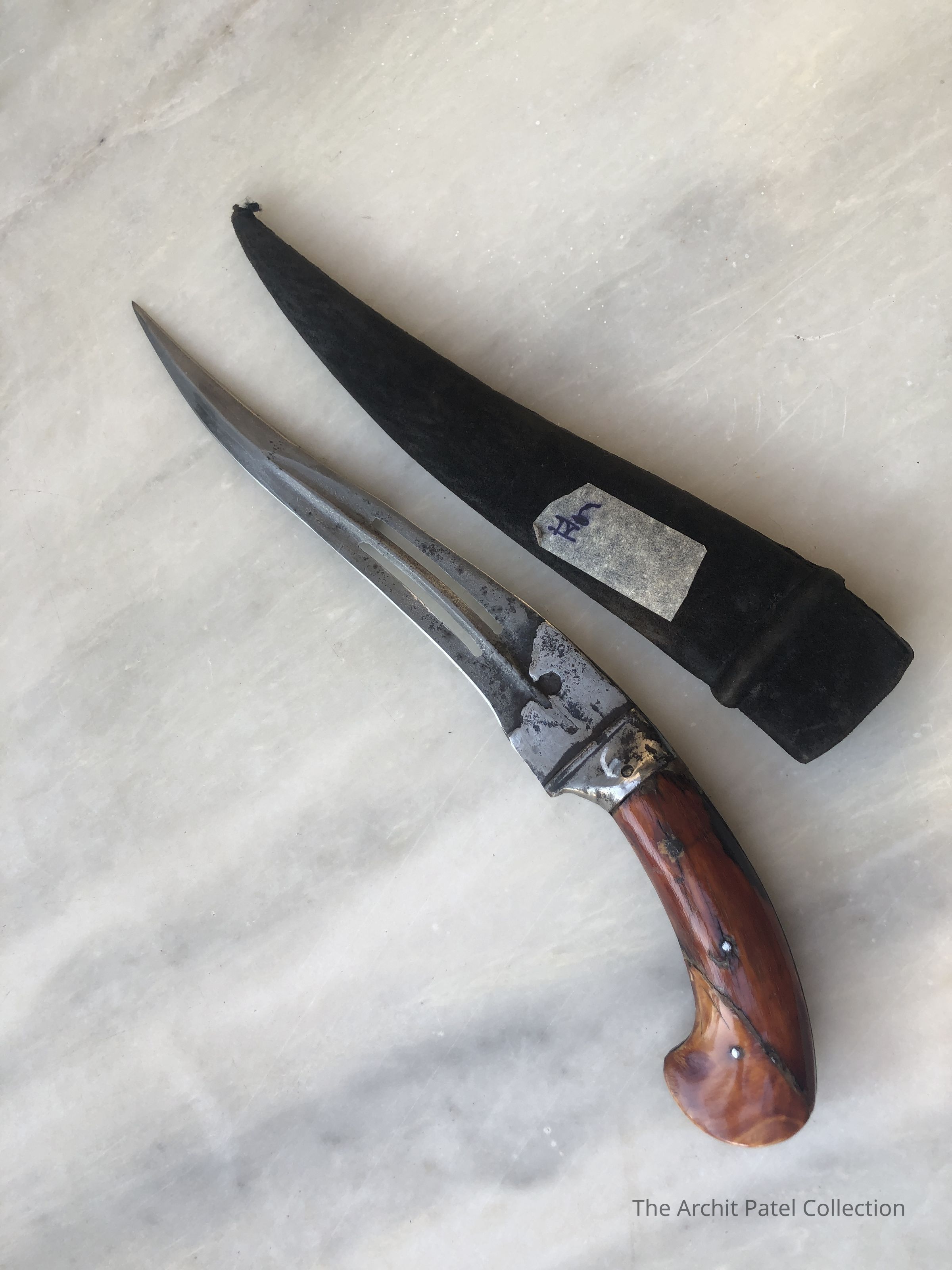
This artifact is an Antique Bichuwa (Scorpion Sting) dagger, likely originating from Southern or Central India in the 19th century. This specimen is characterized by its exceptionally slender "intrinsic" blade profile and a high-status ivory hilt. It represents a specialized tier of Indian daggers designed for concealment and precision, prioritizing mechanical agility over raw mass.
Core Components & Engineering
The Blade (Recurved Multi-Fuller Steel): A double-edged blade forged with a dramatic recurved "S" geometry.
Multi-Fullering: The blade features two deep, parallel fullers (grooves) running nearly the entire length of the steel.
Structural Ribs: The areas between the fullers act as internal I-beams. This engineering removes non-functional weight while maintaining the longitudinal rigidity required for a high-velocity piercing "process."
Geometry: The blade tapers to a needle-sharp tip, optimized for concentrated point-pressure against organic targets.
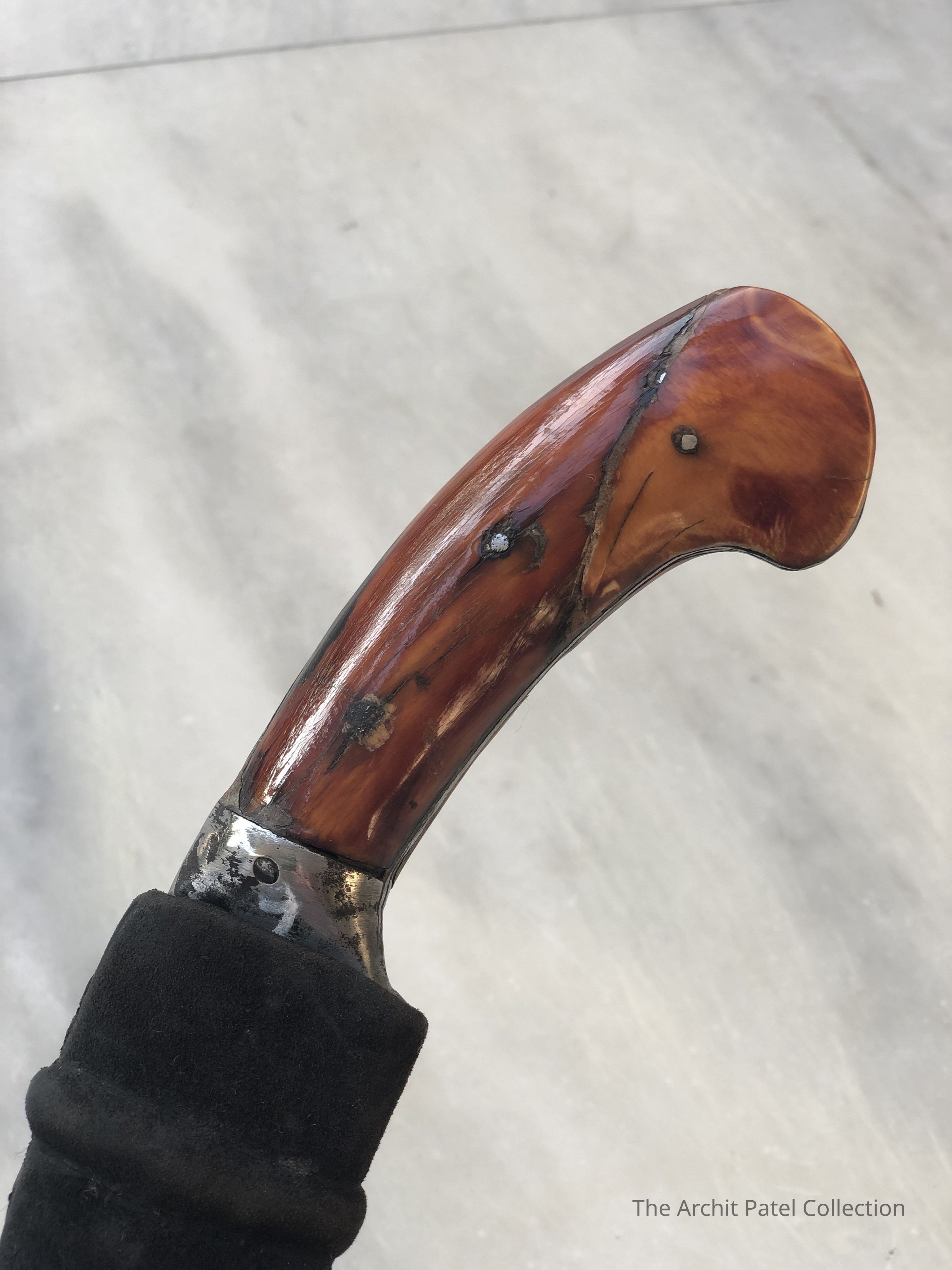
The Hilt (Antique Ivory): The handle consists of two slabs of seasoned ivory, secured to the full tang with steel pins.
Material Significance: Historically, ivory was a "Status Input" signaling the owner's wealth and rank. Mechanically, it provides a dense, smooth interface that remains cool to the touch.
Anatomical Ergonomics: The hilt features a downward "pistol-grip" cant and a flared pommel. This ensures the hand remains locked in position, aligning the point of the blade directly with the long bones of the forearm for maximum "thrust-certainty."
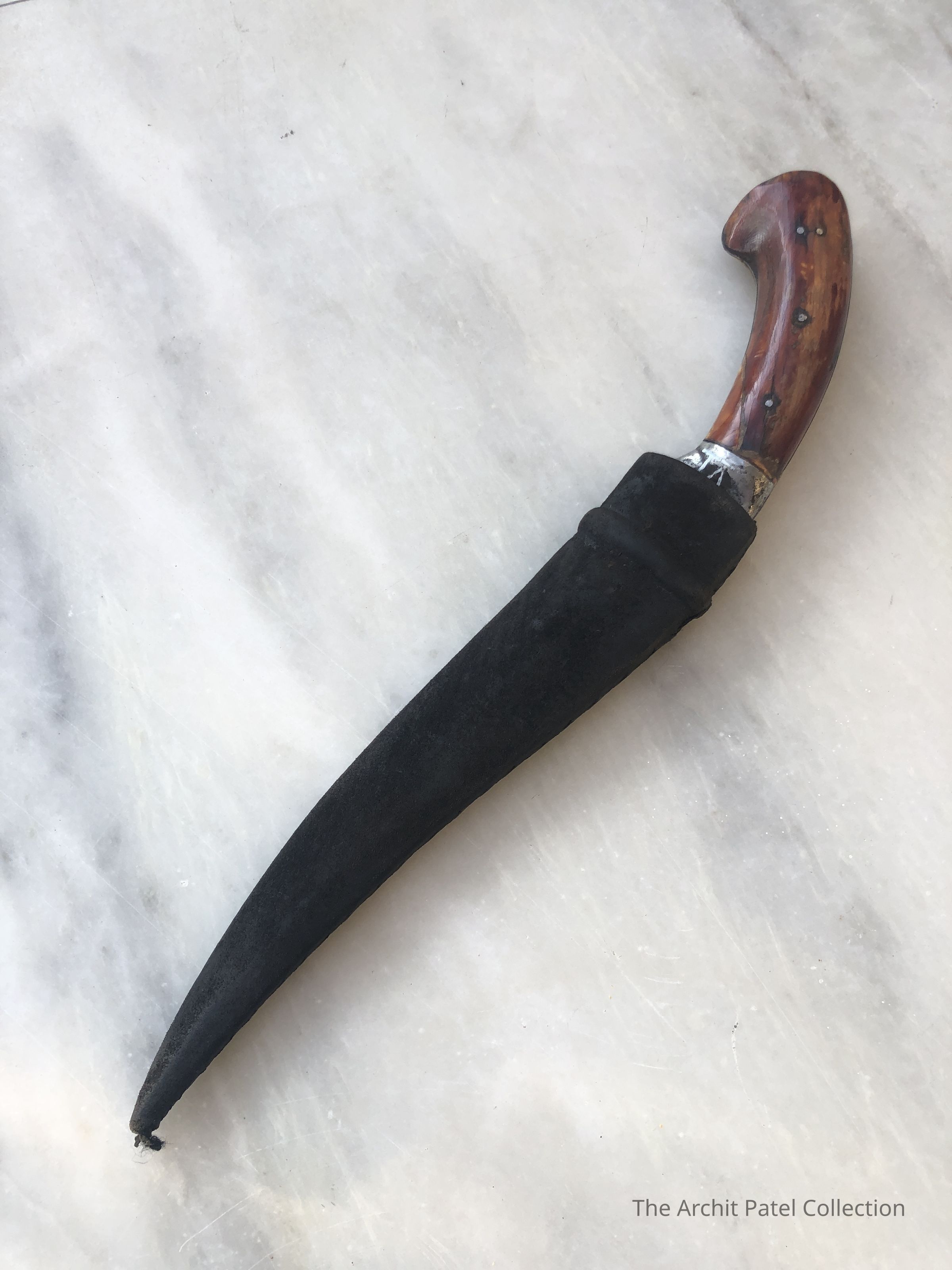
The Scabbard: Housed in a wooden-core scabbard wrapped inMade/Created
Manufacturer
Unknown ArtisanDate made
circa 1650 - circa 1700Time Period
17th CenturyDimensions
Dimension Description
12"Length
7 inAcquisition
Acquisition Method
PurchasePlace
City
HyderabadRegion
South India