Name/Title
Pesh Kabz_Thin_Wooden_HandleEntry/Object ID
5; Full Code: 5.3.3-DG-IATags
Dagger, Pesh-KabzDescription
Correction acknowledged. The technical classification has been updated to reflect a flat-ground blade geometry rather than a reinforced T-spine.
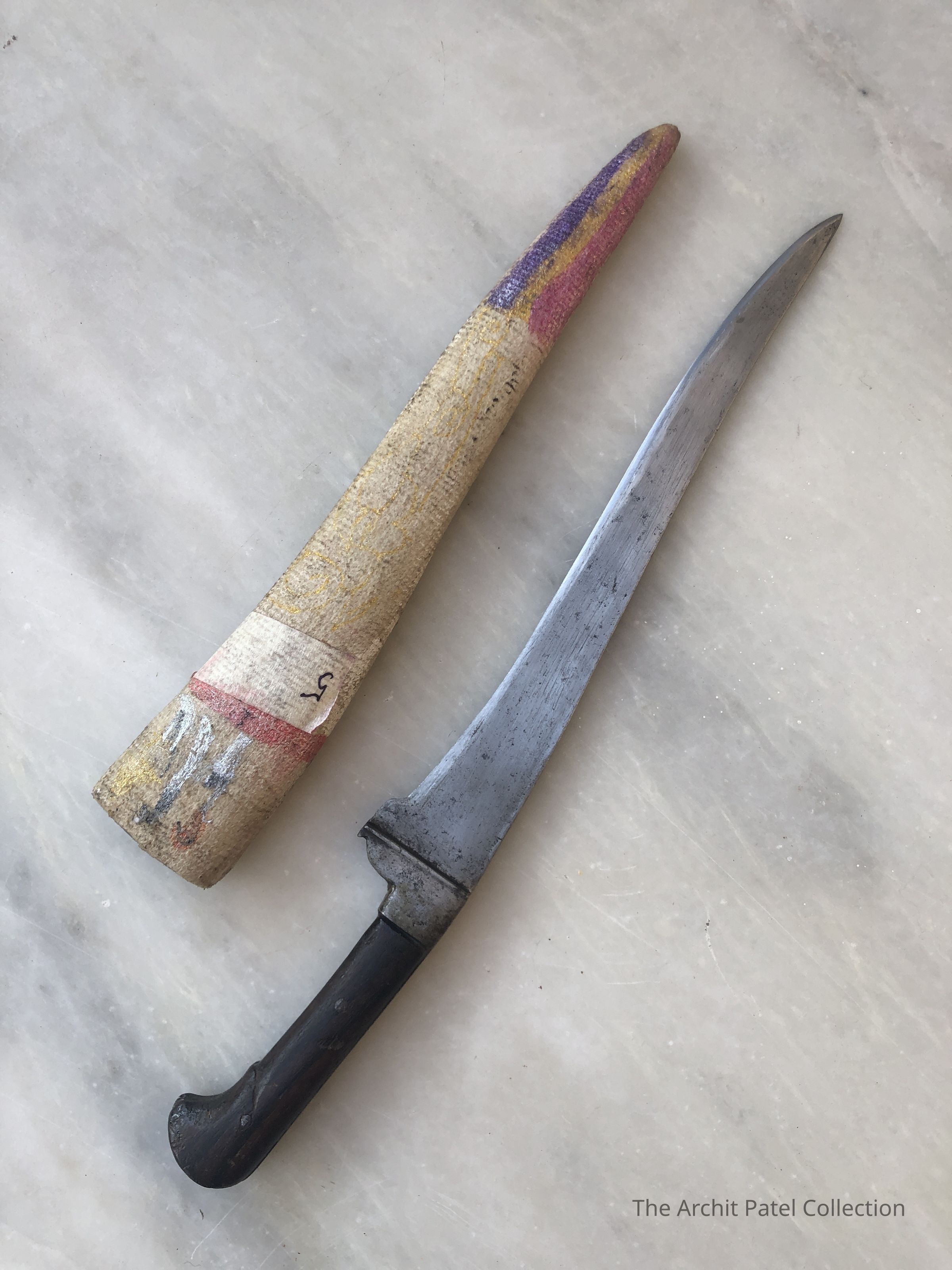
Item Description: Antique Pesh-Kabz (Flat-Ground Variant)
This artifact is an Antique Pesh-Kabz, likely originating from the 19th-century North Indian or Afghan frontier. This specific variant deviates from the common T-spine architecture, utilizing a flat-ground, single-edged blade. This design emphasizes slicing efficiency and a streamlined profile, while the high-carbon steel composition maintains the traditional armor-piercing capabilities inherent to the Pesh-Kabz form.
Core Components & Engineering
The Blade (Flat-Ground High-Carbon Steel): A single-edged blade with a straight spine and a gradual taper toward a needle-sharp point.
Geometry: By forgoing the thickened T-spine, the blade achieves a more uniform thickness across its width. This reduces lateral drag during a cut, prioritizing the "process" of a clean, deep slice over the absolute rigidity of a reinforced spine.
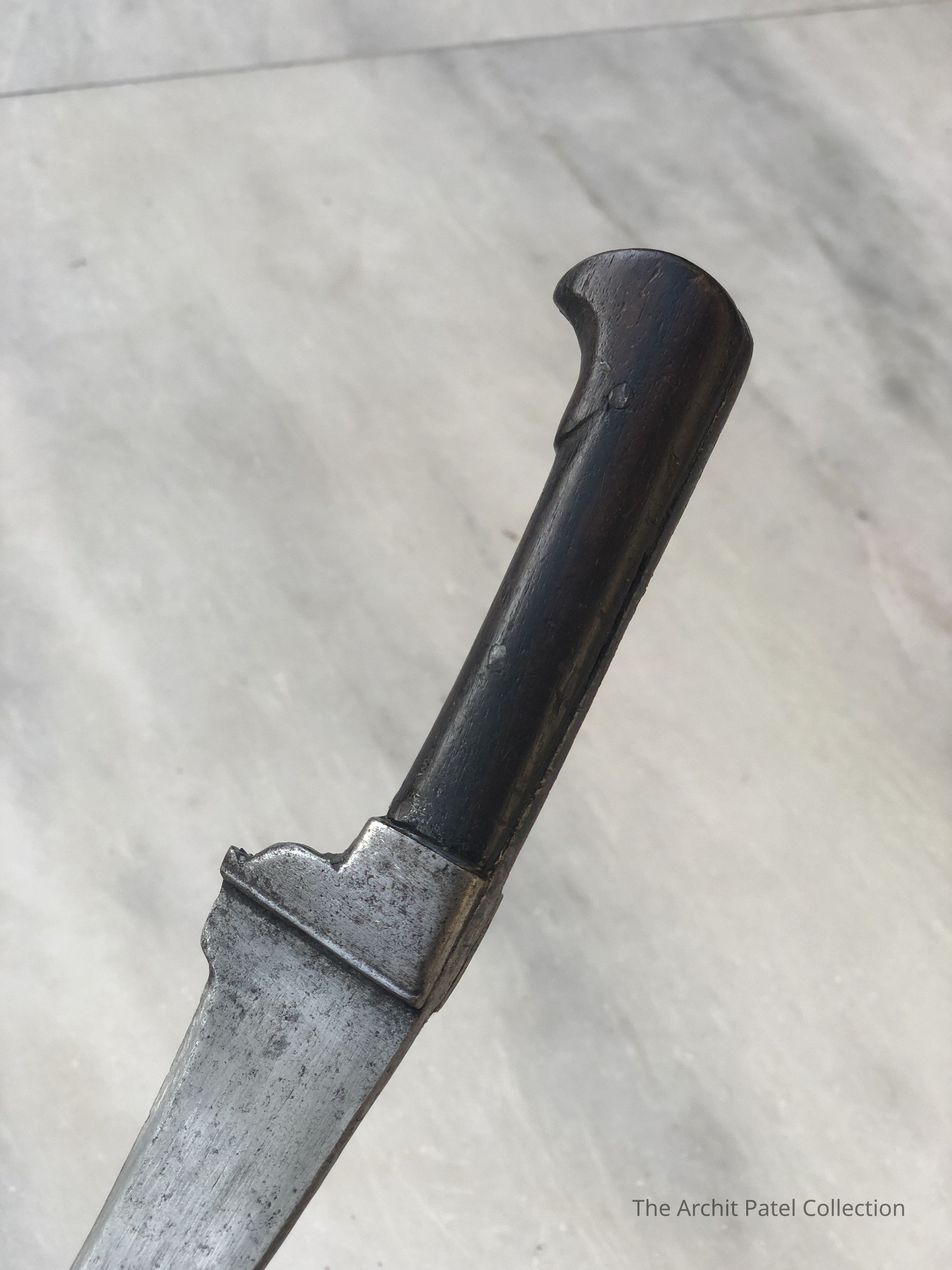
Structural Integrity: Despite being "flat," the blade retains significant thickness at the base (ricasso), providing the mechanical stability required for high-force thrusting maneuvers.
The Hilt (Deep Ebony/Horn): The handle is constructed from two slabs of dark polished horn or wood, secured to the full tang with steel pins.
Ergonomics: The hilt maintains the classic downward "pistol-grip" cant. This aligns the point of the blade directly with the user's forearm, ensuring that the kinetic input of a strike is delivered with maximum linear efficiency.
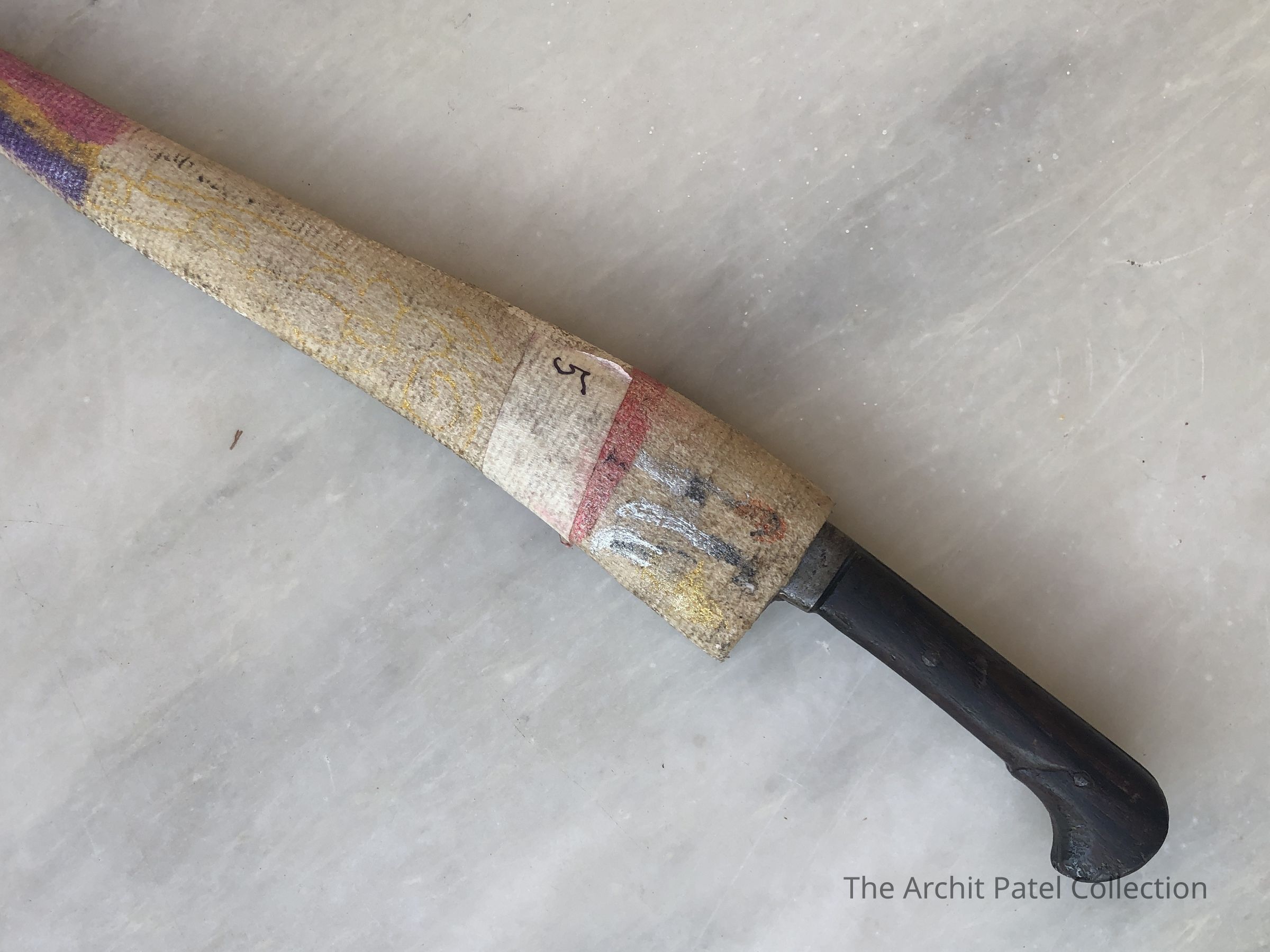
The Scabbard (Canvas-Reinforced): Housed in a wooden-core scabbard with a unique textile-wrapped finish.
Material Logic: The use of canvas or reinforced cloth provides superior abrasion resistance compared to standard leather. The visible texture offers a high-friction surface, facilitating a secure grip for the secondary hand during a rapid draw.Made/Created
Manufacturer
Unknown ArtisanDate made
circa 1800 - 1850Time Period
19th CenturyEthnography
Cultural Region
Region
North Western IndiaDimensions
Dimension Description
14"Length
10 inCondition
Overall Condition
Very GoodAcquisition
Acquisition Method
Purchase