Name/Title
Rampuri - KadakedarEntry/Object ID
149; Full Code: 149.59.93-KN-NBTags
Rampuri, Knife, FoldersDescription
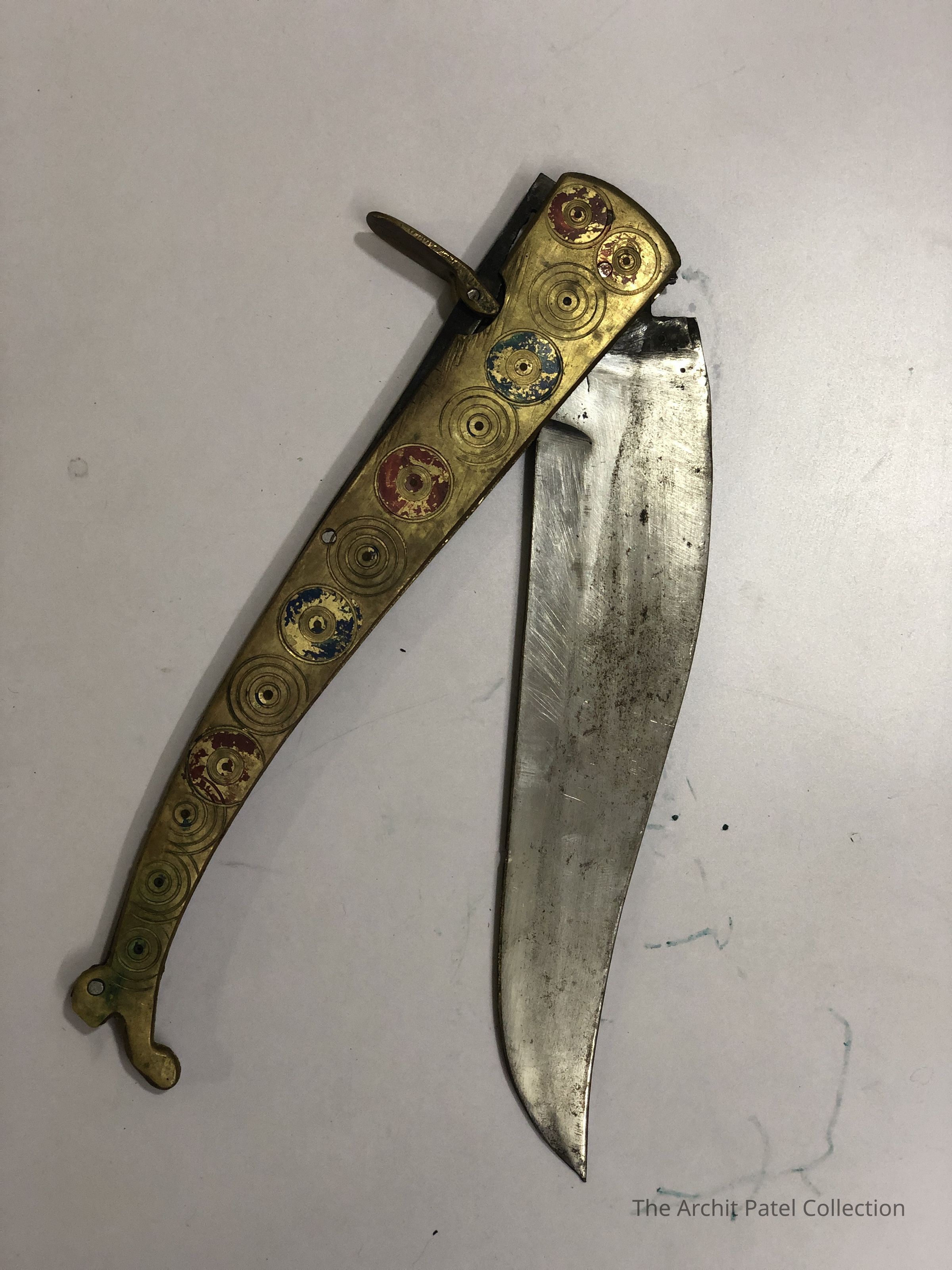
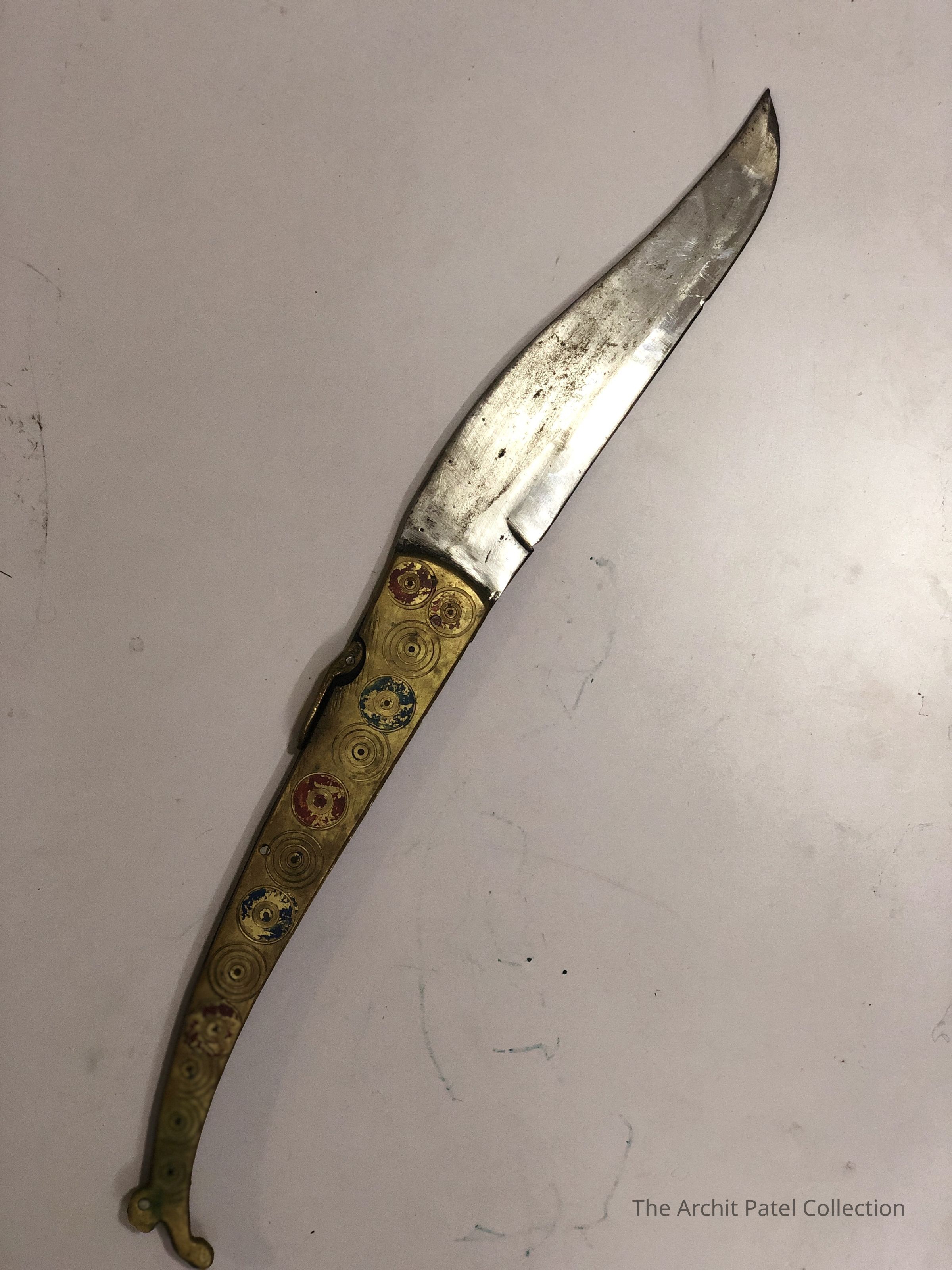
This artifact is a Modern Rampuri Chaku, featuring a substantial 6-inch blade. It represents the high-utility tier of traditional North Indian mechanical folders. This specimen is distinguished by its extended reach and a specialized lever-based mechanical lock, documenting a design optimized for structural rigidity and manual reliability.
Core Components & Engineering
The Blade (6-inch Clip-Point/Stiletto Hybrid): A single-edged blade with a straight spine and an aggressive distal taper.
Geometry: The 6-inch length provides significant reach and mechanical leverage. The profile transitions into an acute tip, concentrating force for high-velocity piercing maneuvers.
Mechanical Interface: The tang features a specific notch that engages with a robust internal locking bar. The external brass lever-tab (visible in the raised position in the first image) is the manual interface for this security system.
The Hilt (Chased Brass "Fish-Tail" Handle): Constructed with brass scales over a rigid steel internal frame.
Surface Ornamentation: The scales feature rhythmic, concentric "eye" motifs, some inlaid with red and blue pigments. This traditional "Process of Adornment" is a signature of the Rampur cutlery district.
Retention Architecture: The hilt terminates in a distinctive "fish-tail" pommel. Mechanically, this acts as a flared stop, ensuring the hand remains locked in position during high-pressure inputs and preventing the handle from slipping during a draw.
The Mechanism (Manual Lever-Lock): A gravity/manual opening design with a positive mechanical lock.
Operational Input: Lifting the lever retracts the locking pin from the tang. The blade is then deployed manually. Releasing the lever once the blade is fully extended drops the pin into a secondary notch, locking it open.
Mechanical Logic: This system provides "Fixed-Blade Certainty," ensuring the blade cannot accidentally collapse under stress.Made/Created
Manufacturer
Bladesmith from RampurDate made
circa 1997Dimensions
Dimension Description
14"Length
6-1/4 inAcquisition
Acquisition Method
Purchase