Name/Title
Sigolo XVIIEntry/Object ID
182; Full Code: 182.66.104-KN-NBTags
Knife, FoldersDescription
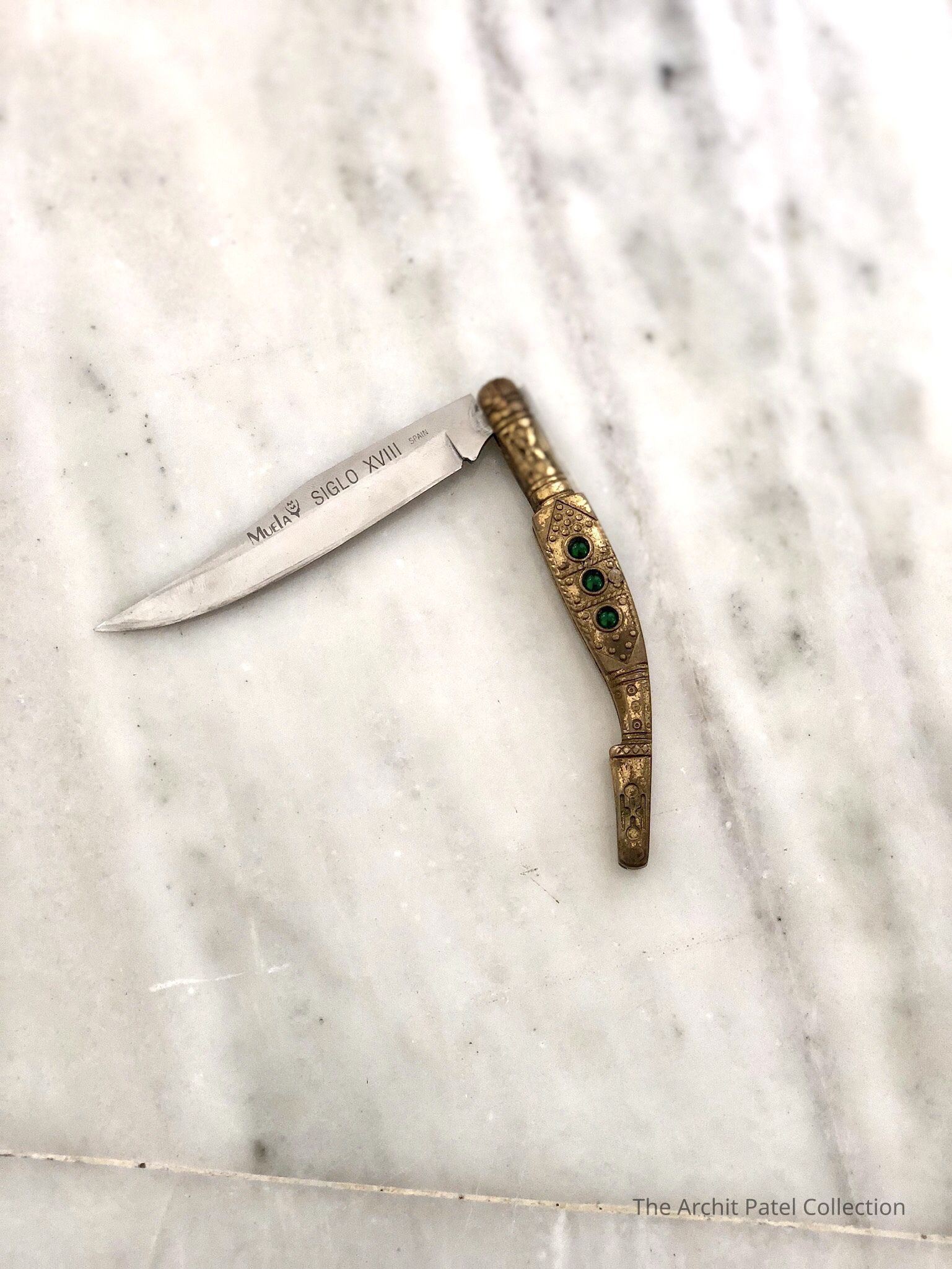
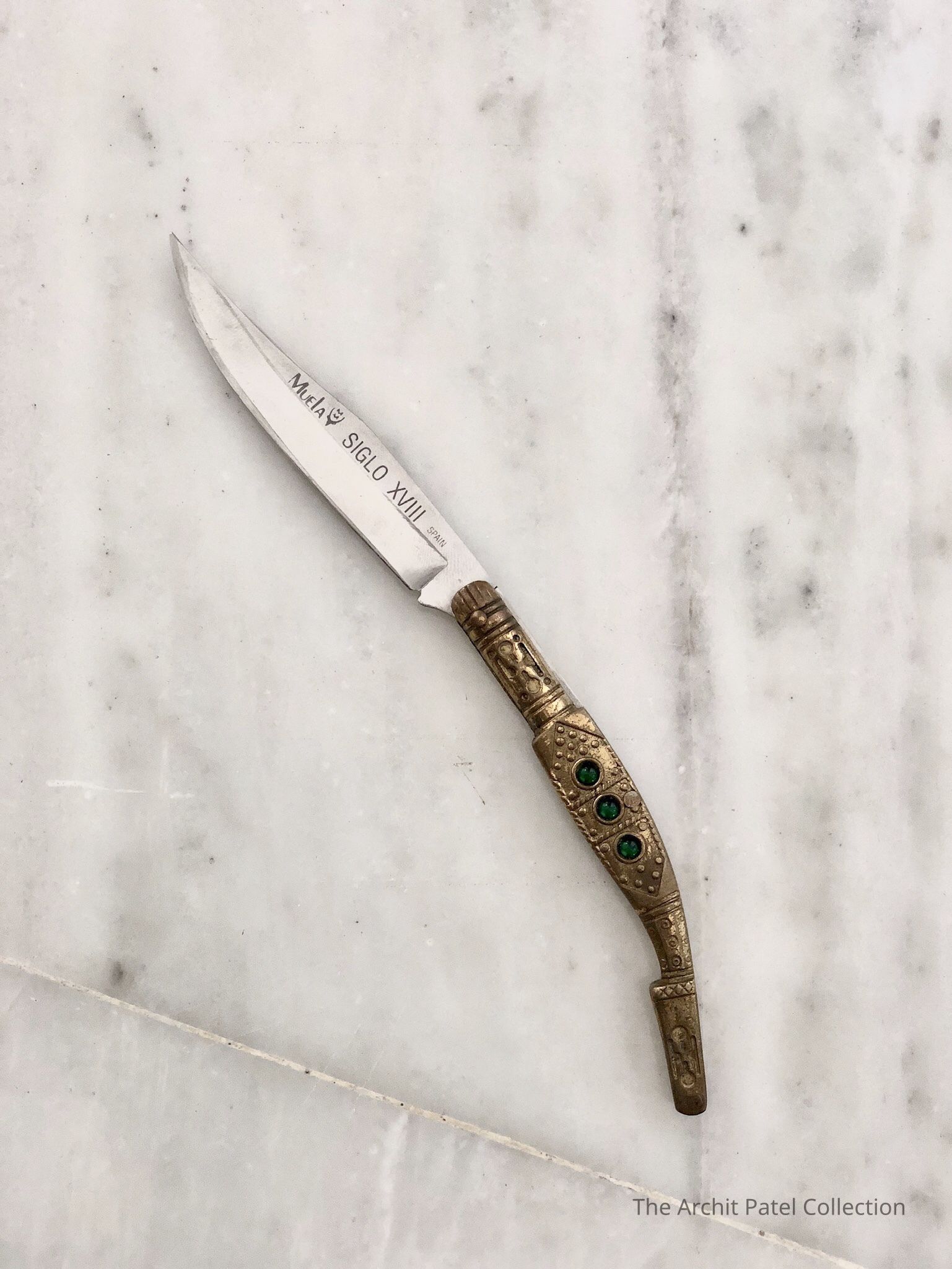
This artifact is a specialized commemorative Navaja produced by Muela Knives in Spain. It represents a modern metallurgical tribute to the 18th-century (Siglo XVIII) Spanish folding traditions. The piece documents the "Carraca" or ratcheting lock logic, transitioning from a historical defensive tool to a high-status cultural specimen.
Core Components & Engineering
The Blade (Yataghan-Influenced Clip Point): A single-edged stainless steel blade featuring a slight recurve and an acute, upturned tip.
Inscriptions: The blade is etched with the "MUELA" logo and the text "SIGLO XVIII", identifying it as a historical reproduction model. It also bears the "SPAIN" mark of origin.
Geometry: The blade’s narrow profile and "needle" tip are engineered for Linear Penetration. The distal taper concentrates longitudinal force, providing high "Certainty" during piercing maneuvers.
The Hilt (Cast Brass Ornamentation): A curved, ergonomic handle constructed from cast brass.
Architecture: The hilt follows the traditional "Pistol Grip" curve of the classical Navaja. This provides a natural mechanical stop for the hand, preventing it from sliding forward onto the edge.
Aesthetic Adornment: The brass scales are decorated with rhythmic "beaded" textures and three green synthetic gem inlays. This documents a high-status "Process of Adornment," signaling that the tool is intended for curation rather than industrial utility.
The Mechanism (External Spring Slip-Joint / Carraca):
The Logic: A heavy external leaf spring sits along the spine of the handle.
Mechanical Input: This spring provides constant vertical pressure against the tang. In traditional 18th-century specimens, this often included a "Carraca" (ratchet) that produced a distinct mechanical sound upon opening—a tactical warning used in historical Spanish contexts.Made/Created
Manufacturer
Muela Knives SpainDate made
2011Dimensions
Dimension Description
3.5"Length
2-3/4 in