Name/Title
Straight RazorEntry/Object ID
155; Full Code: 155.12.31-TL-IATags
Blood, ToolsDescription
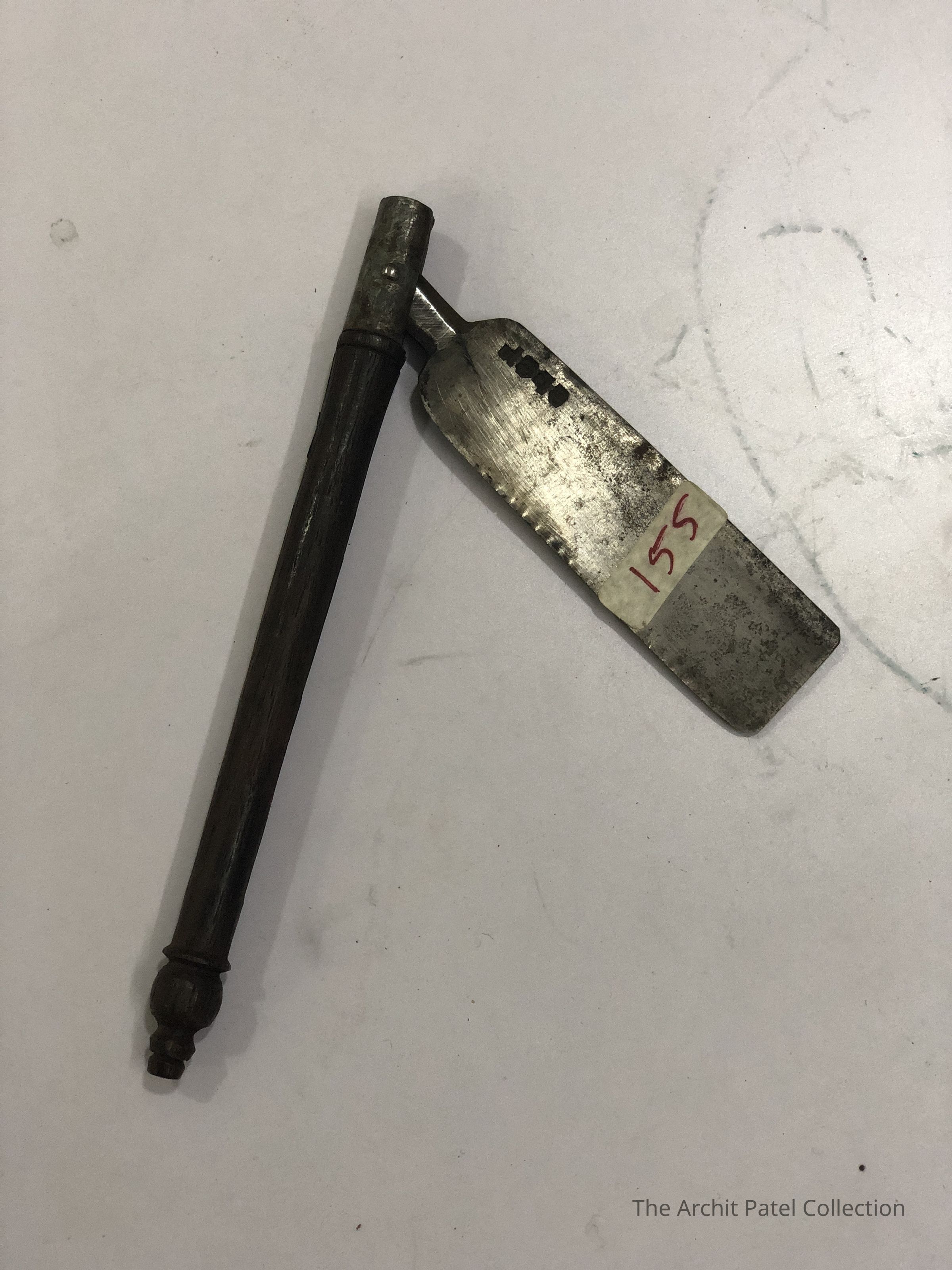
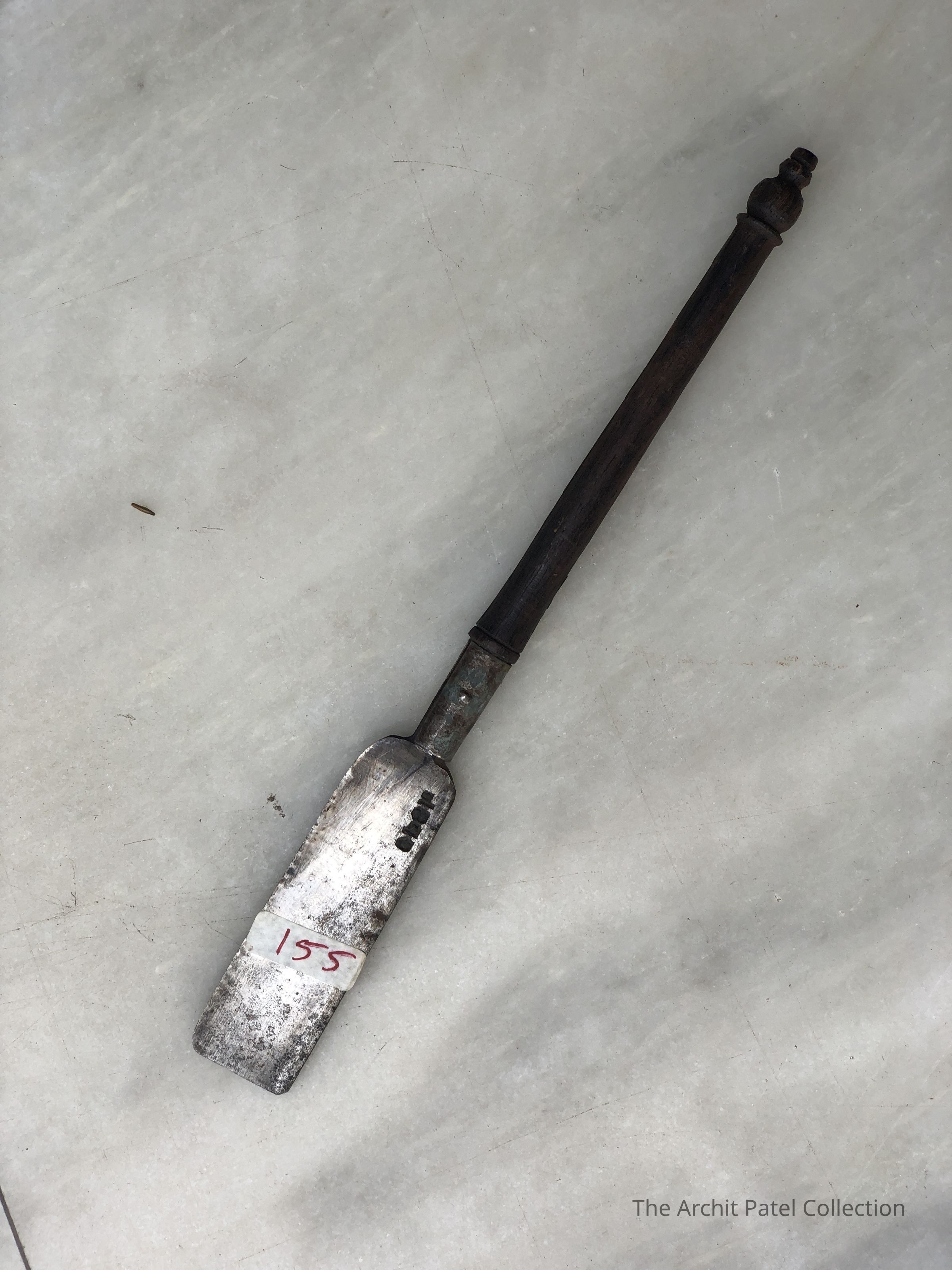
This is an Antique Straight Razor, commonly known in South Asia as an Ustra. Unlike mass-produced European folders, this specimen features the heavy, hand-forged construction characteristic of professional barbers in the 19th and early 20th centuries. It is a tool of pure utility, where every design element is dictated by the repetitive process of traditional grooming.
The Blade: Forged from high-carbon steel, the blade features a "wedge" or "near-wedge" grind. Unlike the hollow-ground razors common today, this thicker profile provides more stability and weight, allowing the barber to use the mass of the tool to guide the shave.
The Tang and Pivot: The blade is connected to the handle via a robust iron pivot. The tang (the part of the blade that extends past the pivot) is long and contoured, providing the necessary leverage for the barber’s fingers to maintain a precise angle.
The Scales (Handle): The handles, or "scales," are crafted from dark hardwood (likely Indian Rosewood or Ebony). They are slim and straight, designed to fold over the blade to protect the edge when not in use.
Condition: The steel shows an honest, dark patina with some surface oxidation, consistent with its age and long-term storage in a humid environment.
Technical Features & Maintenance
1. The Geometry of the Edge
The Ustra relies on a zero-taper edge. Because it is forged from a single piece of steel, it requires a specific sharpening process. To maintain this tool, it would historically have been "honed" on a natural water stone and "stropped" on a hanging leather strap before every single use to realign the microscopic teeth of the blade.
2. Ergonomics of the Professional
While a personal razor is designed for ease of use by the owner, a professional Ustra like this is balanced for a second-party shave. The length of the scales and the weight of the pivot allow the barber to flip the razor quickly between different grips—the "Forehand" and "Backhand" positions—essential for navigating the contours of a neck and chin.
3. Reliability through Simplicity
In your professional framework of "Process reliant" excellence, the Ustra is the ultimate example. It has no moving parts other than a single friction pivot. It cannot "fail" in the modern sense; its performance is entirely dependent on the user's mastery of the sharpening and stropping process.Made/Created
Manufacturer
Bladesmith from PatanDate made
circa 1900Time Period
20th CenturyEthnography
Cultural Region
State/Province
GujaratRegion
Western IndiaDimensions
Dimension Description
8"Length
2-1/2 in