Name/Title
TabarzinEntry/Object ID
248; Full Code: 248.10.42-AX-IATags
AxeDescription
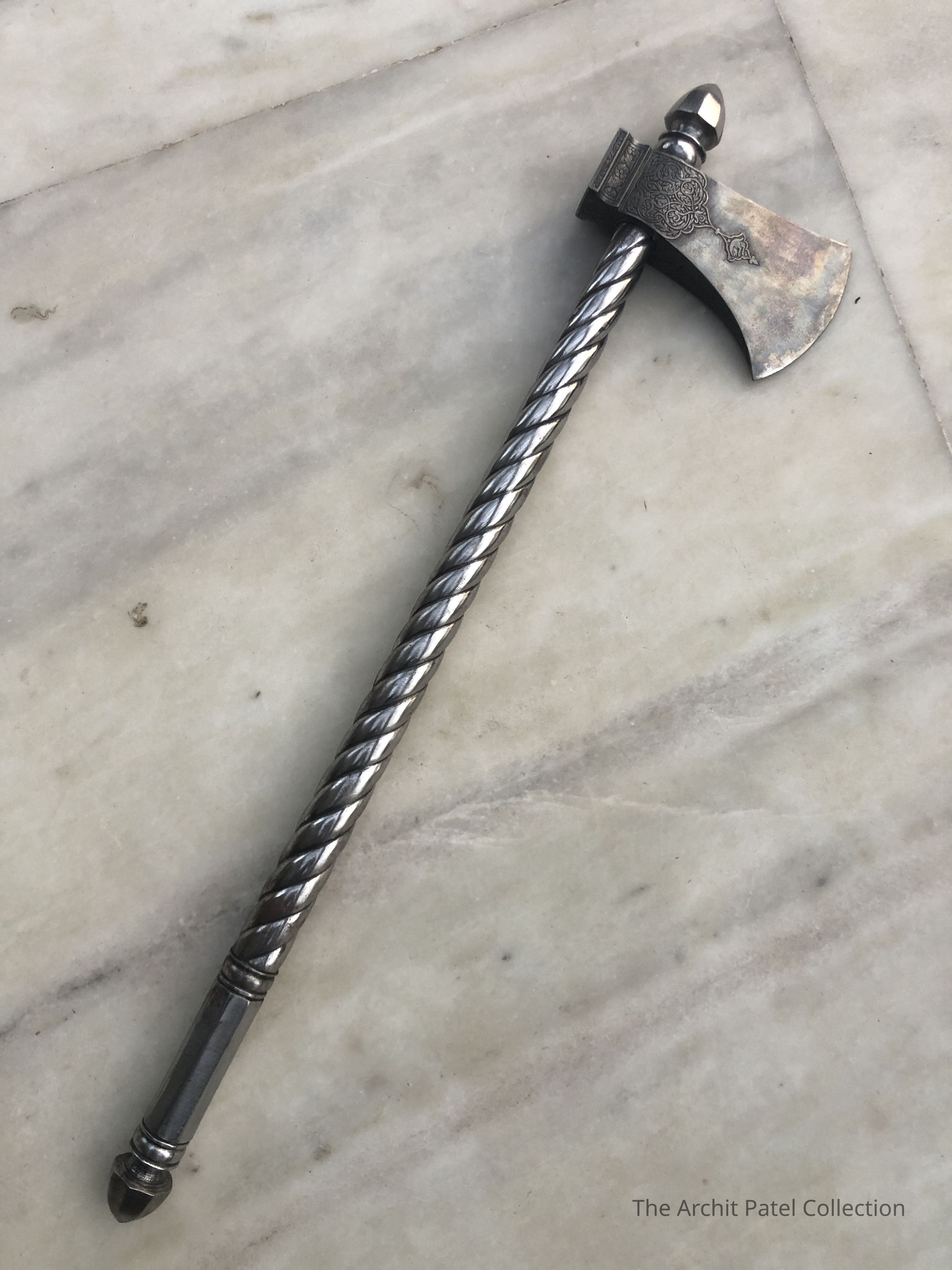
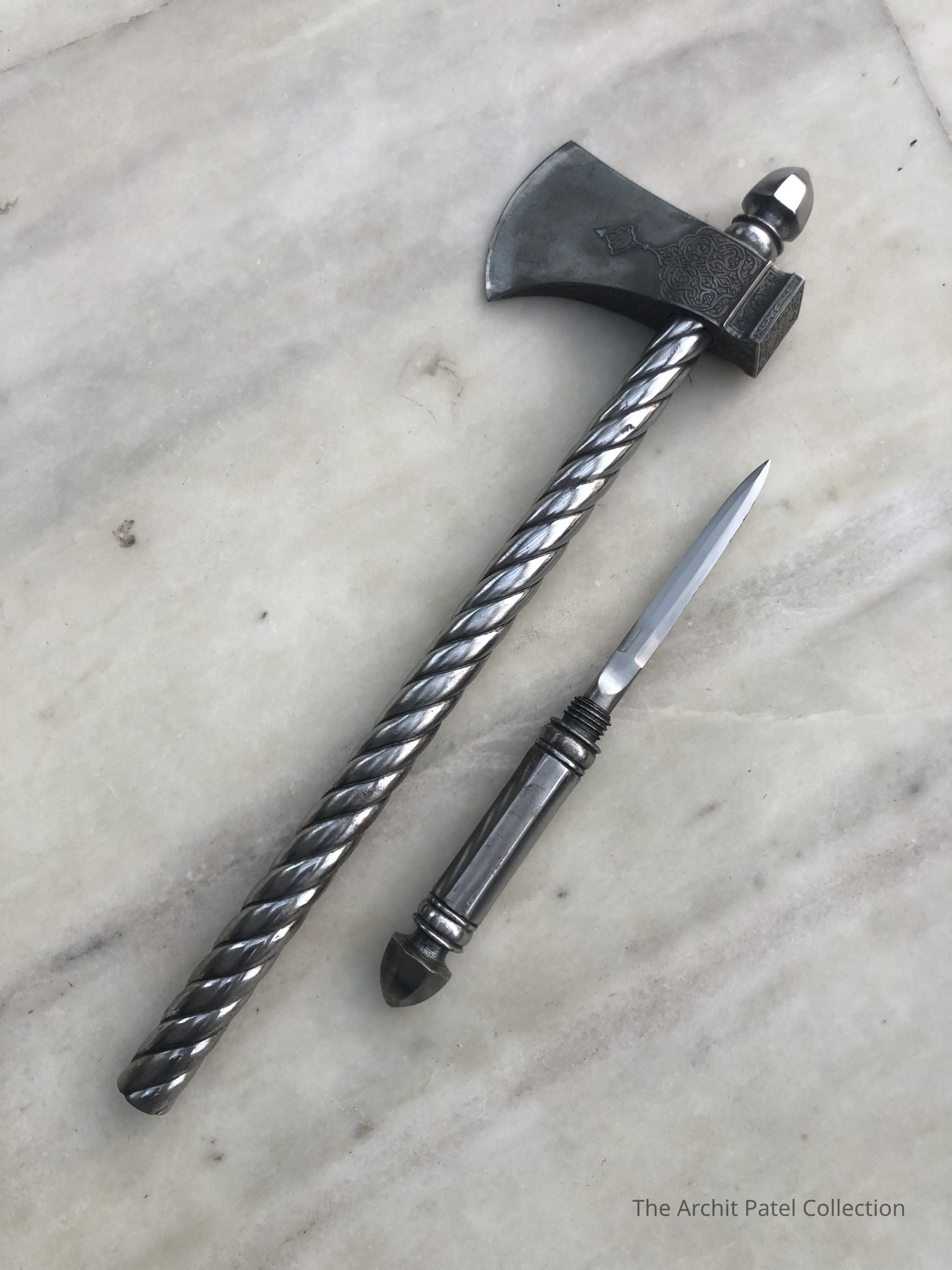
This is an exceptional Antique Tabar-Zin, a traditional Indo-Persian saddle axe, likely dating to the 18th or 19th century. This specimen represents the peak of multi-functional combat engineering, featuring a high-grade Wootz steel head and a specialized hollow-ground steel handle that conceals a secondary stiletto knife. It is a masterclass in the "Deceptive Capability" of historical elite arms.
Core Components & Mechanical Engineering
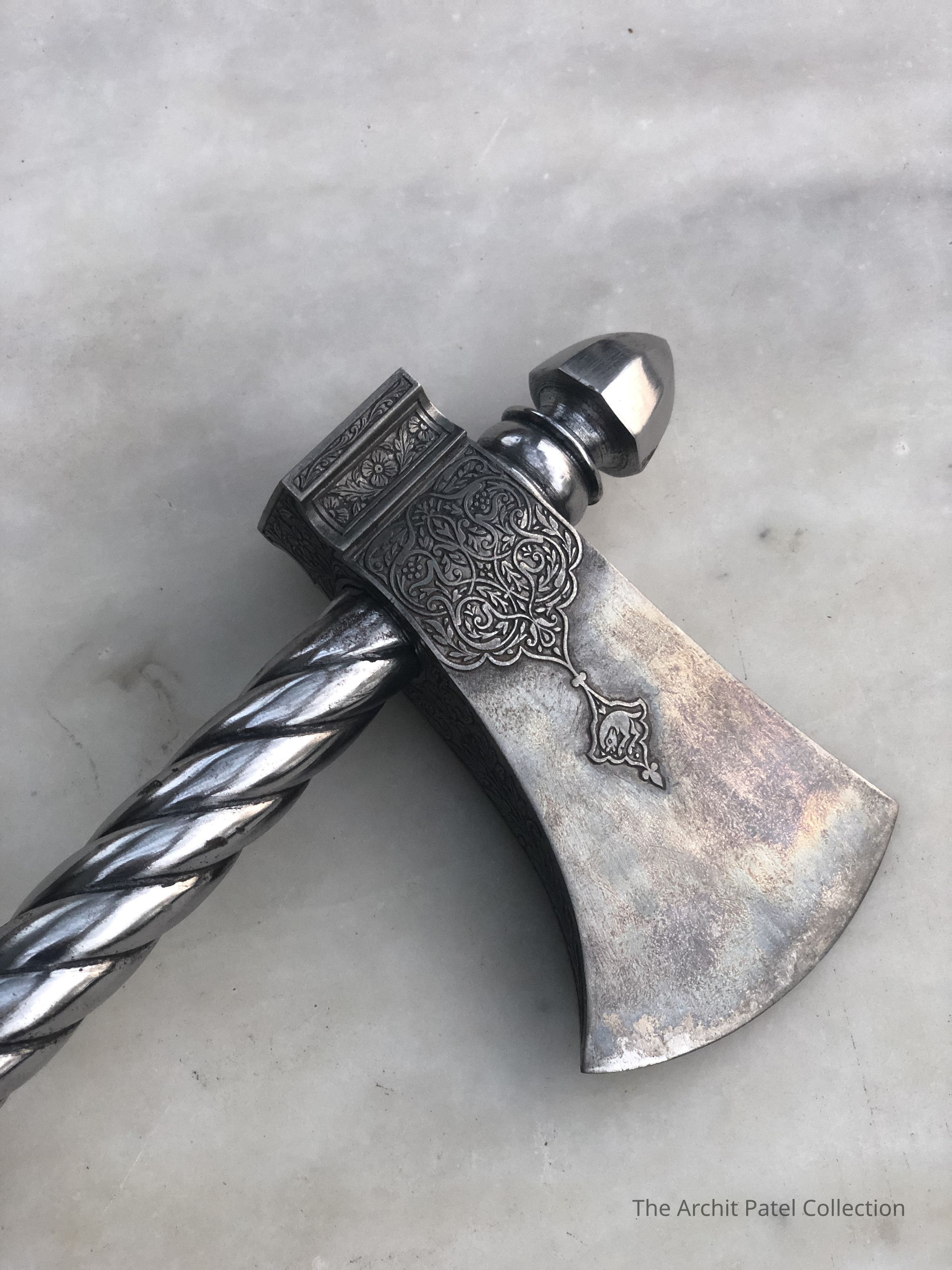
The Head (Wootz Steel): Forged in the characteristic crescent shape of the Tabar, the head exhibits a high-contrast "watered" pattern (Jauhar).
The Process: Wootz is the ultimate mechanical certainty. Its crystalline structure creates a "micro-serrated" edge that maintains lethal sharpness under high-impact stresses—essential for an axe designed to breach quilted armor or mail.
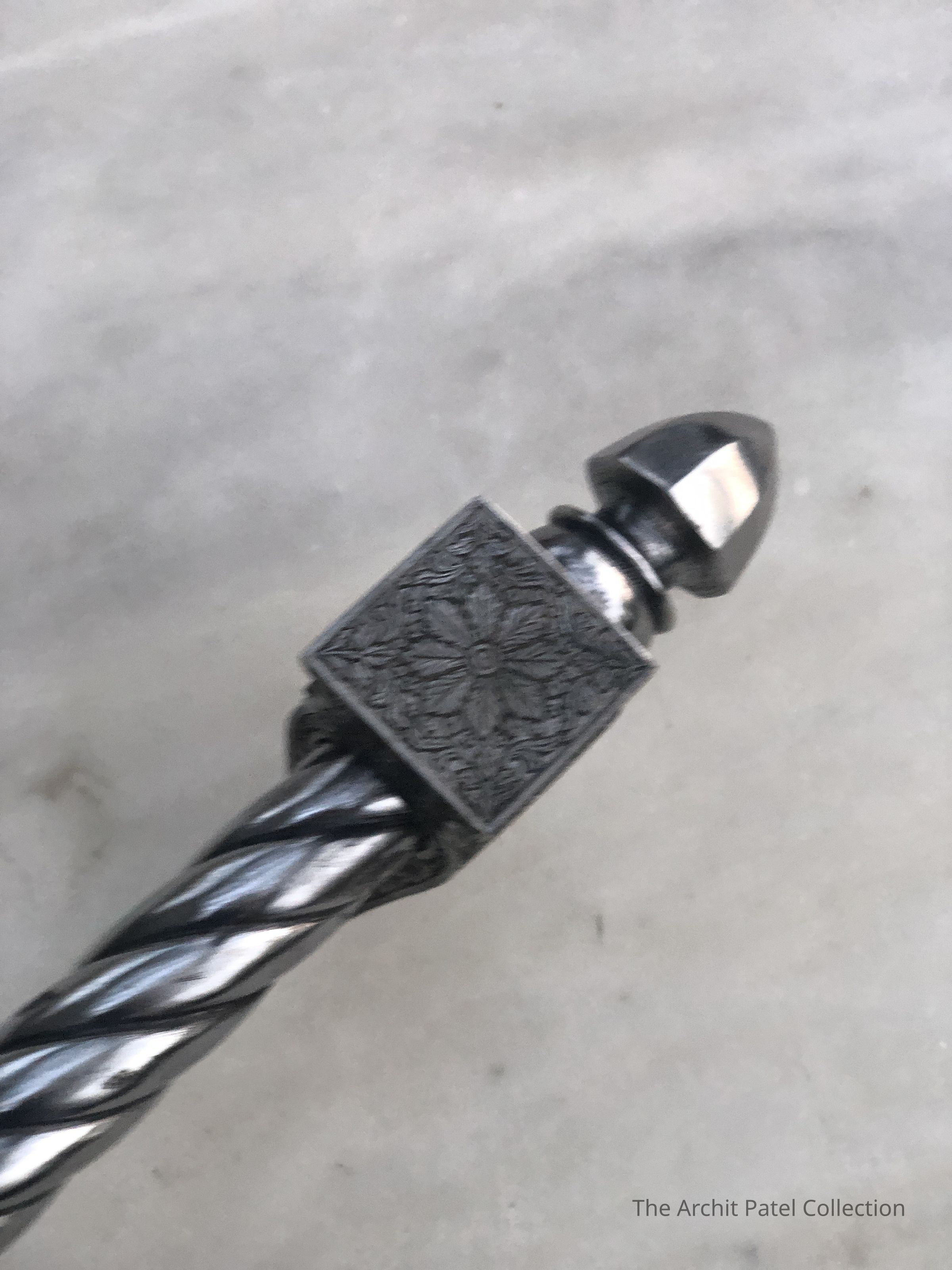
Ornamentation: The block of the axe head (the poll) and the base of the blade are decorated with deep, hand-chased floral Koftgari or engraving, signaling high military status.
The Handle (Hollow Steel Helix): The shaft is constructed from steel with a spiral-twisted (helical) geometry.
In your professional framework of "Standard Operating Procedures," this twist isn't just aesthetic. It increases the structural rigidity of the hollow tube while providing a natural, high-friction grip for the hand, ensuring the tool remains "certain" during high-velocity swings.
The Hidden Stiletto: The base of the handle (the pommel cap) unscrews to reveal a slender, double-edged concealed knife.
* Tactical Secondary: This stiletto serves as a fail-safe. If the axe were lost or bound in an opponent's shield, the wielder could instantly transition to a close-quarters piercing "process."Made/Created
Manufacturer
Unknown ArtisanDate made
circa 1700 - circa 1750Time Period
18th CenturyDimensions
Dimension Description
24"Length
2-3/4 inAcquisition
Acquisition Method
Purchase