Tegha
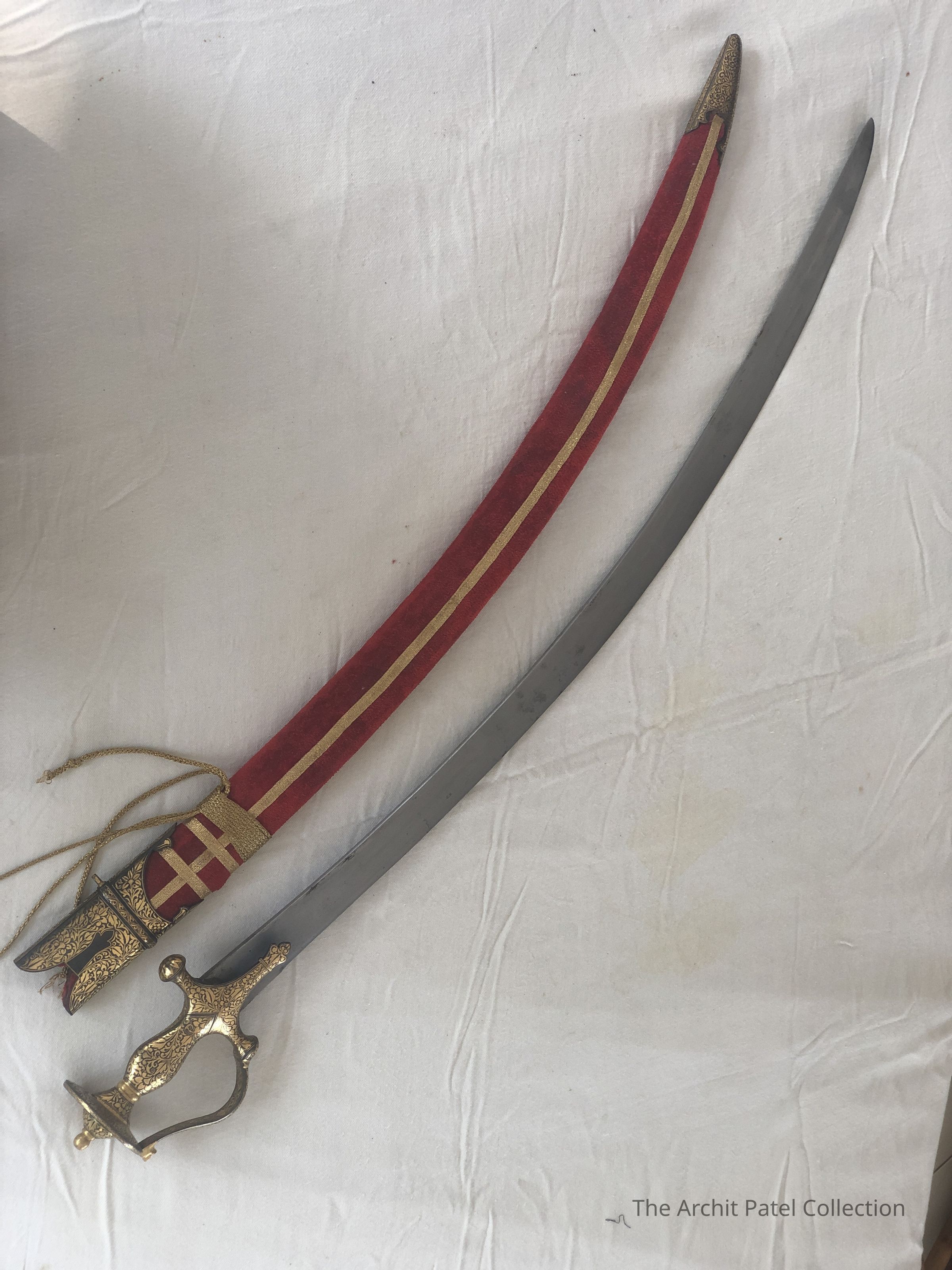
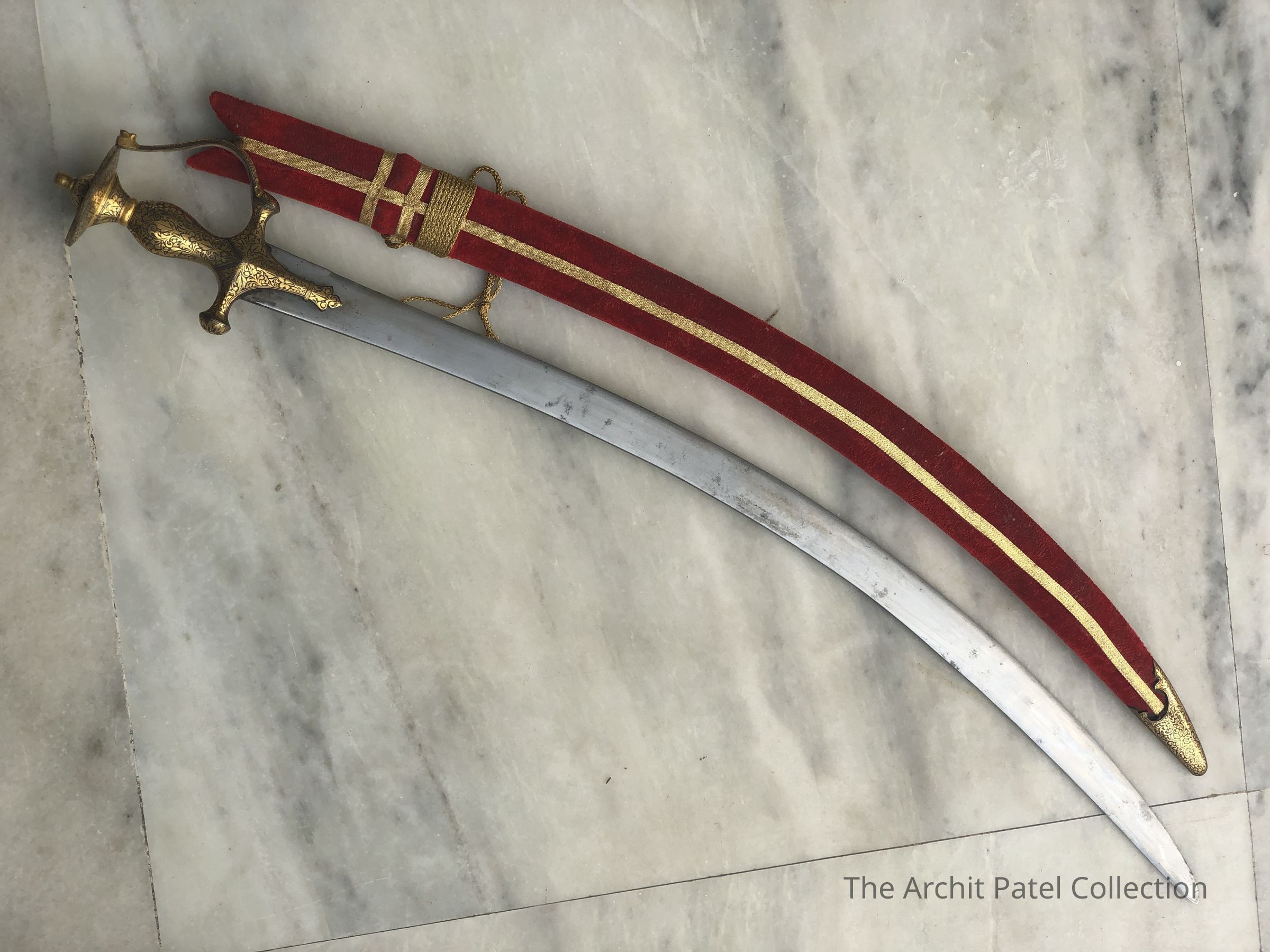
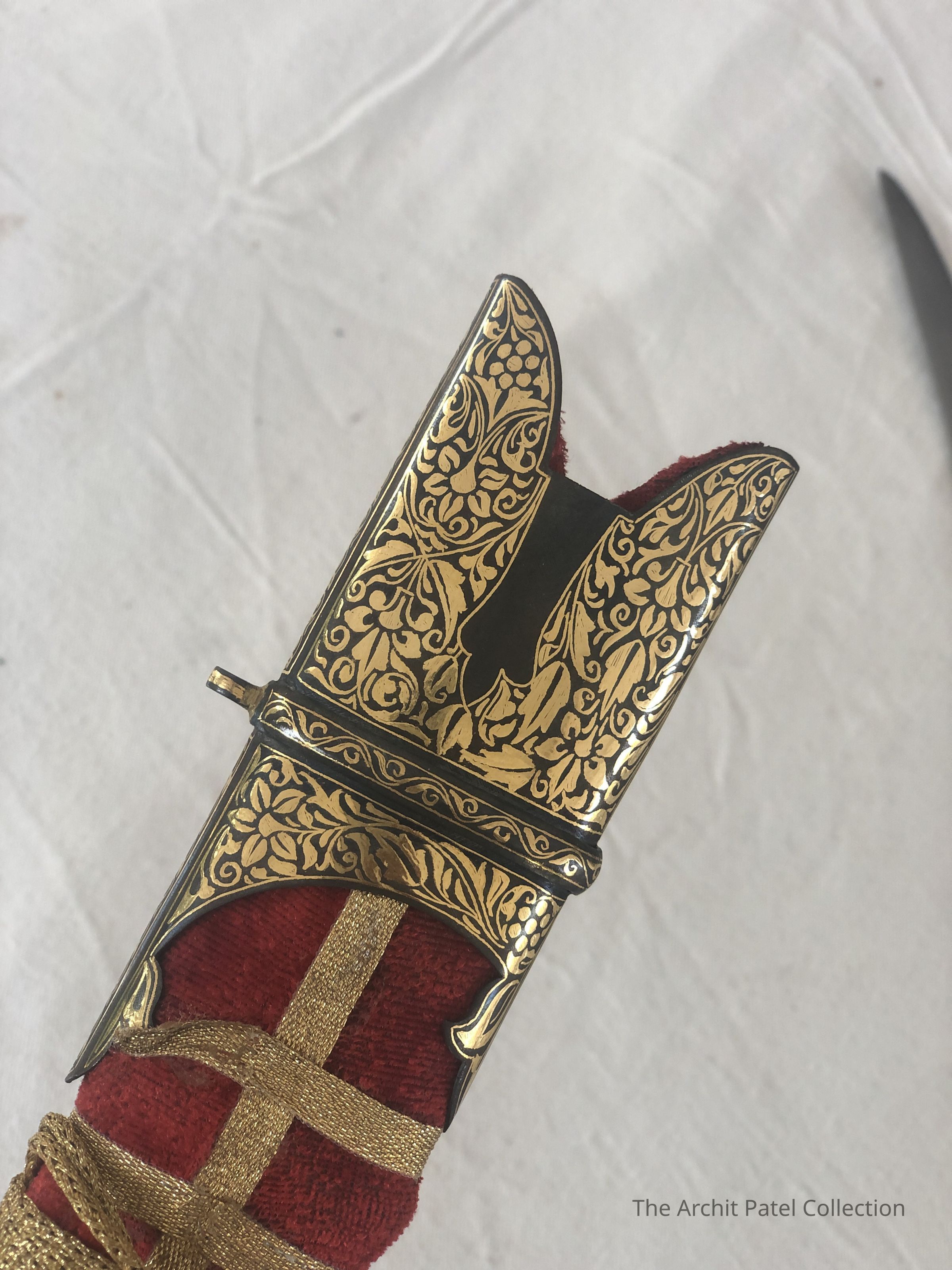
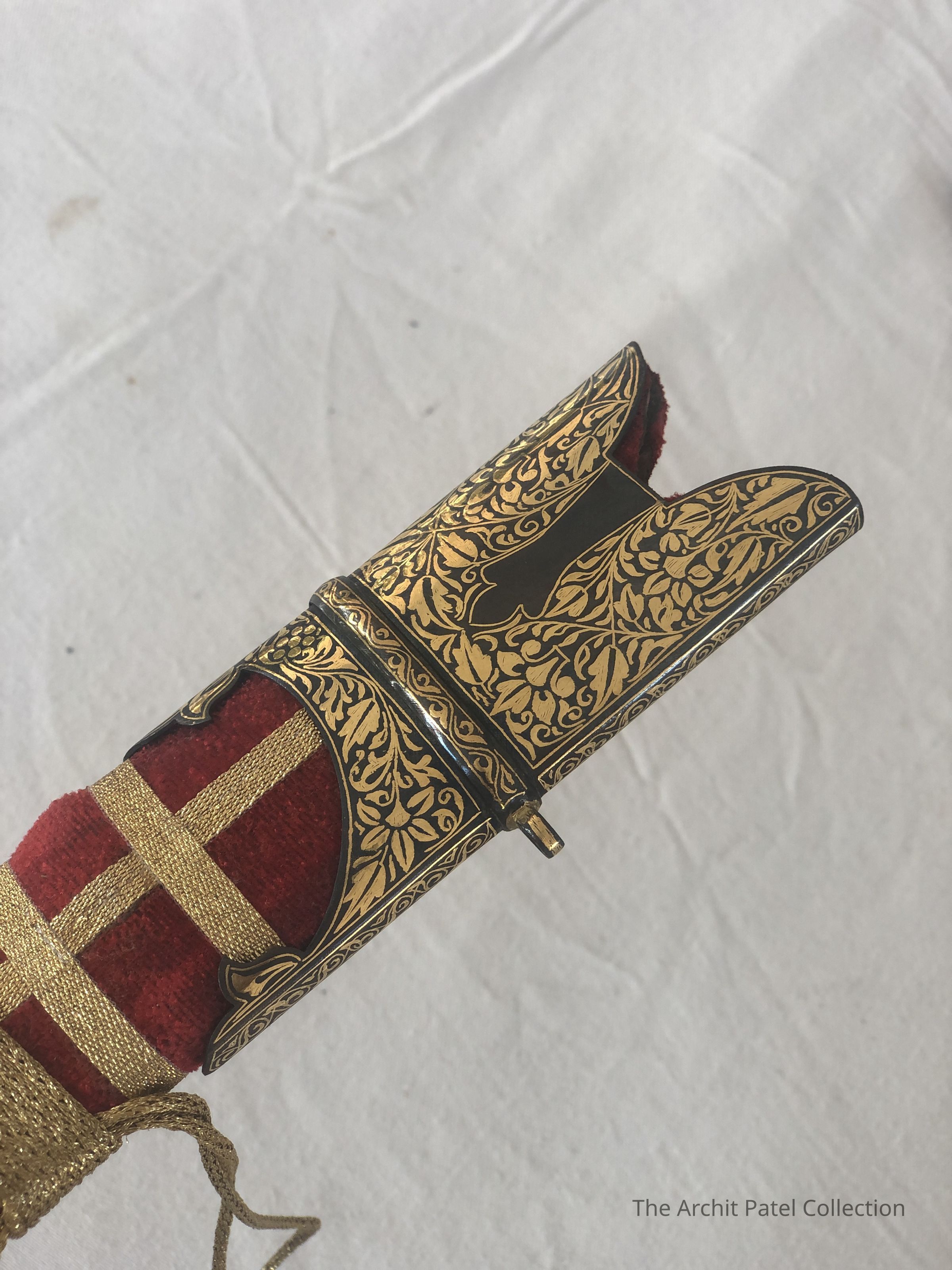
The image presents a traditional curved sword, also known as a "Tegha" or sabre, displayed on a plain white background. The blade of the sword appears sharp and metallic, extending gracefully in a smooth curve. The handle and the scabbard of the sword are adorned with ornate golden embellishments featuring intricate patterns, giving it a regal appearance. Wrapped around the scabbard is a red fabric strap adorned with two golden stripes, enhancing its ceremonial look. The sword exudes an aura of antique elegance, suggesting its use as a decorative piece or a relic from a historical or cultural context.
Name/Title
TeghaEntry/Object ID
38; Full Code: 38.9.25-SW-IATags
SwordDescription
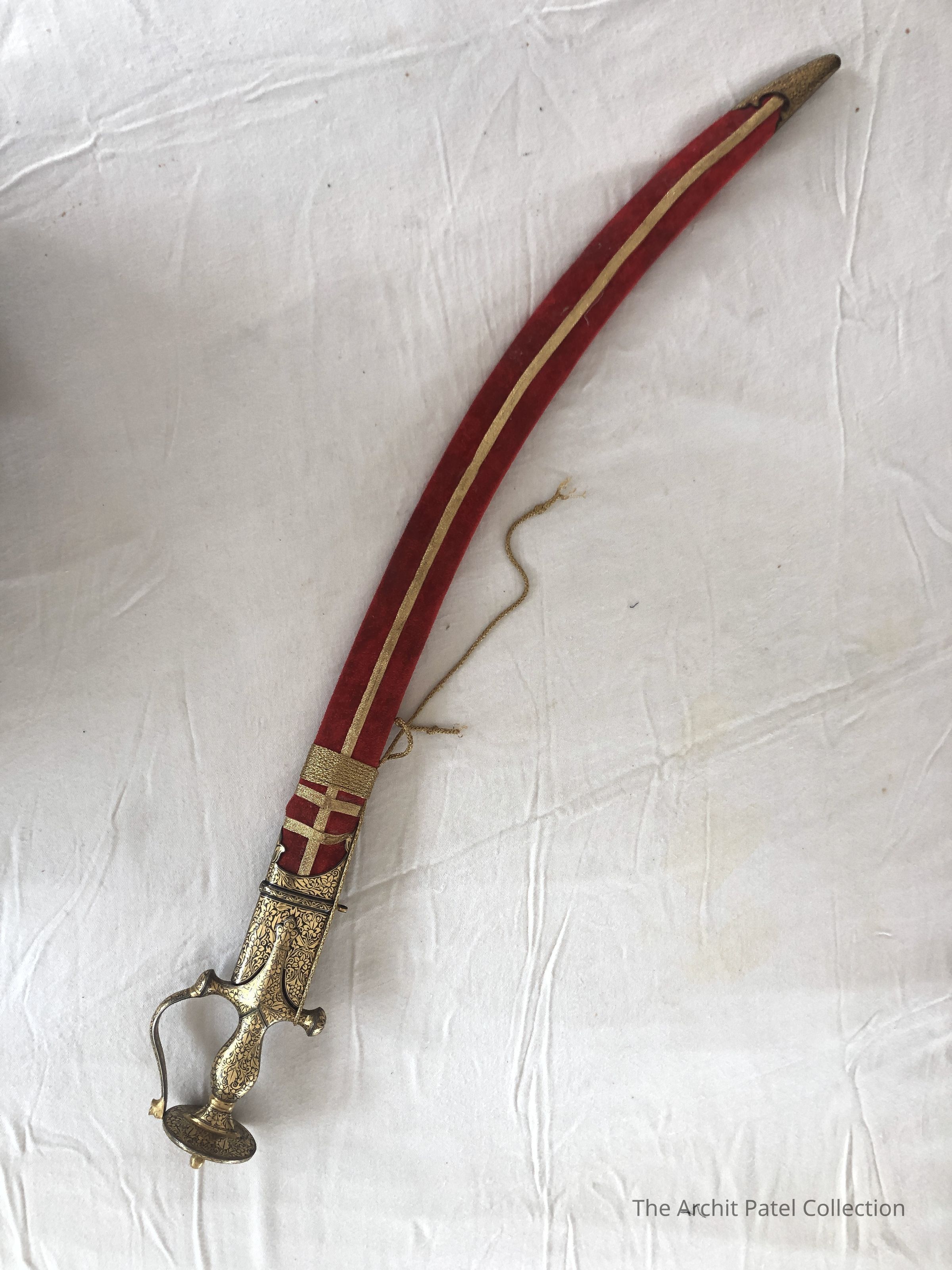
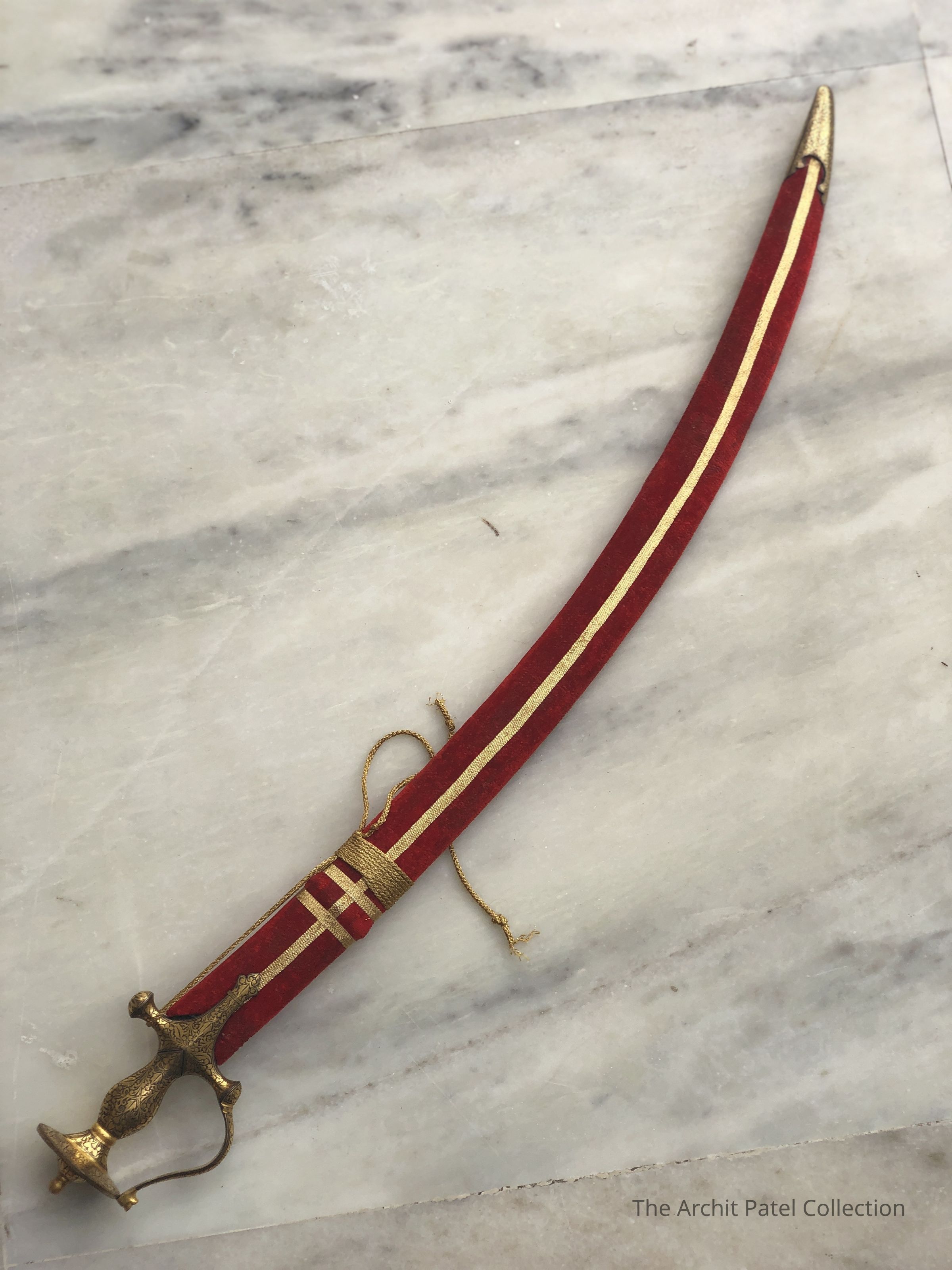
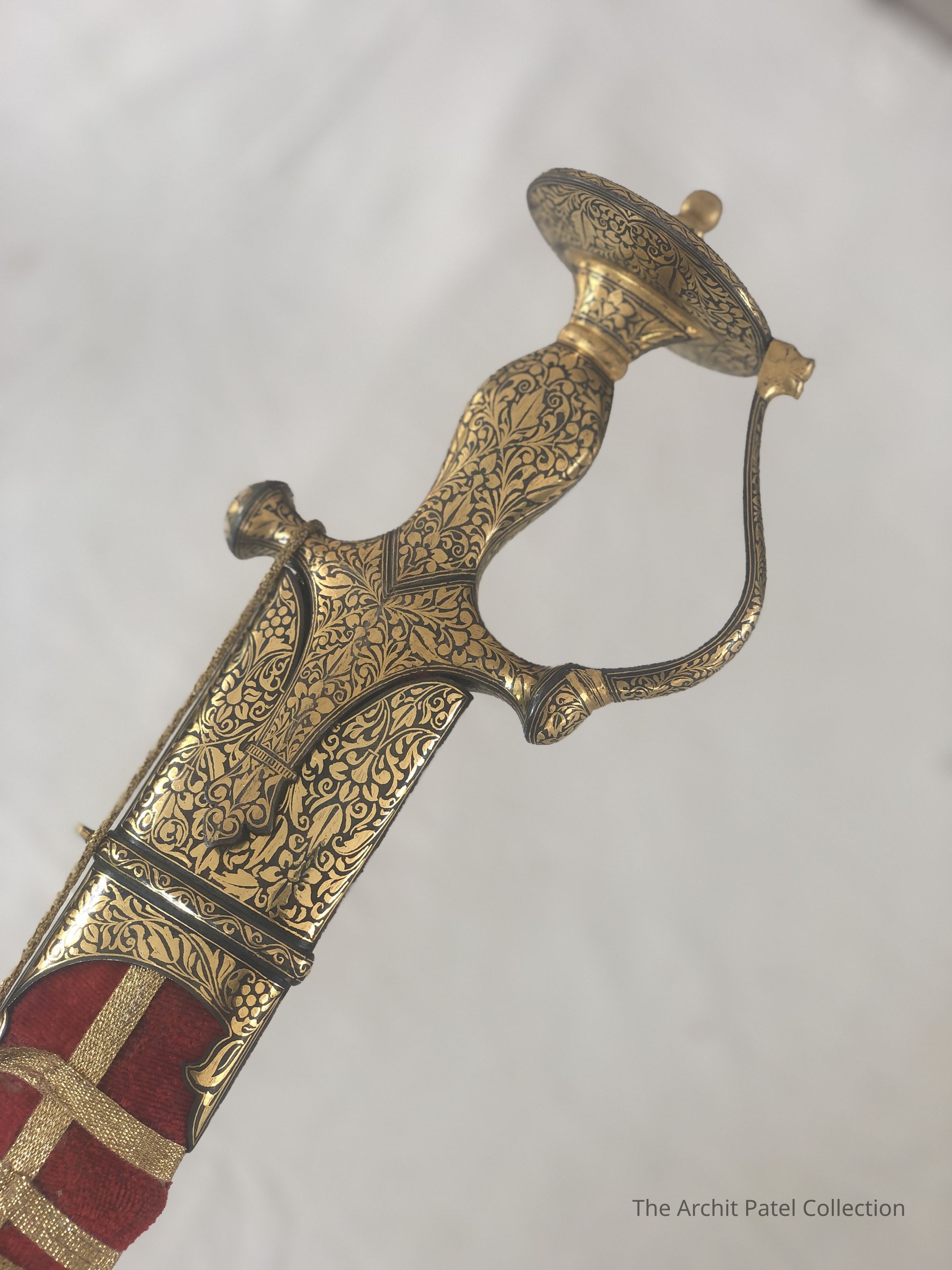
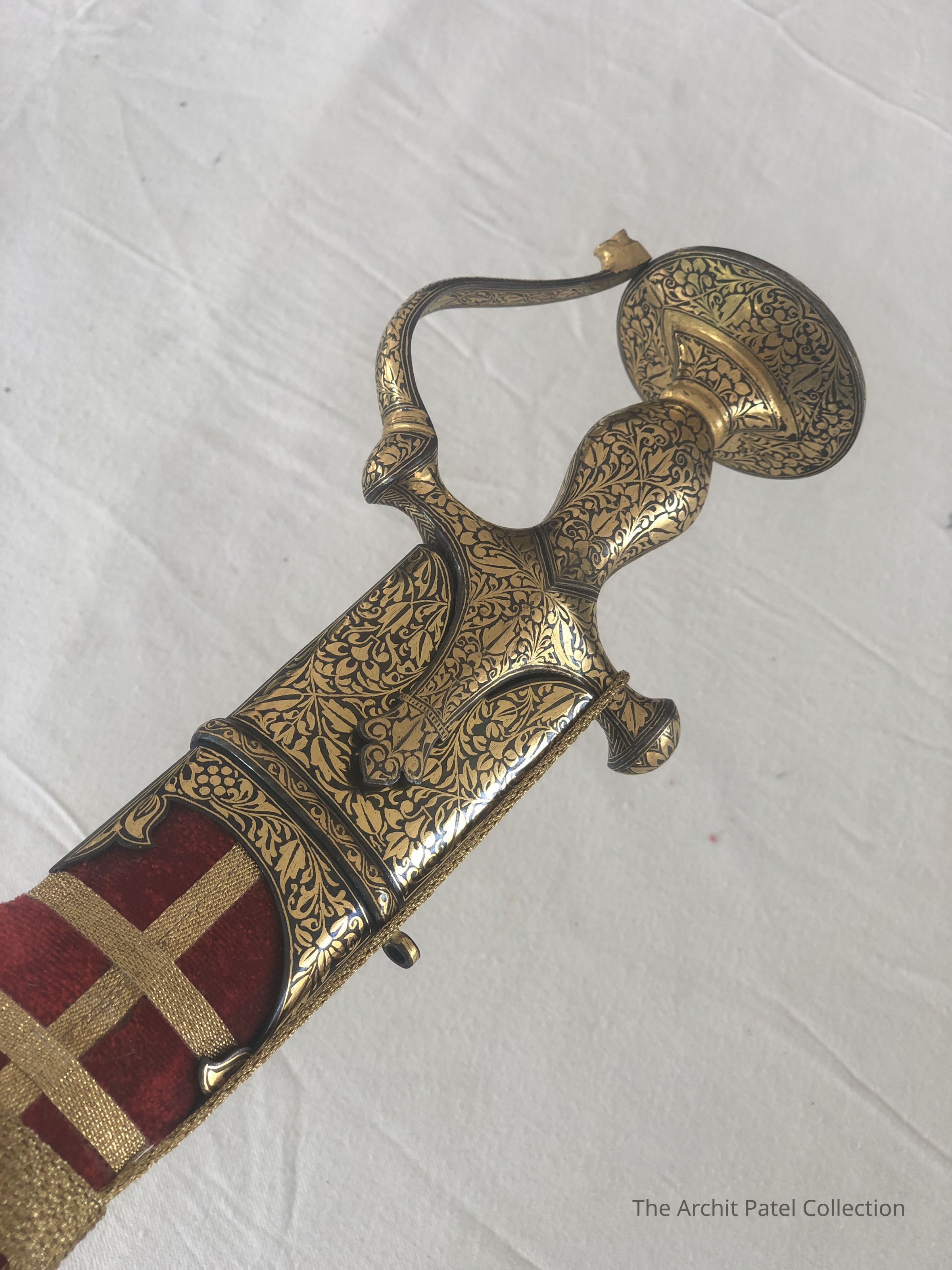
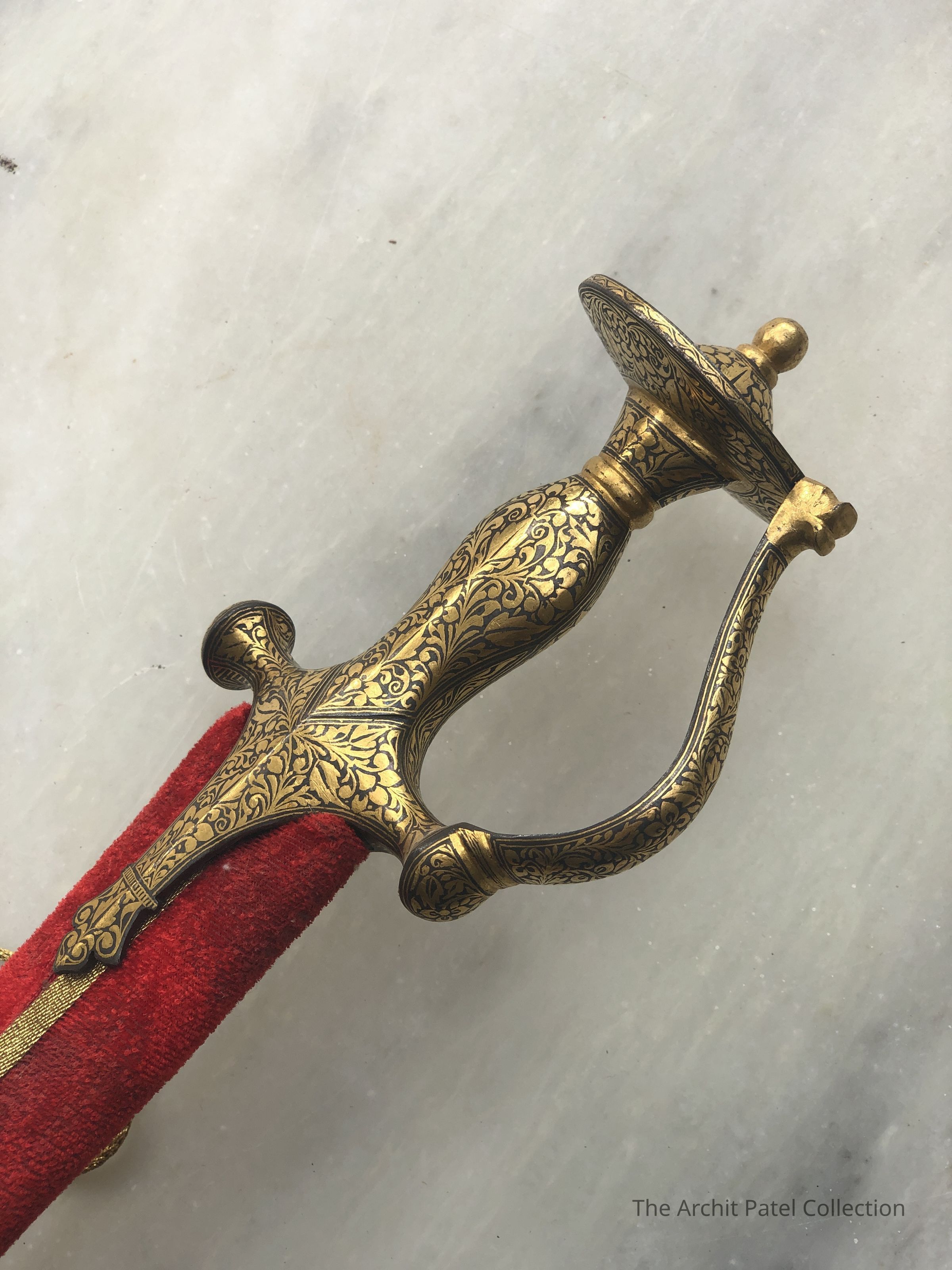
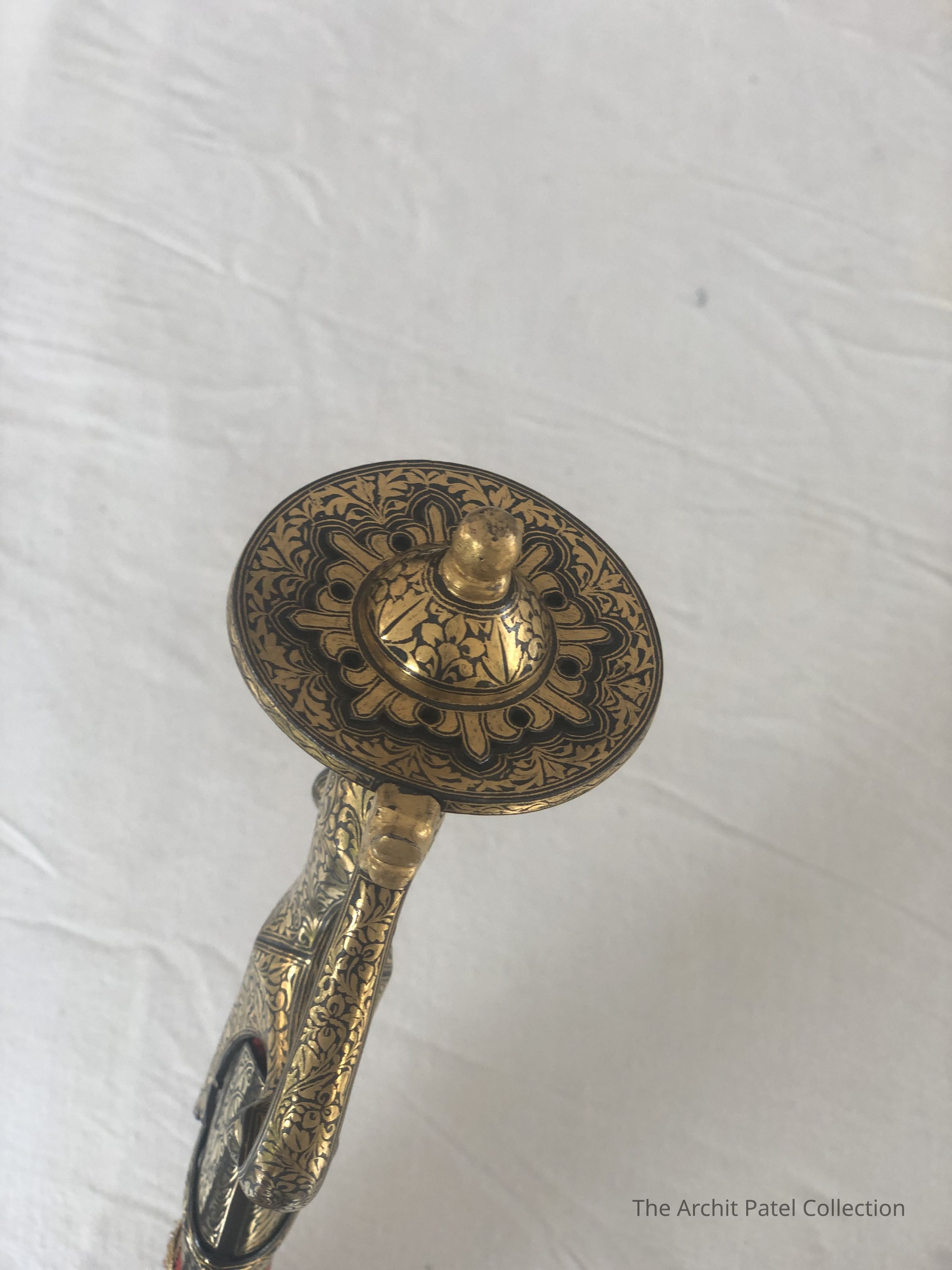
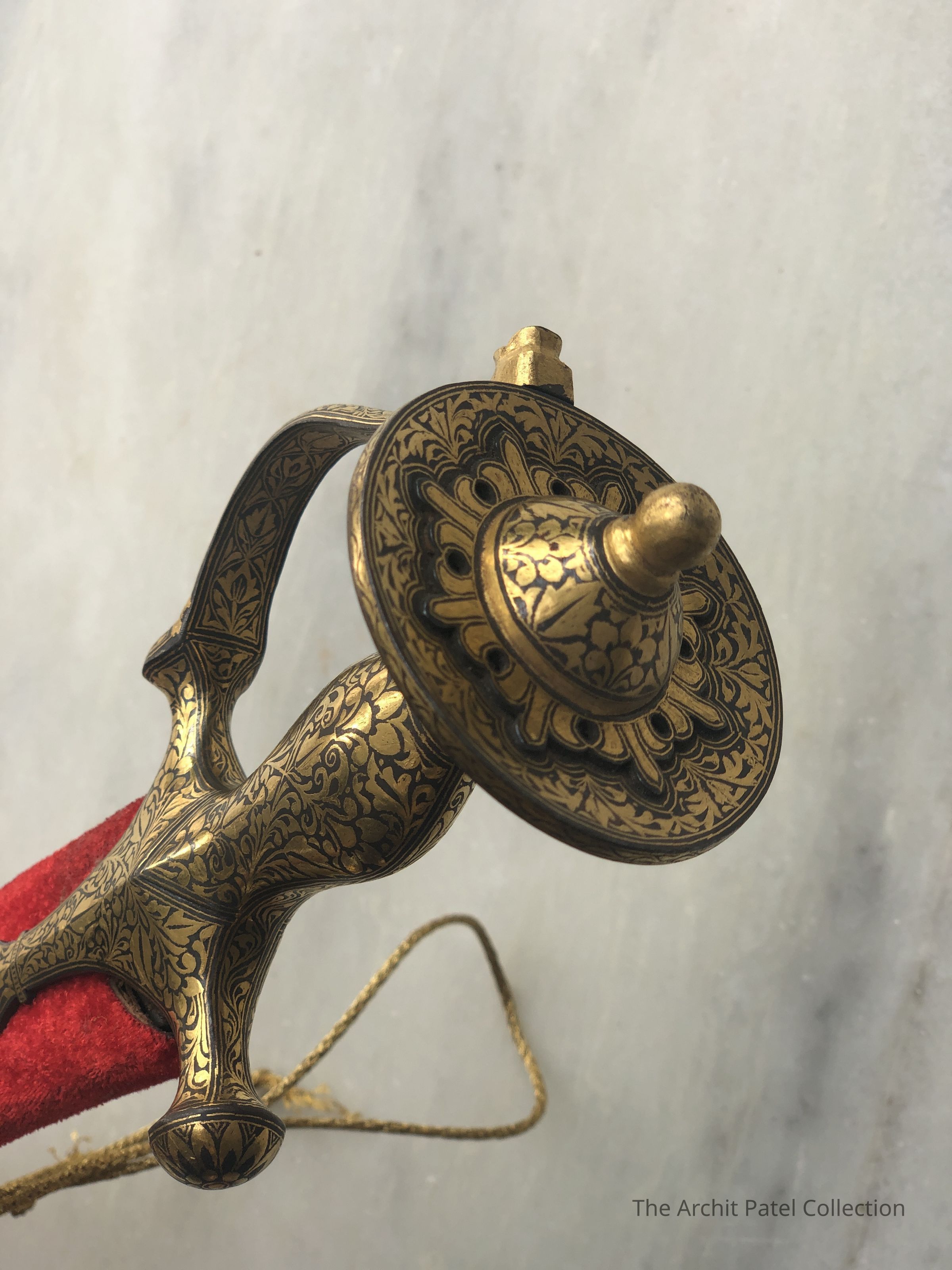
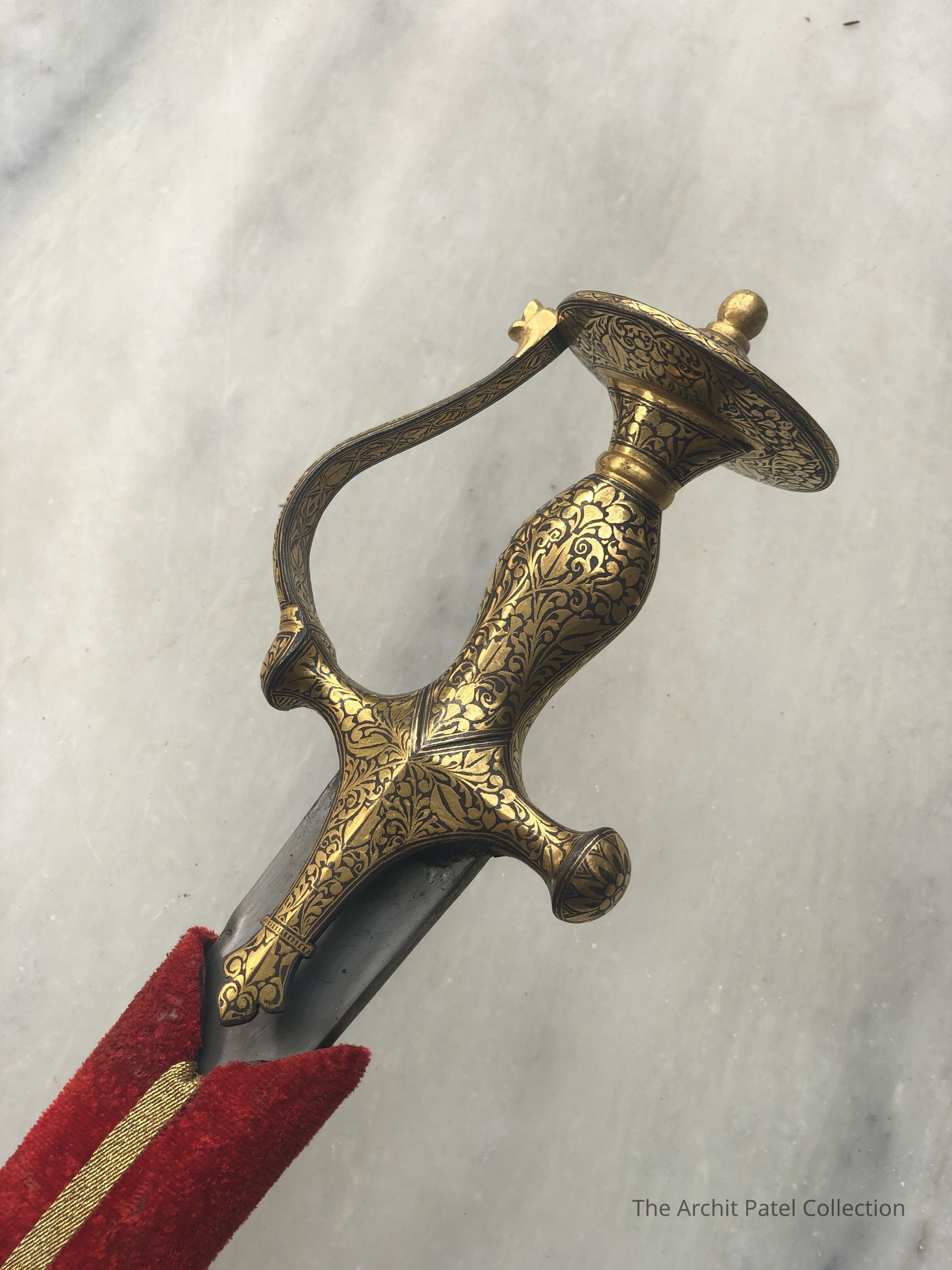
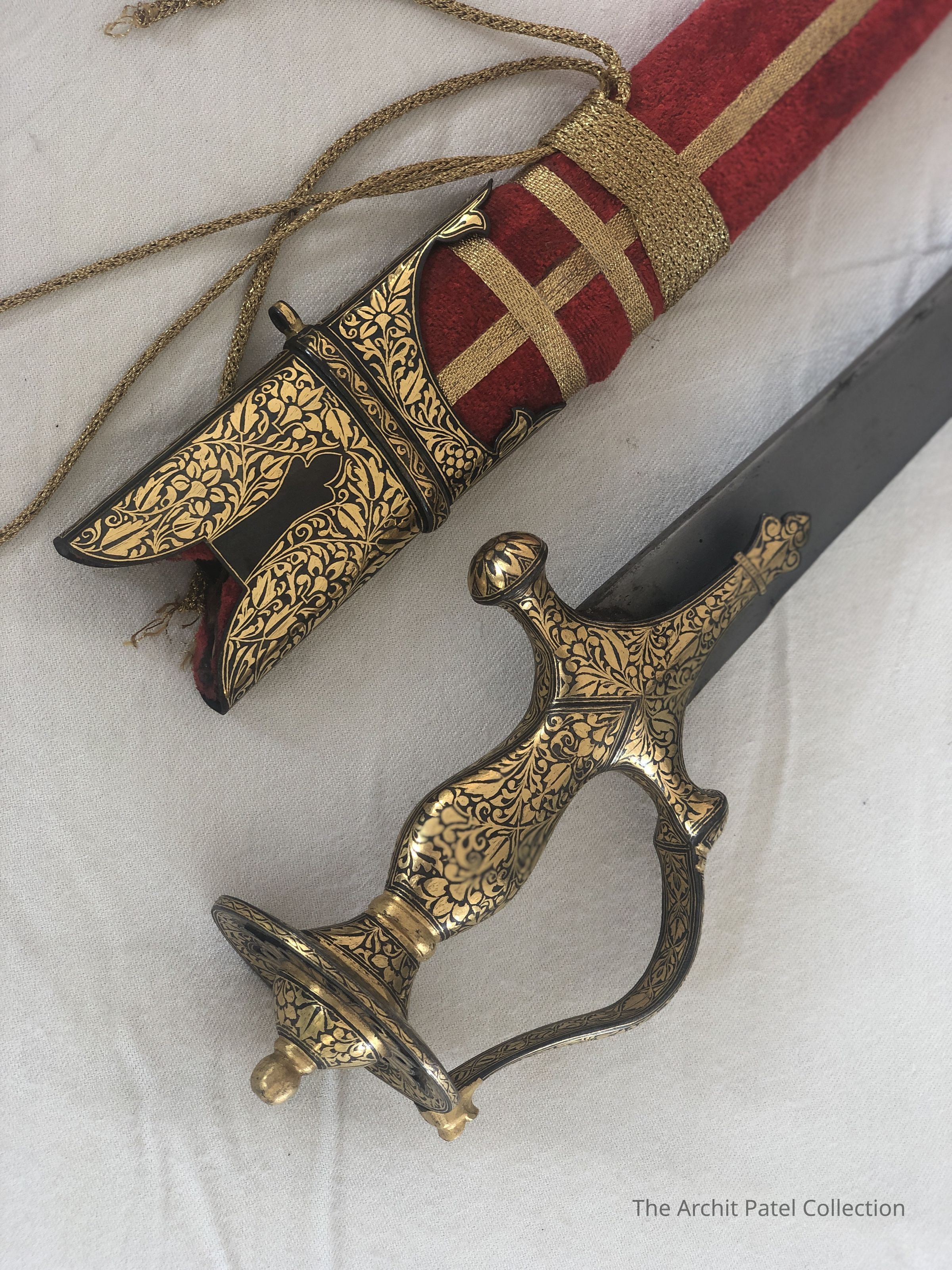
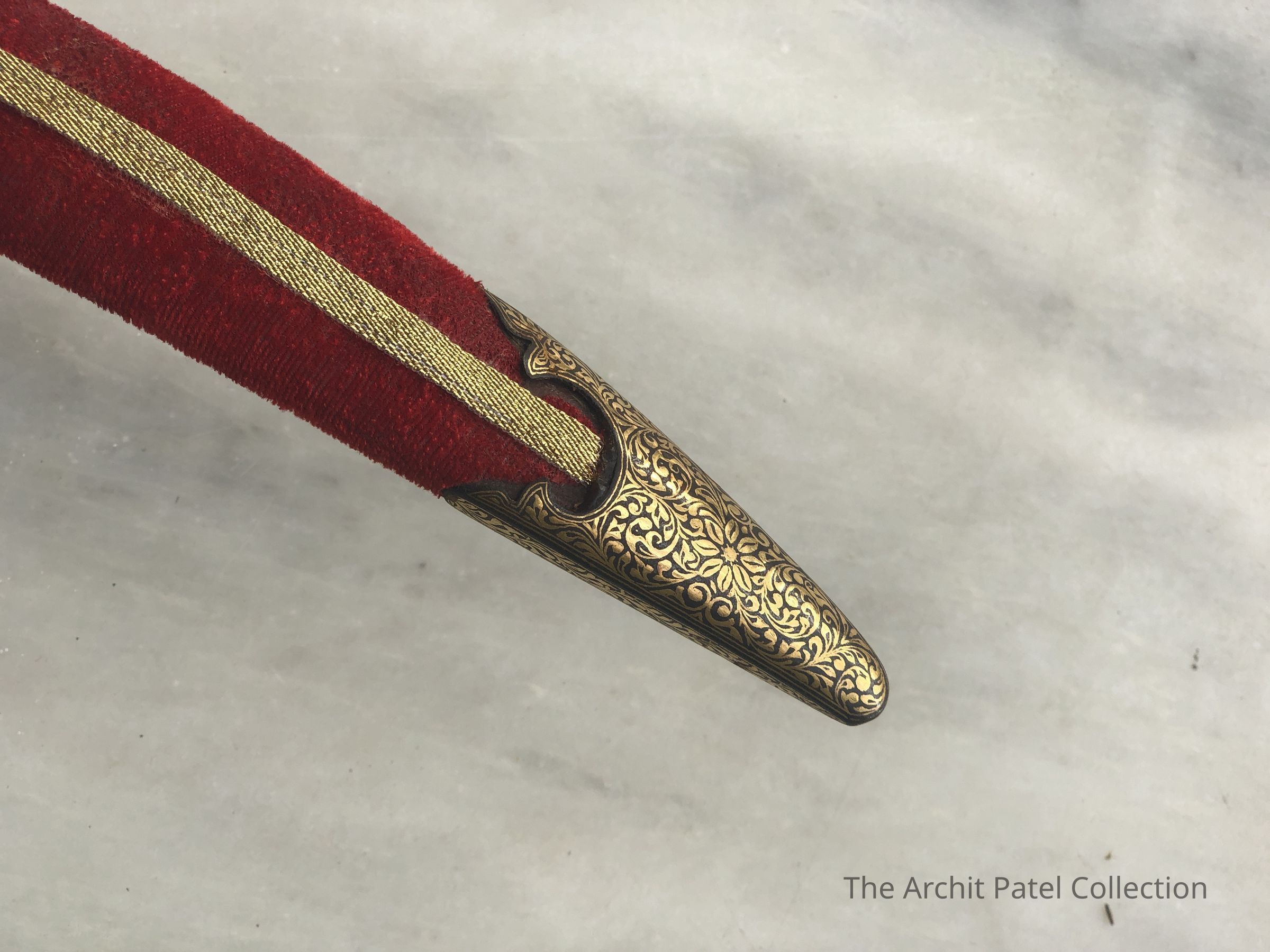
This is a high-status Tegha, the heavy-duty power saber of the Indian subcontinent. The piece represents a masterful synthesis of 18th/19th-century metallurgy and high-level modern craftsmanship: it features an antique Wootz steel blade paired with an exceptional restoration of gold Koftgari work that has been newly applied to the hilt and scabbard fittings. Core Components & Artistry The Blade (Antique Wootz): The blade is forged from Wootz (crucible steel), identifiable by the high-contrast "watered" pattern (Jauhar) visible on the surface. True to the Tegha form, the blade is significantly broader and heavier than a standard Talwar, featuring a dramatic curve and a reinforced T-section spine. This geometry creates a forward-weighted balance optimized for high-kinetic chopping. The Hilt (Indo-Muslim Style): The hilt is a classic steel construction featuring a prominent disc pommel and a slim knuckle guard. It has been entirely revitalized through the restoration process. Restoration Gold Work (New Koftgari): Every millimeter of the steel hilt, including the underside of the pommel and the knuckle bow, has been meticulously overlaid with True Gold Koftgari (Teh-nishan). The design features a dense, scrolling floral arabesque (Munnabat style) that is characteristic of the royal armories of North India. The execution is crisp and vibrant, returning the weapon to its original "Darbar" (courtly) status. Scabbard: The sword is paired with a wooden-core scabbard wrapped in royal crimson velvet. The scabbard features a "cross-hatch" of gold bullion tape (Gota) and newly restored gold-inlay steel fittings: a wide locket at the throat and a tapered chape at the tip.Made/Created
Manufacturer
Unknown ArtisanDate made
circa 1800 - circa 1850Time Period
19th CenturyEthnography
Cultural Region
State/Province
PunjabCulture/Tribe
Sikh, Rajput