Tegha Chandrahas
Name/Title
Tegha "Chandrahas"Entry/Object ID
28; Full Code: 28.3.8-SW-IMTags
Blood, SwordDescription
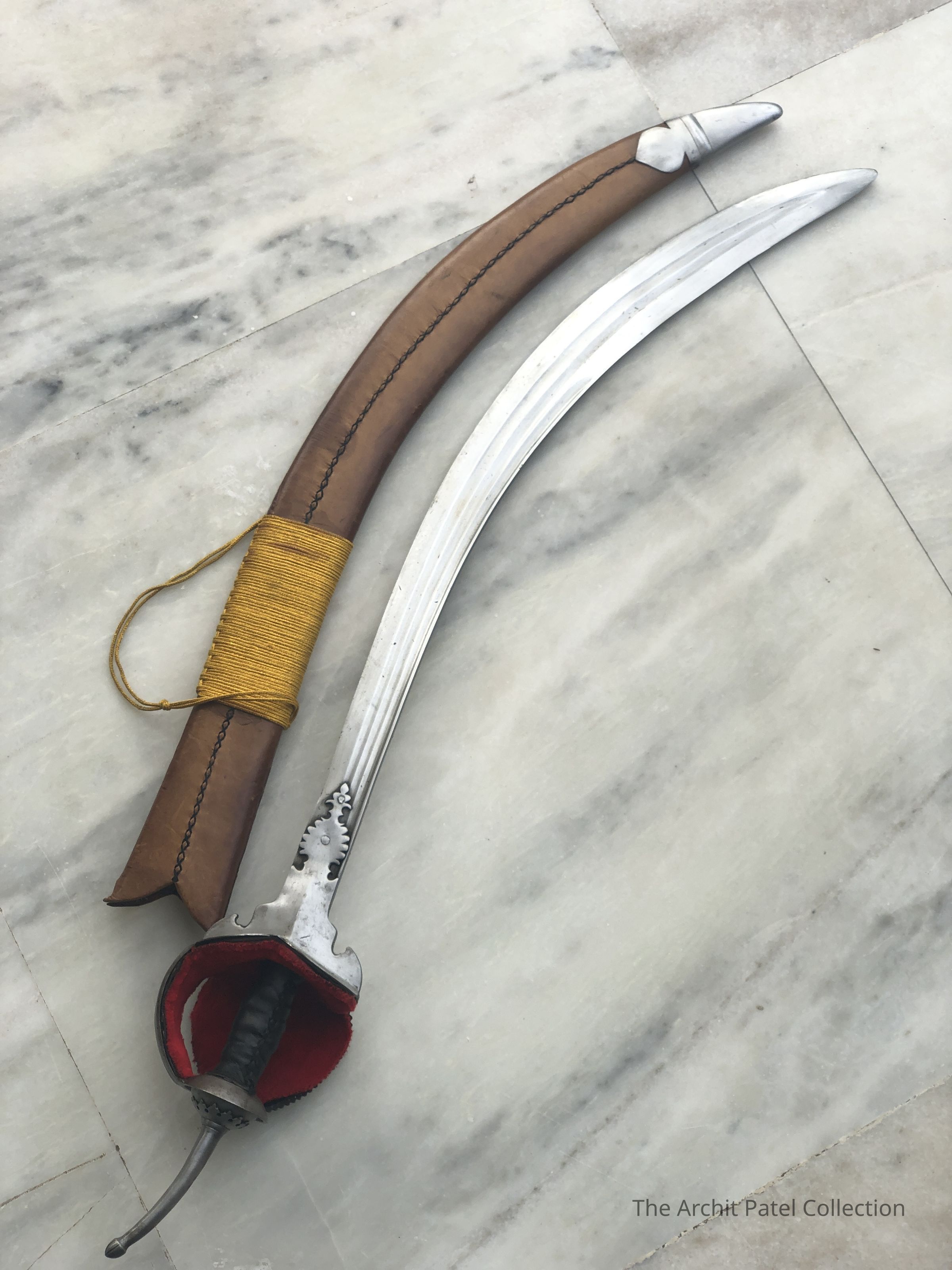
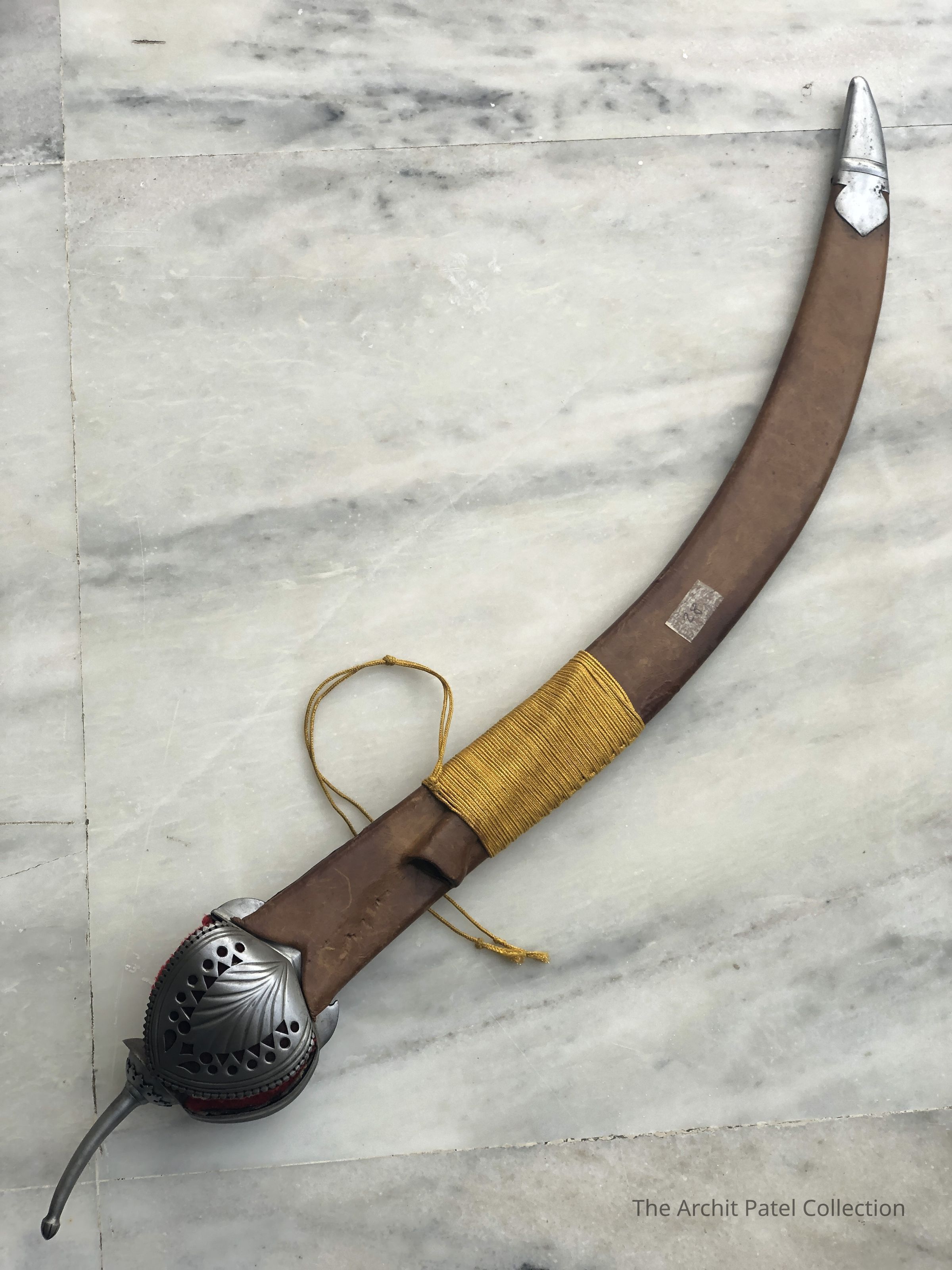
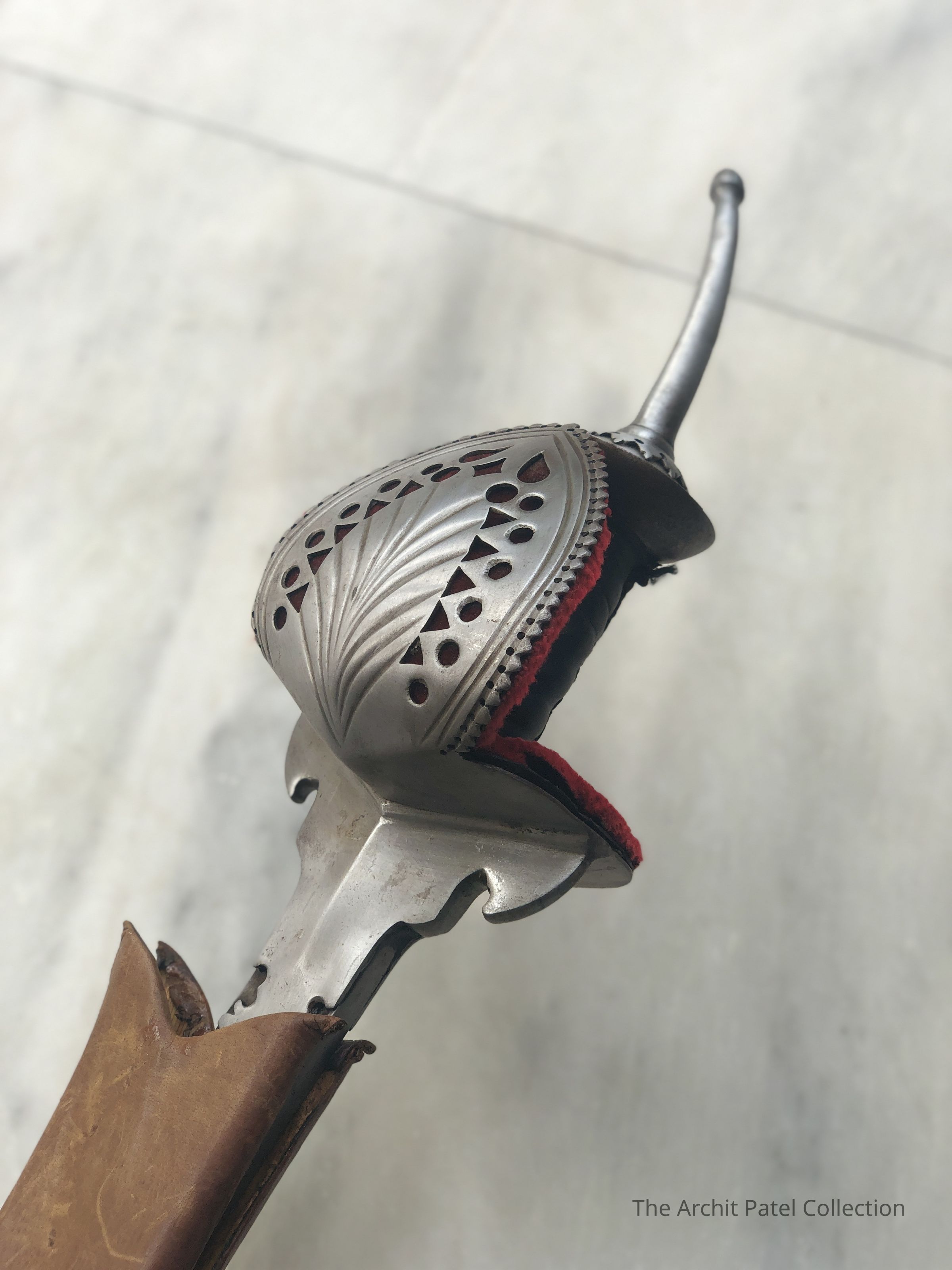
This is a Modern Custom Tegha, a high-performance reconstruction of the "heavy hitter" sabers used by the Rajput and Maratha infantries. While the classic Talwar is built for agility and the draw-cut, the Tegha is engineered for raw chopping power, identifiable by its massive, broad blade and forward-weighted geometry. The Blade: The blade is exceptionally broad with a deep, dramatic curve. It features a heavy T-section spine and dual fullers that run nearly the entire length of the steel. The "flare" near the tip increases the centrifugal force during a swing, allowing the blade to generate immense kinetic energy—capable of cleaving through heavy leather armor or bone with a single blow. The Hilt: This specimen features a basket-style guard (similar to a Firangi or Khanda hilt), providing near-total protection for the hand. The steel guard is pierced with geometric patterns and lined with red velvet padding to cushion the knuckles during high-impact strikes. The Pommel: It terminates in a long, curved pommel spike, a functional element that allows the warrior to deliver "hammer-blow" strikes with the butt of the sword in extremely close quarters. Scabbard: The sword is housed in a wooden-core scabbard wrapped in tan leather, featuring a yellow thread-wrap at the throat for added grip and a steel chape at the tip. Technical Specifications & "Process" In your professional framework of "Process reliant" excellence, the Tegha represents a specialized mechanical solution for a specific battlefield problem: Armor Defeat. 1. Mass Distribution Unlike a standard sword where the balance point is near the hilt, the Tegha’s balance is shifted significantly toward the "sweet spot" on the upper third of the blade. This design follows a strict mechanical process where the tool's weight does the majority of the work, reducing the physical strain on the warrior during a heavy chop. 2. The Fullering Process The deep fullers (grooves) are not decorative. They are an engineering "process" that removes non-structural steel to reduce weight while the remaining "I-beam" ribs maintain the blade's stiffness. This allows for a blade that is broad and intimidating but remains maneuverable enough for active combat. 3. Basket-Hilt Ergonomics The basket hilt provides a "fixed-position" grip. This ensures that the blade's edge alignment is always consistent—a critical process requirement for a chopping weapon, as even a slight "roll" of the wrist upon impact could cause the blade to glance off or break.Made/Created
Manufacturer
Sahib SinghDate made
2009Place
City
Amritsar, PunjabState/Province
PunjabEthnography
Cultural Region
Region
South IndiaState/Province
PunjabCulture/Tribe
Sikh, Mughal, Rajput