Name/Title
Tribal knifeEntry/Object ID
69; Full Code: 69.19.27-KN-NBTags
KnifeDescription
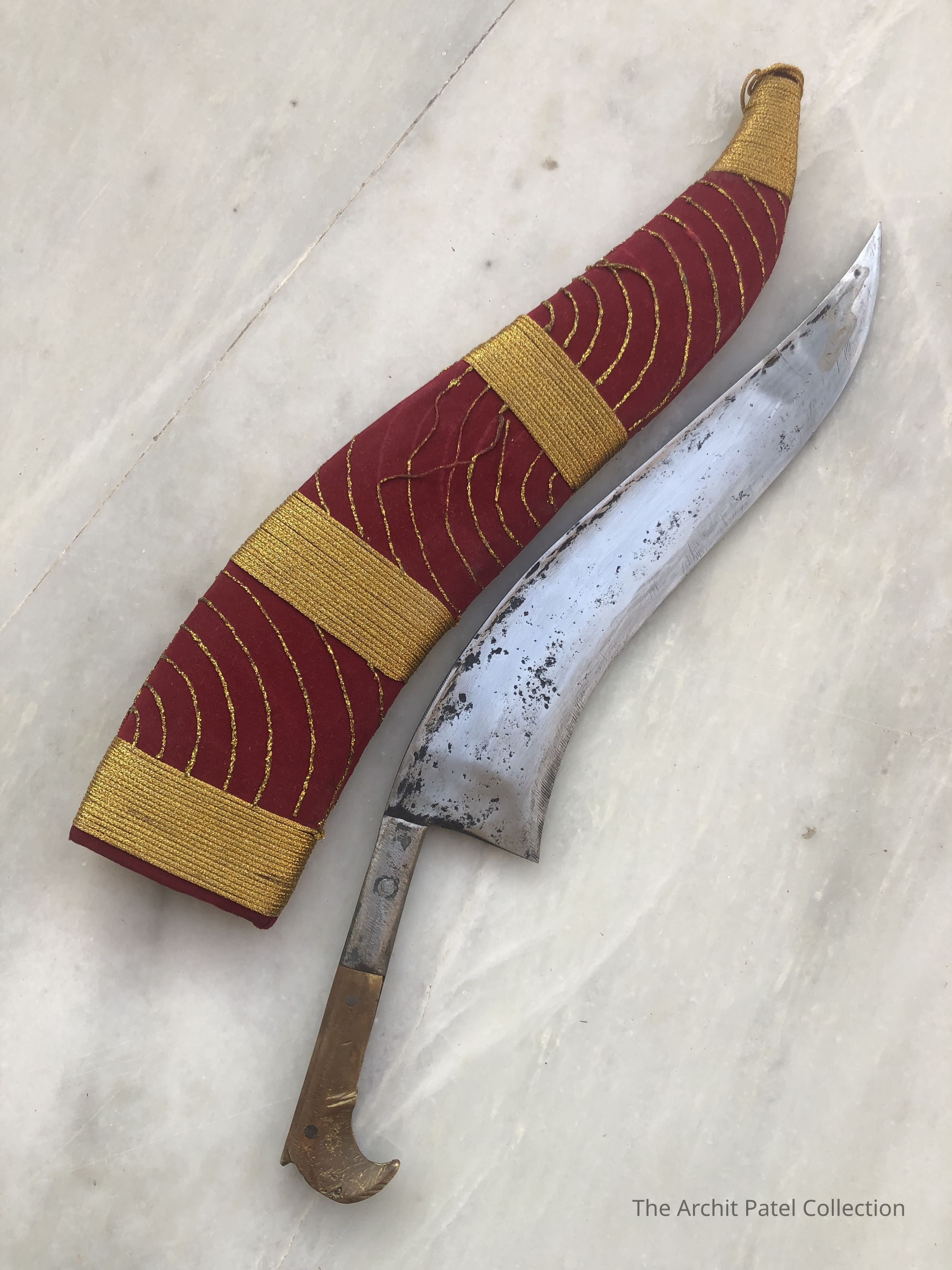
This is a highly significant piece of ethno-historical weaponry, hand-forged by local blacksmiths (Lohars) in the town of Poshina, located in the Sabarkantha/Banaskantha border region of North Gujarat. This knife is a primary tool and cultural attribute of the Bhil community, one of India's oldest indigenous groups residing along the Gujarat-Rajasthan-Madhya Pradesh border.
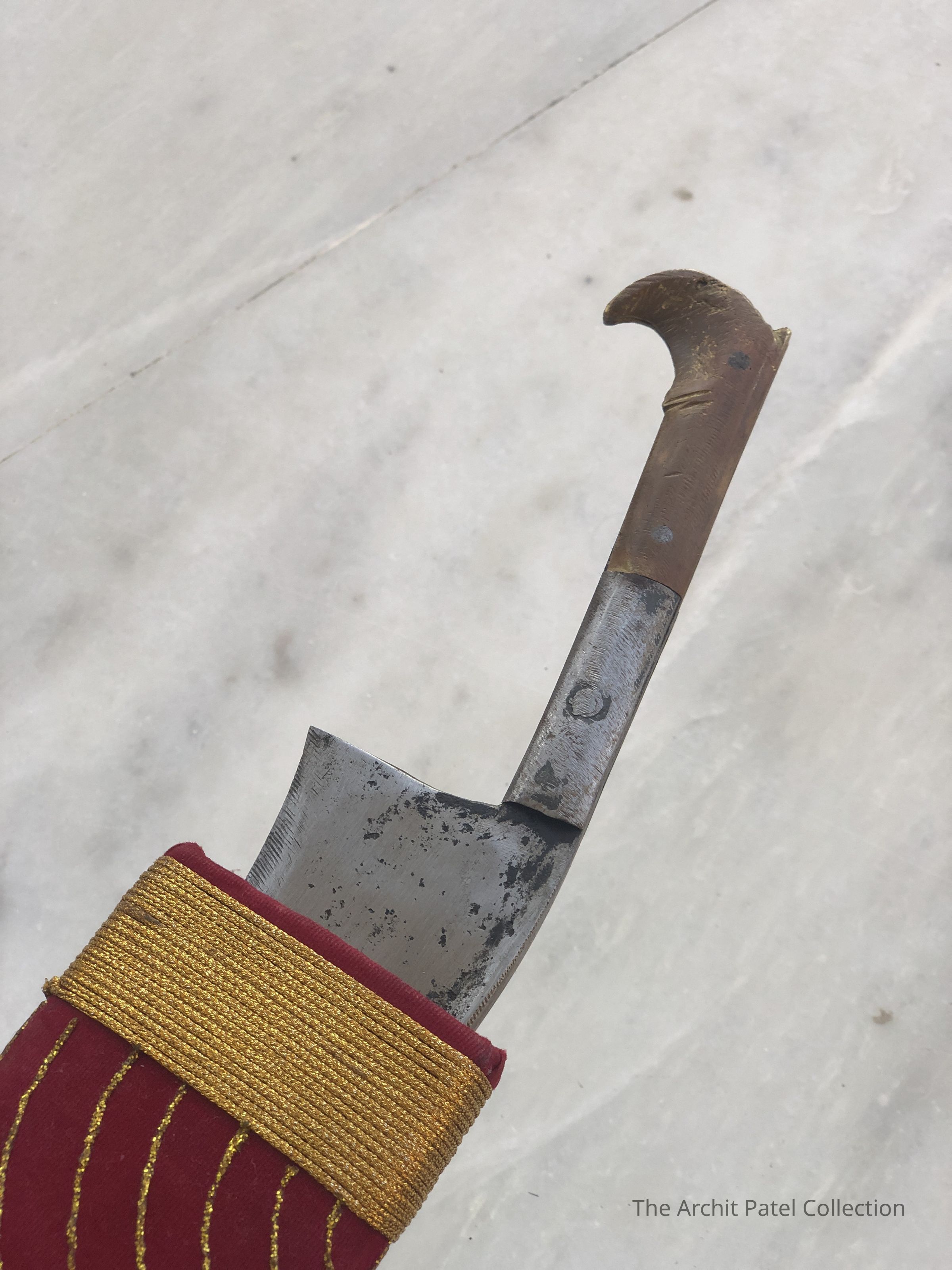
The Blade: The blade features a deep, aggressive upward curve, transitioning from a narrow forte to a broad, heavy belly before terminating in a sharp point. This geometry is designed for dual-purpose utility: the broad section provides momentum for chopping wood or clearing brush, while the curve allows for efficient slicing and skinning. The surface shows a "raw-forged" finish, characteristic of rural blacksmithing.
The Handle: The hilt is a simple, functional construction typical of tribal tools. It features a partial tang secured into a hardwood handle (likely Babul or Sissoo). The pommel is shaped into a distinctive hooked beak, which prevents the hand from slipping during heavy swings—a critical safety feature for a "Process reliant" survival tool.
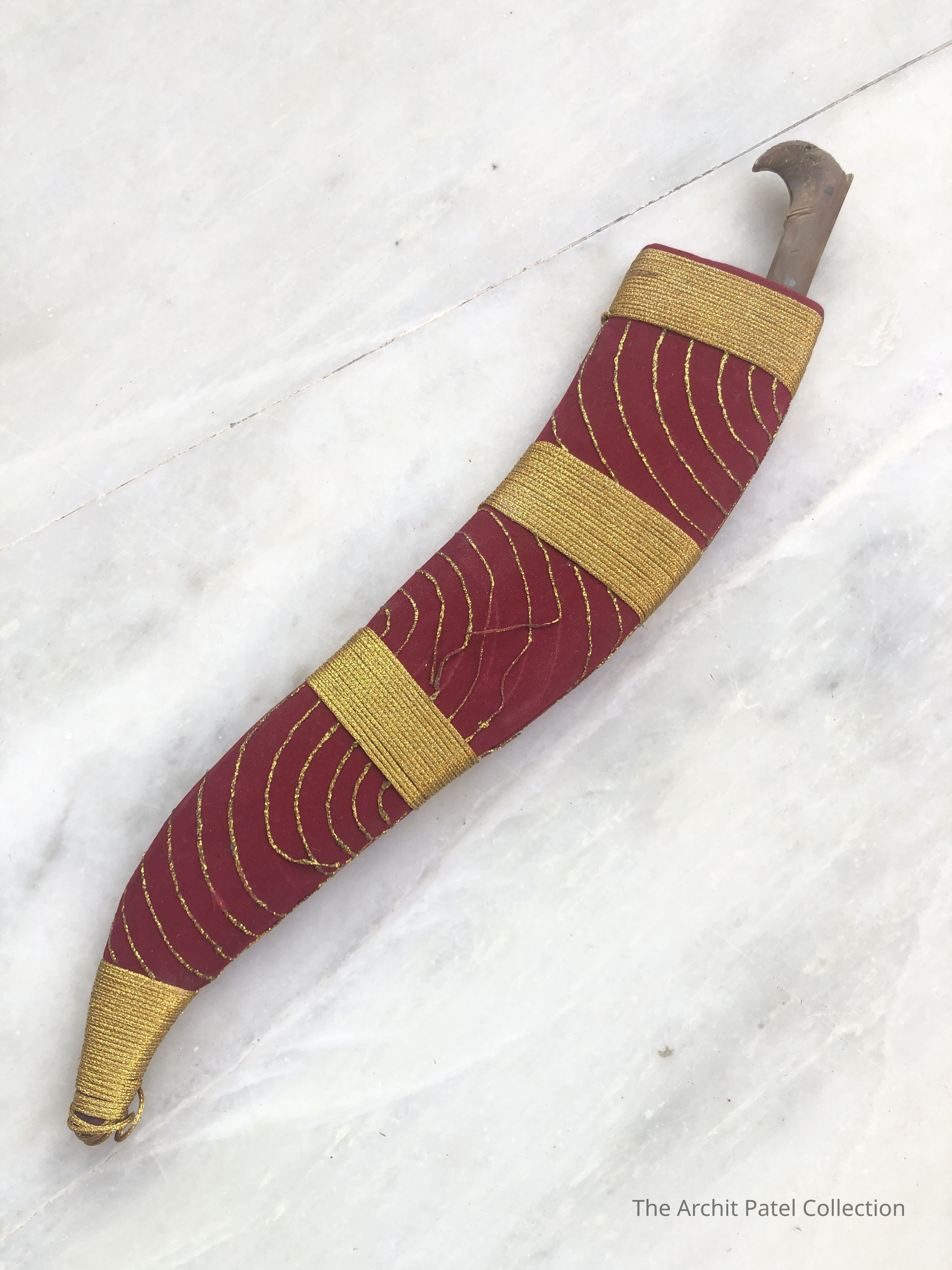
The Scabbard (Custom Decor): Originally a functional wooden or leather core, this scabbard has been elevated through your wife’s decoration. It is wrapped in royal crimson velvet and meticulously adorned with gold cord (Gota/Zari) in a rhythmic, undulating pattern. This transformation bridges the gap between a rugged tribal implement and a curated piece of domestic art.Made/Created
Manufacturer
Bhikha Panchal of PoshinaDate made
circa 2006Dimensions
Dimension Description
14”Length
12 inAcquisition
Acquisition Method
Purchase