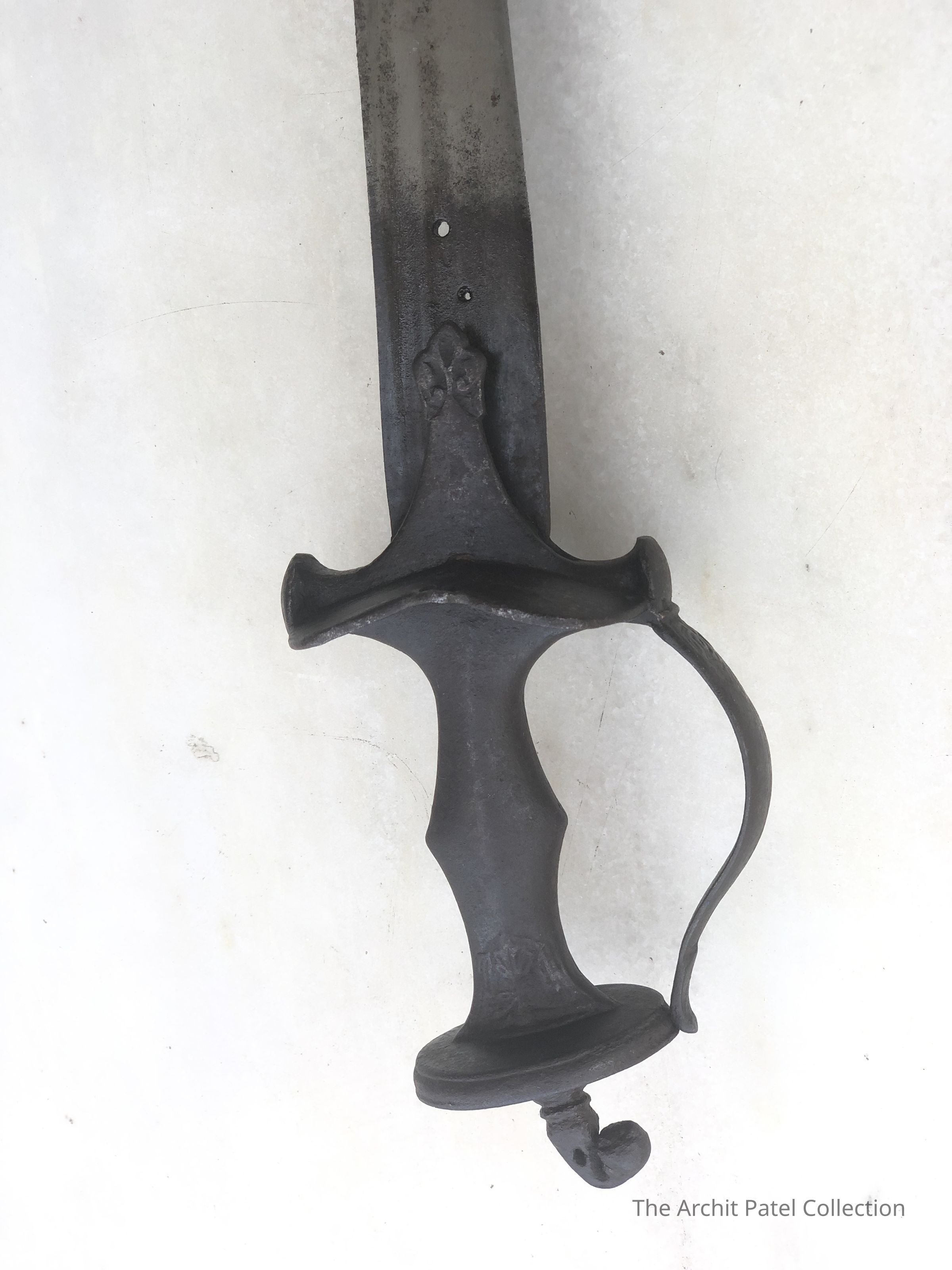
Tulwar (Punjabi Hilt)
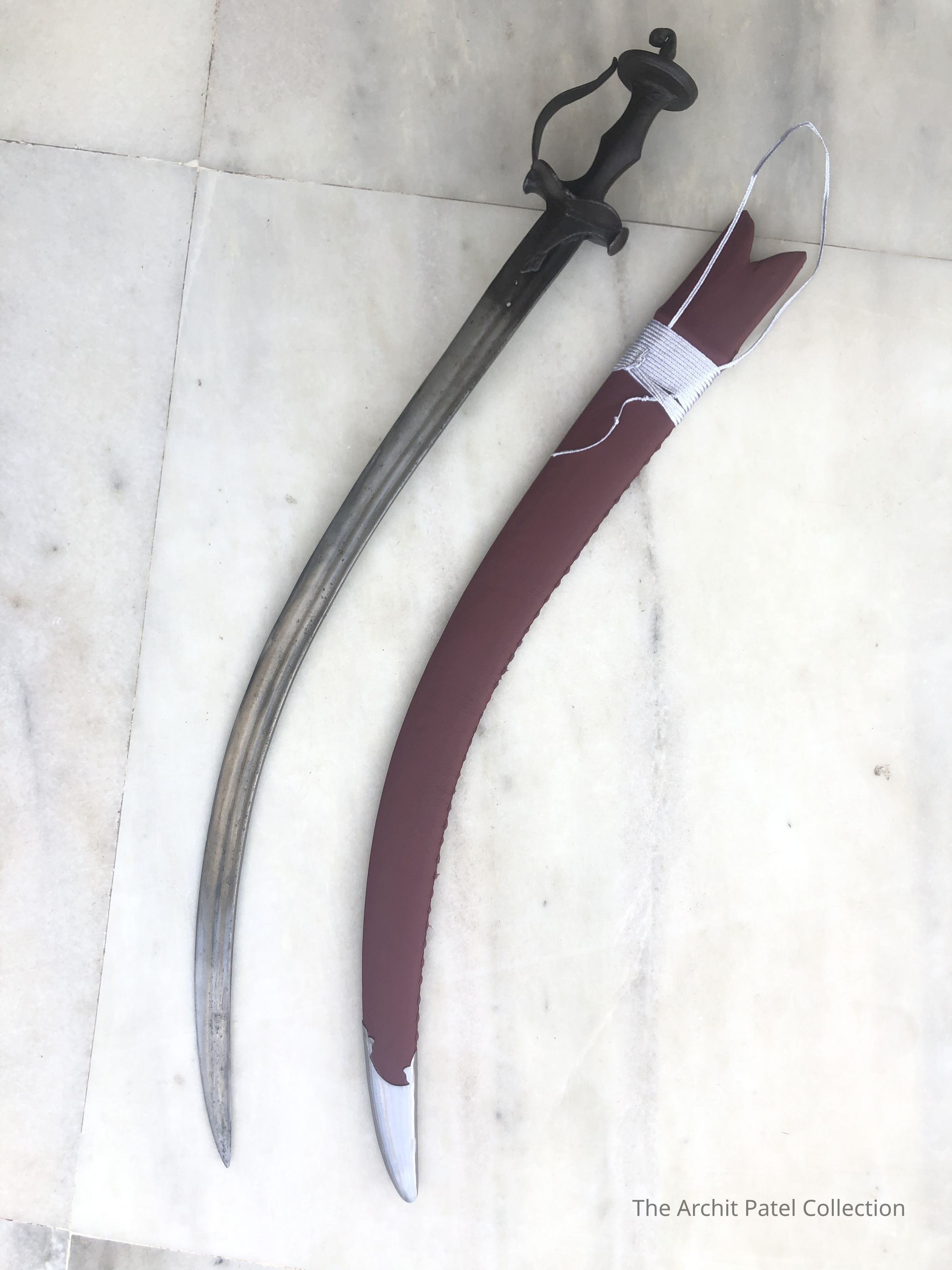
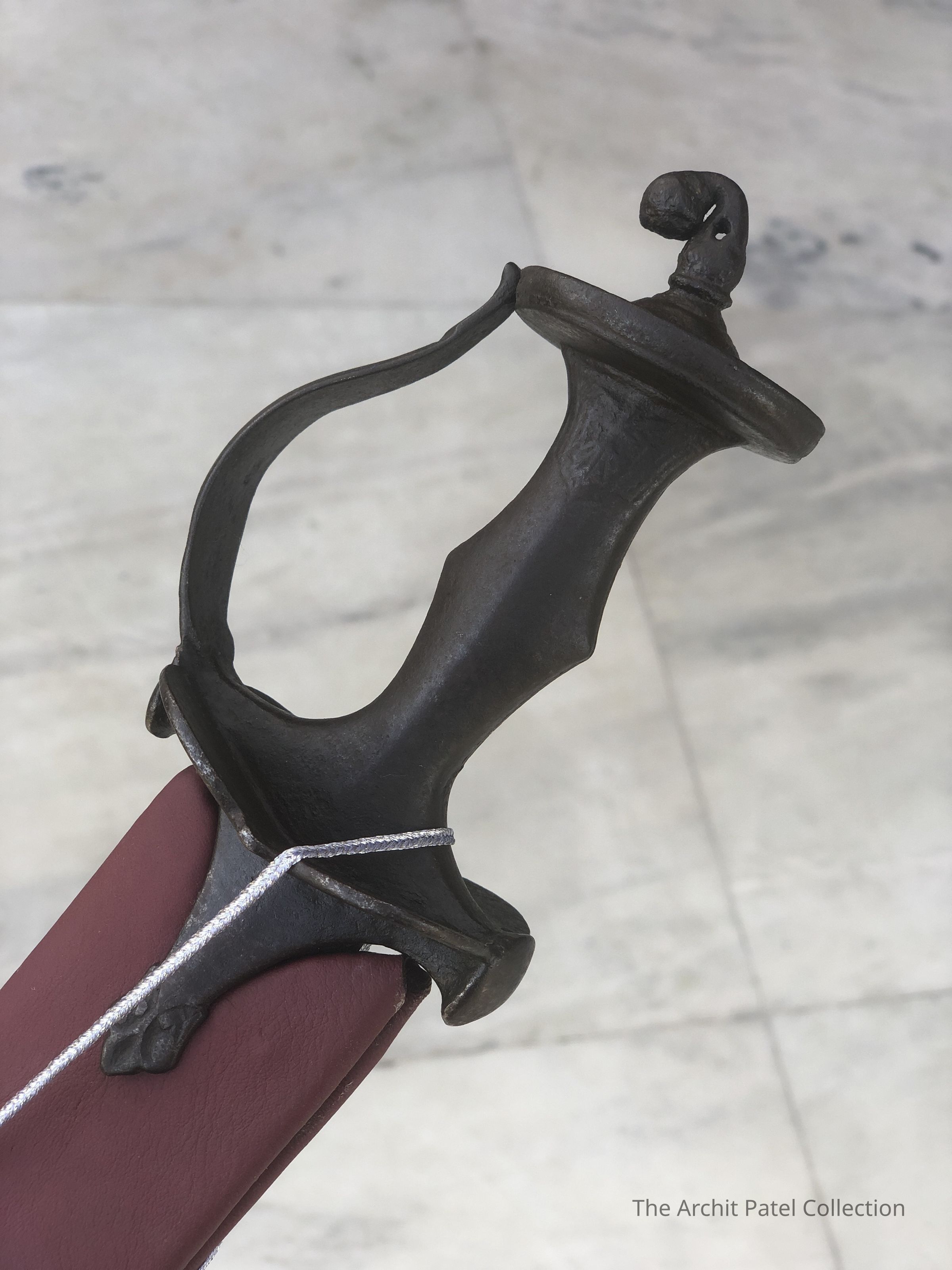
The image displays traditional sword with curved blades, laid on a white marble floor. On the left is a sword with a plain but elegant guard and a steel blade, possessing a slight curvature typical of sabers used in cavalry or military scenarios from past centuries. Its hilt is encased in a dark material, which might be wood or leather, providing a firm grip. The sheath on the right features a dark maroon scabbard, possibly made of leather or a synthetic material, designed to protect the blade and enhance safety when not in use. This sword's handle includes a protective guard that curves towards the blade, typical of designs intended to protect the hand during combat. Both pieces reflect historical weapon designs, likely replicas or antiques, and evoke a sense of historical military tradition and craftsmanship. They are oriented in parallel, suggesting a deliberate placement for display or examination.
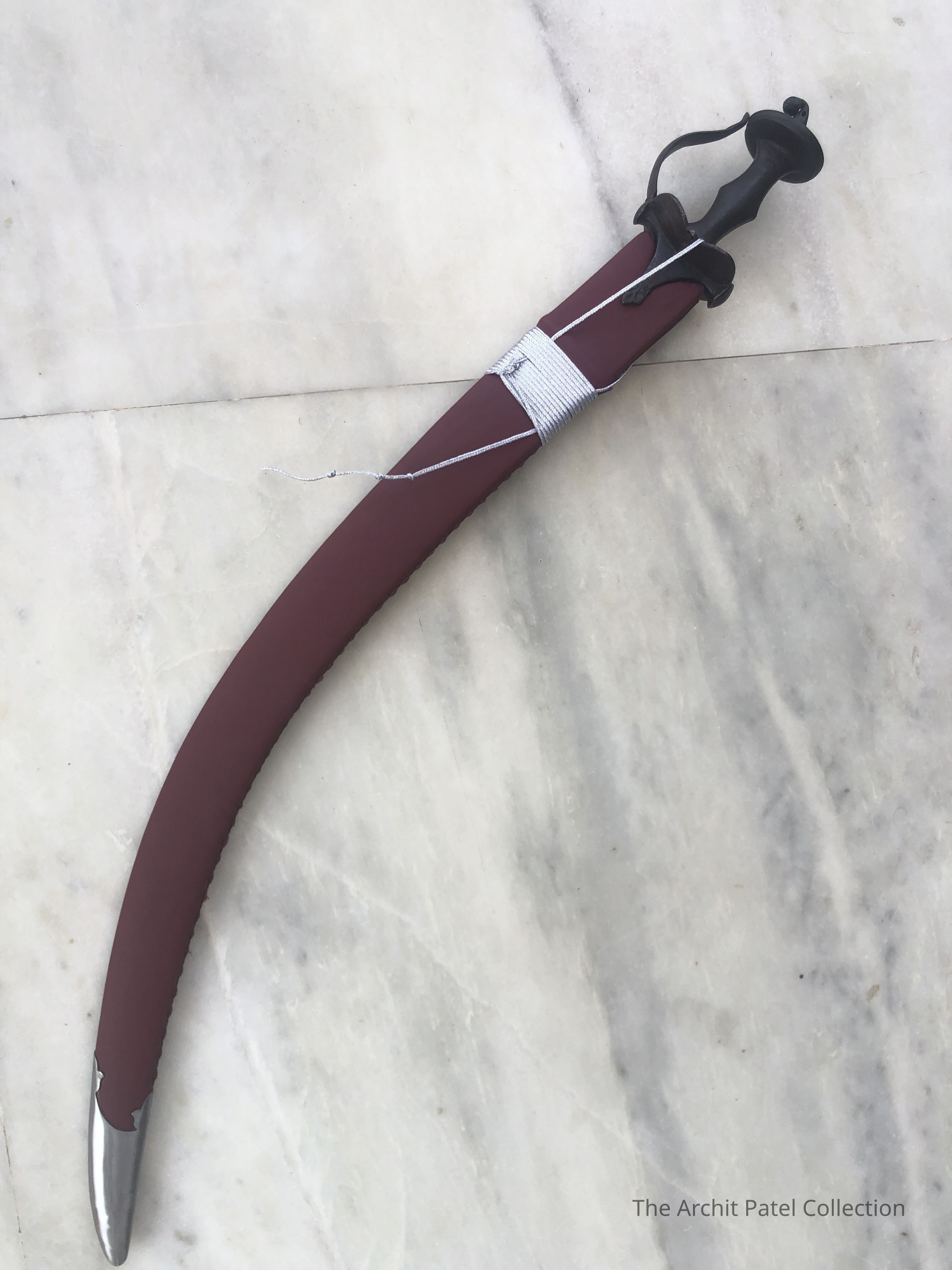
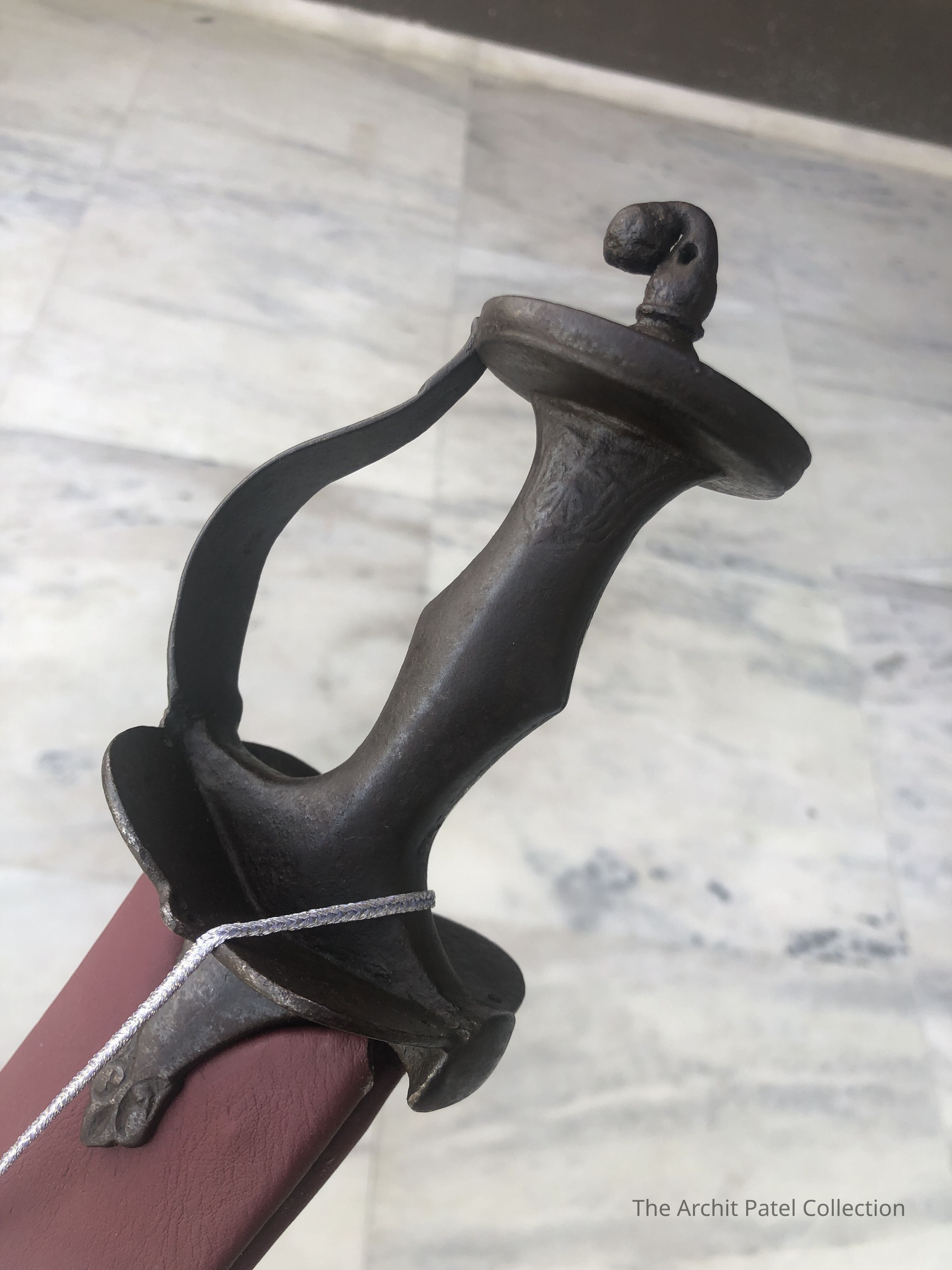
The image displays traditional sword with curved blades, laid on a white marble floor. On the left is a sword with a plain but elegant guard and a steel blade, possessing a slight curvature typical of sabers used in cavalry or military scenarios from past centuries. Its hilt is encased in a dark material, which might be wood or leather, providing a firm grip. The sheath on the right features a dark maroon scabbard, possibly made of leather or a synthetic material, designed to protect the blade and enhance safety when not in use. This sword's handle includes a protective guard that curves towards the blade, typical of designs intended to protect the hand during combat. Both pieces reflect historical weapon designs, likely replicas or antiques, and evoke a sense of historical military tradition and craftsmanship. They are oriented in parallel, suggesting a deliberate placement for display or examination.
Name/Title

Tulwar (Punjabi Hilt)

Entry/Object ID

273; Full Code: 273.27.43-SW-IA

Tags

Engraving, Sword

Description

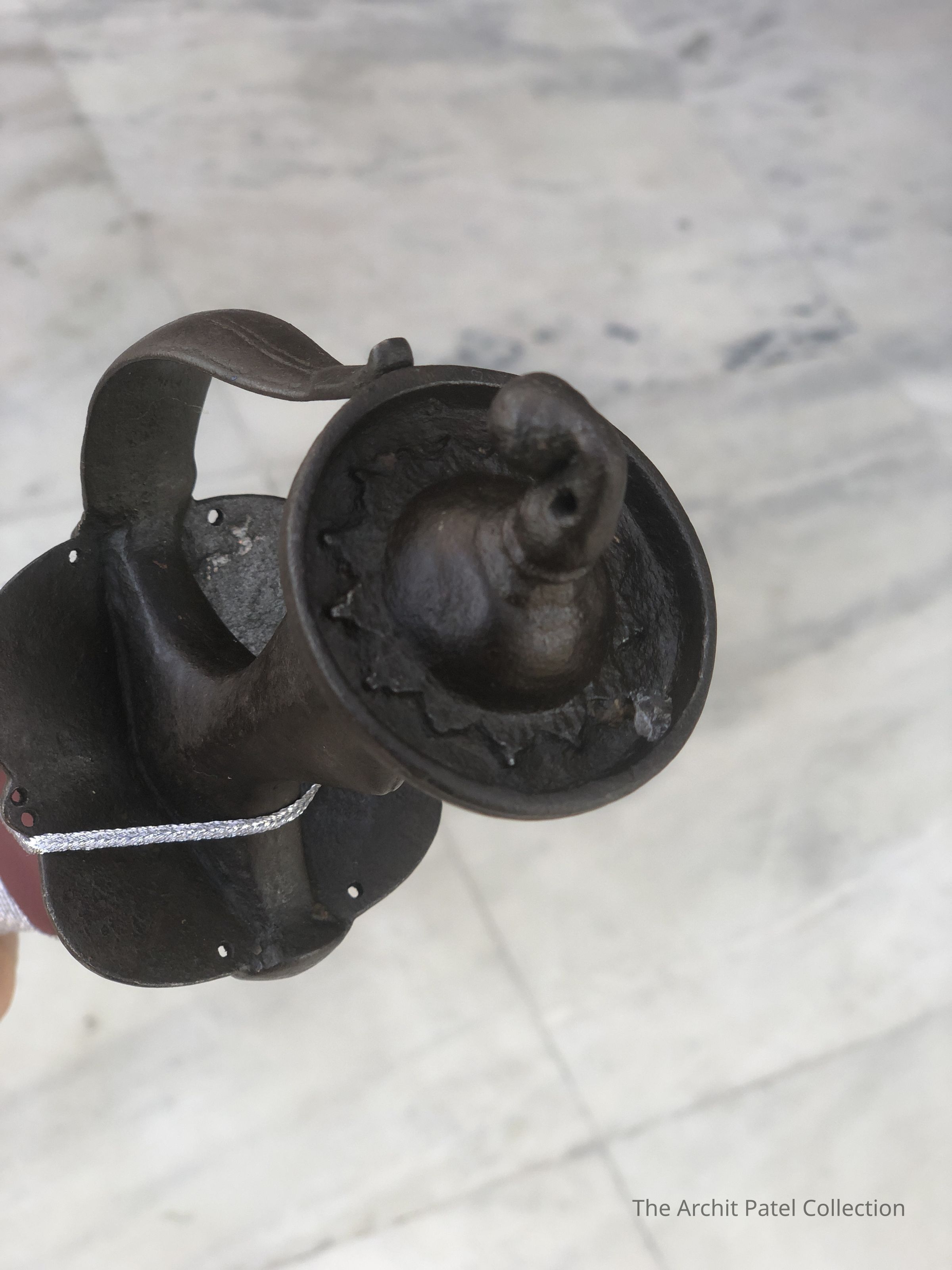
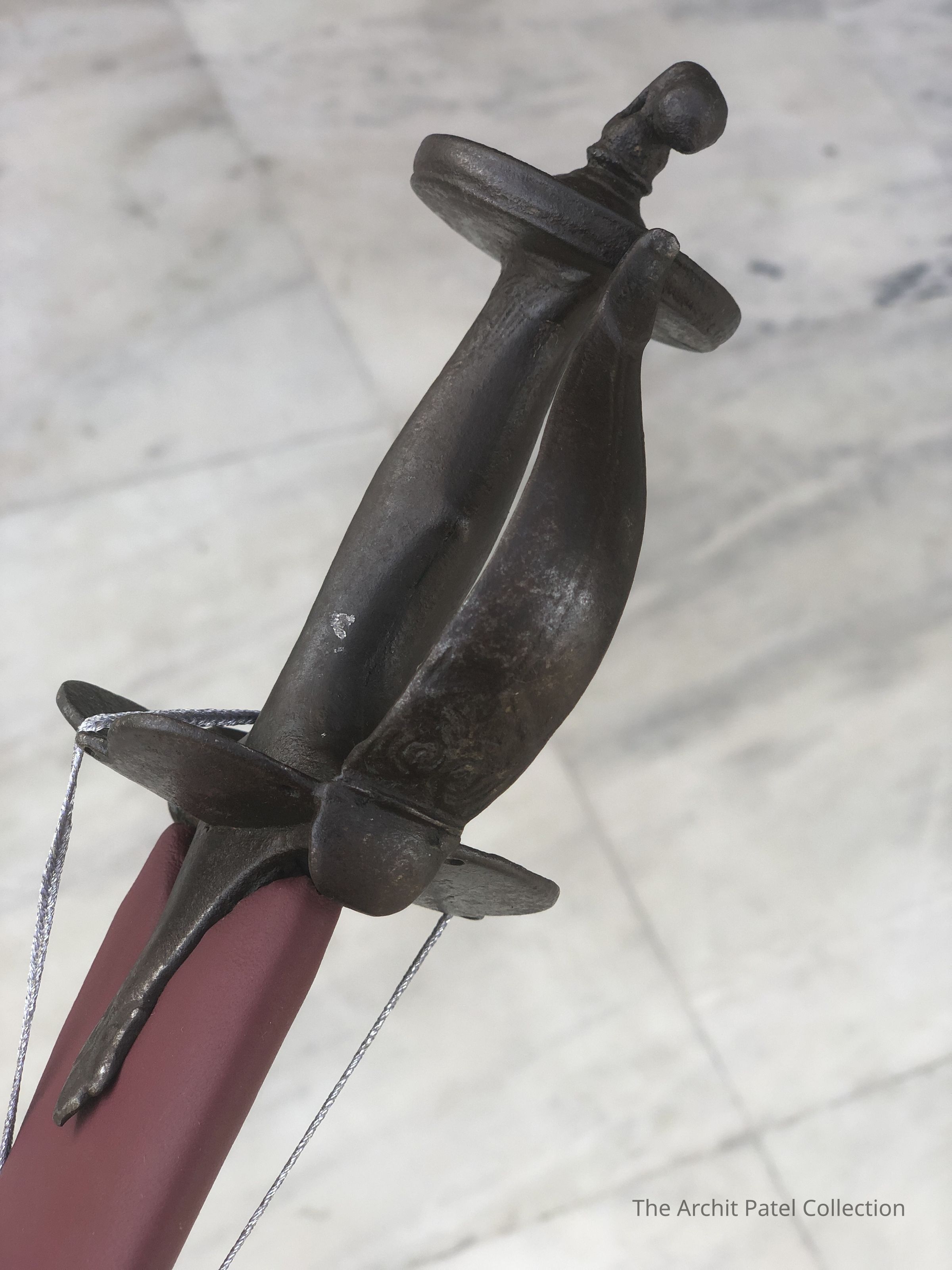
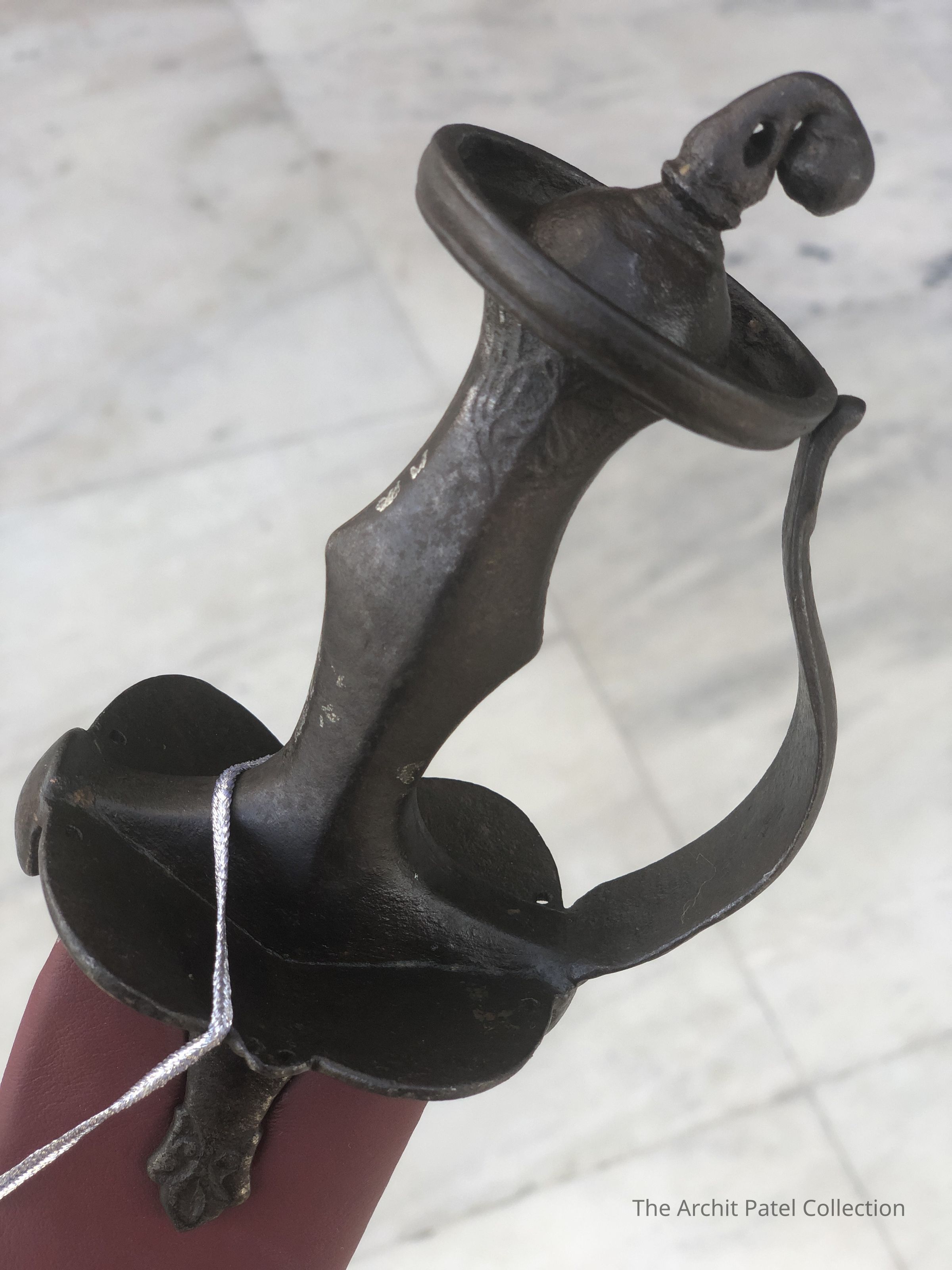
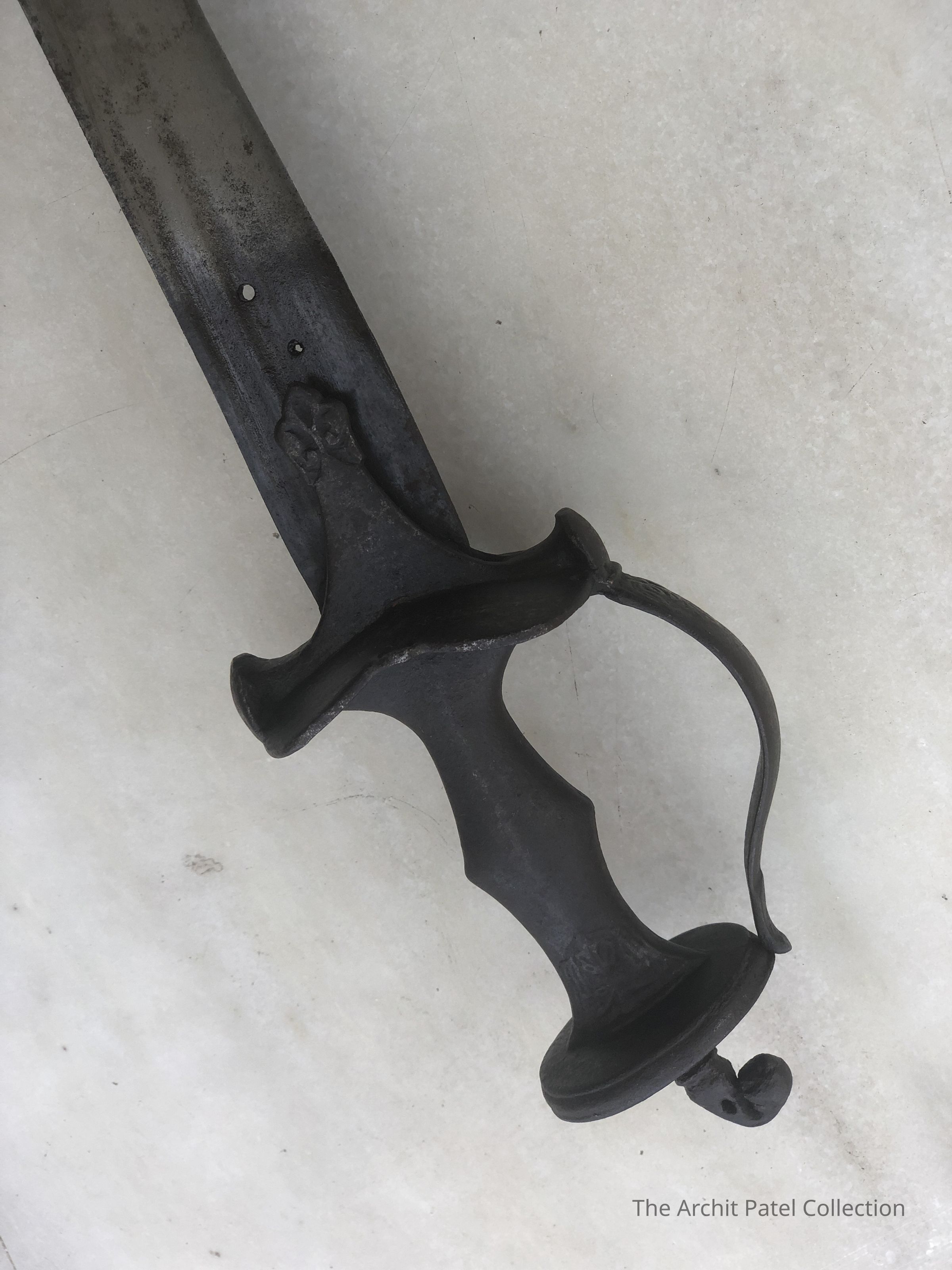
This is an Antique Sirohi Talwar, a specialized variant of the traditional Indian saber named after the Sirohi district in Rajasthan, historically famous for producing the finest steel and sword-smiths in India. This specimen features a classic steel hilt and an aged, slender blade characteristic of the region. Blade: The blade is relatively slender and features a subtle, elegant curve. Unlike broader Teghas, the Sirohi is known for being lighter and exceptionally well-balanced. It is forged from high-quality steel (potentially an early carbon steel or local crucible steel) and shows a dark, aged patina. The tip is reinforced, making it as capable of thrusting as it is of slicing. Hilt: The hilt is a traditional Indo-Muslim style (Talwar hilt) made of steel. It features a prominent disc pommel with a small, curved finial (kukri-like hook). The grip is ergonomically shaped with a central swell, and the cross-guard (quillons) are short and rounded. A protective knuckle bow connects the cross-guard to the pommel, shielding the hand during combat. Decoration: The hilt displays faint remains of traditional floral engravings or potentially low-relief chasing, though much has been smoothed by centuries of handling. Scabbard: The sword is paired with a wooden scabbard covered in deep maroon leather, featuring a simple steel chape (tip) for protection.

Made/Created

Manufacturer

Sahib Singh

Date made

circa 2020

Ethnography

Cultural Region

State/Province

Punjab

Dimensions

Dimension Description

37"

Length

32 in

Material

Steel

Acquisition

Acquisition Method

Purchase