Name/Title
Walking Cane (bamboo)Entry/Object ID
260; Full Code: 260.27.52-SC-TRTags
Staffs & Canes, GediDescription
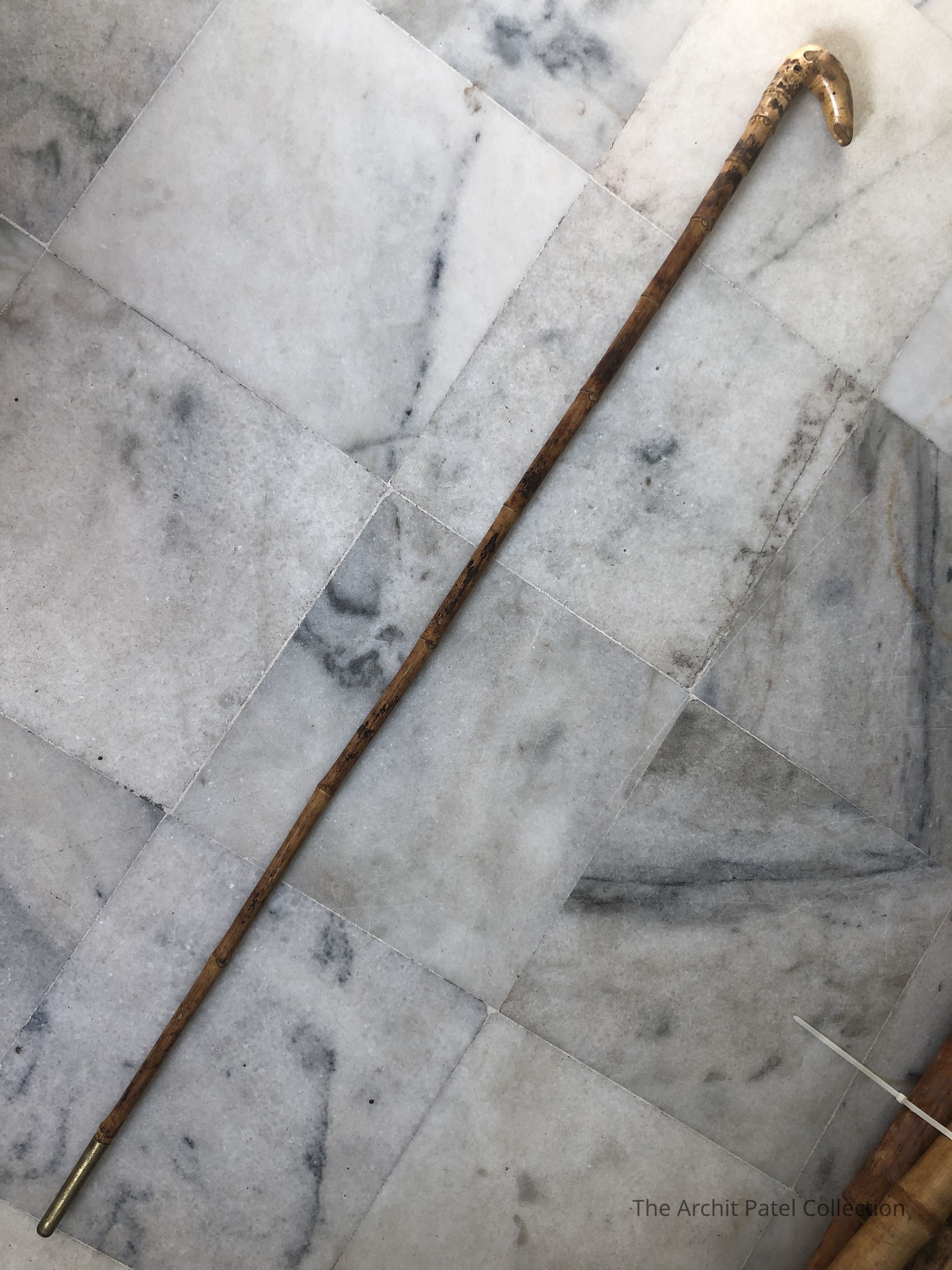
Asset 260 records a state of Regional Material Curation and Functional Ergonomics, documenting a bamboo walking cane sourced from the Sasan Gir node of Gujarat. This technical unit represents a state of Organic Structural Integrity, utilizing a specimen with a natural root-ball hilt and reinforced distal hardware. It stands as a physical record of Portable Navigational Support, prioritizing Biomechanical Alignment and high-friction tactile feedback.
I. Structural & Material Architecture
Botanical Core: The asset utilize a high-density Sasan Gir Bamboo (Bambusoideae) chassis. Sourced from the dry deciduous forest nodes of the Gir region, the specimen records a state of Environmental Hardening.
Regional Science: Bamboo from the Gir ecosystem records a peak in Compression Resistance as a biological response to the arid, high-temperature climate. This produces a chassis with superior longitudinal rigidity and radical resistance to desiccation-induced splintering.
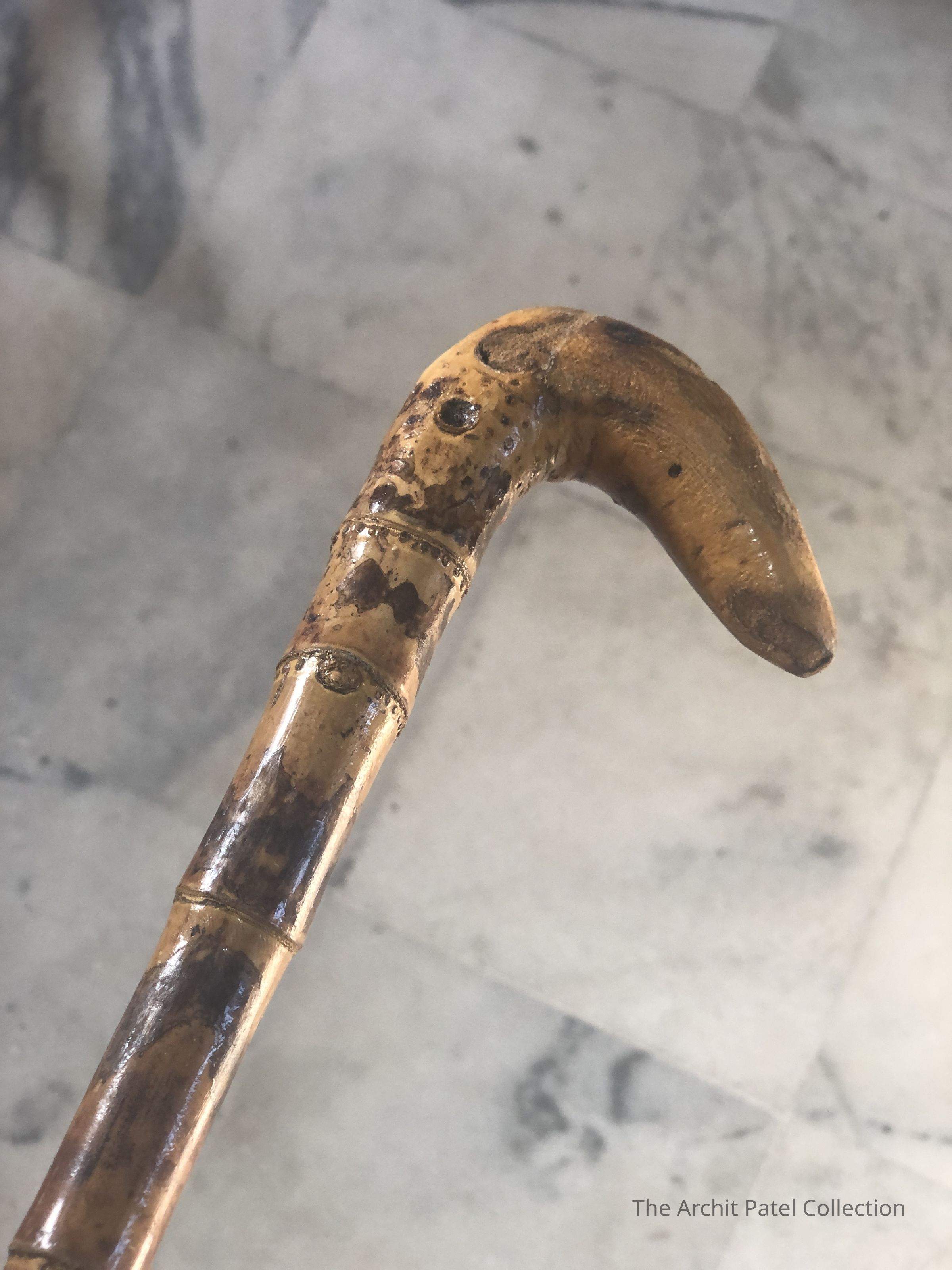
Hilt Geometry (Root-Ball Handle): The cane utilize a radical Integrated Hook Profile.
The Mechanical Logic: By utilizing the natural curvature of the bamboo rhizome/base, the wielder achieves a state of Anatomical Synchronization. The hook geometry (Technical Record 2) records a peak in Palm-Index Certainty, allowing the user to transmit 100% of vertical force directly into the core without manual slip.
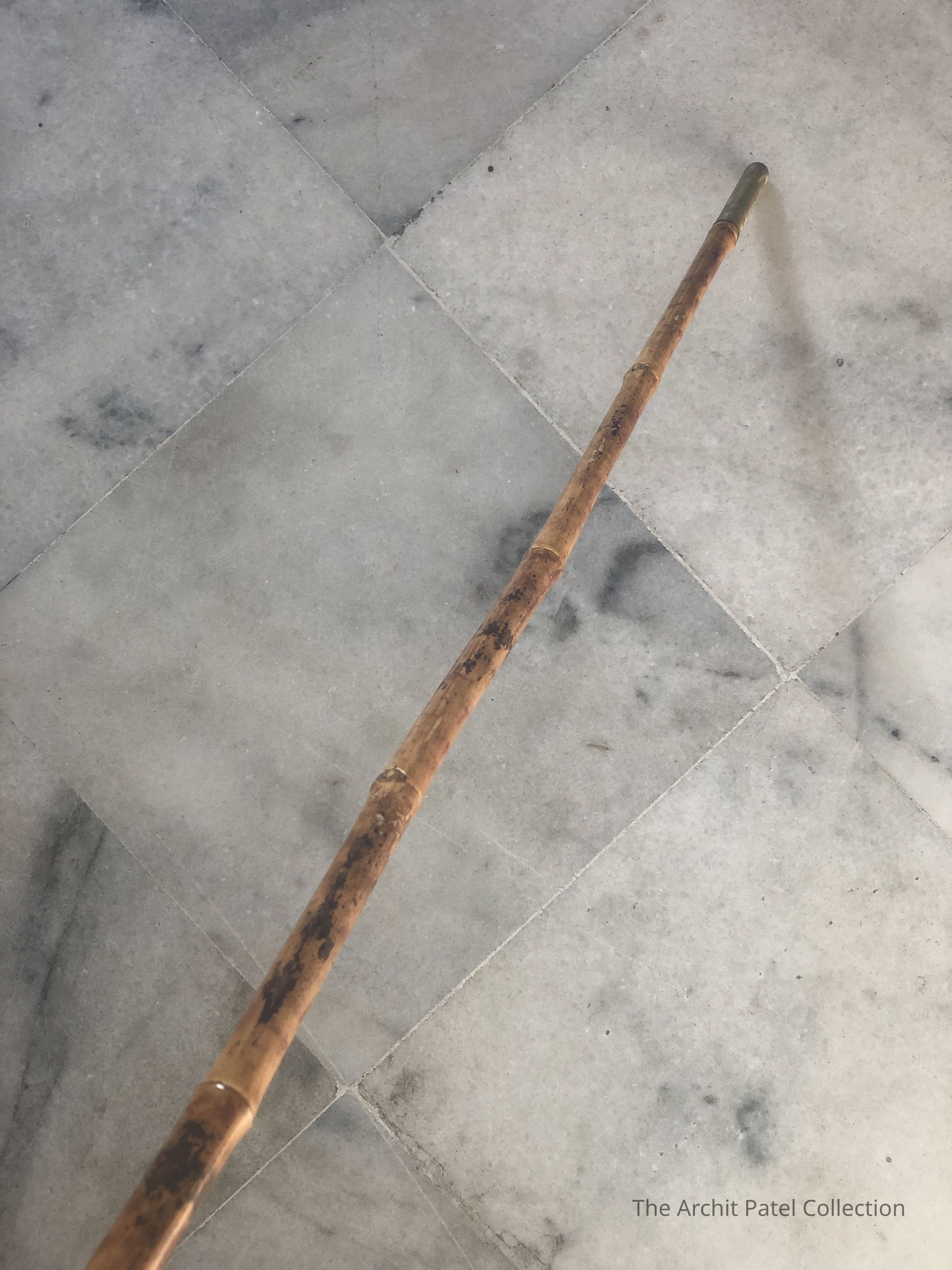
Surface Condition: The shaft exhibits a warm, oil-saturated ochre patina with dark, naturally occurring "leopard" mottling. This records a state of Molecular Stabilization, where the wielder’s saturation protocol has preserved the high-density Gir matrix.
II. Hardware & Functional Engineering
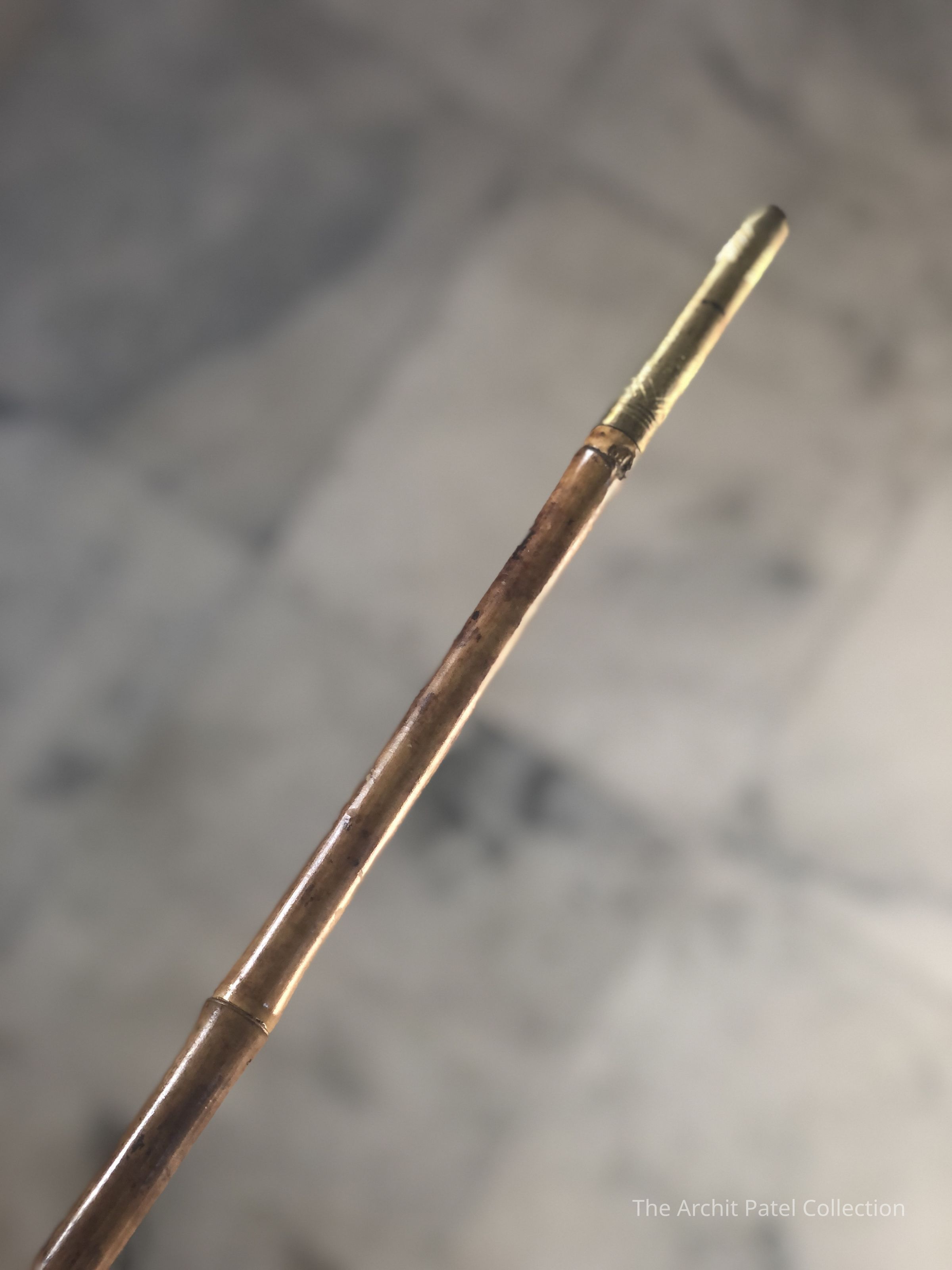
Distal Reinforcement: The distal end is fitted with a deep Brass Ferrule, featuring traditional ring-turned ridges.
Structural Fail-Safe: This hardware acts as a Radial Bulkhead, preventing the organic fibers from recording longitudinal "Splitting" under high-velocity impact or repetitive vertical load-bearing against technical substrates.
Biomechanical Symmetry: The natural node intervals act as Tactile Index-Points. These internodes reinforce the linear integrity of the chassis against lateral impact stress, ensuring absolute Structural Alignment.
Tactile Interface: The combination of the root-ball texture and the oil-rubbed cortex provides a High-Friction Interface, achieving absolute Retention Certainty during field navigation.
III. Systemic Integration & Indexing
Chassis Format: Asset 260 records a "Walking Cane" silhouette. It is optimized for Mobile Navigational Support, providing a state of Biomechanical Stability without the logistical bulk of a 6-foot staff.
Administrative Status: The shaft records the chronological index "260" in black pigment, marking its place within the fifth administrative century of curation.
Operational Profile: Indexed as a Primary Field Navigation Tool, Unit 260 is engineered to process rugged environmental variables while maintaining the wielder's Physical Sovereignty.Made/Created
Manufacturer
Forests of Sasan GirDate made
2020Ethnography
Cultural Region
Region
Sasan - Gir, Saurashtra