Name/Title
Wootz Spear ThinEntry/Object ID
349; Full Code: 349.14.51-PA-NBTags
Pole ArmDescription
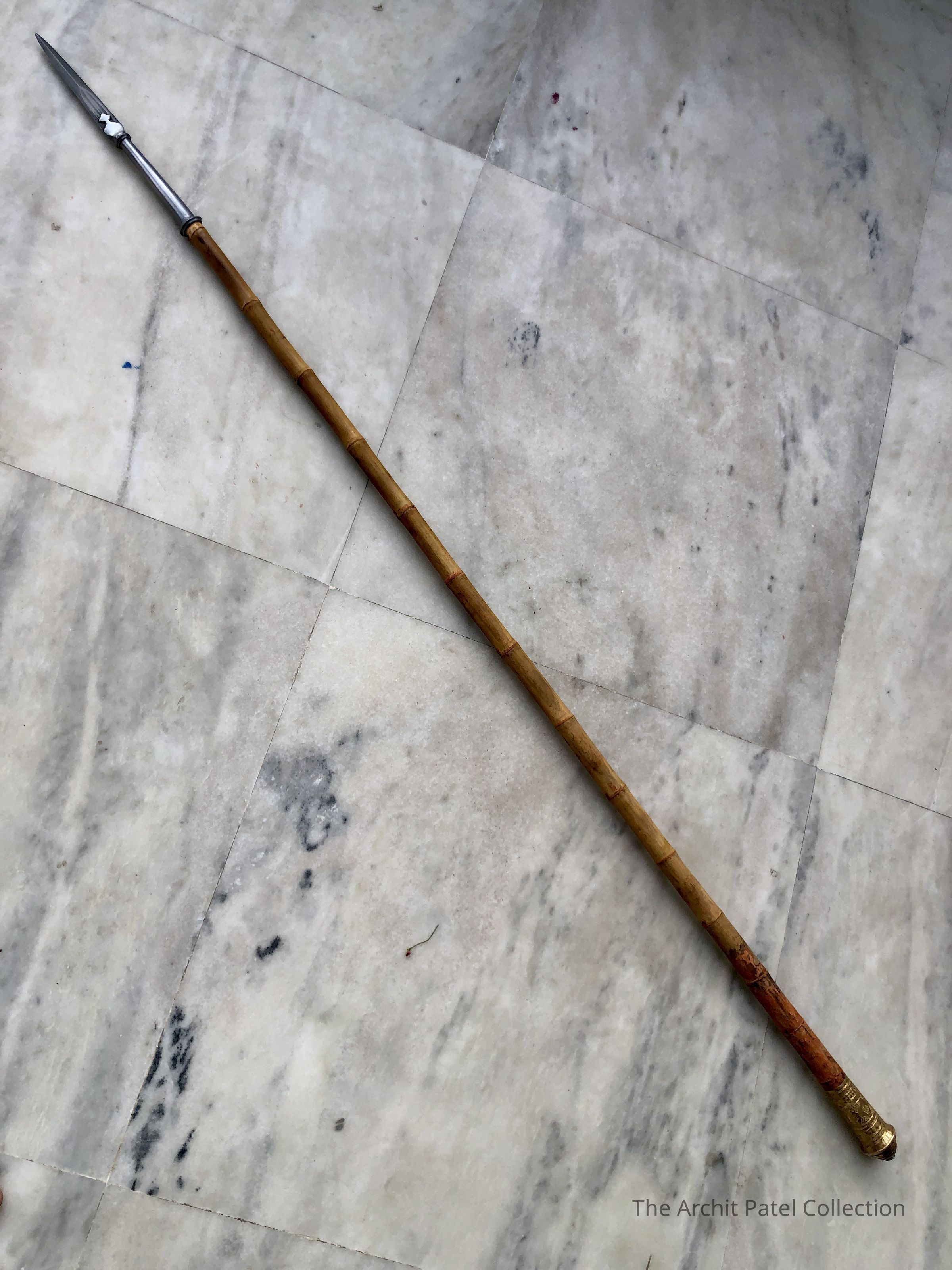
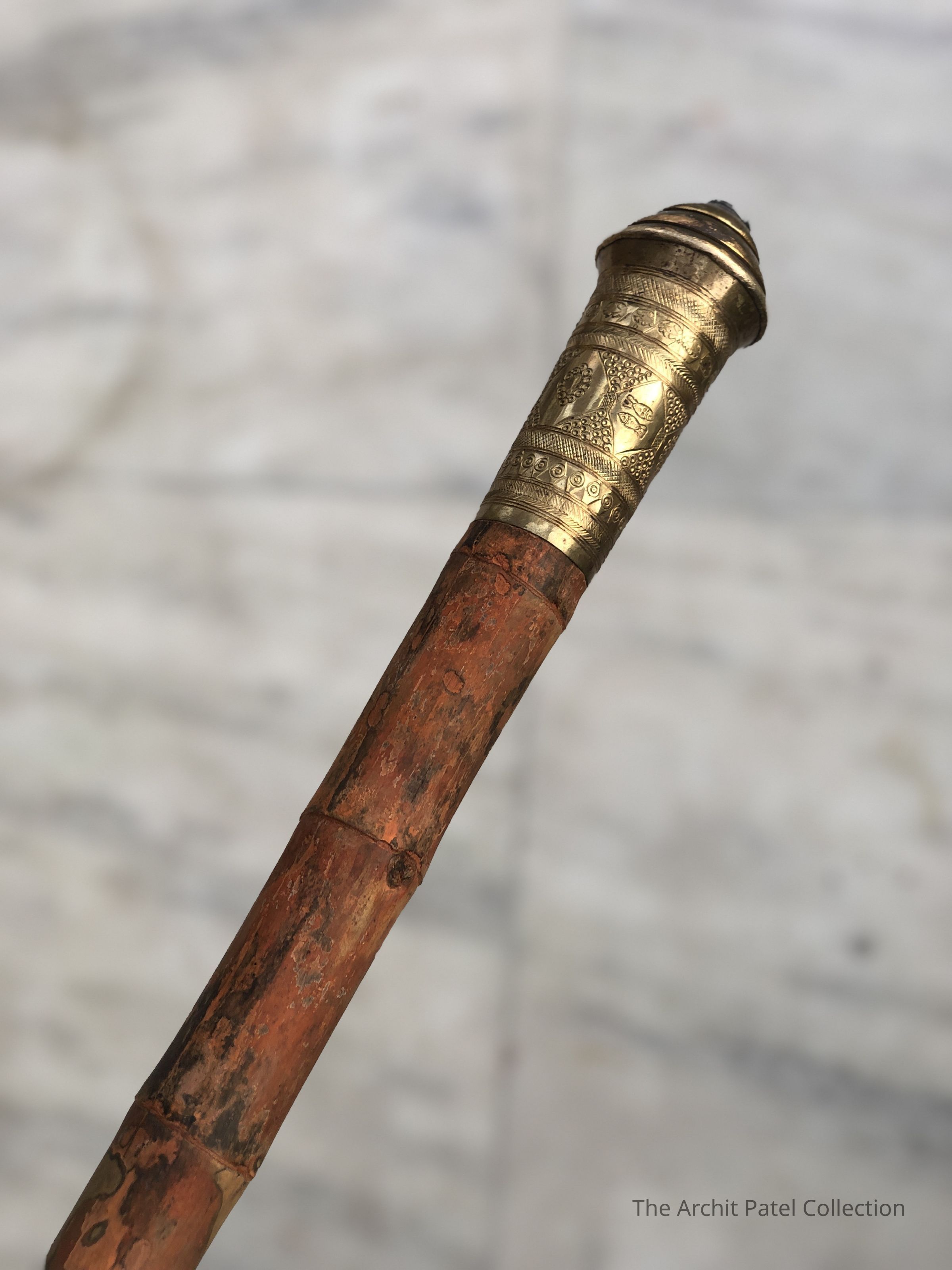
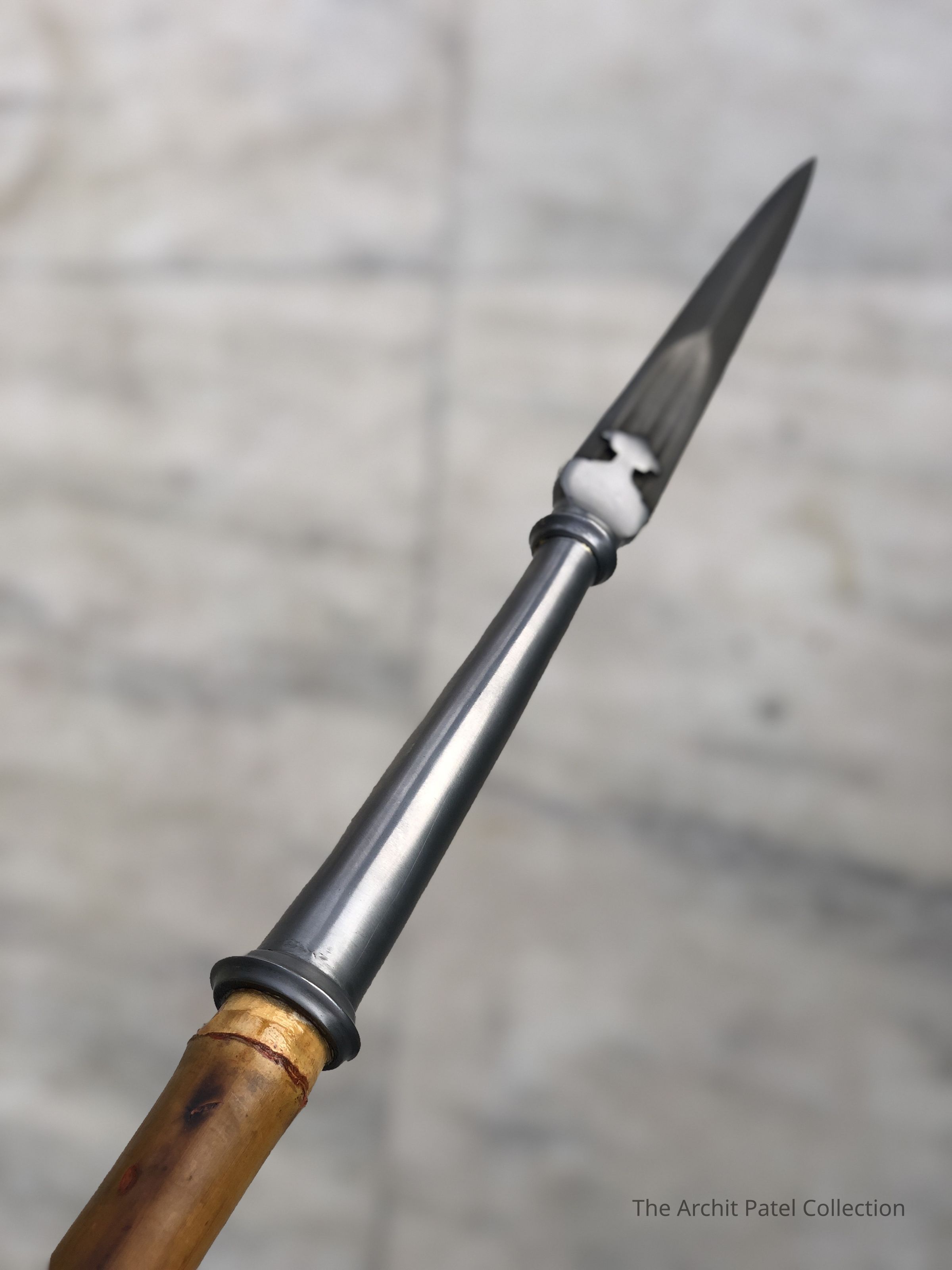
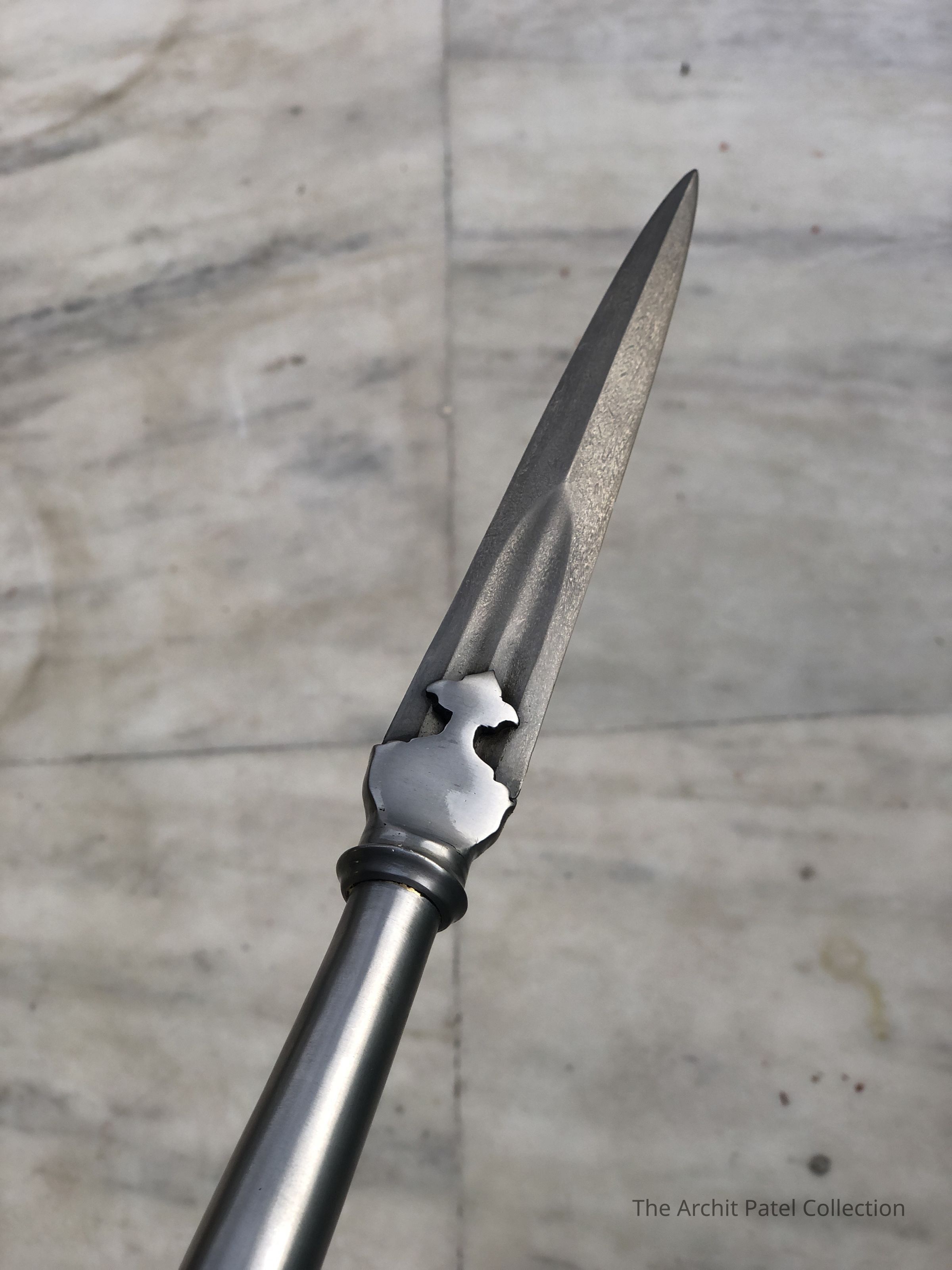
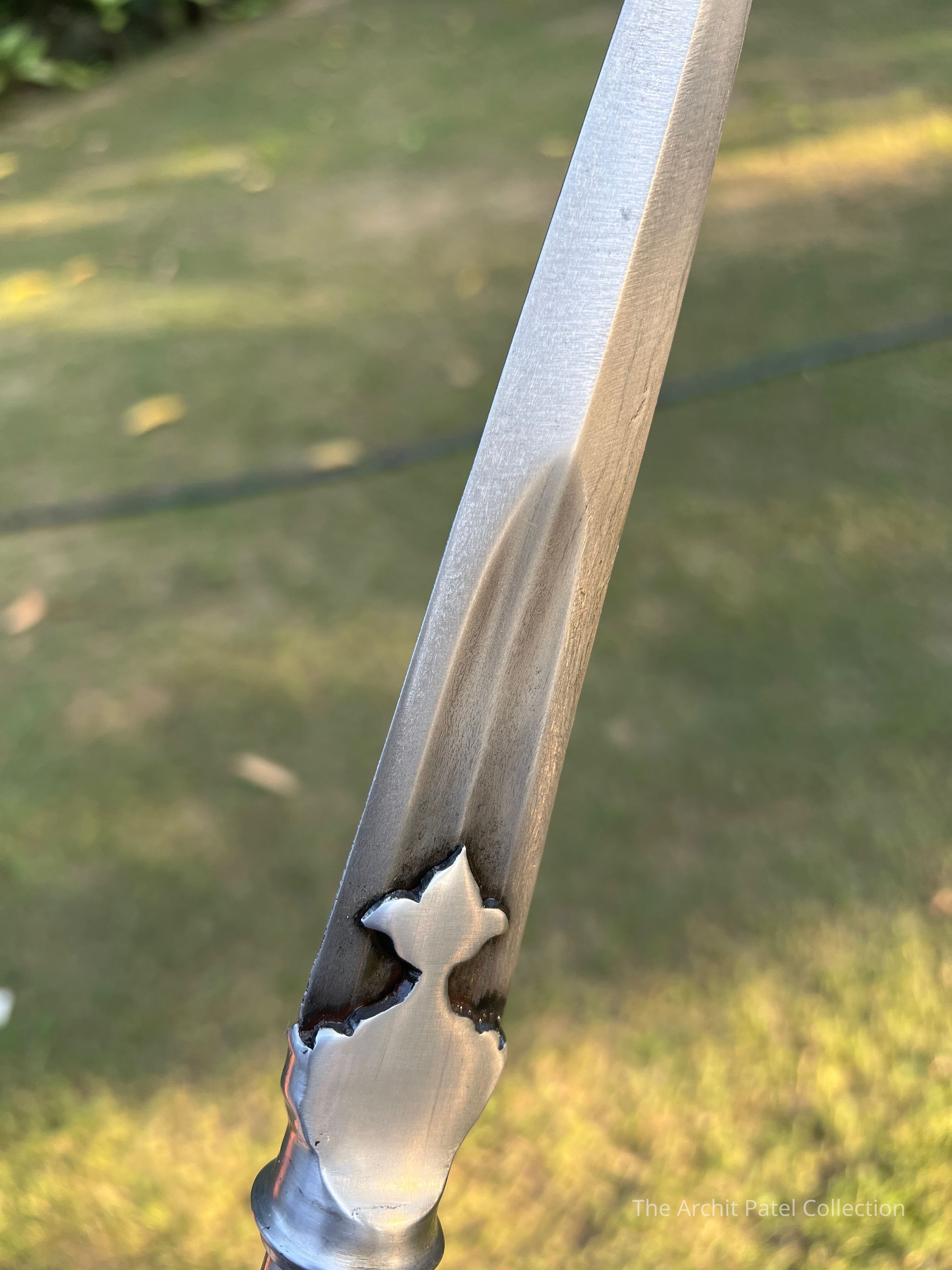
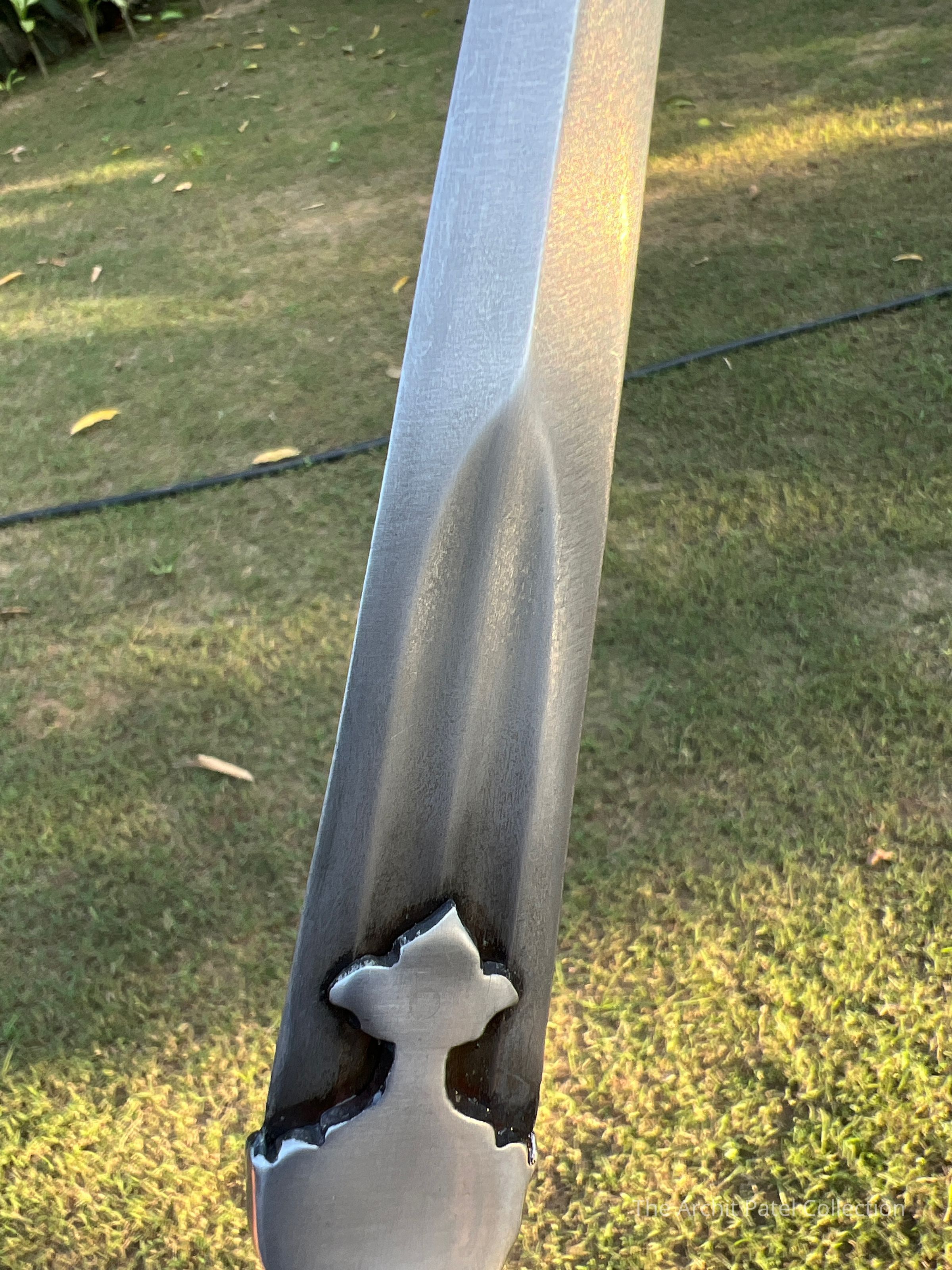
This is a significant hybrid artifact that combines 18th-century metallurgy with modern regional craftsmanship. It features an antique Wootz steel spear head, expertly mounted on a seasoned bamboo shaft, and finished with a custom end cap (butt-spike) by a master artisan from Viramgam, Gujarat.
Core Components & Craftsmanship
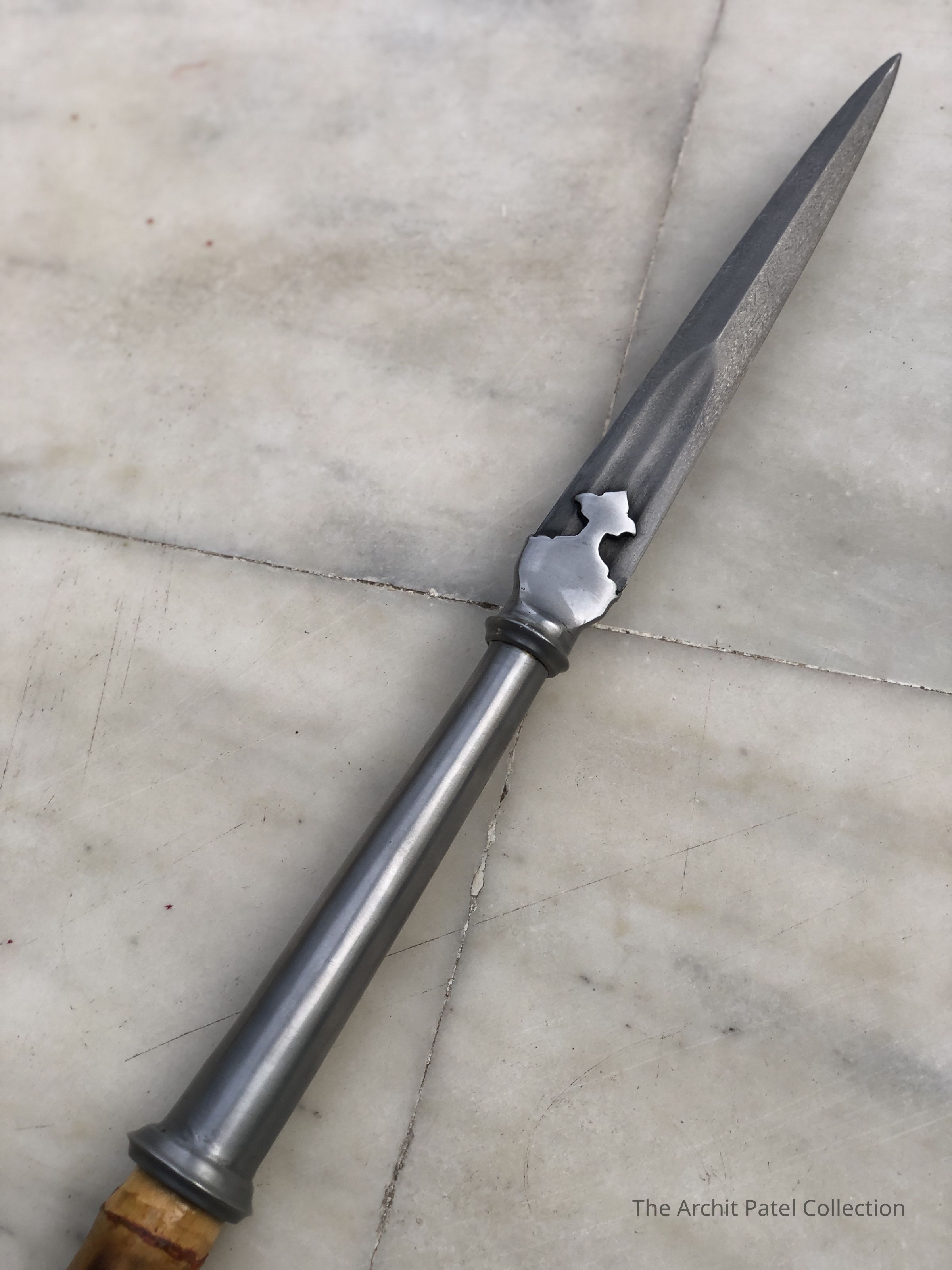
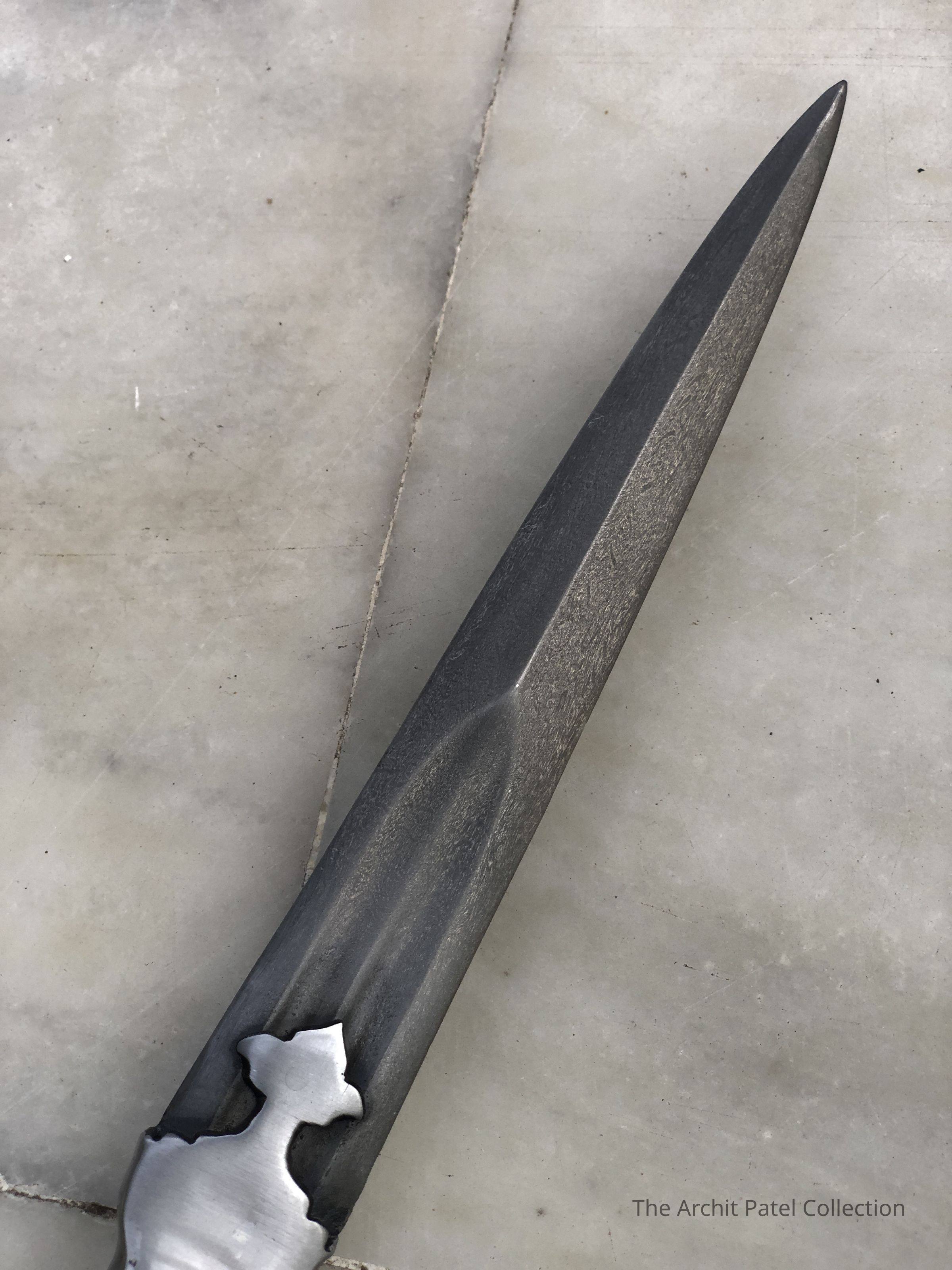
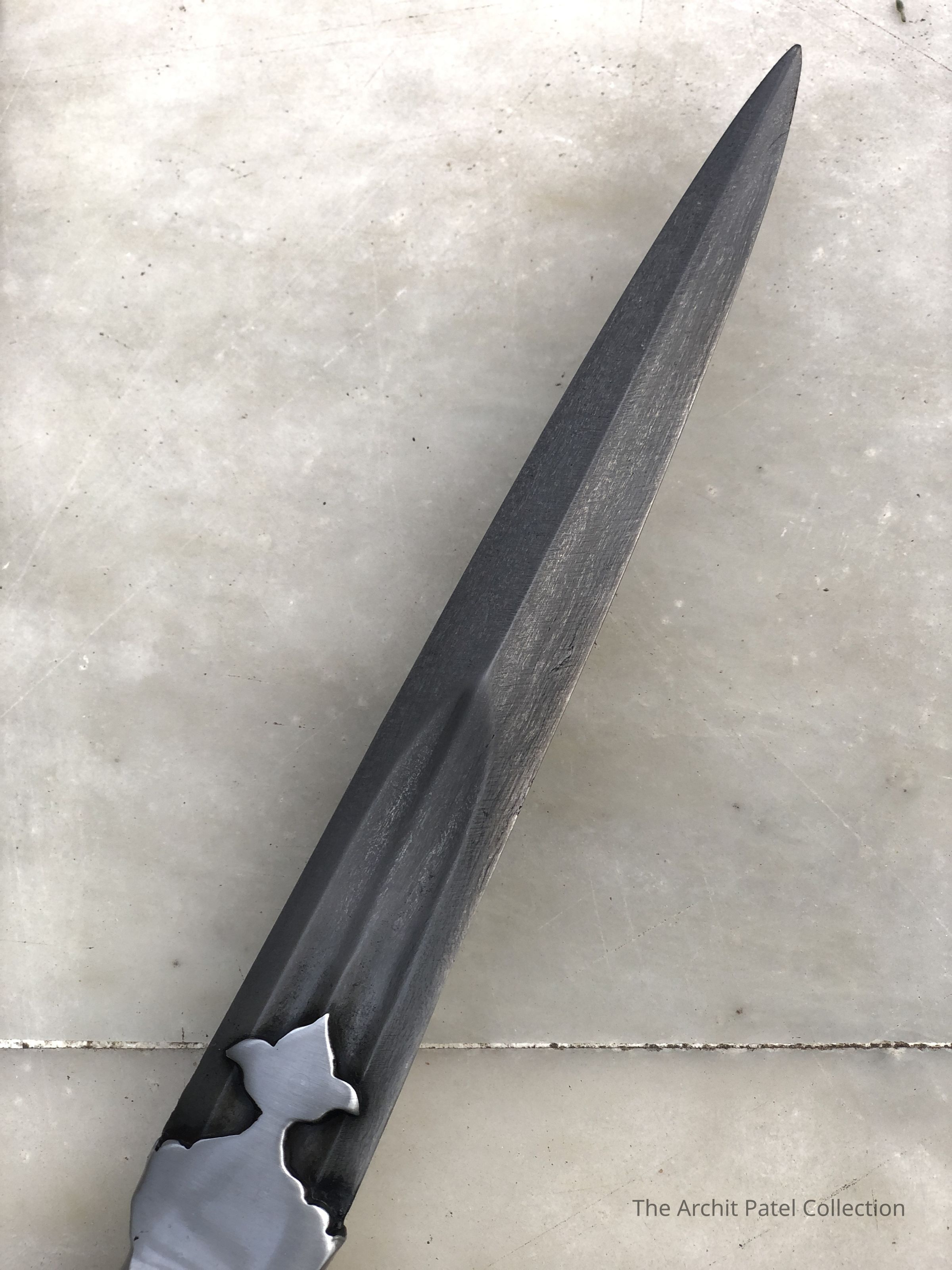
The Spear Head (Antique Wootz): The head is forged from Wootz (crucible steel), identifiable by the high-contrast "watered" pattern (Jauhar) across the blade's surface. It features a robust triangular/leaf-shaped profile with a prominent central ridge for maximum structural rigidity. The tip is reinforced for armor penetration, a hallmark of Indian Barchis used to defeat quilted armor and mail.
The Mounting (The Socket): The head is joined to the shaft via a long, integral steel socket. This transition is critical for energy transfer; the length of the socket ensures that the bamboo does not split under the immense leverage of a thrust.
The Shaft (Solid-Core Bamboo): You have selected a seasoned "Male" Bamboo shaft. In your professional "Process reliant" framework, bamboo is the ideal engineering choice: its longitudinal fibers provide incredible tensile strength and natural shock absorption, making it less likely to snap than solid wood.
The Viramgam End Cap (Butt-Spike): The base of the shaft features a custom-forged steel end cap from Viramgam. This piece is segmented with traditional decorative "bead" work. Mechanically, it serves two purposes: it balances the forward weight of the Wootz head for better handling and provides a secondary striking point for close-quarters "grappling" combat.Made/Created
Manufacturer
Unknown ArtisanDate made
circa 1700 - circa 1750Time Period
18th CenturyDimensions
Dimension Description
16"Length
7 inCondition
Overall Condition
ExcellentAcquisition
Acquisition Method
Purchase