Name/Title
ZagnolEntry/Object ID
159; Full Code: 159.2.32-PA-IATags
Engraving, Pole Arm, Ruturaj Farm ProductDescription
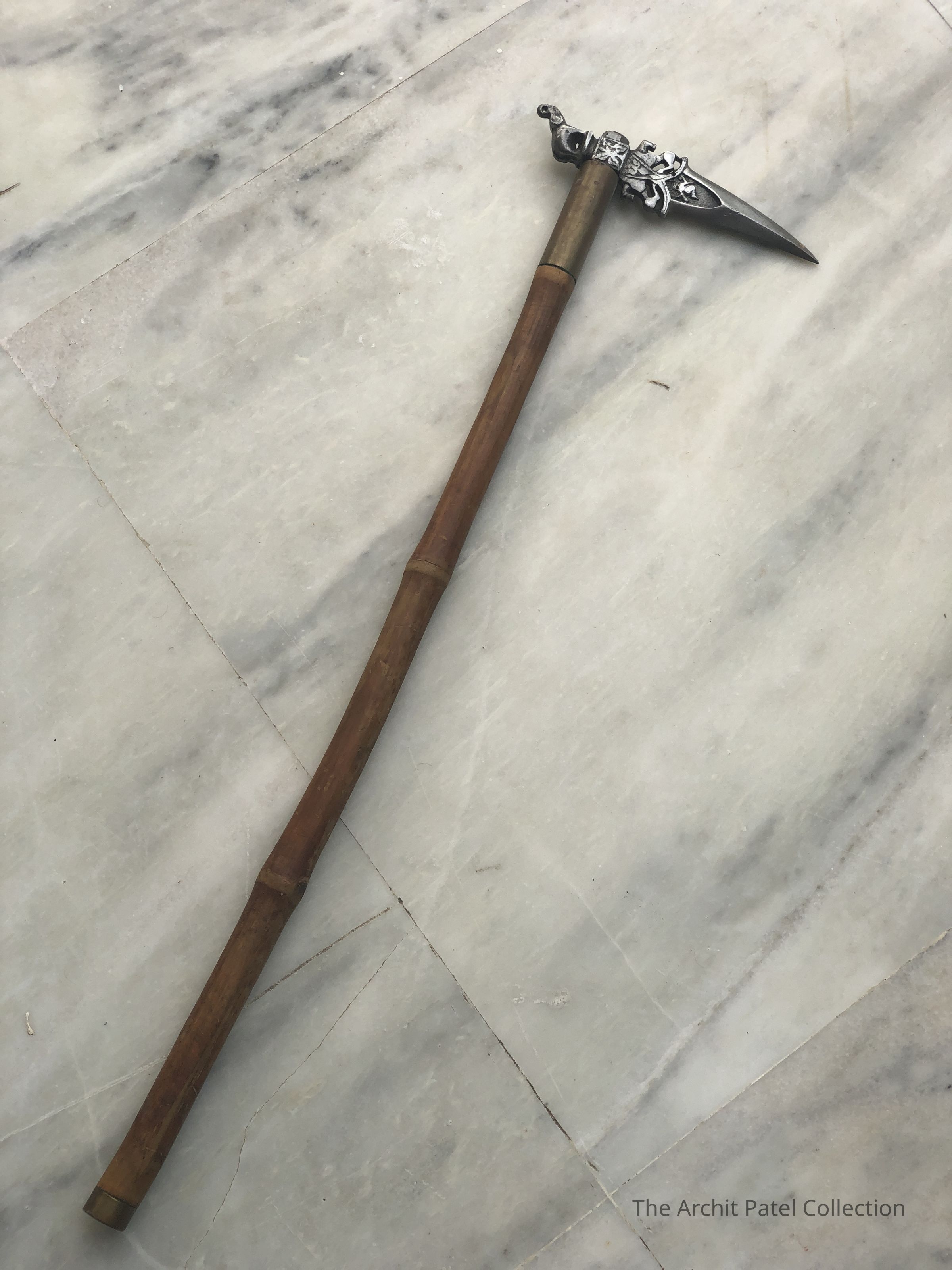
This is a Jhagnol, a formidable and rare Indian pole-axe traditionally referred to as a "Raven's Beak" due to its distinctive pointed peen. This specimen features an antique steel head mounted on a seasoned bamboo shaft, combining ancient lethal geometry with a lightweight, flexible handle.
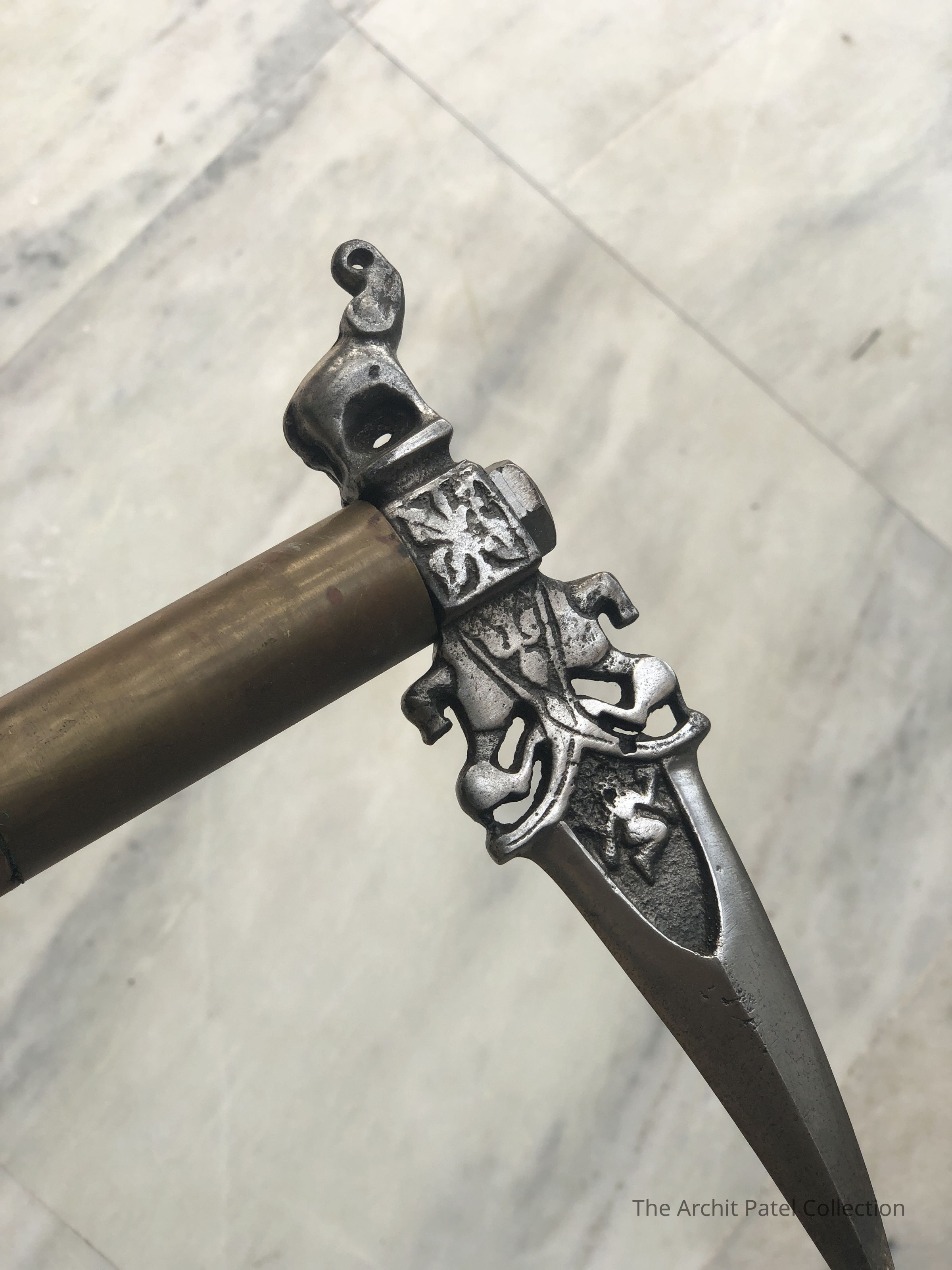
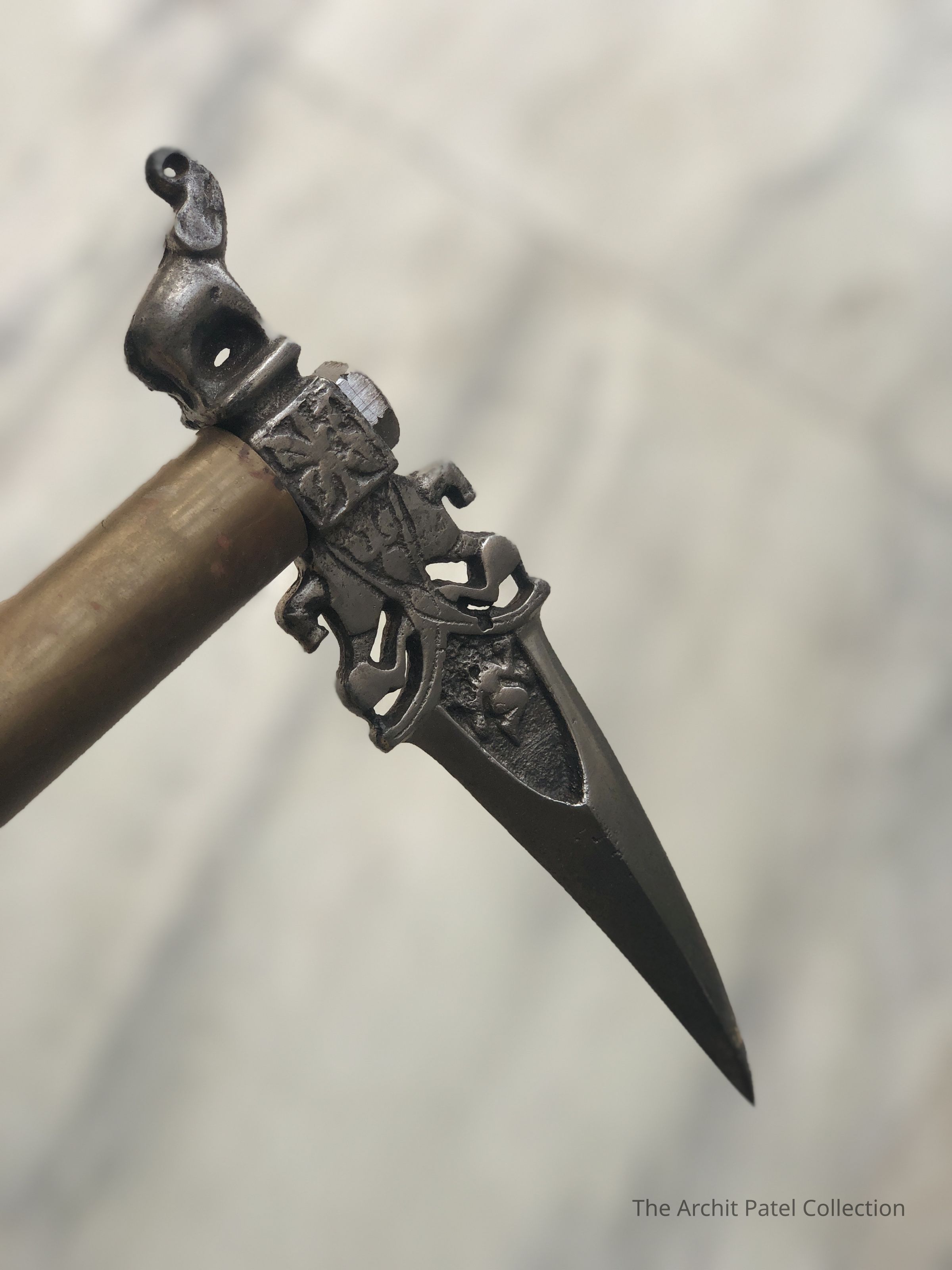
The Head: The steel head is dual-functional. One side features a heavy, curved beak-like spike (the "Raven's Beak"), designed to concentrate the full force of a swing into a single point to puncture plate armor or helmets. The opposite side typically features a small hammer-head or a decorative finial, often shaped like a stylized elephant or a floral motif, which serves as a counterweight.
Artistry: The steel displays intricate high-relief carvings, including traditional Indian foliate patterns and potentially a Yali or elephant figure near the socket. This indicates the weapon was likely used by a high-ranking warrior or for ceremonial purposes in a princely court.
The Shaft: The head is fitted onto a long bamboo shaft using a broad brass or steel ferrule. Bamboo is an ideal choice for this weapon as its natural flexibility prevents the shaft from shattering upon the high-impact strikes the Jhagnol is designed for.
Ferrule: A long brass sleeve reinforces the connection between the head and the bamboo, protecting the wood from being sheared off during combat.Made/Created
Manufacturer
Unknown ArtisanDate made
circa 1700 - circa 1750Time Period
18th CenturyDimensions
Dimension Description
30"Length
6 inAcquisition
Acquisition Method
Purchase