Name/Title
Zirrah Bakhtar (Chainmail Shirt)Entry/Object ID
264; Full Code: 264.4.52-AM-IMTags
ArmourDescription
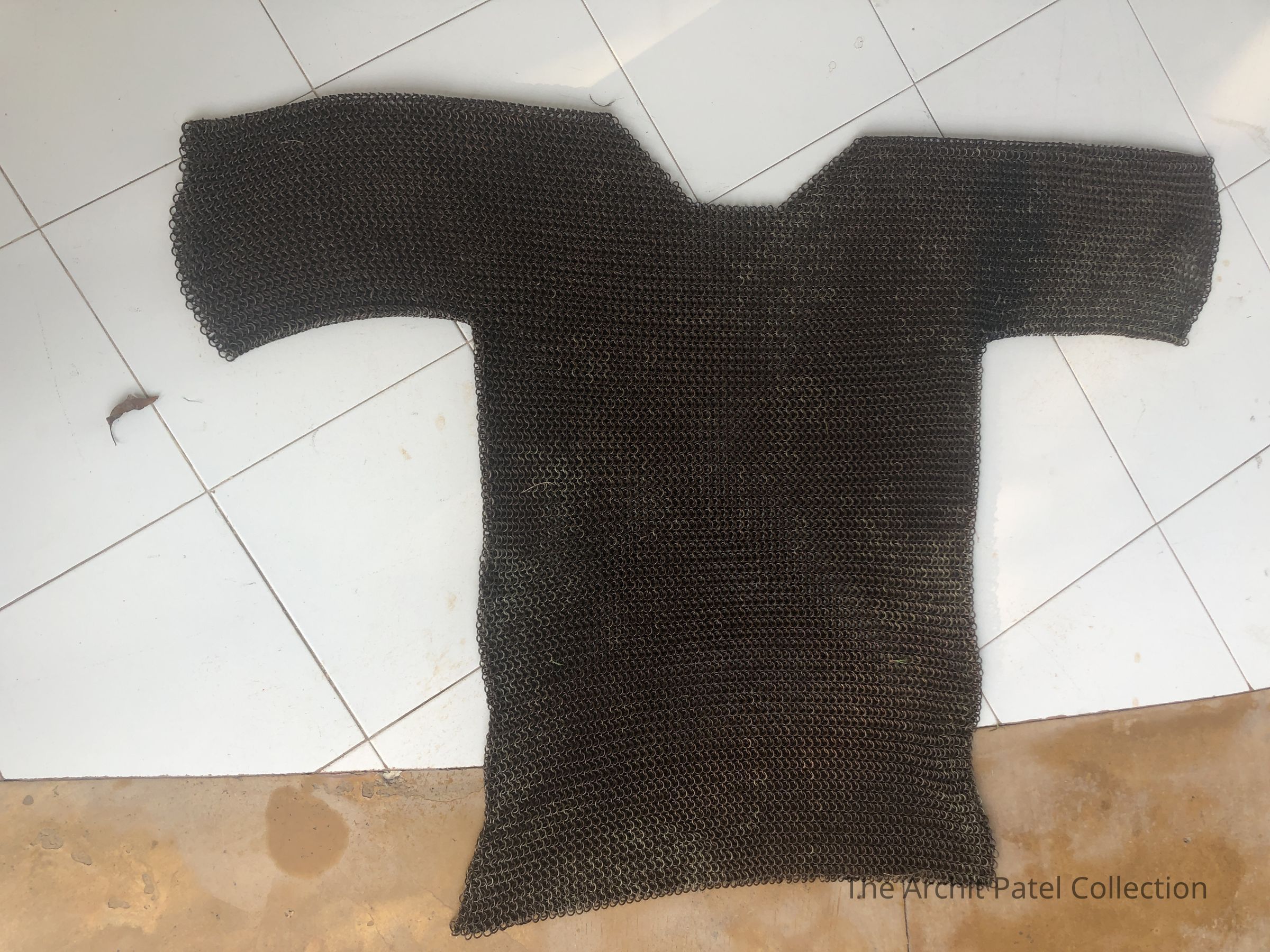
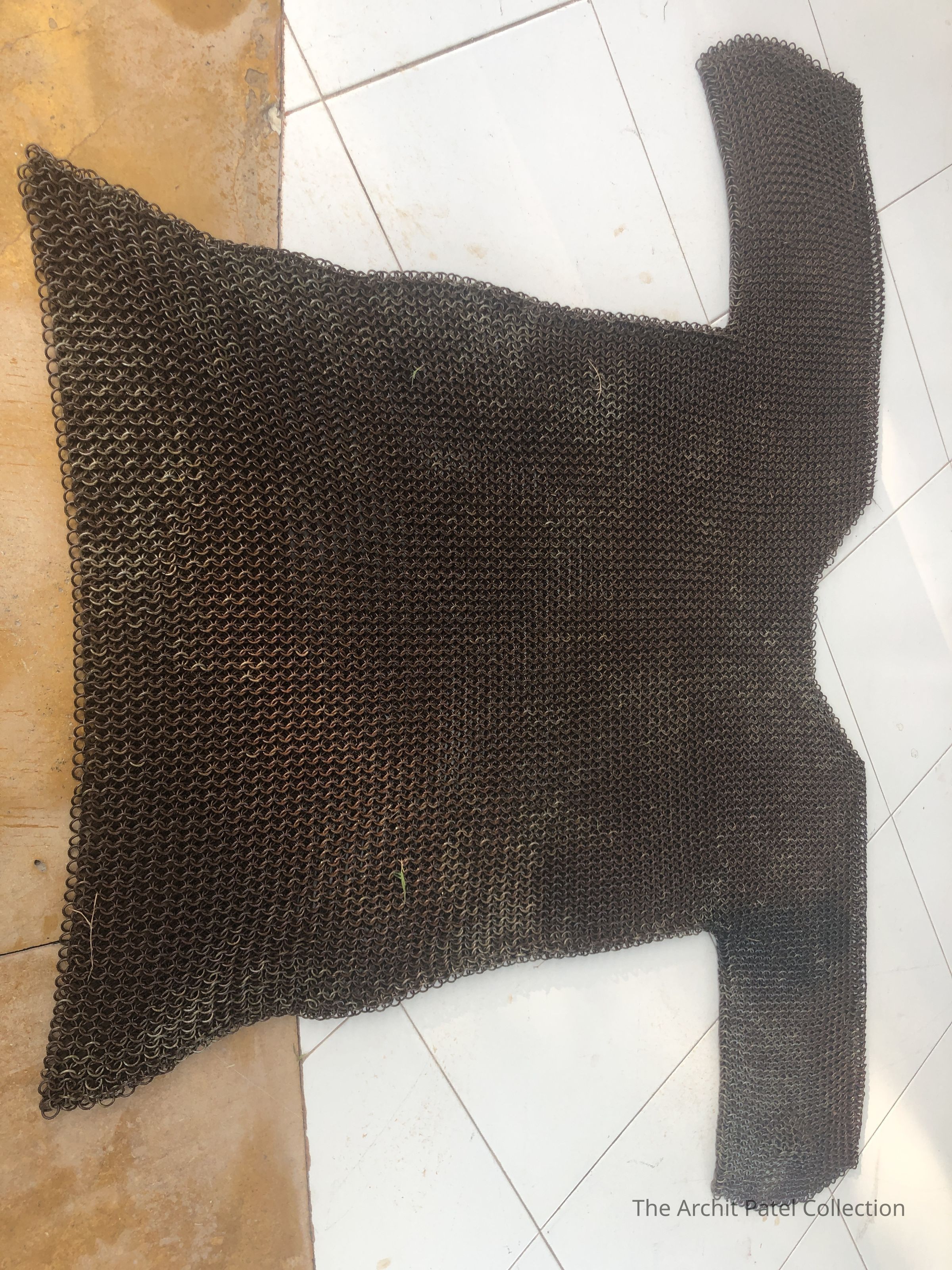
This artifact is a Zirah Bakhtar, a specialized chainmail shirt central to Indo-Persian and Mughal armored cavalry and infantry traditions. It represents the height of Flexible Kinetic Defense, engineered to provide broad-spectrum protection against bladed strikes while maintaining a "fluid" state that permits high-velocity mobility. The piece documents a focus on Torsional Strength and energy dissipation through a multi-point metallic matrix.
Core Components & Engineering
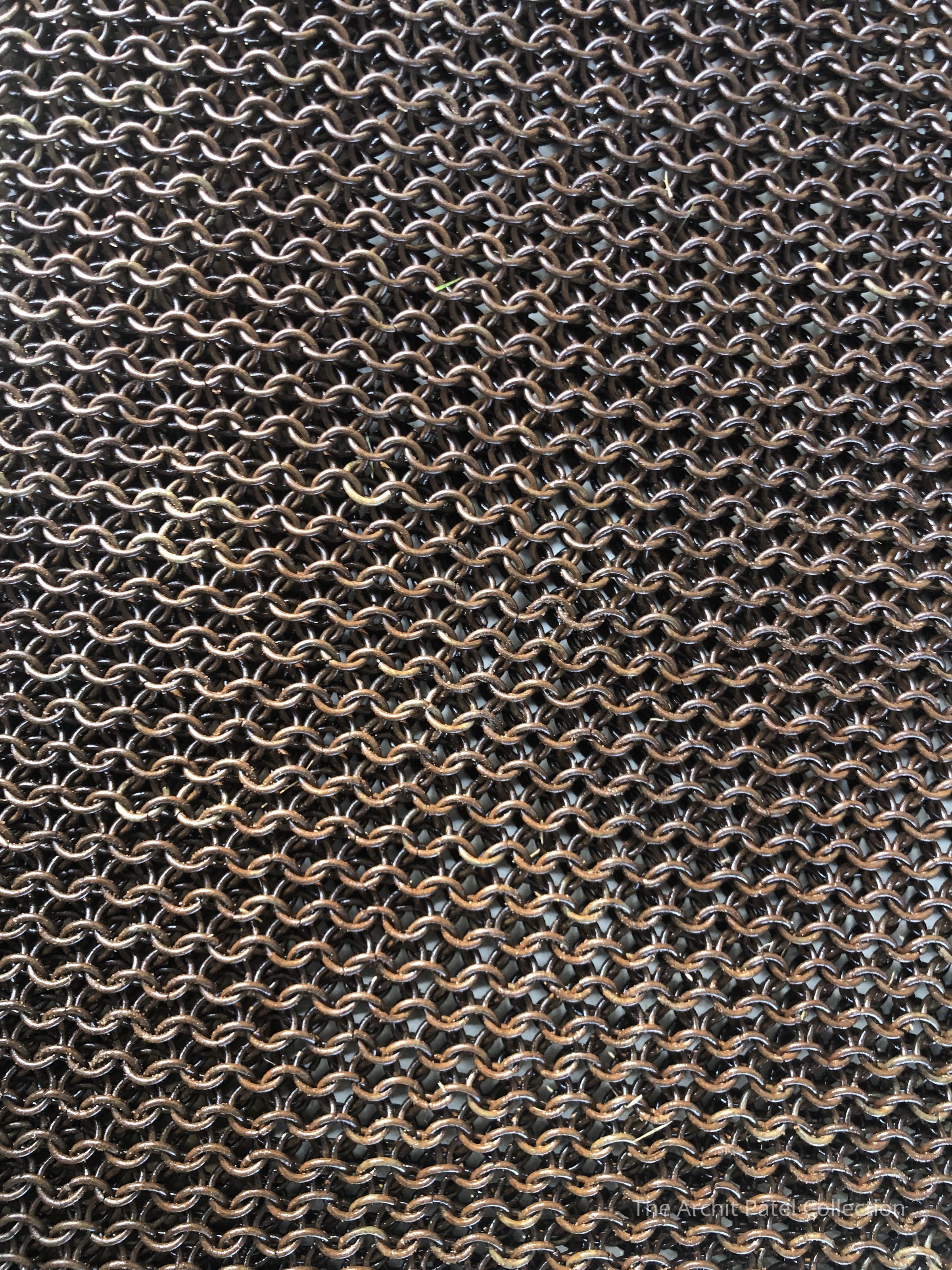
The Matrix (Interlocking Ring Weave): Constructed from thousands of precision-formed steel or iron wire rings.
Architecture: The weave follows the traditional 4-in-1 pattern, where each ring is mechanically linked to four adjacent rings.
Mechanical Logic: This configuration creates a "Shear-Resistant" fabric. To penetrate the shirt, a blade must simultaneously breach multiple rings. The combined tensile strength of the high-carbon wire exceeds the manual force generated by standard sword maneuvers.
The Profile (T-Shirt / Hauberk Geometry): * Torso Section: Features a dense, uniform weave designed to cover the vital organs. The "certainty" of the weave ensures that even under the stress of rapid torso rotation, the defensive perimeter remains closed.
Sleeves: Mid-length sleeves provide protection for the upper arms and armpits (gussets), which are critical "administrative failure points" in rigid plate armor.
Surface Condition: The rings exhibit a stable, aged bronze and iron patina. This documents a state of Passive Preservation, where the metallic oxide layer protects the internal grain structure from active corrosion.Made/Created
Manufacturer
Jitendra PariharDate made
circa 2000Ethnography
Cultural Region
Region
Central Western IndiaAcquisition
Acquisition Method
Purchase