Name/Title
Calimanco QuiltDescription
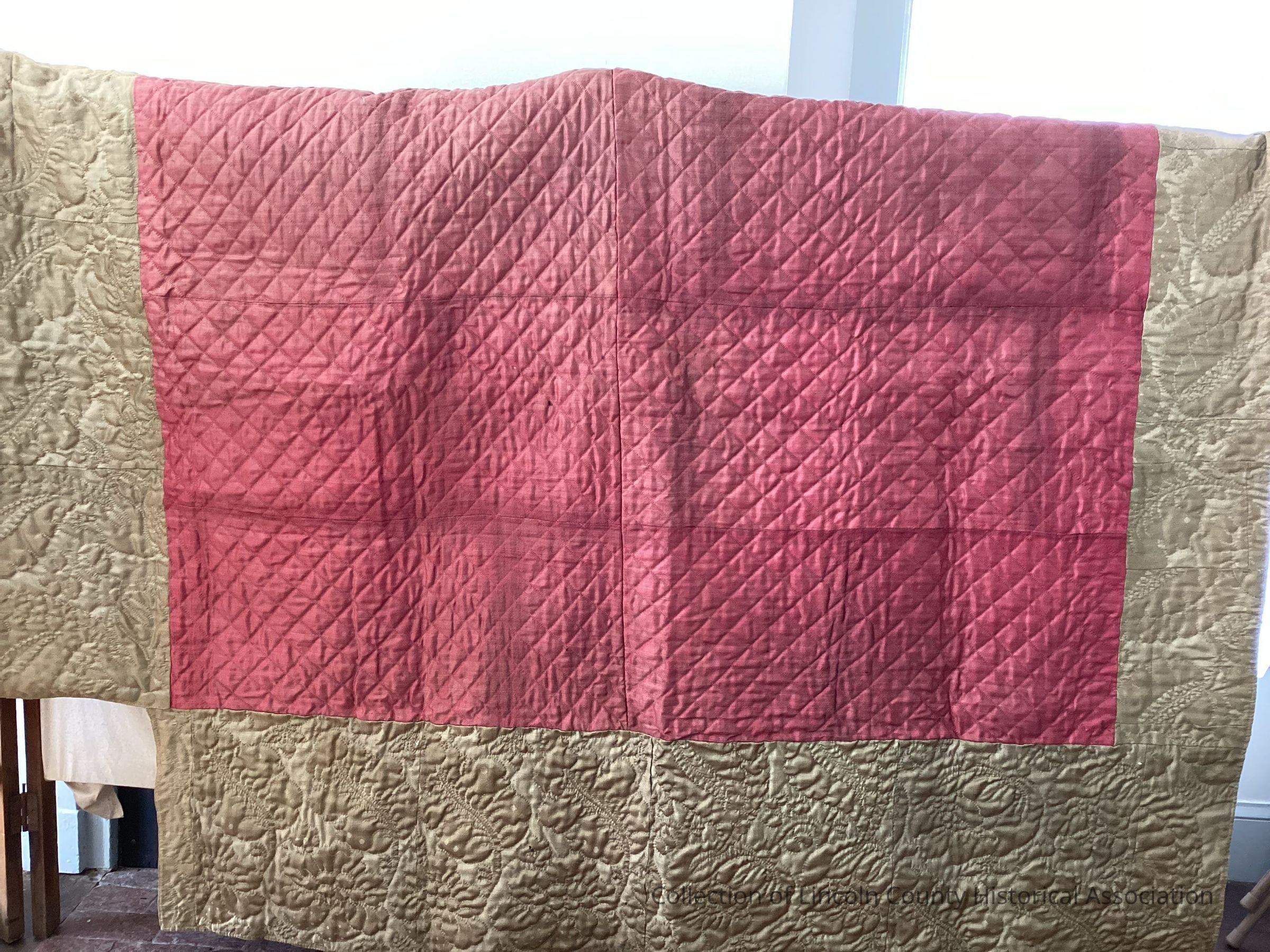
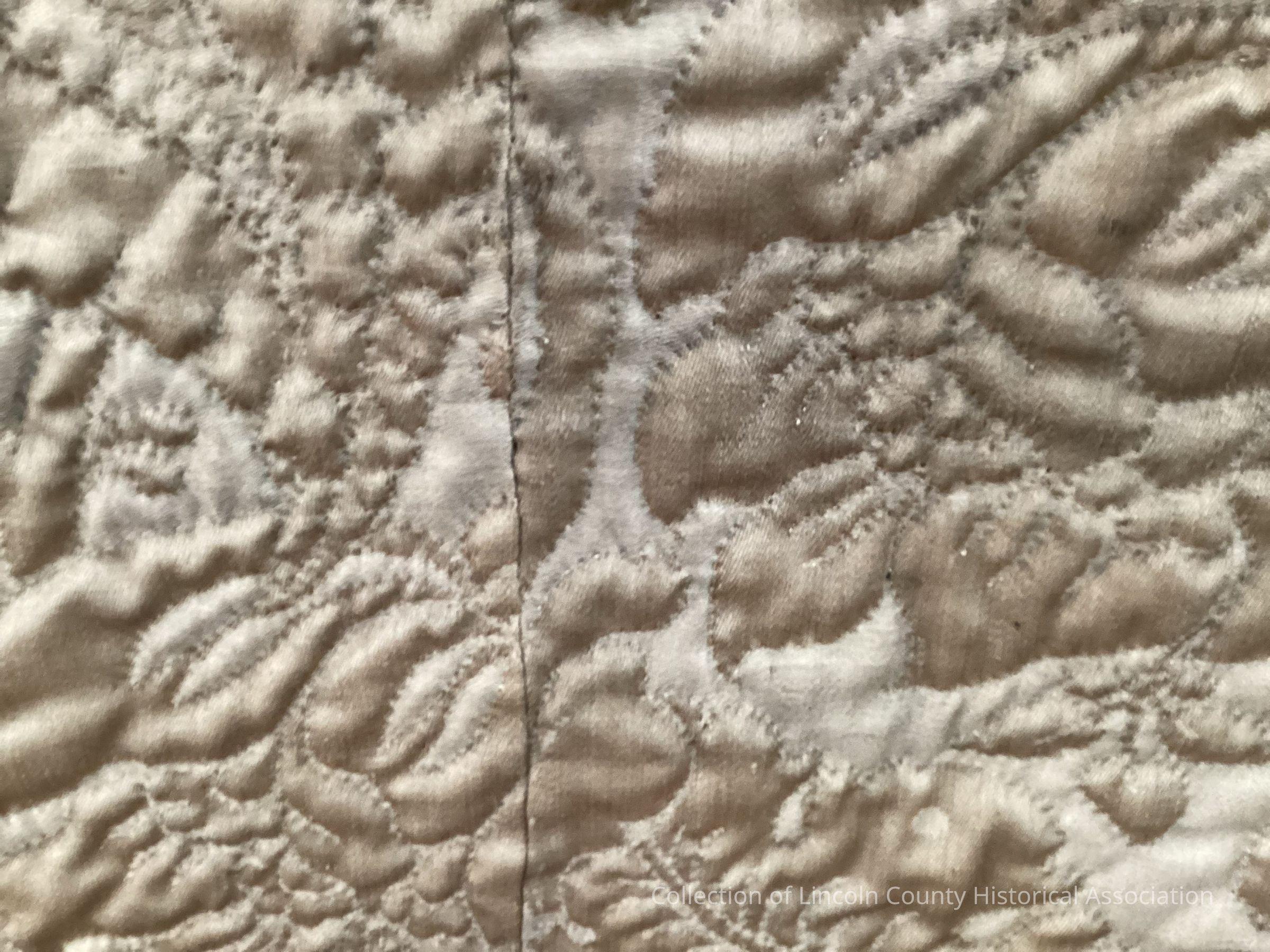
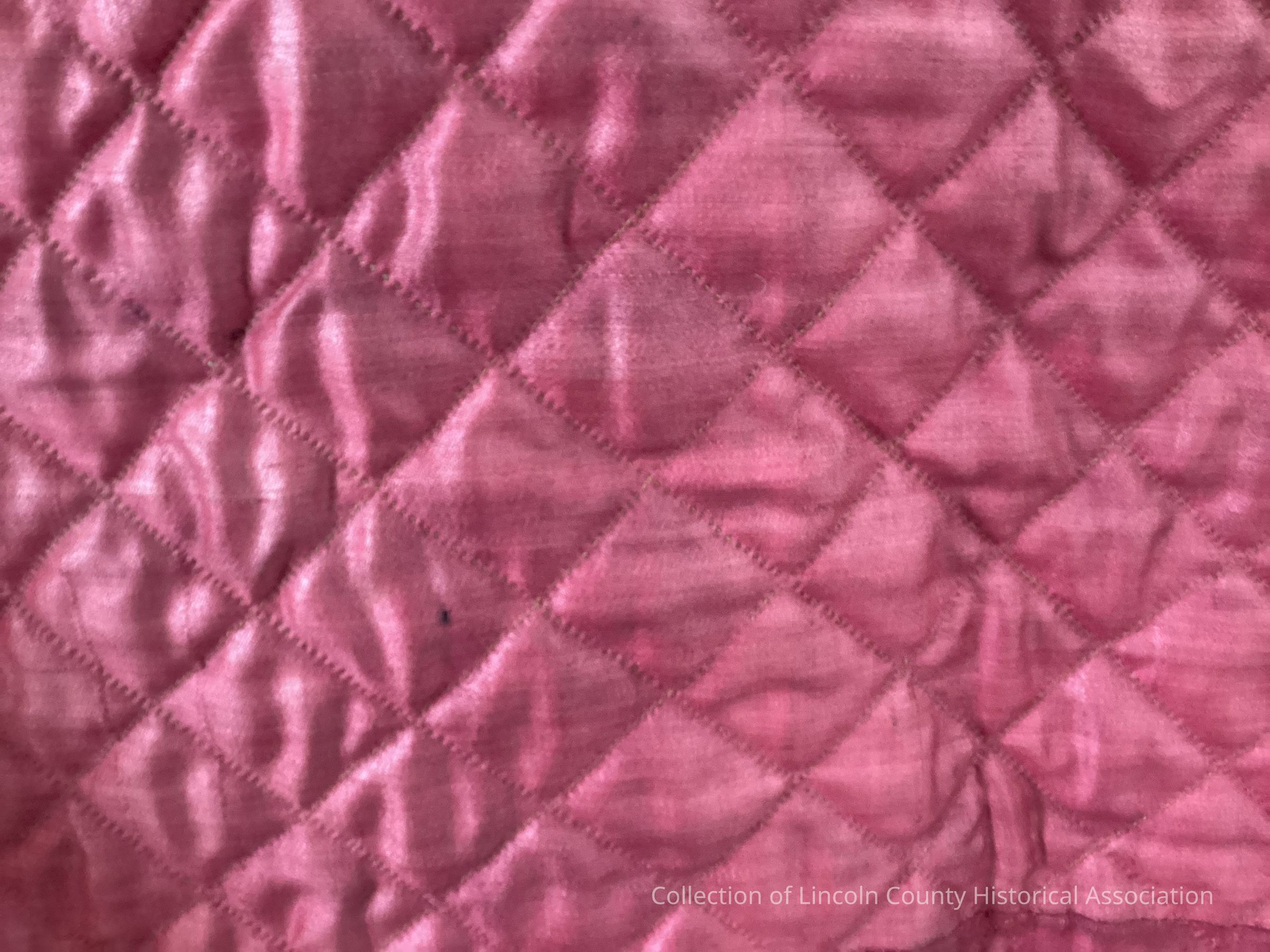
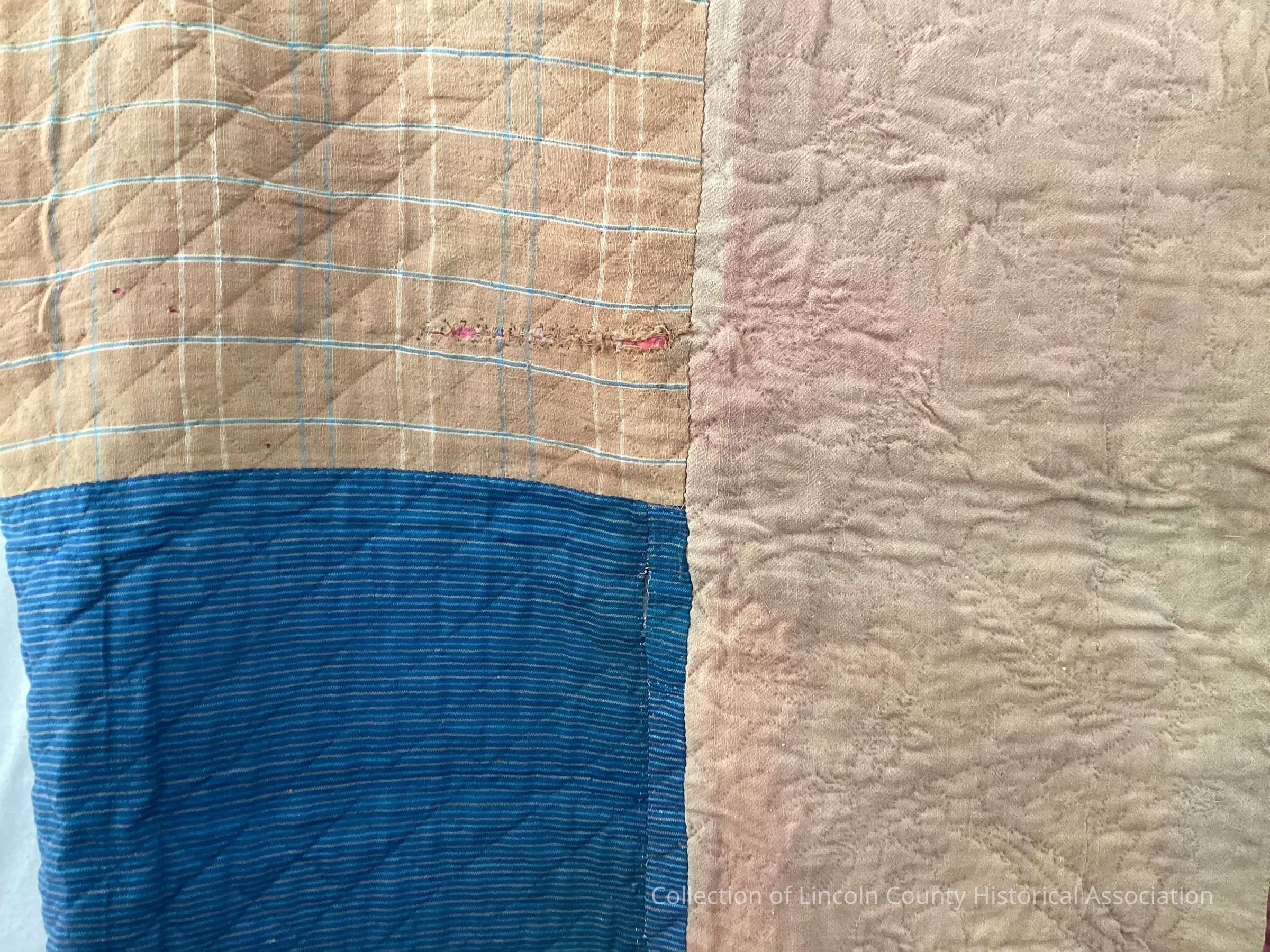
Interesting quilt of a reddish pink center which was formerly a quilted petticoat. The fabric is a polished wool, known as calamanco. The glazed surface was popular in Europe in the 18th century and early 19th century. The glaze was achieved by calendaring by surface rubbing with a stone or by applying wax to the surface. It is quilted in a diagonal diamond design in 8 sections. The 2 sides and bottom of the quilt is a border of beige calamanco fabric hand quilted around the leaf designs. The designs are very complex and elaborate, perhaps upcycled from curtains or bed coverings. The backing is blue striped homespun and blue and butternut Linsey-Wolsey fabrics. The bottom is squared off to accommodate bed posts.Made/Created
Date made
circa 1780 - circa 1810Time Period
18th CenturyNotes
Fabric is most probably from France. Quilt could have been made in America with imported fabricsInscription/Signature/Marks
Dimensions
Width
208 cmLength
229.87 cmMaterials
Material
WoolMaterial Notes
Polished wool known as CalamancoResearch Notes
Notes
According to Maine State Museum curator and quilt scholar Laurie Labar, the quilt is probably from the early 1800s as the petticoat is not elaborately embroidered as they were when petticoats were outerwear. In the late 18th and early 19th centuries petticoats began to be underwear and did not need to be as fancy. The fabric of the drops is probably imported from Europe, likely France, and speaks to how connected this area was to the wider world. It is made of damask material that was not made in the American colonies and had to be imported.