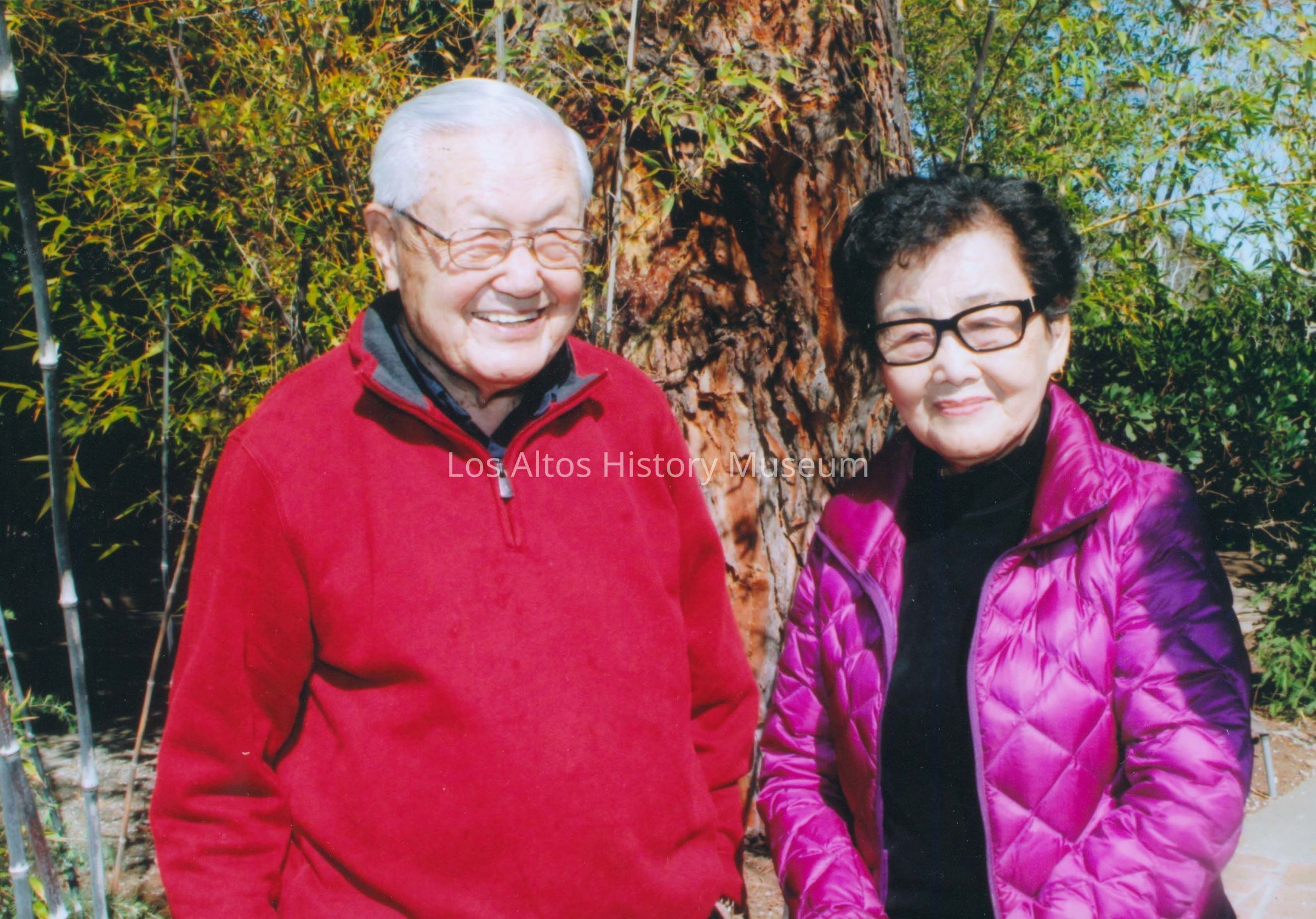
Name/Title
Oral History of Beiren "Paul" HauEntry/Object ID
2019.002.001Scope and Content
From 1939 to 1943, Hau studied sociology at Kyushu University and pursued art as a side project during his schooling. A teacher at Beijing University introduced him to Chinese art styles that he later used in his art career.
He moved to the United States in 1956 when he acquired American citizenship through a government program that granted citizenship to highly educated Chinese people. Hau started teaching art classes in Palo Alto after he arrived. Later in 1972, he decided to move his family from Menlo Park to Los Altos. He has been involved in the community through his art shows and teaching classes on Chinese art at the Palo Alto Art Club and Pacific Art Club.
After finishing college in 1943, when World War II was in full swing, Hau went to Chongqing, the wartime capital, and after the war to Nanjing, as a magazine editor for the government. During his time in Los Altos, he witnessed the change from when the land was mostly occupied by apricot orchards to the dense buildings that populate the city today. His art style also changed with his move to the United States as he began to incorporate the colors of the American landscape into his work.
Hau first began including bold colors into his traditionalist Chinese art after a famous Chinese artist Zhang Daqian came back from meeting Picasso in Paris. Disappointed that Picasso did not know him or his work, Daquin noticed the invisibility of Chinese art in comparison to the bold and colorful shapes from Western artists such as Picasso. Learning from Daqian’s experience, Hau included bold colors in his works that traditional Chinese art had left out.Collection
Oral History CollectionOral History Details
Interviewee
Beiren HauInterviewer
Suruchi MohanInterview Date
Apr 21, 2018