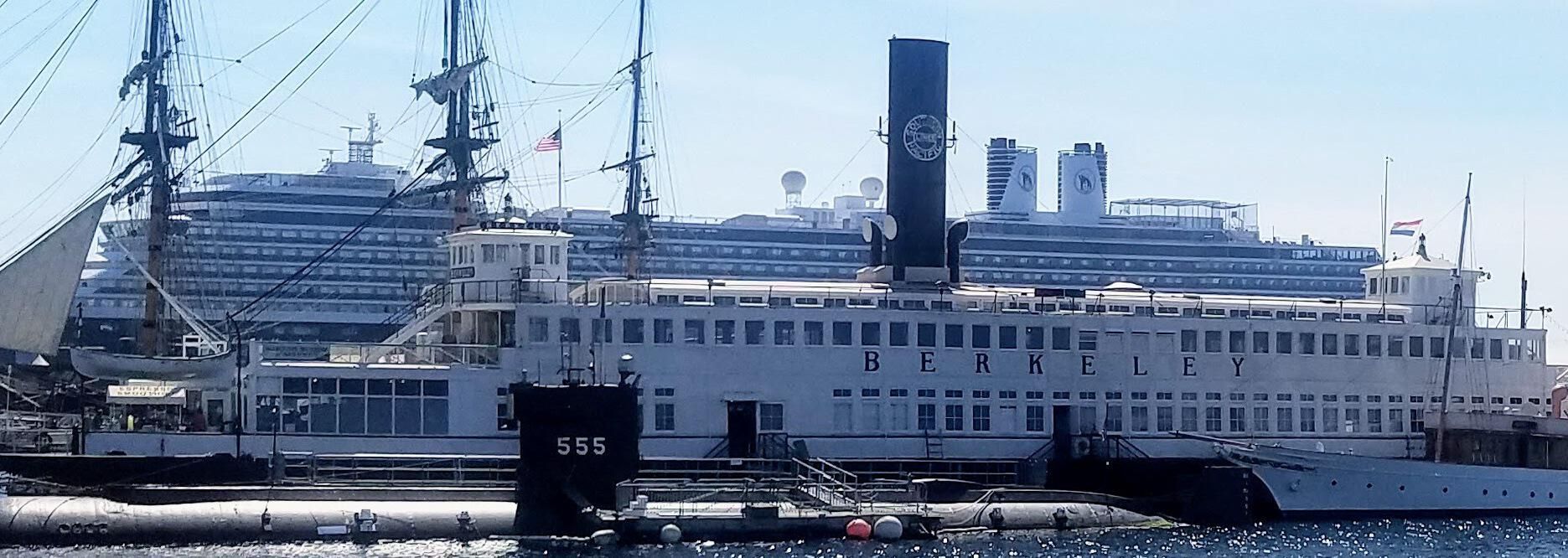
When built at the Union Iron Works in San Francisco and launched in 1898, the ferryboat Berkeley incorporated a design feature at that time unique among West Coast ferries – two eight-foot bronze screws – one mounted at each end to allow the ferry to enter and leave the terminals at San Francisco and Oakland without having to turn around. In practice, this new system of propulsion proved challenging for the Berkeley’s captains to master and resulted in a series of collisions with piers that earned her the nickname “the pile-driver’s friend.” Identical pilot houses were located at the bow and stern to give the captain a 360 degree view of the surroundings. The pilot house at the bow end has been preserved to represent what it would have looked like during the Berkeley’s working life. Steam operated steering gears were located on the main deck immediately beneath each pilot house, and connected to the rudder at the opposite end. Having reached the terminal, the captain would exit the pilot house and walk in the open air along the hurricane deck of the ferry to the other pilot house for the return journey. Voice tubes and an engine-order telegraph in each pilot house transmitted commands to the engine four decks below. The search light mounted on top of the pilot house could be controlled via a handle from within.