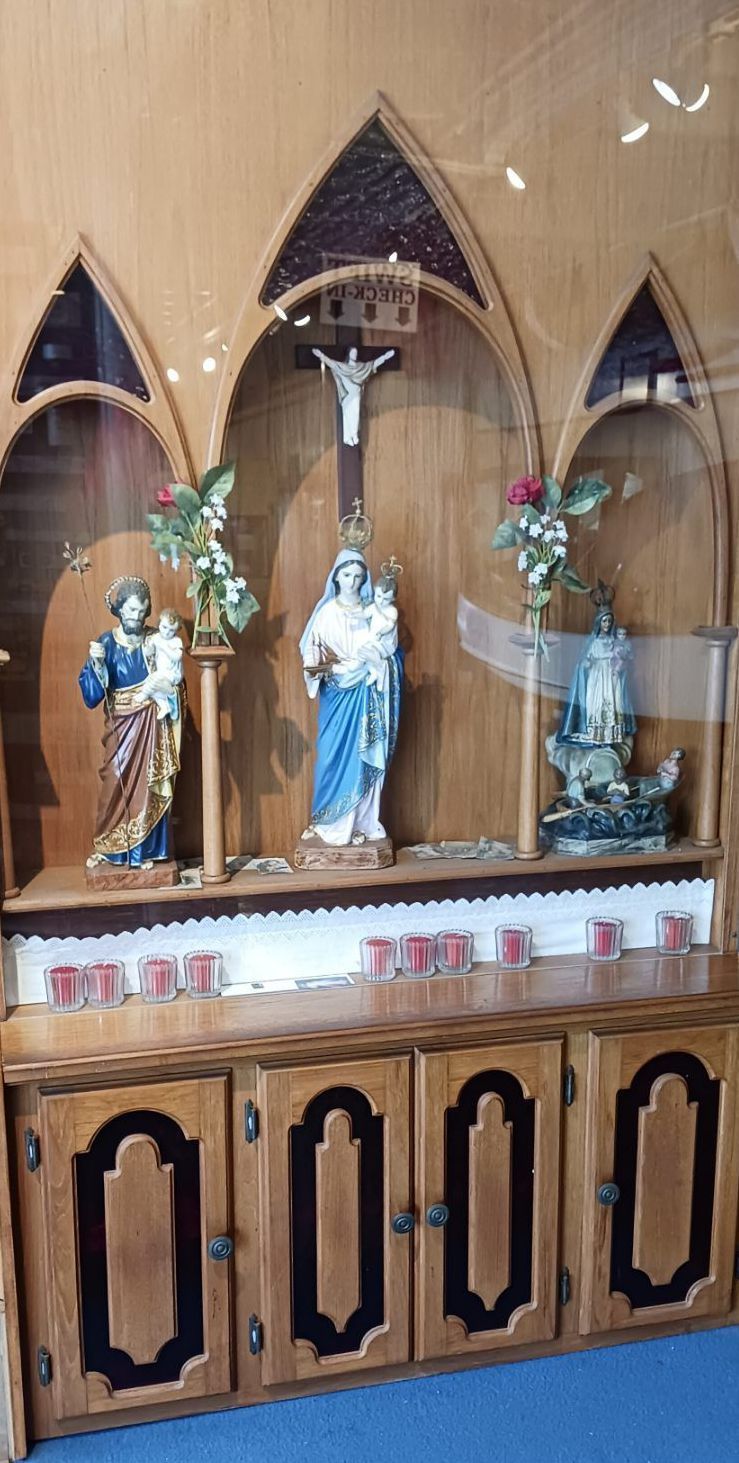
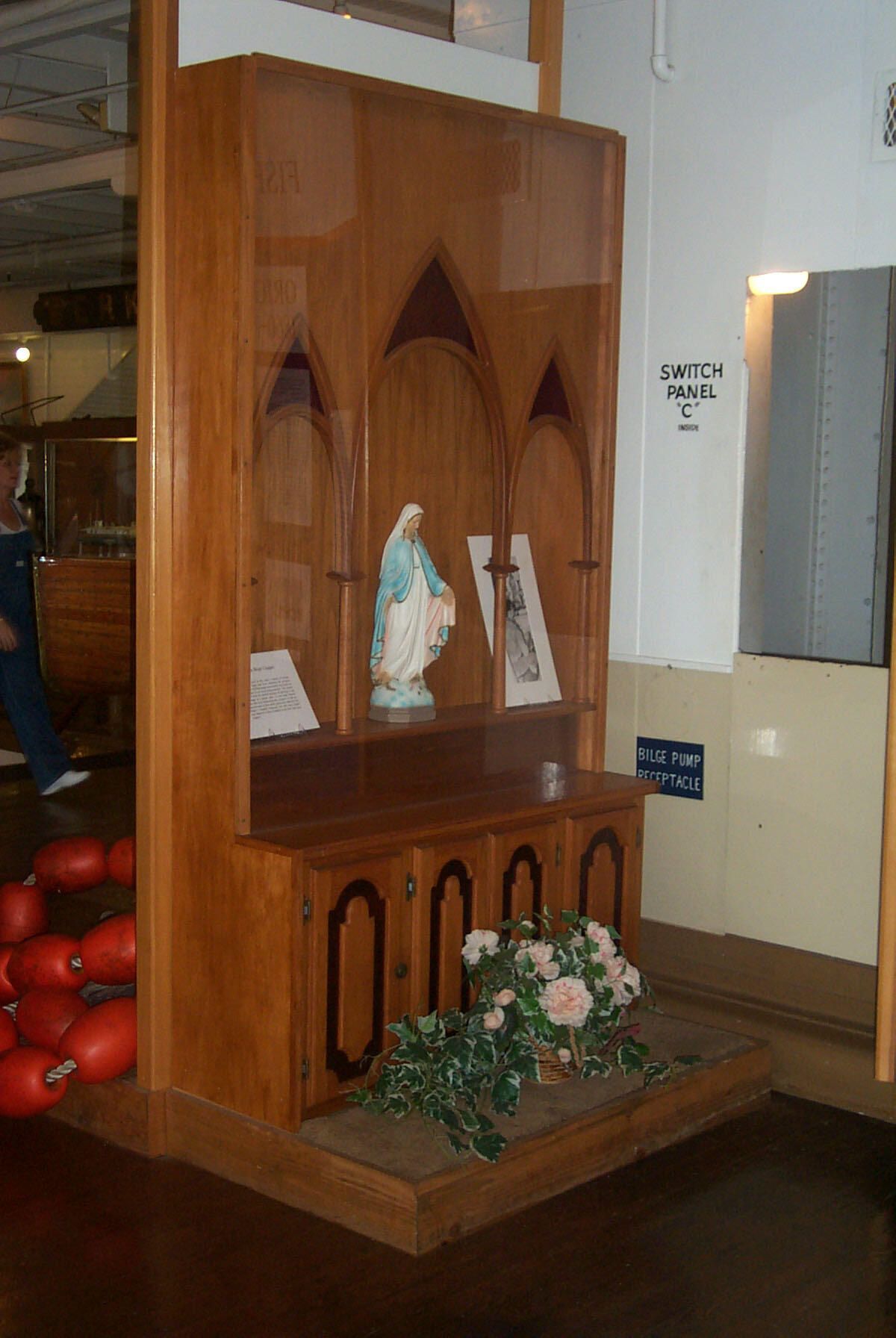
Wooden shrine with three arches and shelf, used on board Portuguese-owned tuna boats
Collection
Portuguese Historical Society Collection
Made/Created
Notes
Date: mid-20th century
Lexicon
Nomenclature 4.0
Nomenclature Secondary Object Term
Shrine
Nomenclature Primary Object Term
Structure, Religious
Nomenclature Sub-Class
Ceremonial Structures
Nomenclature Class
Structures
Nomenclature Category
Category 01: Built Environment Objects
Material
Wood
Interpretative Labels
Label
Along the coast of Southern California, particularly in the first half of the twentieth century, Portuguese fishermen and their descendants were the main protagonists in the tuna fishing industry. Bound together by a respect for the sea and a devotion to the patron saints that guaranteed their protection and prosperity, fishermen and the communities from which they came expressed their piety, devotion and gratitude through charitable donations to their churches. This devotion was not restricted to the endowment and support of places of worship such as Mary Star of the Sea in San Pedro and Saint Agnes in Point Loma. Frequently fishing boats carried on board representations of the saints, as are found here in this altar from a local vessel once engaged in the tuna fishery. The iconography associated with these devotional sculptures included themes familiar to fishermen, and promised protection from the perils of the sea.