Label
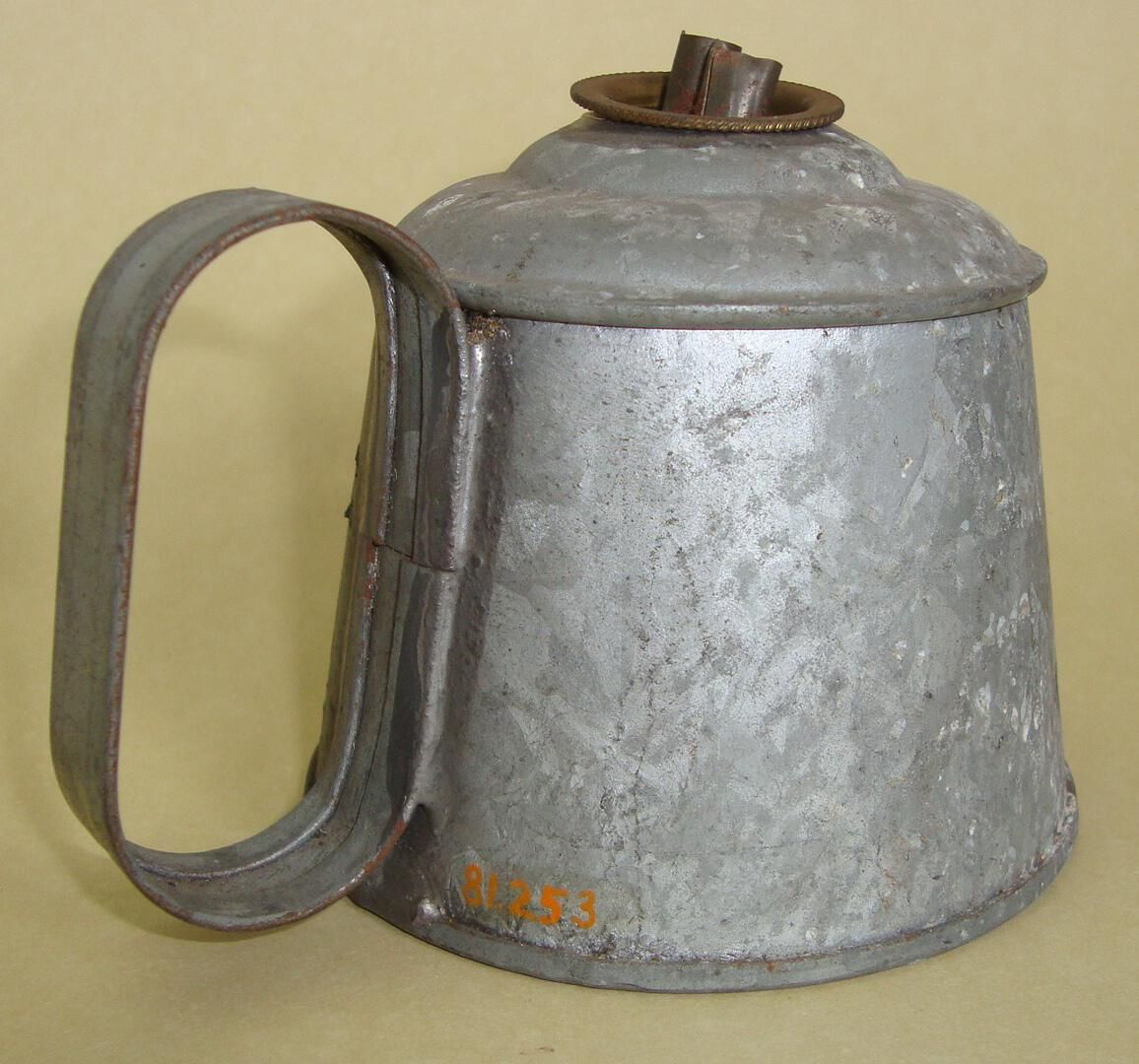
Providing safe and efficient lighting is essential at sea – both at night and also below decks during daylight hours. From the eighteenth century through to the late nineteenth century, whale oil was extensively used in lamps. It had the advantage of providing illumination, without producing significant amounts of soot or smoke. This proved invaluable, particularly in compartments and cabins on board sailing vessels. Whale oil lamps came in a variety of shapes and sizes – from large and ornate lamps with elaborate glass chimneys designed to contain the flame and amplify light, to simpler utilitarian designs for use in workshops and factories. The production of whale oil was a dangerous and time consuming process. It was also a costly commodity, with prices that would today be in the region of $200 per gallon.
Whale oil lamps have a unique design consisting of one, or more commonly, two round wicks, approximately one-quarter of an inch in diameter, mounted close together. This design feature contrasts with the single flat wick found in kerosene lamps. Whale “oil” is actually a liquid wax that thickens as it cools. Because of this, the flame of a whale oil lamp has to be relatively close to the reservoir of oil in order to keep it warm, thus allowing the oil to seep up the wick and reach the flame.
The whale oil industry peaked around 1845 – with the production of eighteen million gallons in that year. Whale oil would eventually be replaced by fuels such as kerosene, which became increasingly popular in the late nineteenth century. Kerosene lamps offered bright illumination without the strong odor commonly associated with the burning of whale oil.