Name/Title
Fossilized Ammonite (Ammonoidea, indeterminate genus)Description
Fossilized Ammonite
Ammonoidea, indeterminate genus
Early Cretaceous (probable)
Morocco
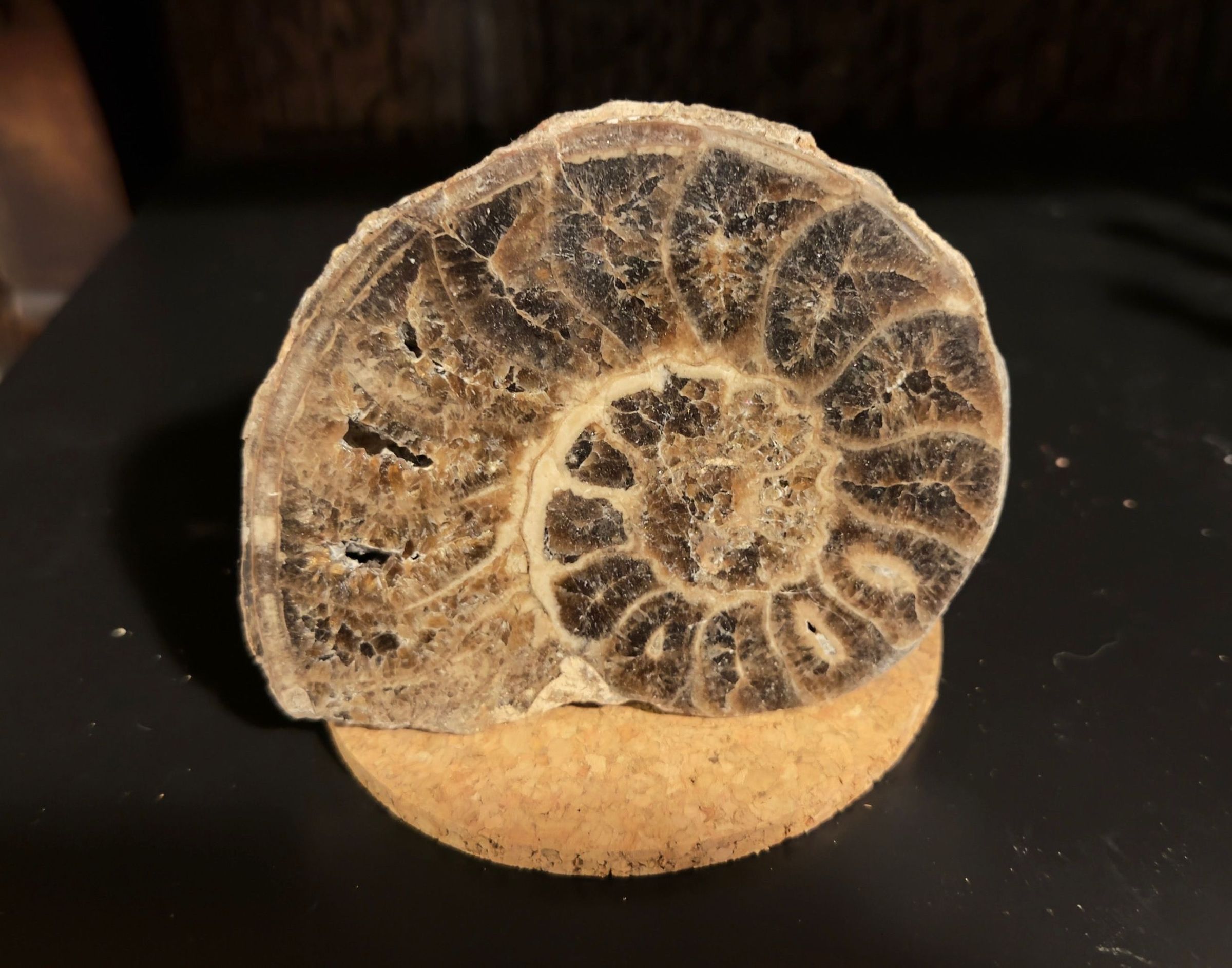
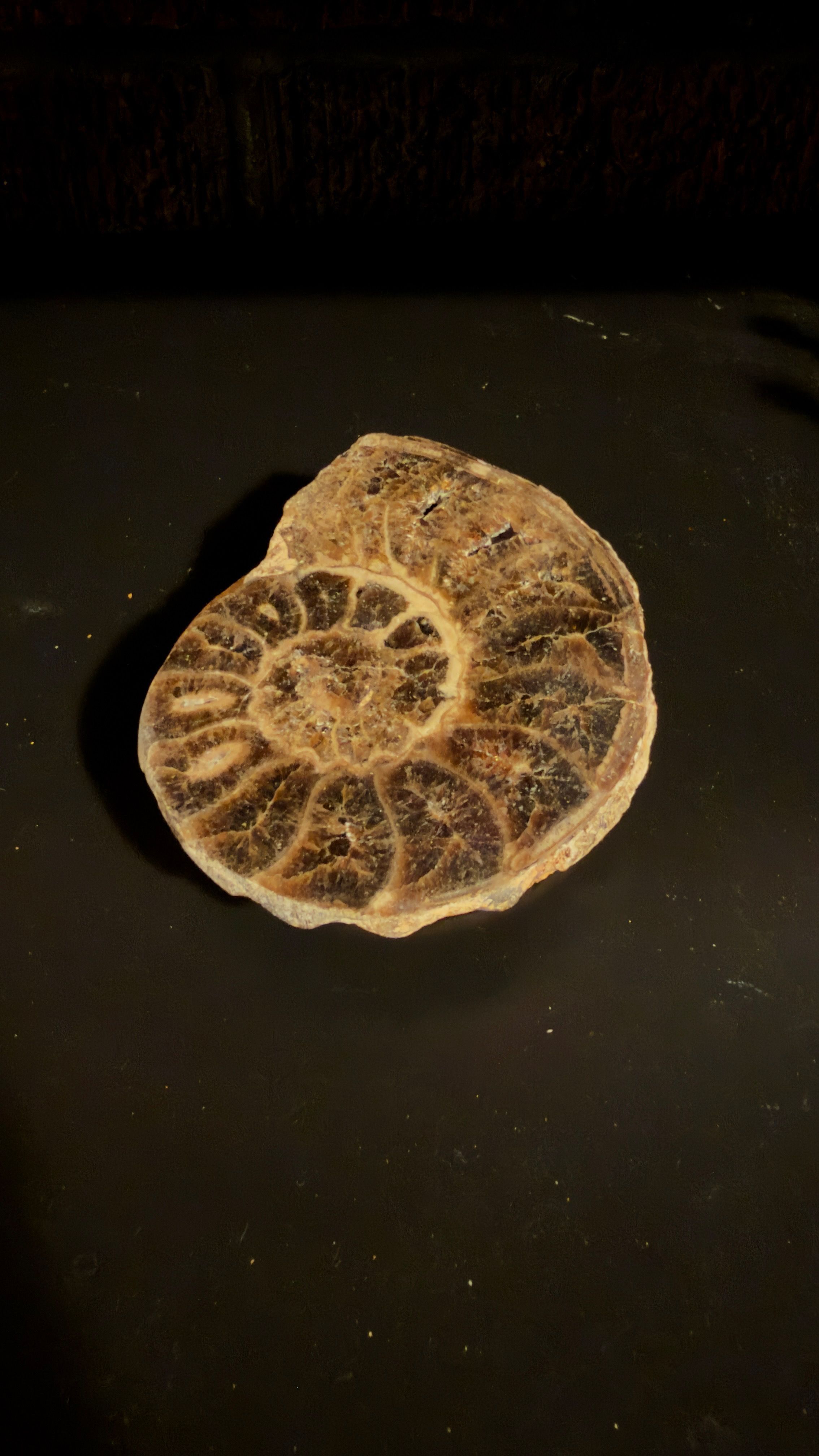
This specimen is a fossil ammonite that reveals the internal shell structure of an extinct marine cephalopod related to modern squid and octopus. Ammonites are characterized by coiled, chambered shells that functioned in buoyancy control and contributed to their evolutionary success in Mesozoic seas.
The exposed surface shows a sequence of internal chambers (camerae) separated by thin walls (septa), arranged in a tightly coiled spiral. The pale, mineral-filled chambers contrast with the darker outer shell material, visually recording the animal’s incremental growth over time. Curving suture lines—formed where the septa met the outer shell—reflect the complex shell architecture that distinguishes ammonites from their modern relatives.
Ammonites are abundant in Moroccan fossil deposits, particularly in Lower Cretaceous marine strata. While the form of this specimen is consistent with common Moroccan Cretaceous genera, the absence of external shell ornament and precise stratigraphic data makes identification beyond “ammonite” inappropriate.
As preserved, this specimen offers a clear view into the growth mechanics of one of the most successful marine invertebrate groups of the Mesozoic Era.
Catalog annotation: Specimen cut longitudinally and polished to expose internal chamber structure.Create Date
July 31, 2025Update Date
January 12, 2026