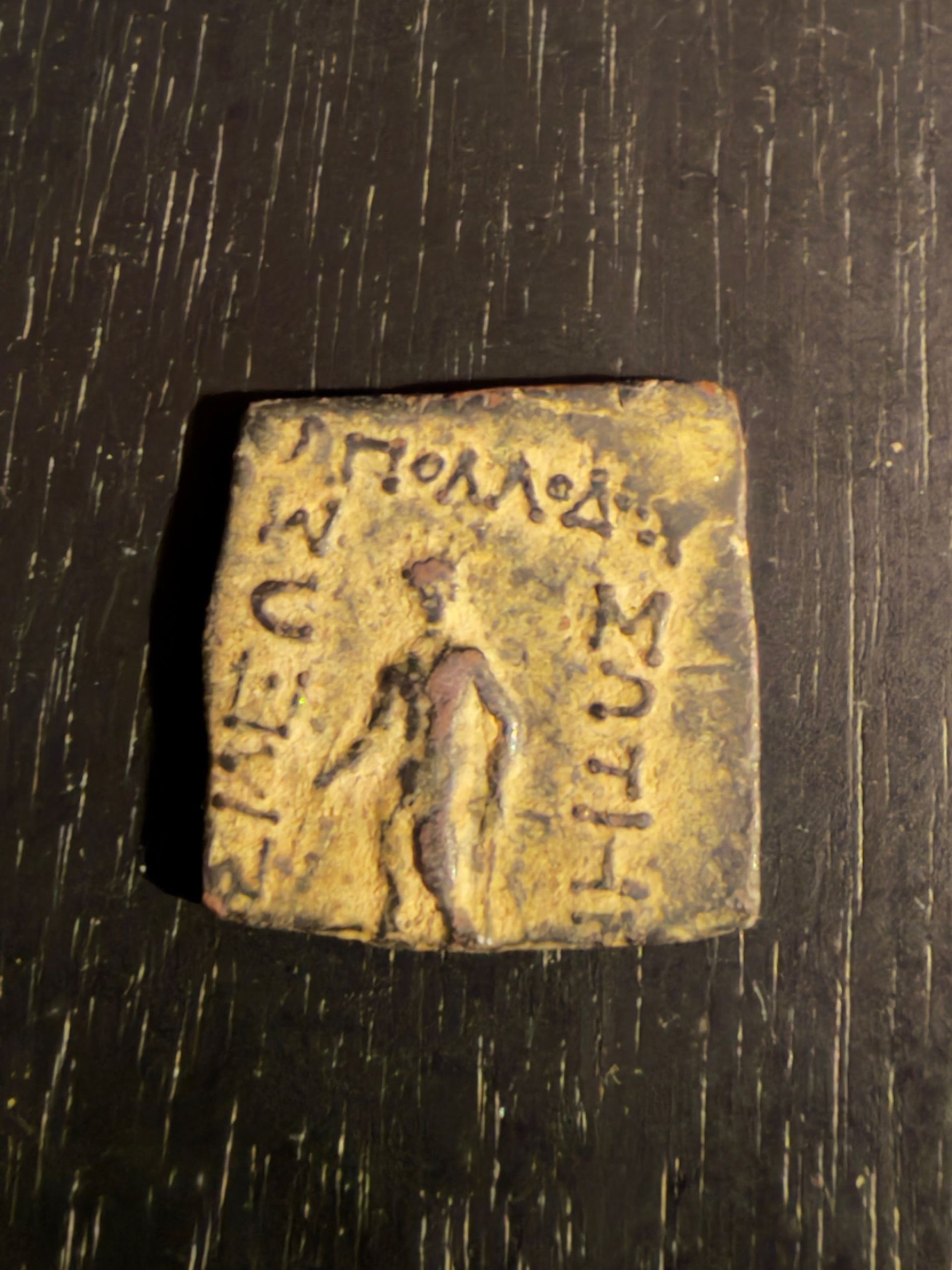
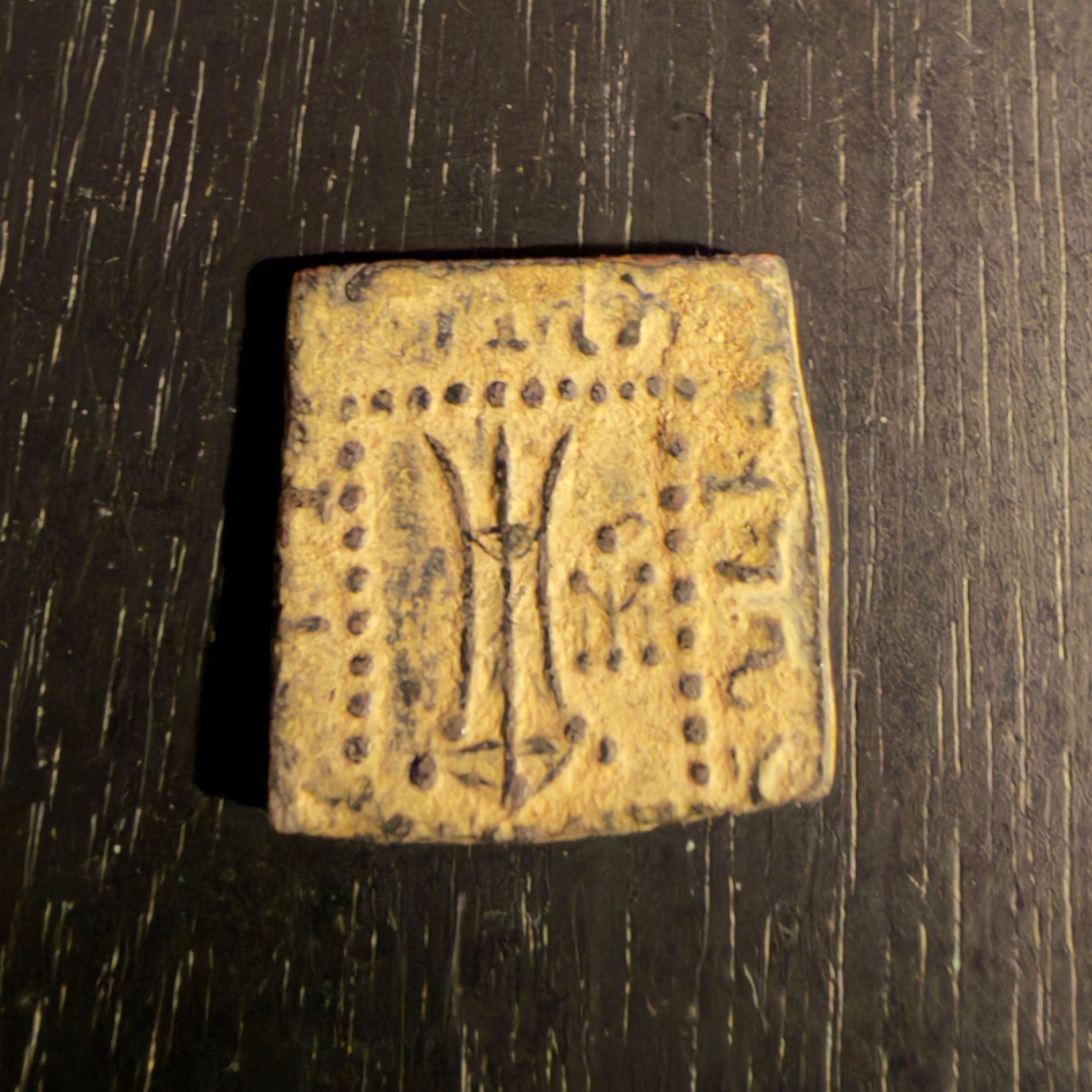
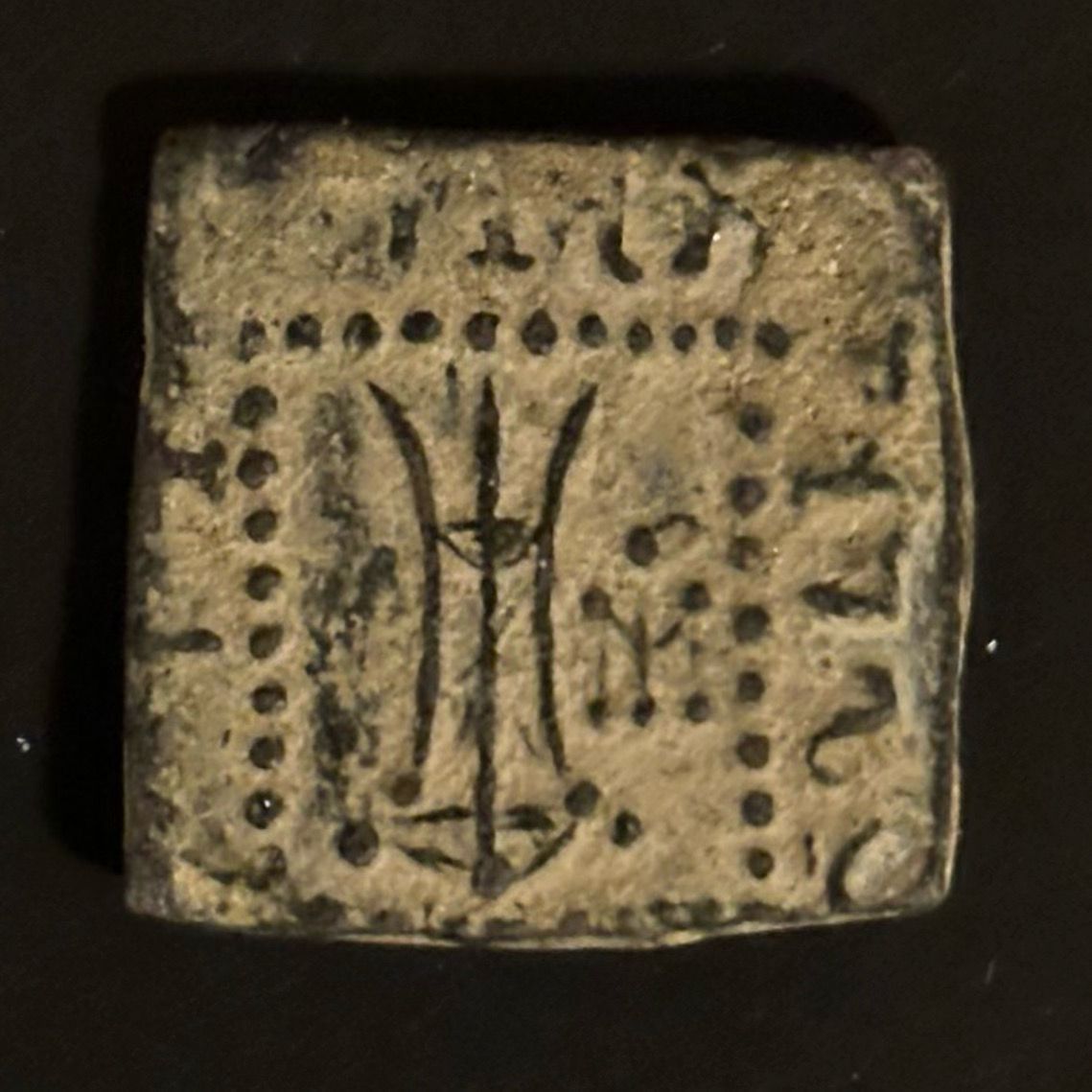
BCE 0180 - 0160 Indo-Greek Kingdom. Apollodotos I Soter (c. 180–160 BCE). AE Square Double Unit. Athena Alkidemos standing left / Tripod; bilingual legend in Greek and Kharosthi.
Description
Indo-Greek Kingdom — Apollodotos I Soter
Square Bronze Double Unit
Reign: circa 180–160 BCE
Material: Bronze | Shape: Square | Diameter: ~22 mm
Obverse: Athena Alkidemos standing left, brandishing a thunderbolt and shield. Greek legend: ΒΑΣΙΛΕΩΣ ΣΩΤΗΡΟΣ ΑΠΟΛΛΟΔΟΤΟΥ (“Of King Apollodotos the Savior”).
Reverse: Trident or tripod-like monogram. Kharosthi legend in vertical script (local Gandharan language and script).
⸻
Apollodotos I Soter, meaning “Apollodotos the Savior,” was one of the earliest Indo-Greek kings to establish firm control over northwestern India after the decline of the Mauryan Empire. His reign marked the expansion of Greek influence into the Indian subcontinent and the beginning of sustained cultural exchange between Hellenistic and Indian civilizations.
This square bronze coin is especially notable for its bilingual inscriptions — Greek on the obverse and Kharosthi on the reverse — illustrating the dual administrative and cultural roles these coins played. Athena Alkidemos, a divine protector figure originating from Macedon, symbolizes military strength and civic virtue, while the Kharosthi script denotes the coin’s acceptance and utility in local South Asian markets.
Apollodotos’ coins reflect political pragmatism and cultural adaptability, essential for maintaining power over a diverse population. These bilingual bronzes are among the earliest numismatic evidence of cross-cultural communication between East and West following Alexander the Great’s eastern conquests.