Name/Title
BCE 0510 - 0480 Caria, Halicarnassus AR Hekte, Ketos Head TypeDescription
Silver Hekte with Ketos Head
Caria, Halicarnassus
ca. 510–480 BCE
Silver
Individual weight and diameter not recorded
Reference: SNG von Aulock 2341–2342
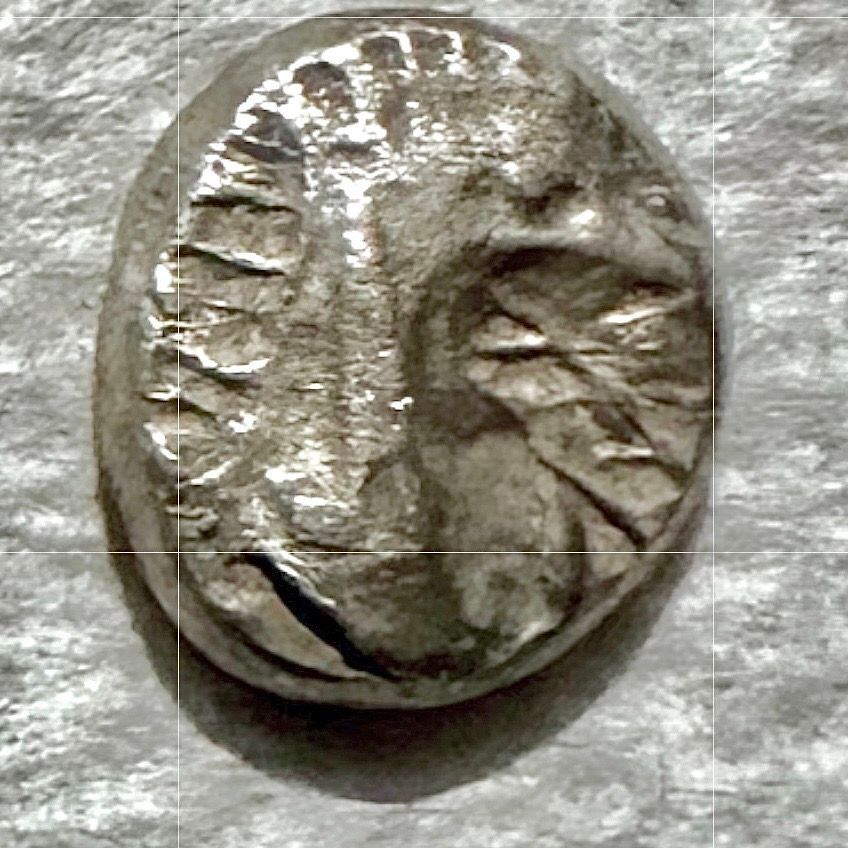
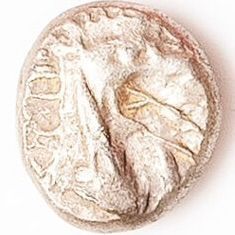
Obverse: Head of a ketos, a Greek sea monster, facing right or left depending on specimen.
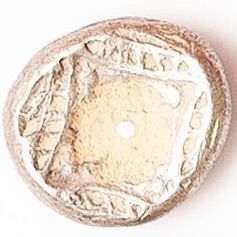
Reverse: Incuse geometric design with four lattice-like concave sections, segmented border, and central starburst.
This small silver coin was struck at Halicarnassus, an ancient Greek city of Caria in southwestern Anatolia. The city later became famous as the birthplace of Herodotus and as the site of the Mausoleum of Halicarnassus, though this coin belongs to an earlier Archaic/Classical phase of its civic coinage.
The obverse image is a ketos, a sea-monster figure common in Greek myth and visual culture. On Halicarnassian coinage, the ketos head appears as a local civic type. Its pointed ear, mane-like crest, long snout, and open mouth give the creature a hybrid form rather than a naturalistic animal appearance. The reverse is an archaic incuse design, typical of early Greek silver coinage, where the punch mark became part of the coin’s formal design.Create Date
July 30, 2025Update Date
October 17, 2026