Name/Title
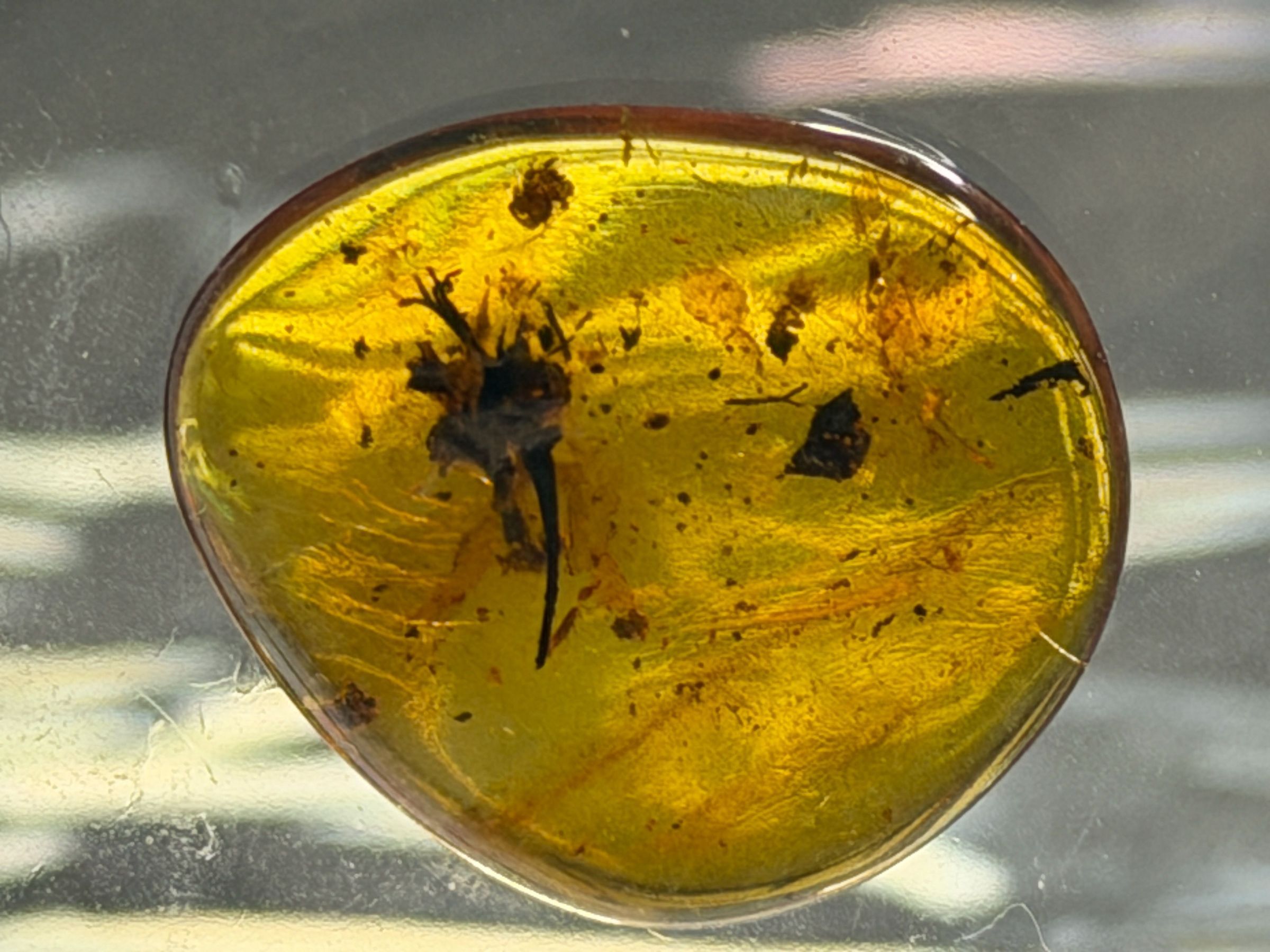
Amber (Burmite) with Flower InclusionsDescription
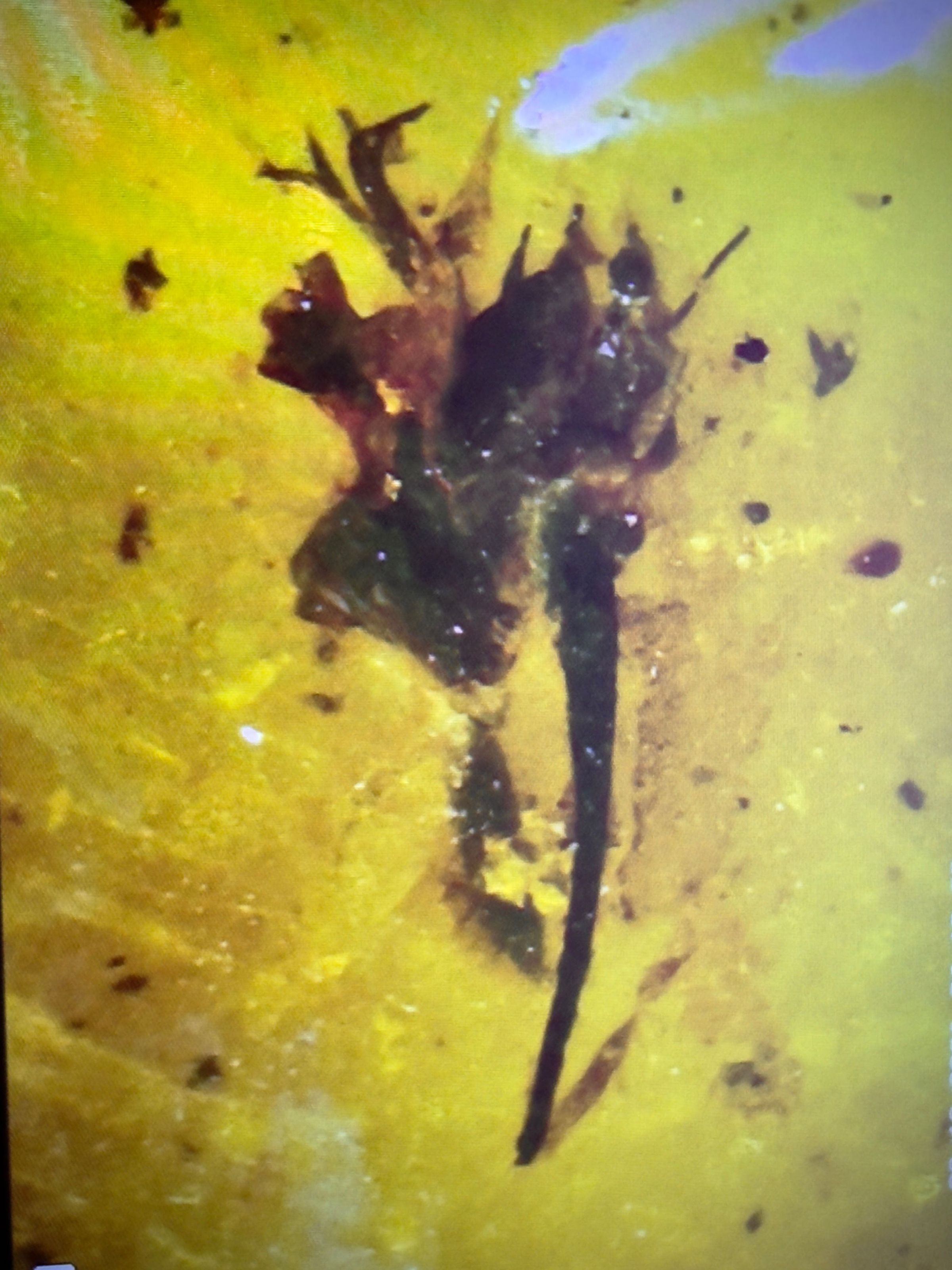
Burmite with Flower Inclusions
Amber (Burmite)
Cretaceous
Hukawng Valley, Myitkyina District, Kachin State, Myanmar
This specimen is a piece of burmite—Cretaceous-age amber from northern Myanmar—preserving delicate floral material entombed within fossilized tree resin. Burmite is renowned for its exceptional clarity and antiquity, dating to approximately 99 million years ago, when tropical forests flourished in what is now Southeast Asia.
Amber forms when sticky resin exuded by ancient trees traps organic material and is rapidly buried, protecting inclusions from decay. Over millions of years, heat and pressure transformed the resin into a stable organic gemstone while preserving extraordinary anatomical detail. In this example, fragments of a flower are suspended within the amber, offering rare direct evidence of early angiosperms (flowering plants) during their initial evolutionary radiation.
Plant inclusions in amber are significantly less common than insects, making floral specimens especially valuable for understanding the structure, diversity, and ecological relationships of Cretaceous forests. Such inclusions help document the coevolution of plants and pollinators at a pivotal moment in Earth’s biological history.
As both a geological substance and a biological time capsule, burmite provides an unparalleled window into ancient forest ecosystems, preserving fragile organisms in three dimensions with remarkable fidelity.
Dimensions: 0.91 × 0.83 × 0.16 inches (2.30 × 2.10 × 0.40 cm)Create Date
September 26, 2025Update Date
September 12, 2026