Name/Title
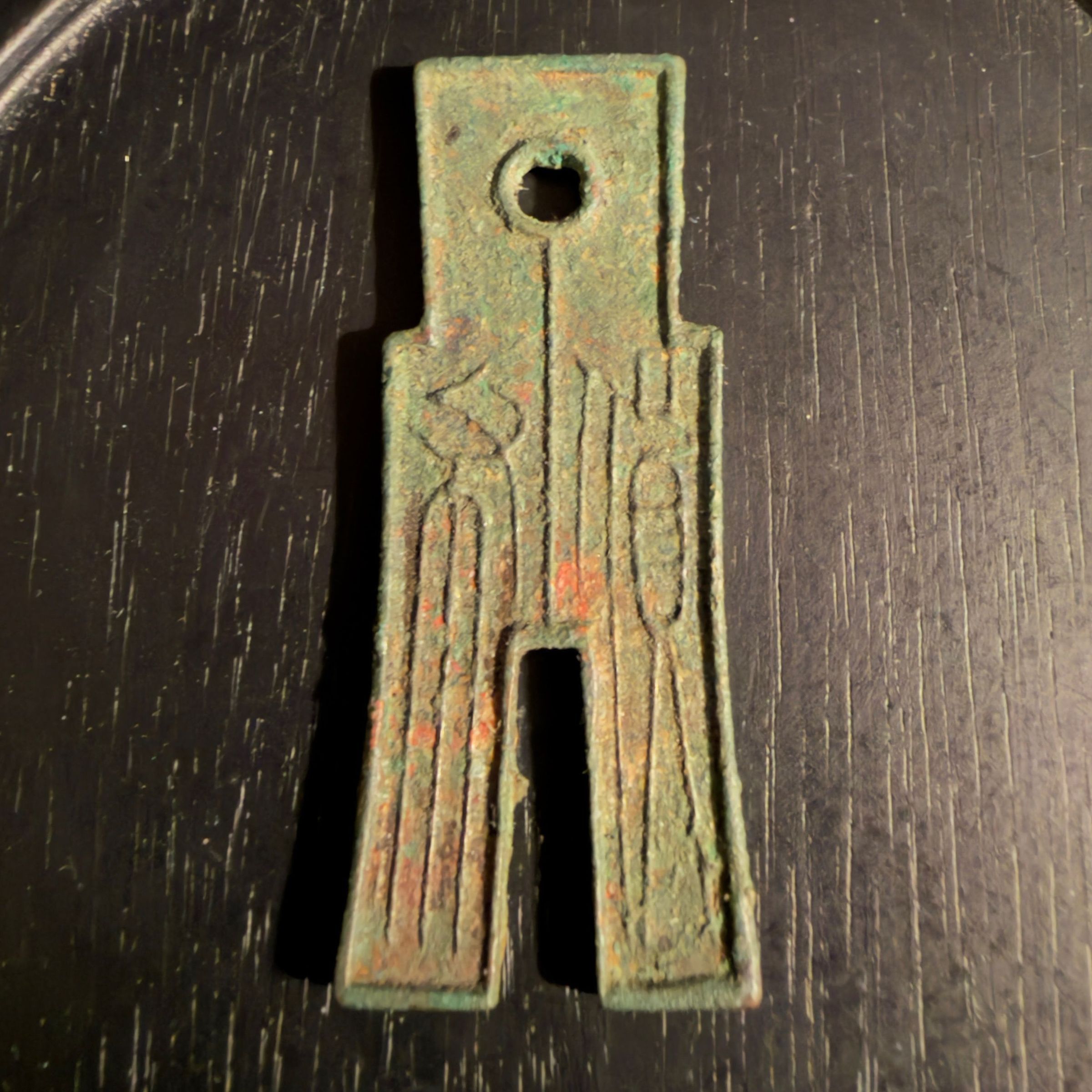
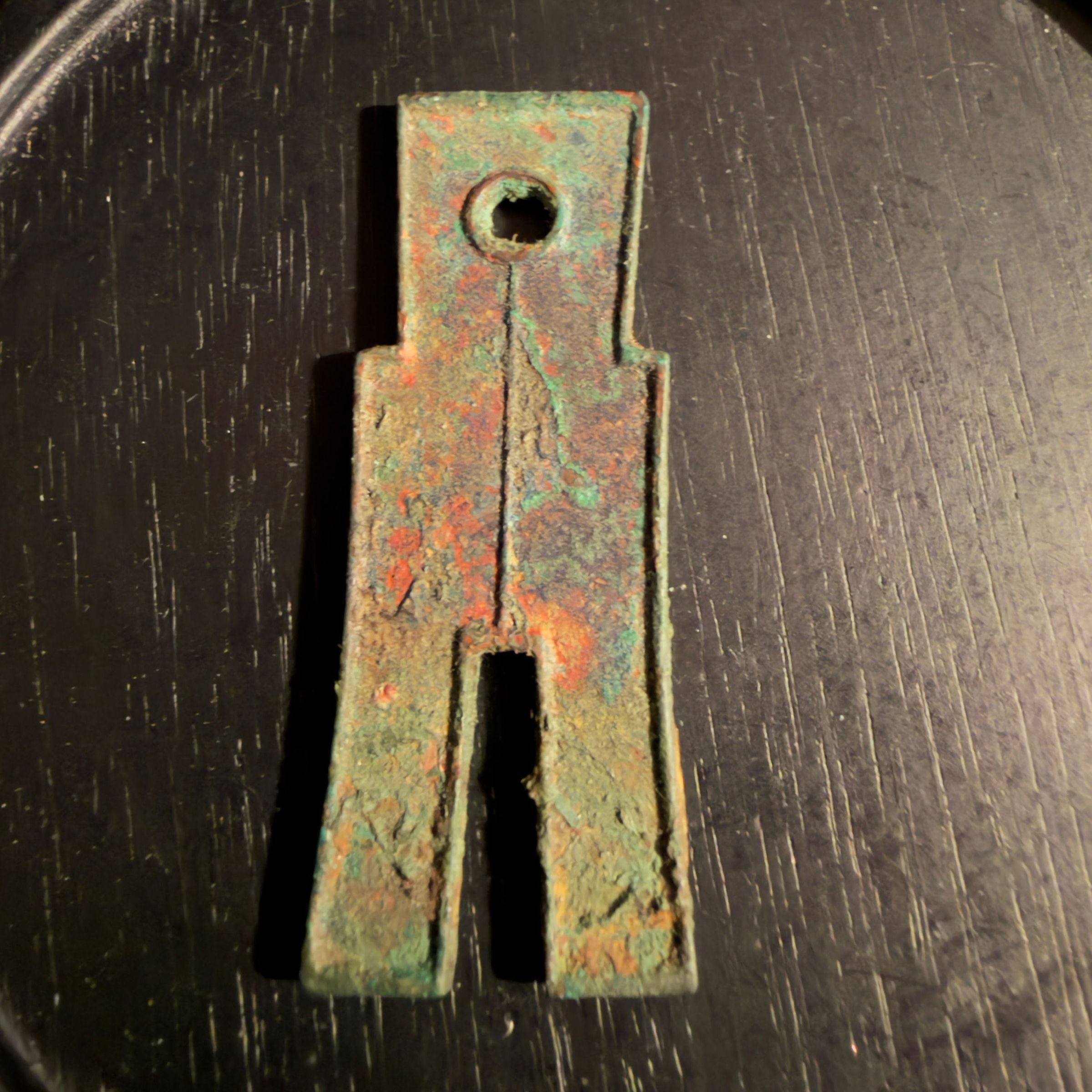
CE 0014 - 0023 China, Xin Dynasty, Wang Mang Huo Bu Spade Money, ca. 14–23 CEDescription
Huo Bu Spade Money
China, Xin dynasty, reign of Wang Mang
Introduced 14 CE; issued ca. 14–23 CE
Cast bronze / copper alloy
57 mm; 15.88 g
References: Hartill 9.30; Schjöth 148; cf. British Museum GC.38
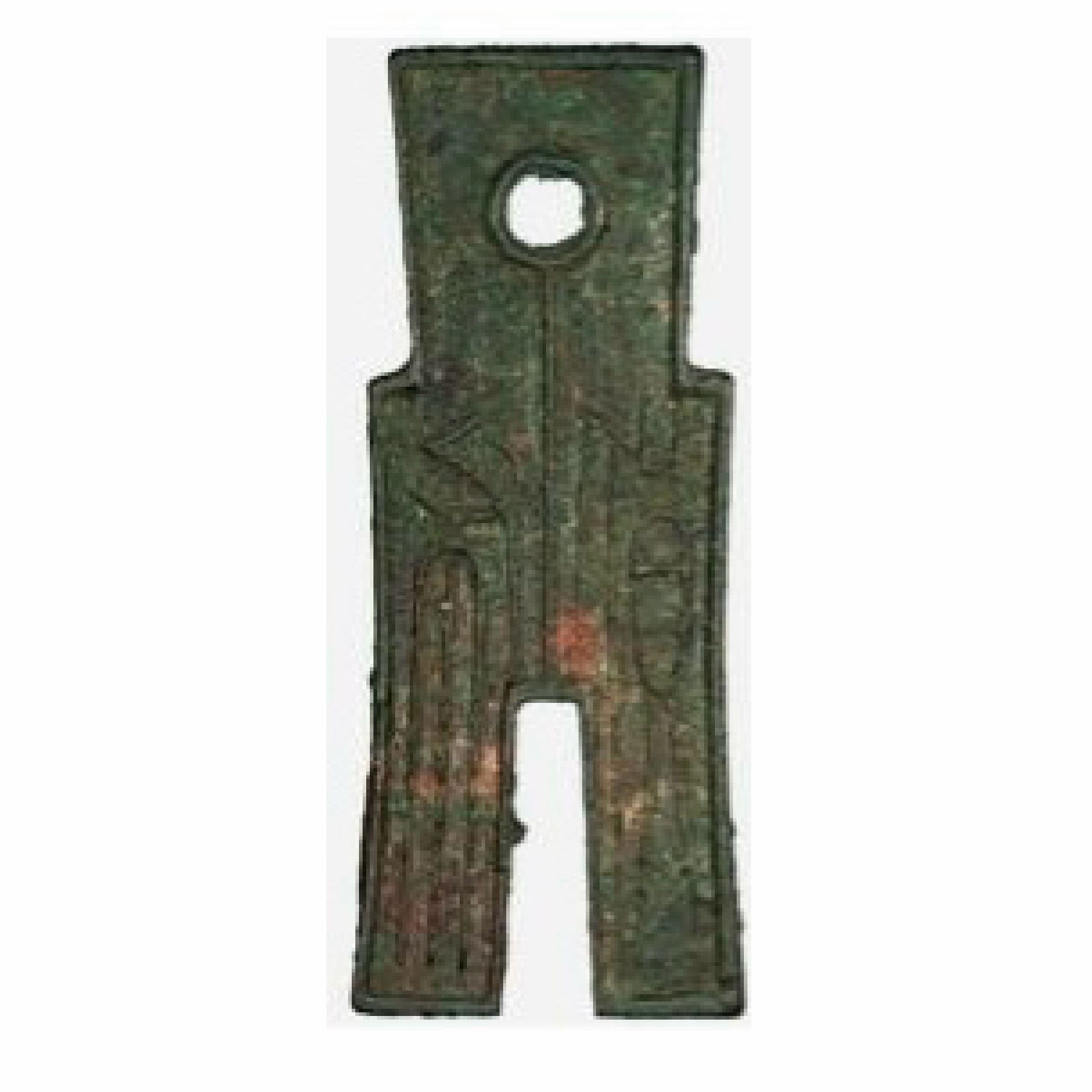
Obverse: 貨布 (huo bu, “money spade”) in seal script, the two characters flanking a central vertical line; circular perforation above.
Reverse: Plain, with patina and casting irregularities visible.
This cast bronze object belongs to the monetary reforms of Wang Mang, who displaced the Western Han imperial line and established the short-lived Xin dynasty. His reign was marked by repeated attempts to reorganize landholding, taxation, social hierarchy, and currency. Britannica notes that his frequent currency reforms disrupted property values and contributed to political and economic instability.
The Huo Bu form revived the archaic shape of earlier Chinese spade money, but it was a reform-era imperial issue, not a Warring States spade. Its form was deliberately antiquarian: Wang Mang’s reforms often invoked older Zhou models as part of an effort to legitimate his rule through claims of restoration and moral renewal. The inscription is read right to left: 貨 (huo, “money” or “goods”) and 布 (bu, “spade” or “cloth/money,” depending context). The circular hole near the top allowed the piece to be strung or suspended, while the lower bifurcated form preserves the visual memory of tool-shaped currency.
The surface condition on this example is appealing for display: dark green patina with red cuprite mottling, sharp surviving characters, and typical roughness from casting and burial. The faint cleaning marks should be noted in a collector record, but they do not substantially detract from its interpretive value.Create Date
July 30, 2025Update Date
May 20, 2026