Name/Title
CE 0605 - 0618 Rare small late Sui Wu Zhu, Emperor Ming Di (605-618 AD), Sui Dynasty, China (G/F #9.13)Description
Sui Dynasty Wu Zhu Cash Coin, Late 6th–Early 7th Century CE
China, Sui Dynasty (581–618)
Late Sui period; attributed to the reign of Emperor Yang (r. 604–618)
Cast bronze cash coin
Gratzer/Fishman 9.13
Description
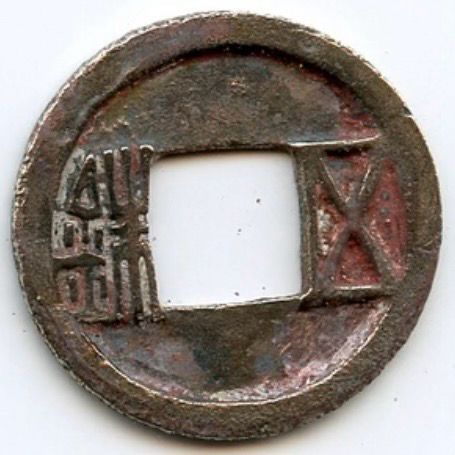
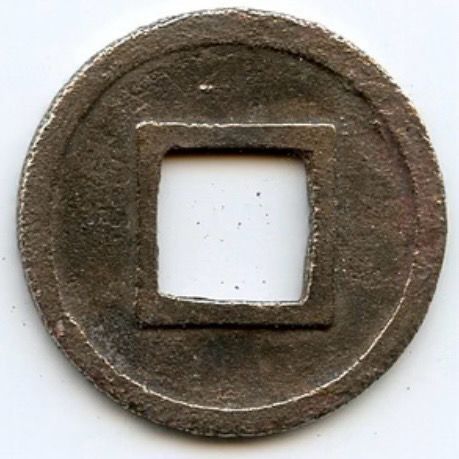
Cast bronze Wu Zhu (五銖) cash coin attributed to the late Sui dynasty and the reign of Emperor Yang (Yangdi, r. 604–618 CE). The obverse bears the two-character inscription 五銖 (Wu Zhu), with 五 (wu, “five”) at right and 銖 (zhu) at left, surrounding a large square central hole. The reverse is uninscribed.
This specimen is attributed by the seller to Gratzer/Fishman 9.13, a small late-Sui variety distinguished by details of the inscription and rims, including a stout outer rim and asymmetric inner-rim treatment on the obverse. The attribution to the specific G/F variety has not been independently checked against the published catalogue.
Wu Zhu, literally “five zhu,” originally designated a coin according to its nominal weight. The denomination was introduced under Emperor Wu of the Western Han in 118 BCE and became one of the longest-lived coin types in Chinese history. Numerous governments and dynasties subsequently produced Wu Zhu coins, with substantial variations in weight, calligraphy, casting and rim configuration.
The Sui dynasty (581–618) emerged after centuries of political fragmentation and reunified much of China under a single imperial government. Although exceptionally brief, the dynasty initiated major administrative and infrastructural projects that influenced the succeeding Tang state, including extensive construction and integration of the canal system connecting northern and southern China.
Under Emperor Yang, enormous public works and costly military campaigns, particularly repeated invasions of Goguryeo on the Korean peninsula, placed severe demands on the empire. Rebellions spread during the final years of his reign, and Emperor Yang was killed in 618 as Sui authority collapsed. The Tang dynasty subsequently established control over the empire.
This coin belongs to the final phase of an exceptionally long monetary tradition. Wu Zhu coinage had originated more than seven centuries before the Sui dynasty. Shortly after the establishment of the Tang, the government introduced the Kaiyuan Tongbao in 621 CE. That reform replaced the old weight-based Wu Zhu denomination with a new naming convention employing tongbao (“circulating treasure” or “circulating currency”), a formula that would influence Chinese coinage for centuries.
Obverse: 五銖 (Wu Zhu, “five zhu”), read right to left around a square central hole. Broad outer rim; asymmetric inner-rim treatment associated with the attributed variety.
Reverse: Uninscribed, with prominent rim surrounding the square central hole and broad outer rim.
Condition: Substantially complete example with strongly defined inscription and well-preserved inner and outer rims. Dark brown to reddish-brown patinated surfaces with minor deposits and casting irregularities. Reverse rims particularly well preserved. No active bronze disease apparent from the photographs.
Reference: Gratzer/Fishman 9.13 (seller attribution; catalogue attribution not independently verified).Create Date
August 13, 2026Update Date
August 13, 2026