Name/Title
CE 0961 - 0968 Kai Yuan TB cash, Emperor Li Yu (961-978), Southern Tang Kingdom, China (H#15.101)Description
Southern Tang Kaiyuan Tongbao Cash Coin of Li Yu, 961–975 CE
China, Southern Tang Kingdom (937–975)
Reign of Li Yu (r. 961–975)
Issued from 961 CE
Cast bronze 1-cash coin
25 mm; 3.41 g
Hartill 15.101
Description
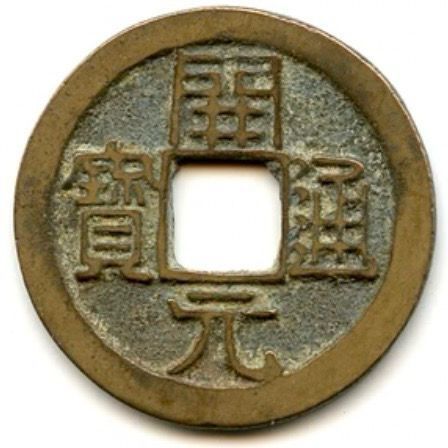
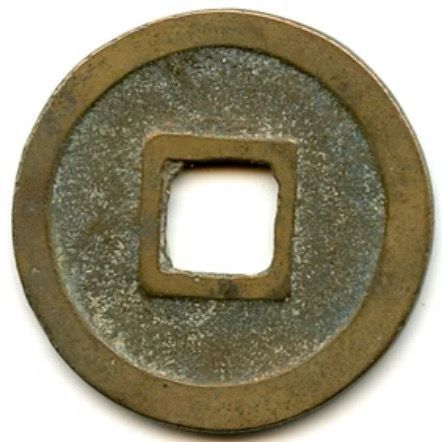
Cast bronze Kaiyuan Tongbao (開元通寶) cash coin issued under Li Yu (李煜), the final ruler of the Southern Tang Kingdom. The obverse bears the four-character inscription 開元通寶 (Kaiyuan Tongbao) in clerical script (lishu), arranged around a square central hole and read top to bottom and then right to left. The reverse is uninscribed.
This specimen corresponds to Hartill 15.101, the clerical-script Southern Tang Kaiyuan Tongbao with a blank reverse. Southern Tang examples can be distinguished from the much earlier Tang dynasty coins bearing the same inscription by characteristics including their relatively broad rims and lower-relief inscriptions.
The Southern Tang began issuing Kaiyuan Tongbao under Li Yu in 961 CE. The choice of inscription consciously continued one of China’s most important monetary traditions. Kaiyuan Tongbao had first been introduced by the Tang dynasty in 621 and became an enduring model for the round, square-holed cash coin. Its revival by the Southern Tang reflected that kingdom’s political and cultural identification with the prestigious Tang legacy.
The Southern Tang (937–975) was one of the regional states that governed portions of China during the period following the collapse of the Tang dynasty and preceding the reunification accomplished largely by the Song. Centered in the lower Yangtze region, with its capital at Jinling, present-day Nanjing, the kingdom developed a particularly distinguished literary and artistic culture.
Li Yu, its final ruler, is remembered today especially for his poetry. After ascending the throne in 961, he governed an increasingly vulnerable kingdom confronted by the expanding Song dynasty. Song forces conquered the Southern Tang in 975, and Li Yu was taken to the Song capital. His poetry following the loss of his kingdom, particularly his ci verse concerned with memory, displacement, and loss, became an important part of his later cultural reputation.
Obverse: 開元通寶 (Kaiyuan Tongbao), in clerical script, surrounding a square central hole; broad outer rim.
Reverse: Blank, with raised inner and outer rims.
Condition: Complete and clearly legible inscription with strong outer and square-hole rims. Brown patination on the raised characters and rims contrasts with gray-green surfaces in the recessed fields. Minor surface deposits and irregularities are present. The appearance may reflect previous cleaning or conservation treatment, but this cannot be established from photographs alone.
Reference: Hartill 15.101.Create Date
August 13, 2026Update Date
August 13, 2026