Name/Title
CE 1103 - 1105 Large 10-cash, Emperor Hui Zong (1101-25 CE), Northern Song, China (H#16.407)Description
Northern Song Dynasty Chongning Zhongbao 10-Cash Coin of Emperor Huizong, 1103–1105 CE
China, Northern Song Dynasty (960–1127)
Emperor Huizong (r. 1100–1125)
Chongning era (1102–1106); coin issued 1103–1105 CE
Cast bronze 10-cash coin
33 mm; 8.18 g
Hartill 16.407
Description
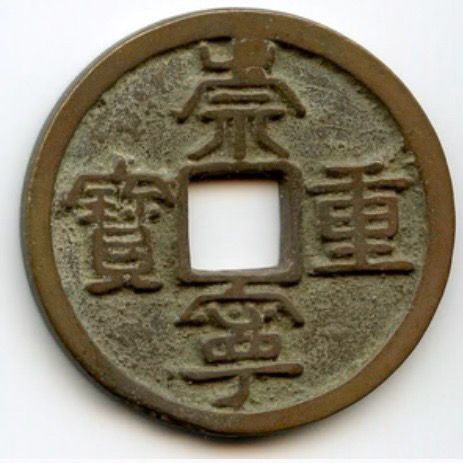
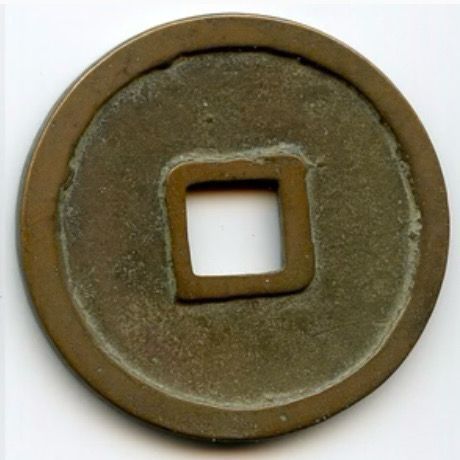
Large cast bronze Chongning Zhongbao (崇寧重寶) 10-cash coin issued during the reign of Emperor Huizong (宋徽宗) of China’s Northern Song dynasty. The obverse bears the four-character inscription 崇寧重寶 (Chongning Zhongbao) in clerical script (lishu), arranged around a square central hole and read top to bottom and then right to left. Chongning (“Exalted Tranquility”) was Huizong’s second reign era, while zhongbao (“heavy currency” or “heavy treasure”) was a monetary designation associated with higher-denomination cash. The reverse is uninscribed.
This specimen corresponds to Hartill 16.407, distinguished by its relatively large, heavy clerical-script characters. Its 33 mm diameter reflects the intentionally imposing format of the 10-cash denomination.
The coin belongs to an important but short-lived monetary experiment during Huizong’s reign. Five-cash Chongning Zhongbao were introduced in 1102, followed by the larger 10-cash denomination in 1103. Attempts to circulate high-denomination bronze cash proved problematic, and production of the 10-cash type was discontinued in 1105.
Huizong’s reign represents one of the most culturally distinguished periods of the Northern Song dynasty. An accomplished painter, calligrapher, poet, and patron of the arts, Huizong cultivated an elaborate imperial court and is particularly associated in numismatics with the distinctive calligraphic styles appearing on his coinage. His reign nevertheless ended amid military catastrophe. The Jurchen Jin captured the Song capital of Kaifeng in 1127 and took Huizong and his successor Qinzong prisoner, bringing the Northern Song dynasty to an end.
Obverse: 崇寧重寶 (Chongning Zhongbao), in clerical script, surrounding a square central hole.
Reverse: Blank, with raised inner and outer rims.
Condition: Strong, substantially complete obverse inscription with well-defined inner and outer rims. Brown to olive-brown patinated surfaces with lighter gray-green deposits or surface alteration within portions of the fields. Reverse substantially complete but without inscription. No major casting break visible. Whether the surfaces have received previous cleaning or conservation treatment cannot be determined from photographs alone.
Reference: Hartill 16.407.Create Date
August 13, 2026Update Date
August 13, 2026