Name/Title
CE 1286–1287 — Qaidu, Ögedeid Mongols — Silver Dirham, Otrar Mint, AH 685Description
Mongol Empire — Ögedeid / Chaghatayid Central Asia
Qaidu (c. 1235–1301)
Silver dirham
Otrar mint
AH 685 (1286–1287 CE)
Silver
Approx. 25 mm; 1.84 g [seller’s measurements]
Nyamaa 43; SNA Tübingen 10 var.; cf. Album 1985/1984X
This silver dirham was struck at Otrar, an important commercial city of medieval Central Asia, during the period of Qaidu, a great-grandson of Ögedei Khan. The coin belongs to the politically complex decades following the fragmentation of the unified Mongol Empire, when competing descendants of Genghis Khan governed overlapping territories and contested control of Central Asia.
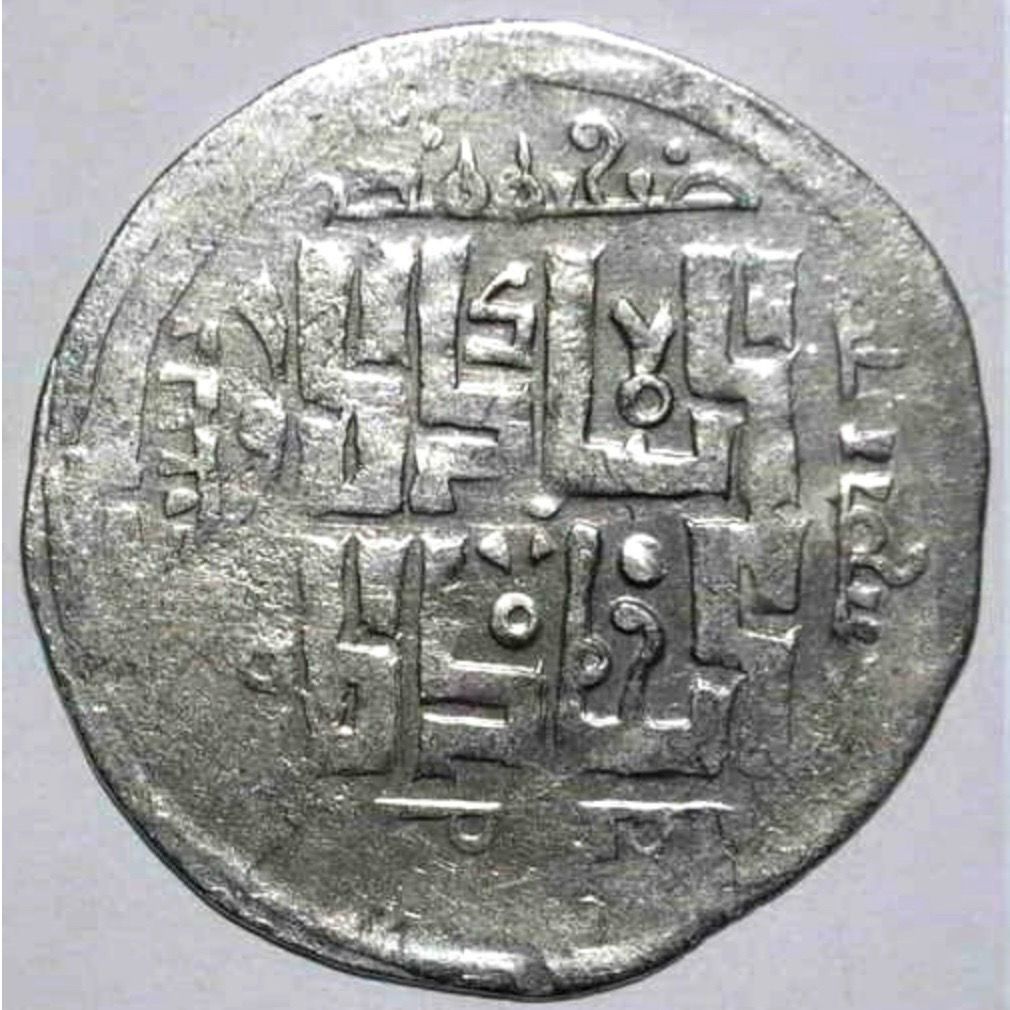
One side contains the central Arabic inscription:
an depicting the ruleالحمد لله / الملك لله
al-ḥamdu lillāh / al-mulku lillāh
“Praise be to God / the kingdom belongs to God.”
Surrounding it is a square Kufic inscription giving the mint and date. Published examples of this type read:
ḍuriba hādhā bi-baldat Utrār sana khams wa-thamānīn wa-sitt miʾa
“Struck in the city of Otrar in the year six hundred and eighty-five.”
The inscription therefore provides unusually specific information about the coin’s manufacture: Otrar, AH 685 (1286–1287 CE).
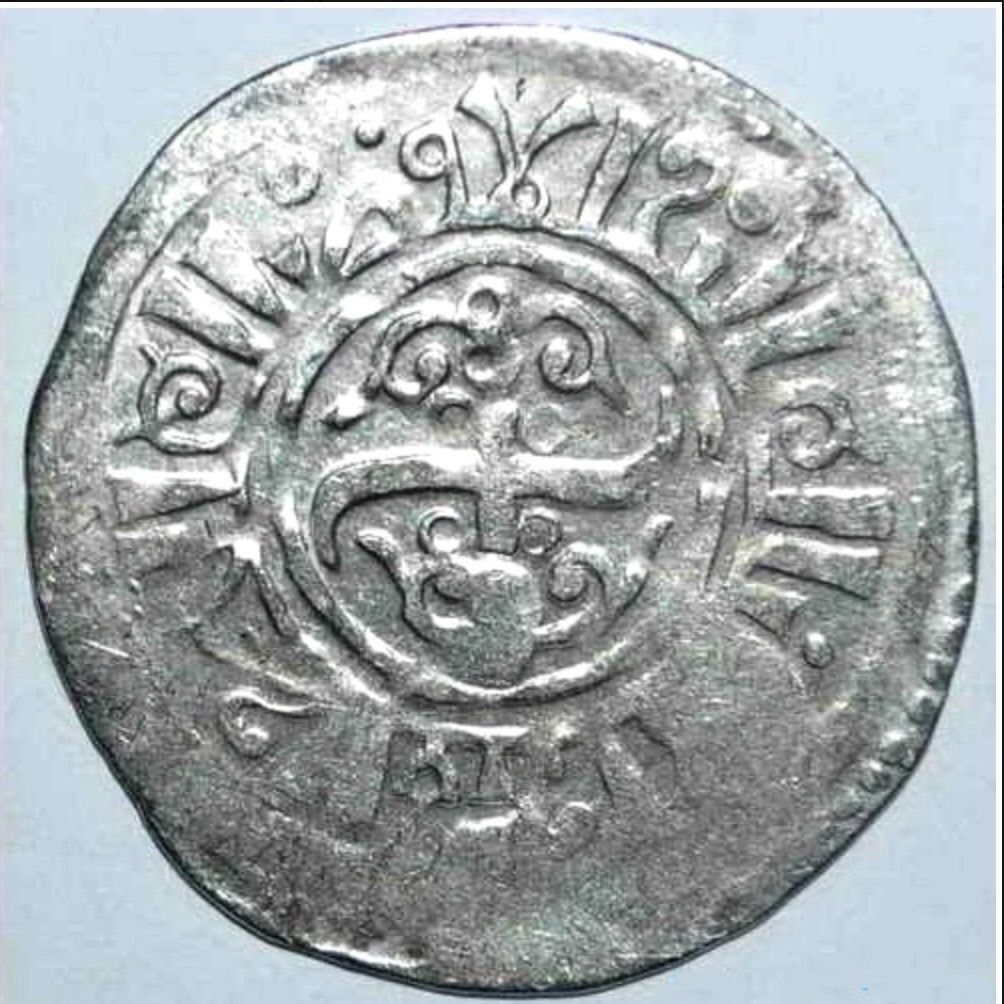
The opposite side is dominated by Qaidu’s tamgha, a dynastic or personal emblem used on his coinage. Four annulets and ornamental elements surround the central device. Rather t
hr, as was common on much contemporary European coinage, the coin communicates political authority through inscriptions and the tamgha.
The marginal Arabic inscription names the Abbasid caliph al-Nasir li-Din Allah:
al-imām al-aʿẓam al-Nāṣir amīr al-muʾminīn
“The supreme imam al-Nasir, Commander of the Faithful.”
This is historically notable because al-Nasir died in 1225, more than sixty years before this coin was struck. His name continued to appear on this Central Asian coinage after his death. It therefore should not be interpreted as identifying the contemporary political ruler. Qaidu’s tamgha provides the more immediate statement of secular authority.
Qaidu was the son of Qashi and great-grandson of Ögedei Khan, Genghis Khan’s third son and successor as Great Khan. During the later thirteenth century Qaidu established a substantial power base in Central Asia and opposed the authority of Kublai Khan and Kublai’s successor Temür. His prolonged conflict with the Yuan rulers involved shifting alliances among several branches of the Mongol imperial family.
Otrar was particularly significant within this political geography. Located near the Syr Darya in present-day Kazakhstan, it had long served as an important node in the commercial networks connecting Central Asia, Iran, the steppe, and China. Its association with Mongol history predates Qaidu: the killing of members of a Mongol trading caravan and subsequent execution of Genghis Khan’s envoys by the Khwarazmian governor of Otrar in 1218–1219 helped precipitate the Mongol invasion of the Khwarazmian Empire.
The coin also illustrates the difficulty of imposing modern dynastic categories on later Mongol coinage. Otrar was associated with Chaghatayid territory, and numismatic catalogues have traditionally classified these issues with the Chagatai Khanate. Qaidu, however, belonged to the House of Ögedei, not the Chaghatayid line. Modern auction catalogues consequently vary: CNG classifies the issue as “Mongols, Ögedeids,” whereas Leu catalogues it under “Chaghatayid Khans, temp. Qaidu.”Create Date
September 16, 2026Update Date
September 16, 2026