Name/Title
CE 1517 Virgil, Aeneas at the Entrance to the Underworld, Book VI of the AeneidDescription
Virgil (70–19 BCE)
Woodcut design associated with the Grüninger Virgil illustration cycle
From Aeneis Virgiliana
Lyon: Jacques Sacon for Cyriacus Hochperg, 1517
Woodcut and letterpress on paper
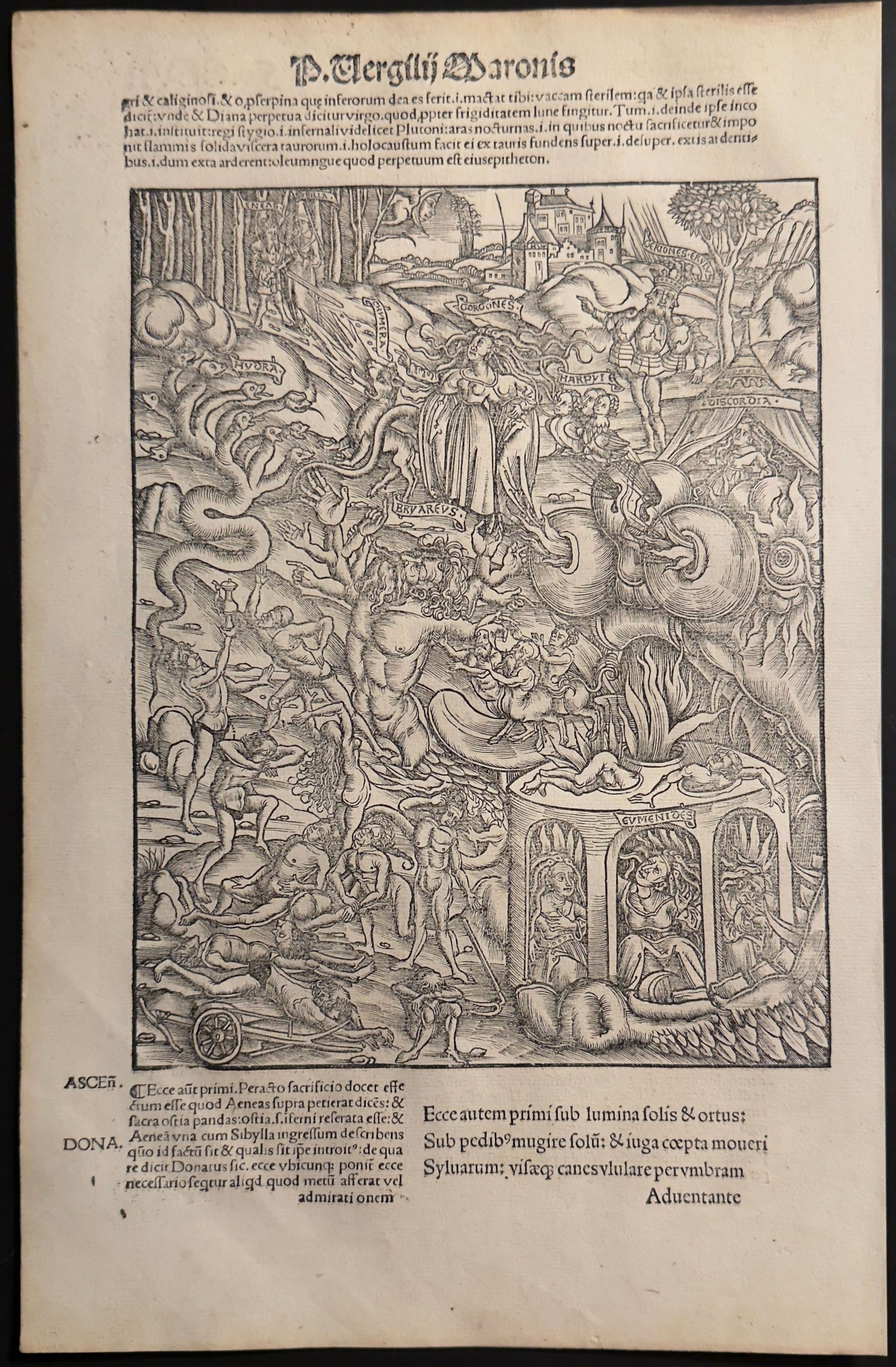
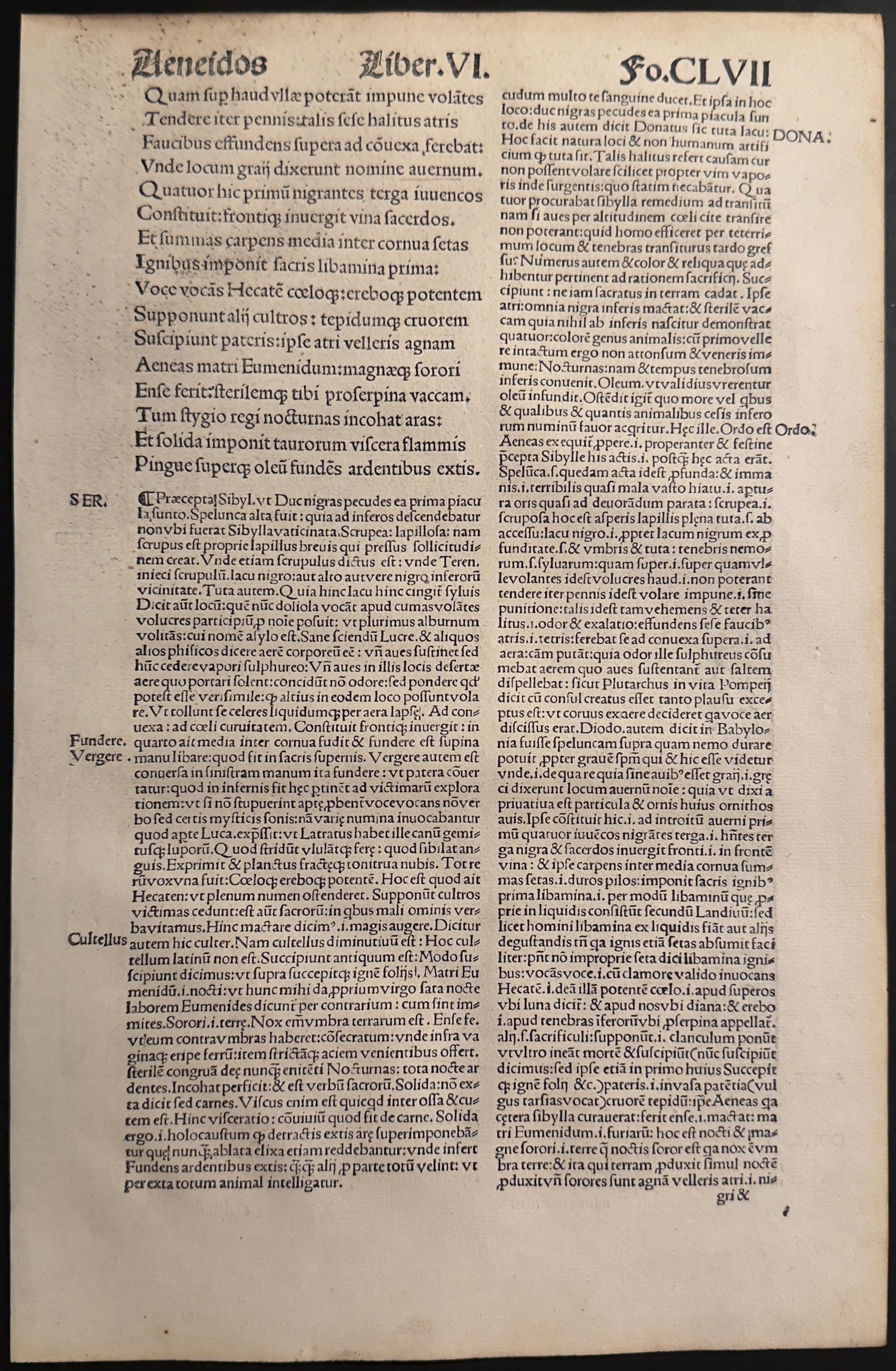
This leaf illustrates Aeneas’s approach to the Underworld in Book VI of Virgil’s Aeneid. Guided by the Cumaean Sibyl, Aeneas encounters the beings and personifications associated with the entrance to the realm of the dead.
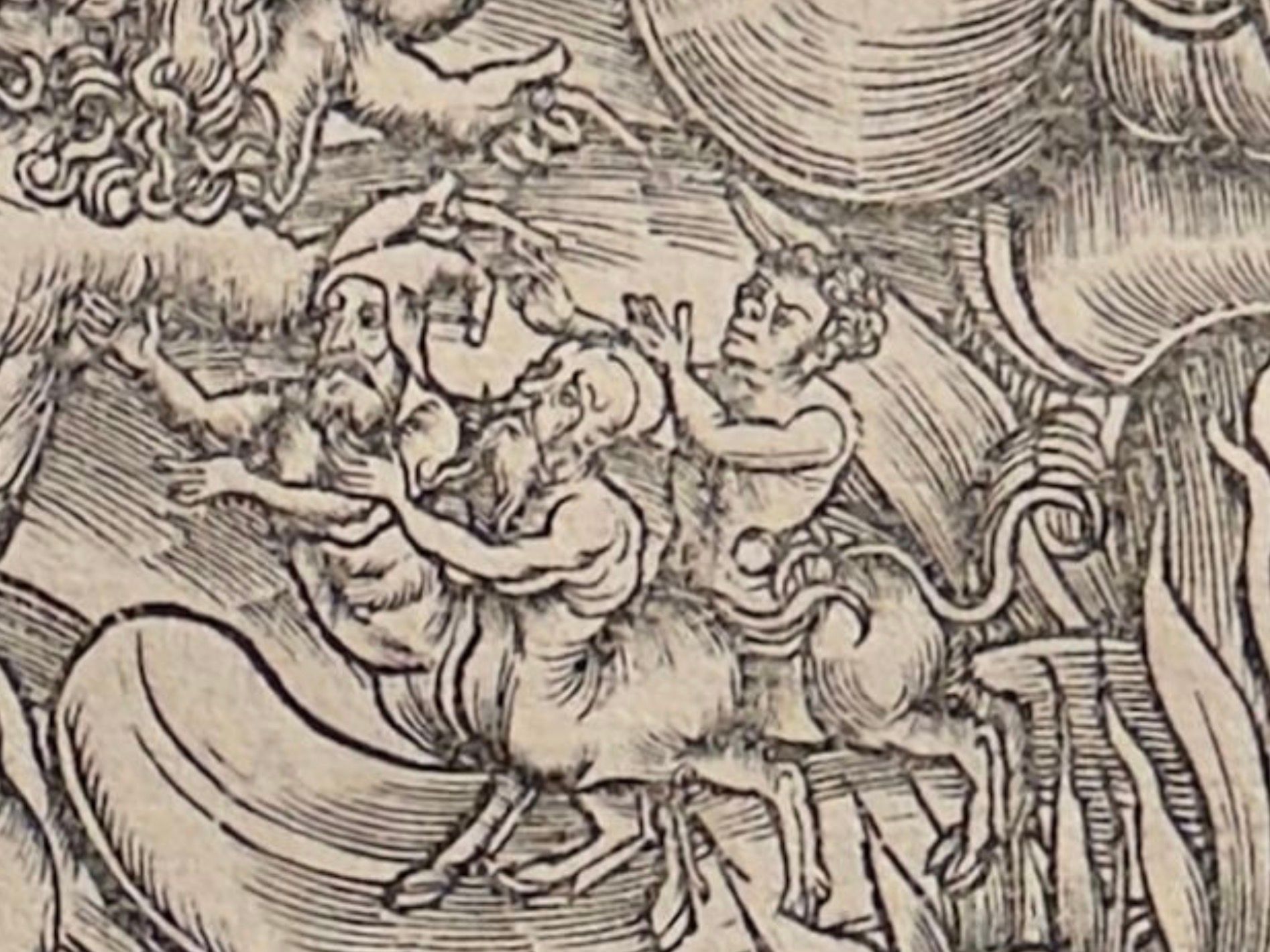
The densely populated woodcut translates Virgil’s literary catalogue into a single visual field. Among the figures are monsters and hybrid creatures associated with the Underworld, including Gorgons, Harpies, Briareus, and other beings described in the poem. Multiple episodes and figures are presented simultaneously rather than according to a single moment in linear narrative.
The illustration belongs to the woodcut cycle originally produced for the influential Strasbourg Virgil associated with Sebastian Brant and printed by Johann Grüninger in 1502. The blocks or designs were subsequently reused in other editions, including this Lyon printing by Jacques Sacon in 1517. The imagery therefore also illustrates the mobility of printing materials and visual compositions during the first decades of European illustrated book production.
Unlike the natural-history monsters represented in the Gessner, Jonston, and Aldrovandi material elsewhere in the collection, the creatures here occupy an explicitly literary and mythological context. The leaf consequently provides a useful comparison between monsters represented as components of classical narrative and superficially similar creatures incorporated into Renaissance and early modern investigations of the natural world.Type of Print
WoodcutCreate Date
July 5, 2026Update Date
September 6, 2026