Name/Title
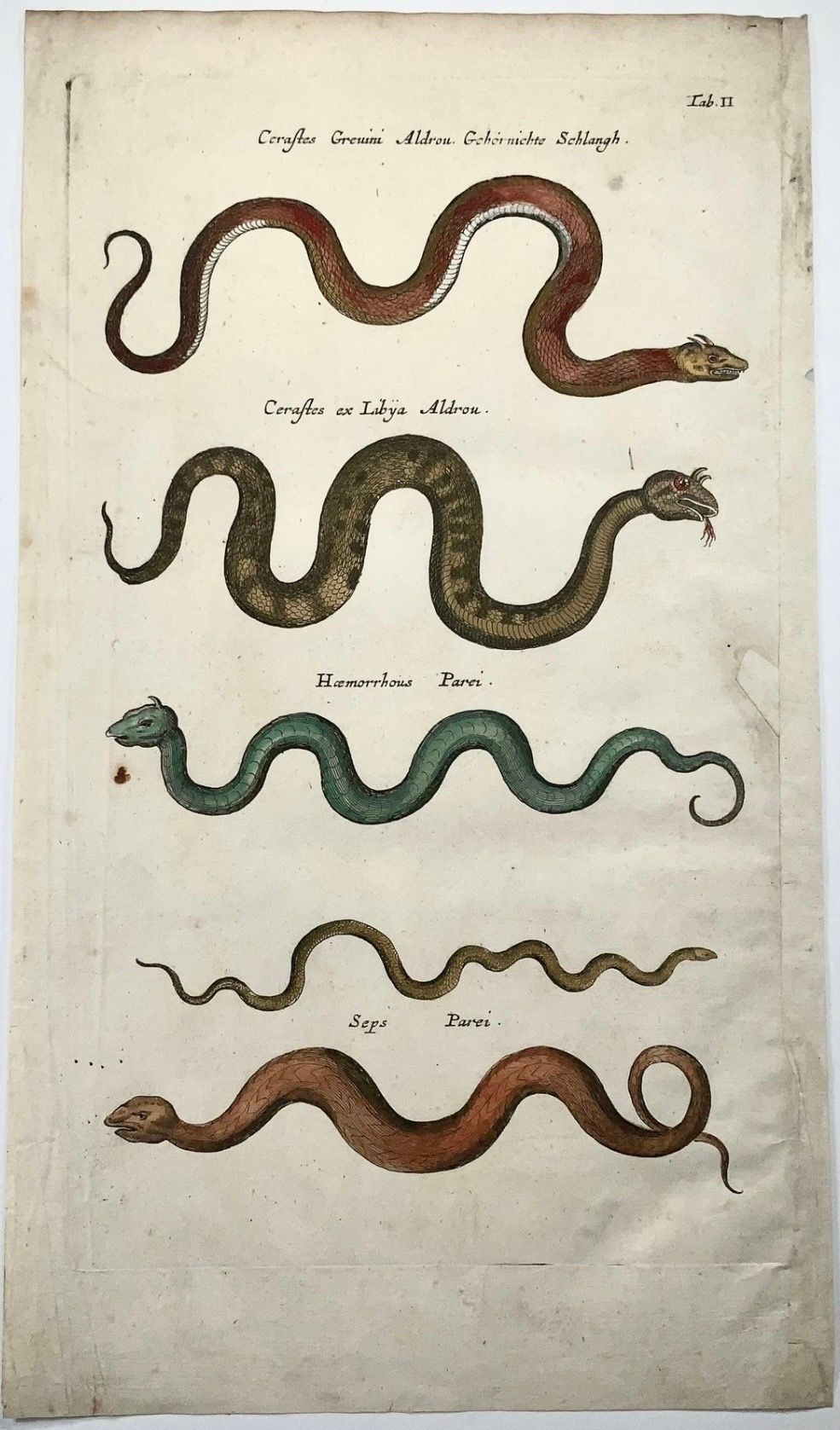
CE 1657 — John Jonston, Snakes and Vipers (TAB. II)Description
John Jonston (1603–1675)
After Matthäus Merian the Elder (1593–1650)
From Historiae naturalis de serpentibus libri II
Amsterdam: Johannes Jacobus Schipper, 1657
Copper engraving on paper with hand coloring
Plate II
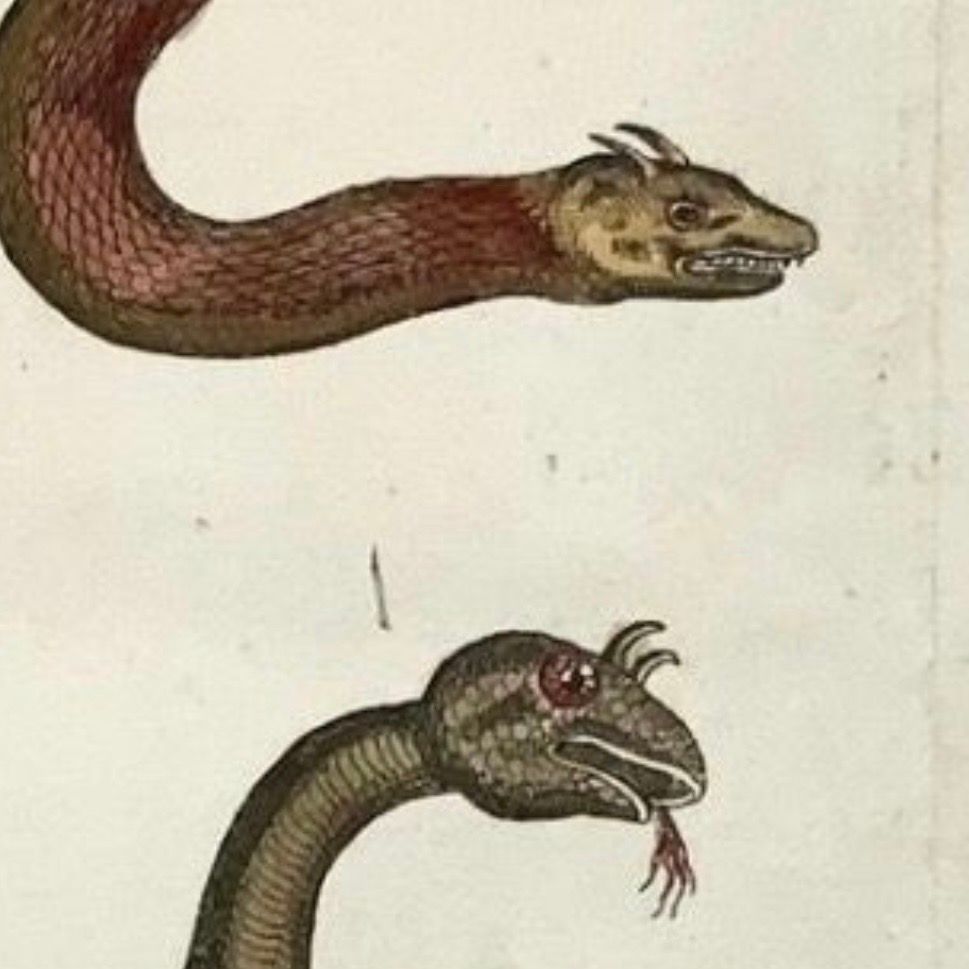
Plate II from Jonston’s natural history of serpents depicts five snake-like animals arranged individually across the sheet. Their inscriptions include Cerastes, Haemorrhous, and Seps, names inherited substantially from classical natural history. The uppermost creature is also identified in German as Gehörnte Schlang (“horned snake”).
Jonston’s treatment of serpents combined information from classical authorities with medieval and Renaissance natural history and more recent European accounts. The resulting classifications do not correspond consistently to modern zoological species. Animals that could be related to observable snakes therefore appear within the same intellectual system as descriptions whose anatomical or behavioral characteristics had been transmitted through older textual traditions.
This coexistence was characteristic of seventeenth-century natural history. Compilers such as Jonston were attempting to reconcile accumulated written authorities with illustrations, travelers’ reports, specimens, and increasingly systematic observation. The plate consequently provides evidence not only of what animals Europeans represented but also of the categories through which the natural world was organized before modern biological taxonomy.
The imagery belongs to the illustrative tradition associated with Matthäus Merian the Elder’s workshop. Jonston’s original serpent volume appeared at Frankfurt in the early 1650s; this impression comes from Johannes Jacobus Schipper’s 1657 Amsterdam edition.Create Date
August 22, 2026Update Date
September 6, 2026