Name/Title
CE 1887–1898 — China, Qing Dynasty — Guangxu Tongbao 1 Cash, Board of Revenue Mint, East Branch — Hartill 22.1275Description
China — Qing Dynasty
Guangxu Emperor (r. 1875–1908)
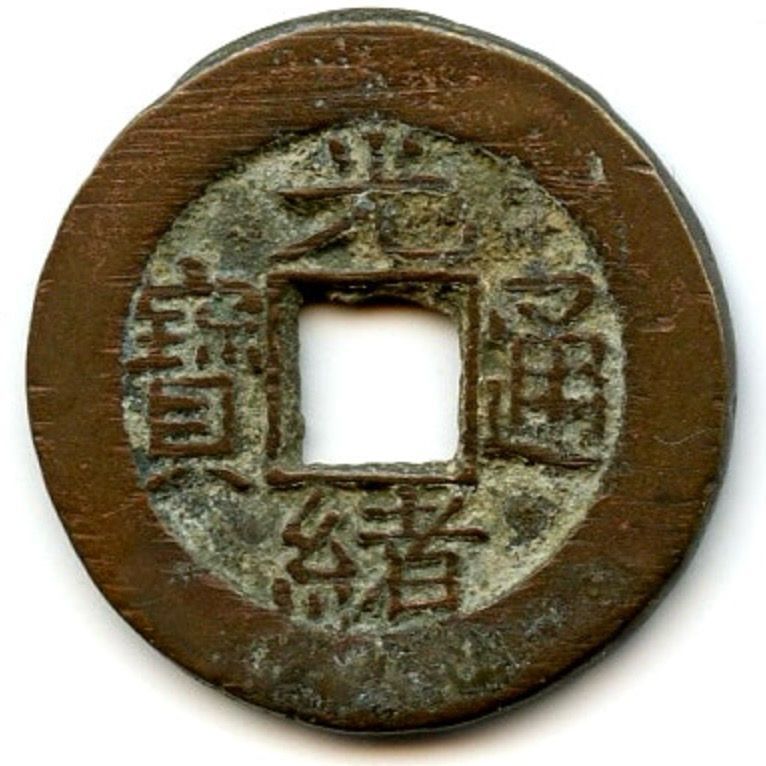
Guangxu Tongbao 光緒通寶
1 cash
Board of Revenue Mint, East Branch, Beijing
1887–1898
Cast brass
22.5 mm; 3.43 g
Hartill 22.1275
This cast cash coin was issued during the reign of the Guangxu Emperor by the Board of Revenue mint in Beijing, one of the principal institutions responsible for producing Qing dynasty copper-alloy coinage.
The obverse carries the four Chinese characters 光緒通寶 (Guāngxù tōngbǎo), arranged around the square central hole and read top-bottom-right-left. Guangxu is the emperor’s reign title, while tongbao is the traditional designation meaning approximately “circulating treasure” or “current treasure.” The formula belongs to a monetary tradition extending back many centuries before the Qing dynasty.
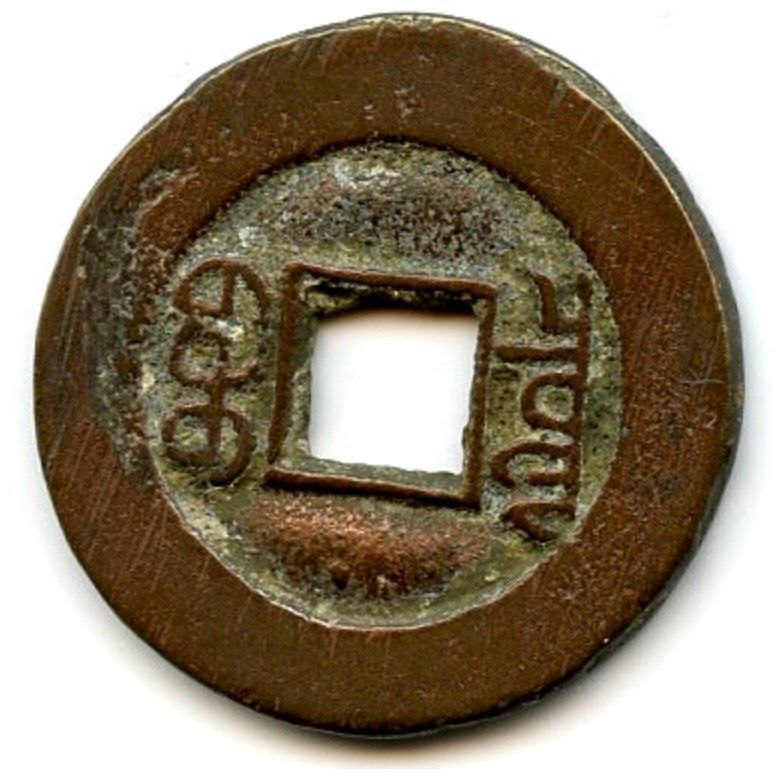
The reverse bears the mint name in Manchu, read vertically on either side of the square hole: Boo-chiowan, identifying the Board of Revenue mint. Qing cash commonly combined Chinese reign inscriptions on the obverse with Manchu mint identification on the reverse, reflecting the Manchu political identity of the ruling dynasty within an established Chinese monetary form.
This specimen can be attributed more precisely to the East Branch of the Board of Revenue mint. Hartill 22.1275 is the large-format East Branch variety, distinguished by details of the calligraphy—particularly the closed head and two-dot form of the character tong. Numismatic references date this variety to approximately 1887–1898.
The coin was produced by casting rather than striking. Molten brass was poured into molds containing multiple coin impressions; after cooling, the connected coins were separated and finished. The square central hole facilitated finishing and also allowed cash coins to be carried in strings, the traditional accounting unit of large quantities of Chinese copper-alloy currency.
This coin belongs to the final decades of China’s long-lived cast cash tradition. During Guangxu’s reign, traditional cast cash circulated alongside increasingly important machine-struck coinage. By the early twentieth century, mechanized minting was rapidly replacing the casting technology that had characterized much of Chinese monetary production for roughly two millennia.Create Date
September 16, 2026Update Date
September 18, 2026