Name/Title
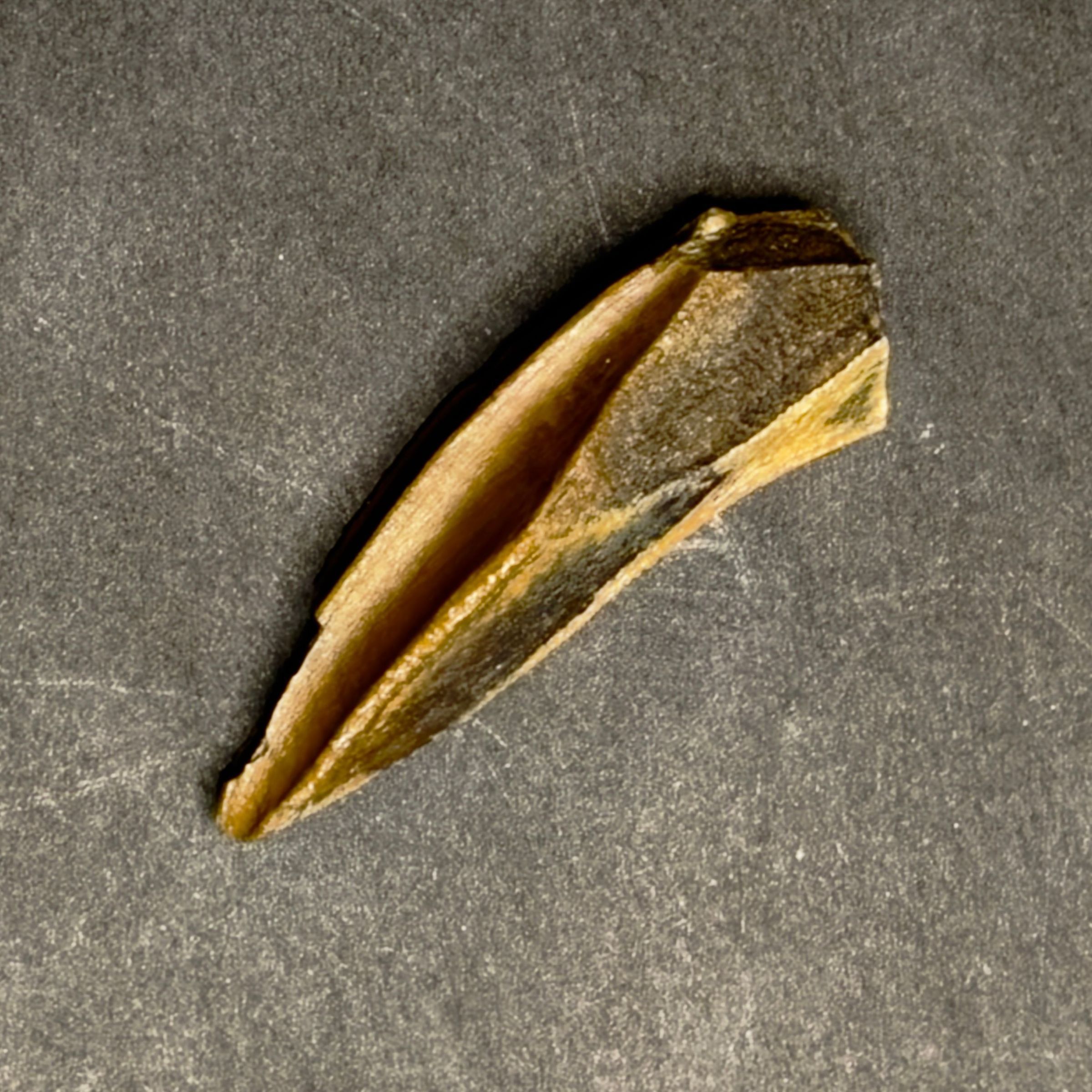
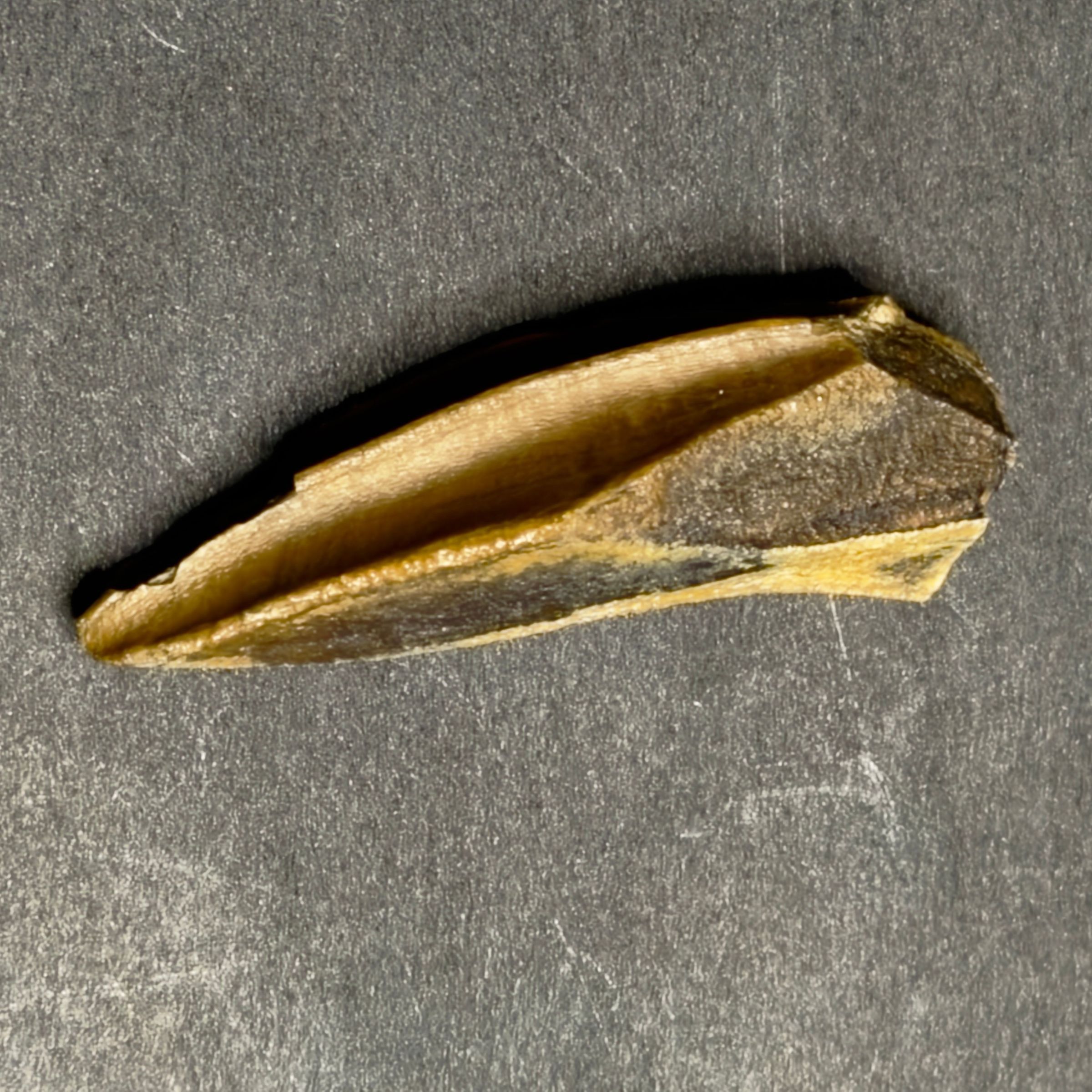
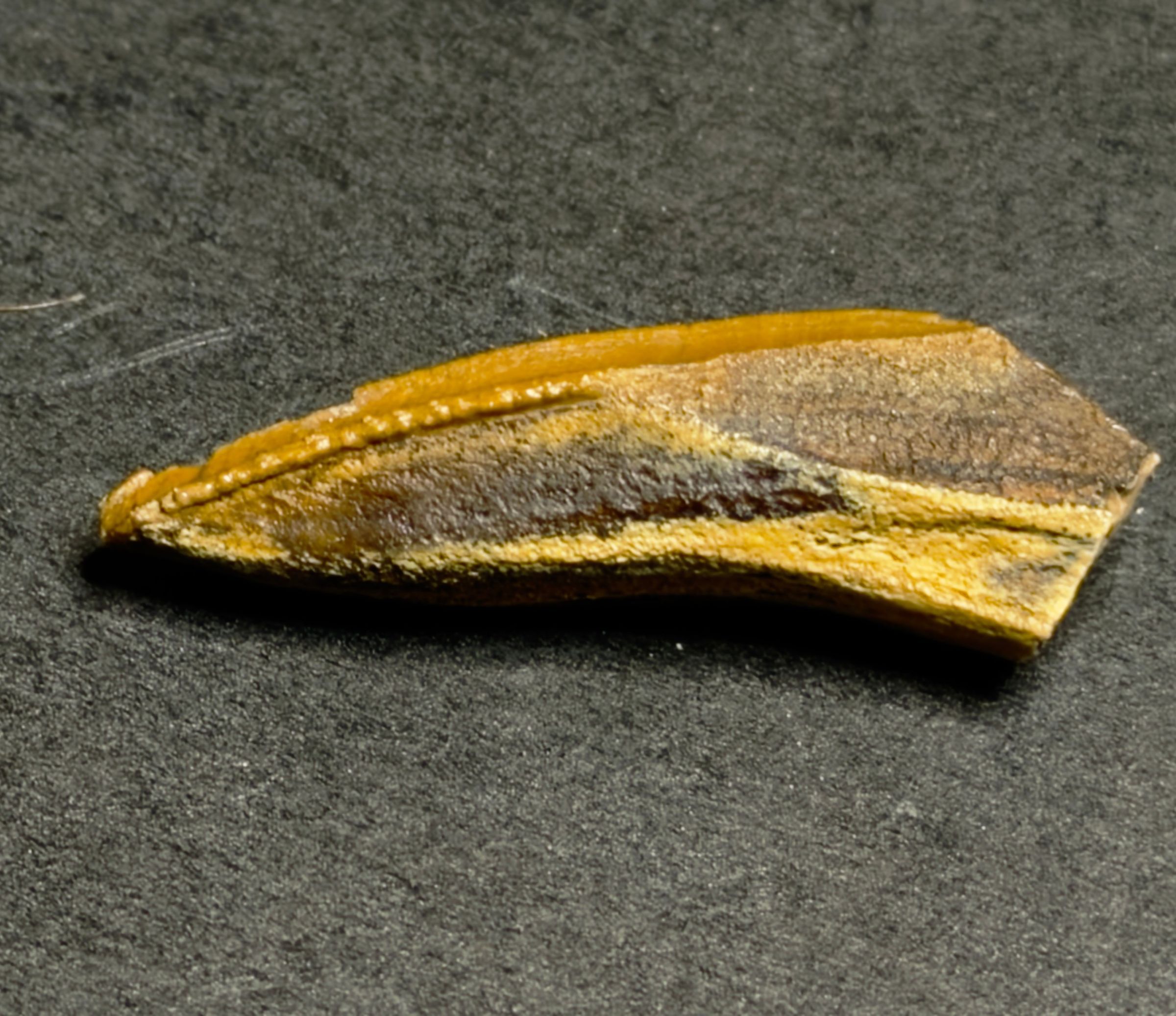
Fossilized Dinosaur Tooth (Edmontosaurus sp.)Description
Fossilized Dinosaur Tooth (Edmontosaurus sp.)
Edmontosaurus
Late Cretaceous (ca. 68–66 million years ago)
Hell Creek Formation
Montana, United States
This specimen is an isolated fossil tooth of Edmontosaurus, a large hadrosaurid (“duck-billed”) dinosaur that was among the most abundant herbivores of the Late Cretaceous in western North America. Edmontosaurus inhabited river floodplains and coastal lowlands, feeding on a wide range of vegetation in the final ecosystems that existed before the end-Cretaceous mass extinction.
The tooth is elongate and laterally compressed, with a gently curved profile and a distinct median ridge. Fine wear facets along the edges reflect its role within a complex dental battery—an interlocking arrangement of hundreds of teeth that functioned together as a powerful grinding surface. Individual teeth such as this were continually replaced during life, making isolated specimens common in Hell Creek deposits.
The Hell Creek Formation preserves a diverse assemblage of plants and animals from the last two million years of the Age of Dinosaurs, including Triceratops, Tyrannosaurus rex, and hadrosaurs such as Edmontosaurus. Teeth provide especially important evidence for herbivorous dinosaurs, offering insight into feeding mechanics, tooth replacement, and diet even in the absence of associated skeletal remains.
As a small but diagnostic element, this tooth represents one component of a highly specialized chewing system and offers a direct connection to the dominant plant-eaters of Late Cretaceous North America.
Dimensions: 1.10 × 0.40 × 0.40 inches (2.80 × 1.01 × 1.01 cm)Create Date
August 3, 2025Update Date
September 12, 2026