Name/Title
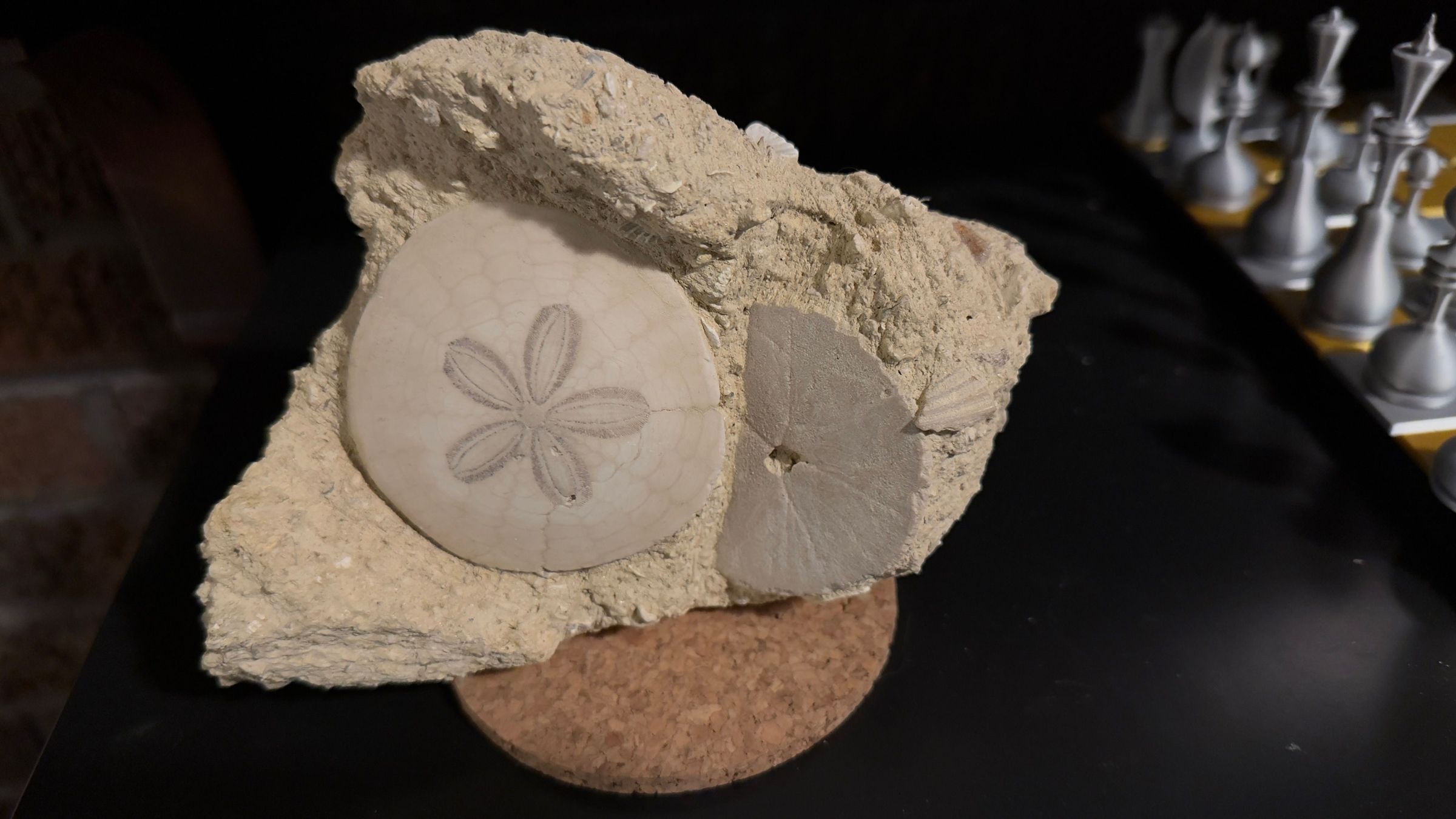
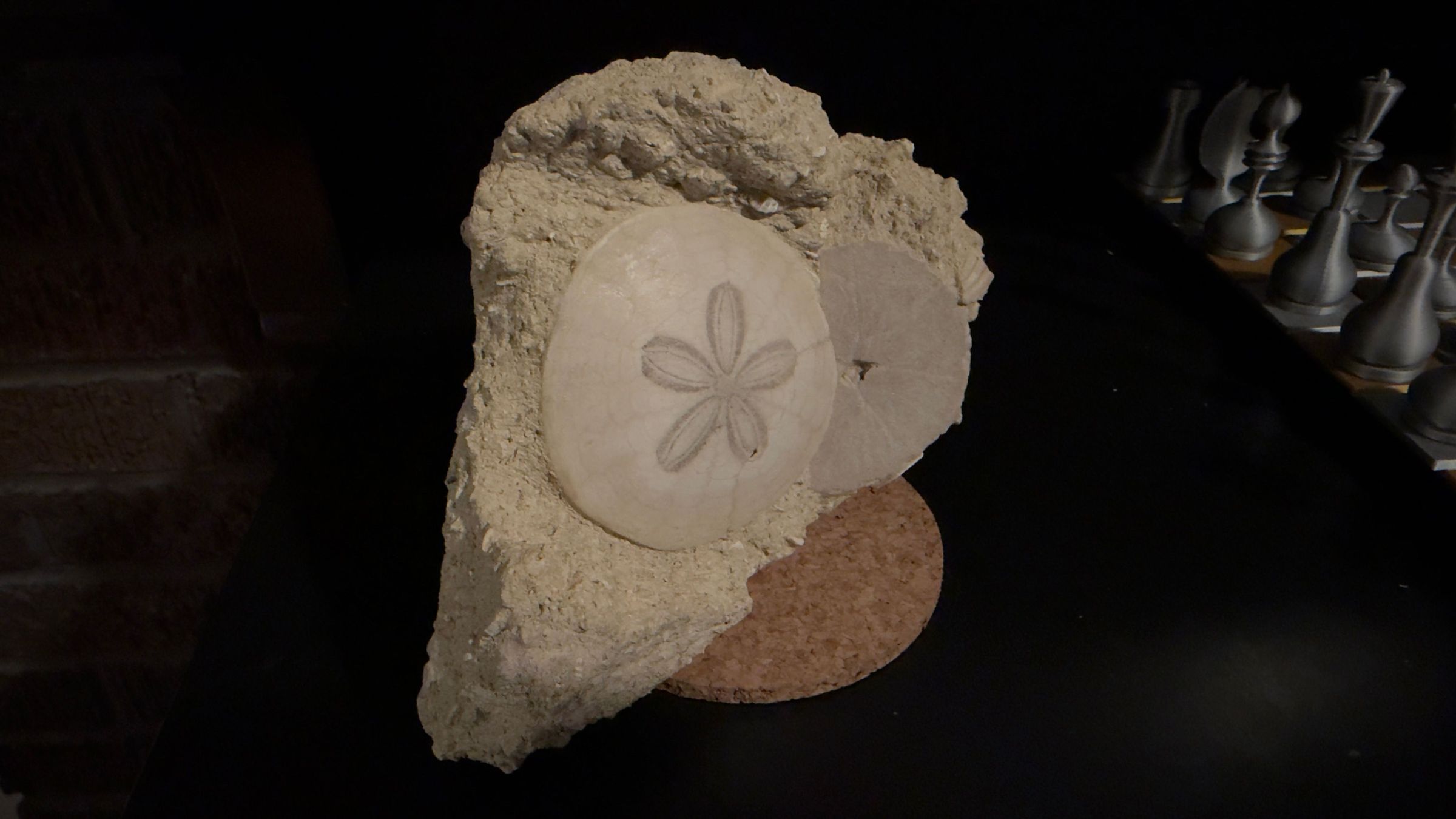
Fossil Echinoid Pair (Scutella faujasii)Description
Fossil Echinoid Pair
Scutella faujasii
Miocene
France
This specimen preserves two fossil echinoids of the species Scutella faujasii, commonly known as sand dollars, displayed together within their original limestone matrix. Echinoids are marine invertebrates belonging to the class Echinoidea, and flattened forms such as Scutella were adapted for life on or just beneath sandy sea floors.
The circular outlines and five-petaled star patterns visible on the surfaces represent the animals’ ambulacra—channels that once housed tube feet used for respiration and feeding. These structures are symmetrically arranged and are among the most diagnostic features of fossil sand dollars. Their preservation here is notably clear, allowing both overall form and fine surface detail to be readily observed.
During the Miocene Epoch, shallow seas covered large parts of what is now France. Warm, carbonate-rich marine environments supported abundant echinoid populations, many of which were rapidly buried by sediment after death, protecting their tests (skeletons) from destruction. Over time, these sediments lithified into limestone, preserving the echinoids as fossils.
Paired specimens such as this are particularly evocative, suggesting a snapshot of a living community rather than an isolated individual. As a result, this piece offers insight not only into echinoid anatomy but also into the structure of Miocene marine ecosystems and the conditions that favored their exceptional preservation.
Dimensions: 5.22 × 4.96 × 2.31 inches (13.25 × 12.61 × 5.86 cm)Create Date
September 5, 2025Update Date
January 12, 2026