Name/Title
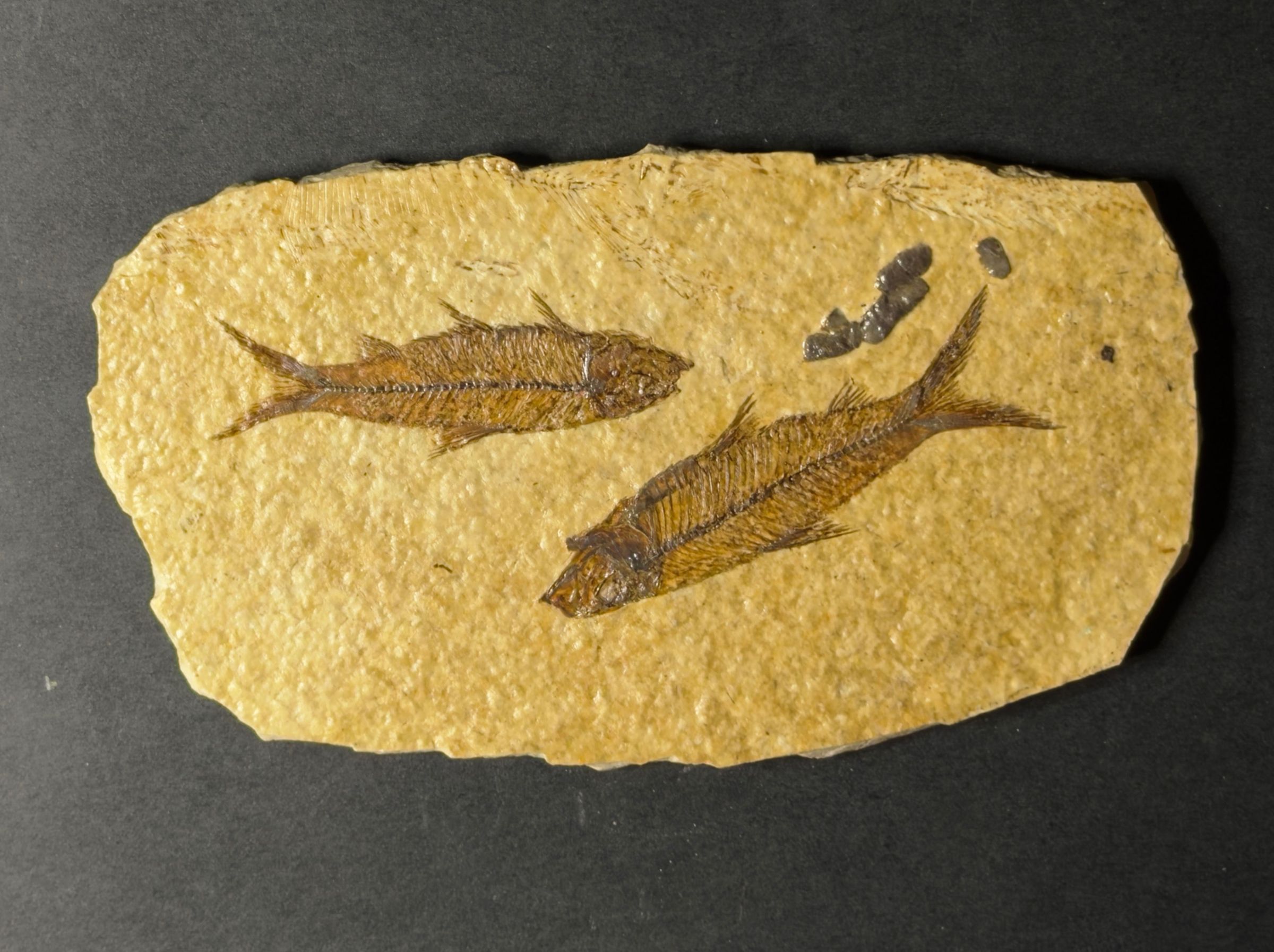
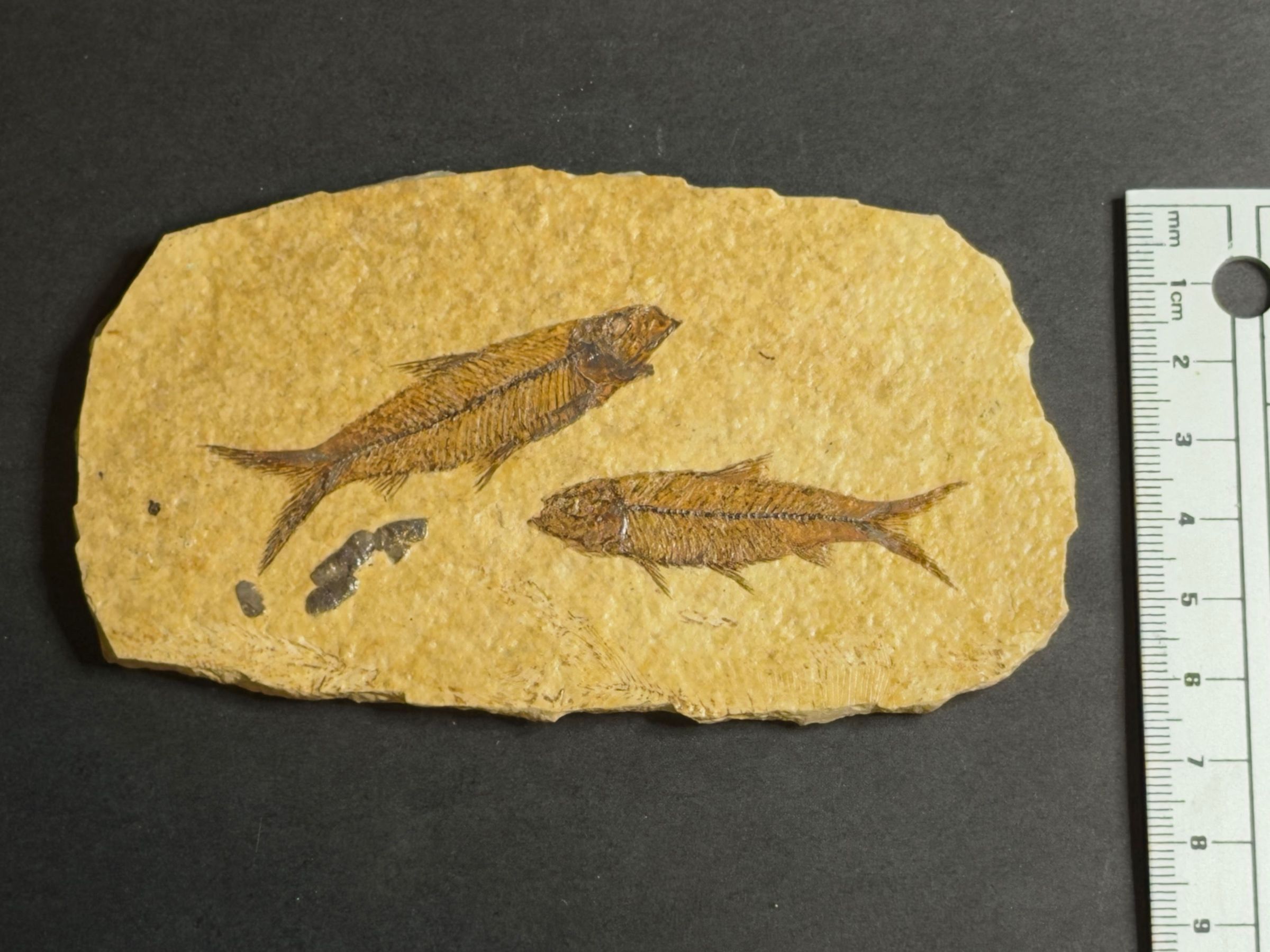
Knightia Eocaena FossilizedDescription
Knightia eocaena
Extinct freshwater fish (Eocene)
Green River Formation, Wyoming, USA
Early–Middle Eocene (approximately 56–48 million years ago)
Lithographic limestone slab with two articulated individuals
⸻
This specimen preserves two individuals of Knightia eocaena, one of the most abundant fossil fish species from the Eocene Green River lake system. Knightia was a small, schooling, ray-finned fish related to modern clupeiforms (herrings and sardines). Individuals typically measured between 7 and 15 cm in length.
The Green River Formation represents a series of long-lived freshwater lakes that occupied parts of present-day Wyoming, Utah, and Colorado during the Eocene. Fine-grained carbonate sediments settled in low-oxygen bottom waters, allowing for exceptional preservation of delicate skeletal structures, including scales, fins, and vertebral columns.
Mass mortality layers containing multiple Knightia individuals are common in these deposits and are interpreted as the result of periodic environmental stress events within the ancient lake system. Fossils such as this provide critical evidence for reconstructing early Cenozoic freshwater ecosystems and food webs.
Knightia is the state fossil of Wyoming.Create Date
January 6, 2026Update Date
September 12, 2026