Name/Title
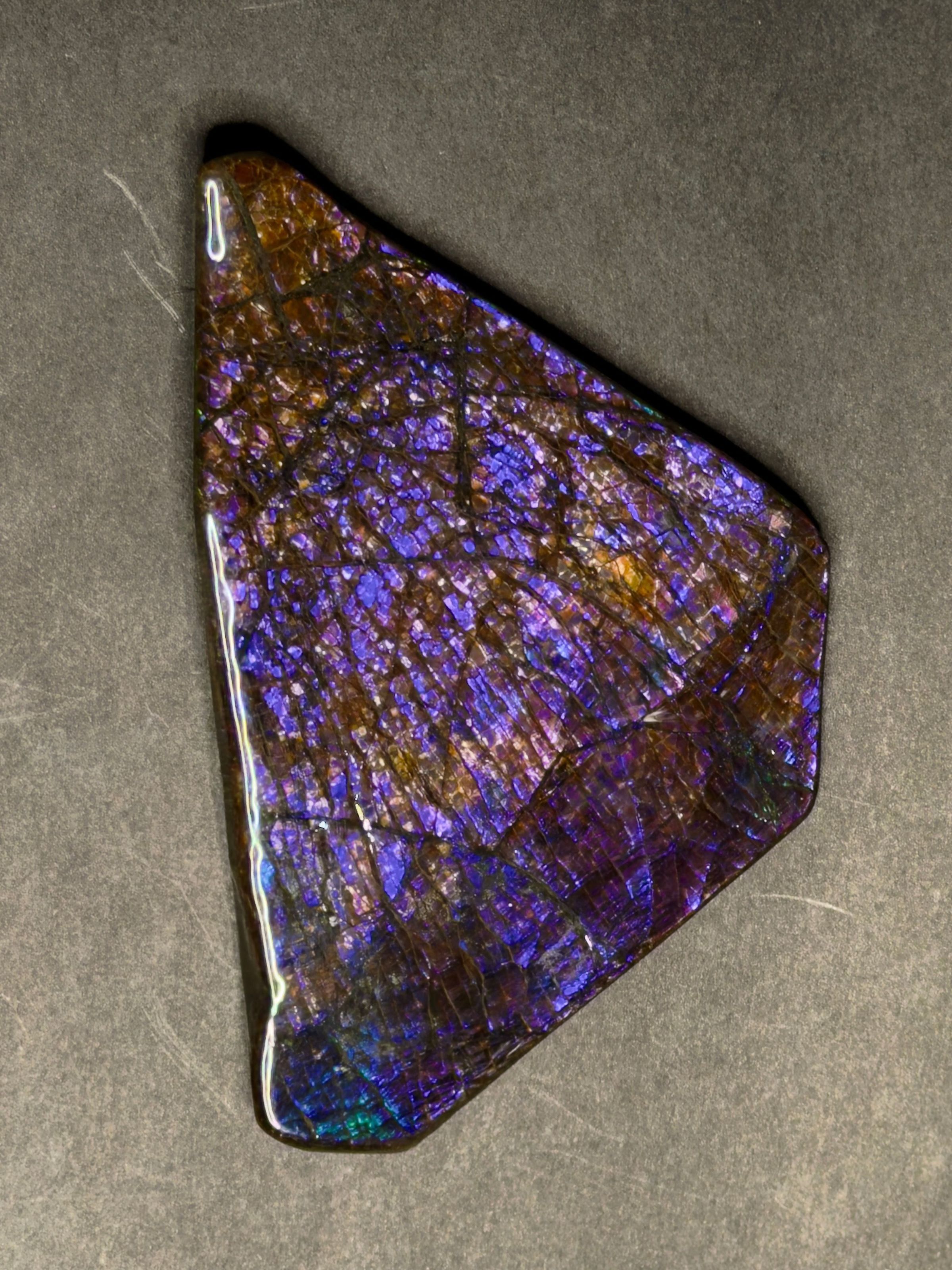
Ammolite Plate from a Cretaceous Ammonite (Placenticeras sp.)Description
Ammolite (from Ammonite Shell)
Placenticeras sp.
Late Cretaceous (c. 75 million years ago)
Bearpaw Formation, Alberta, Canada
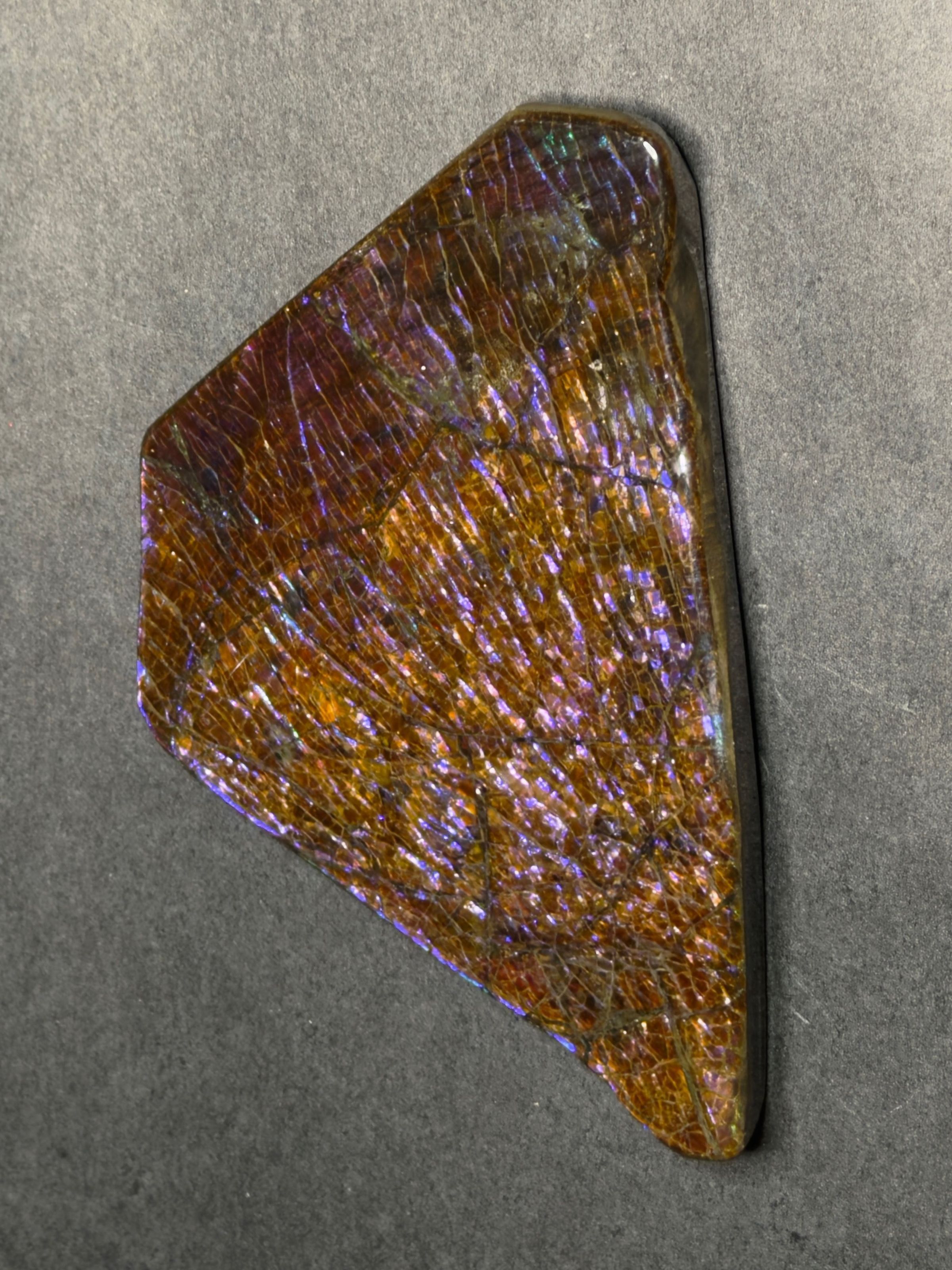
This specimen is ammolite, a rare biogenic gemstone formed from the fossilized shell nacre of an extinct marine cephalopod known as an ammonite. Ammolite preserves the original aragonite microstructure of the shell’s nacre, which produces vivid iridescent colors—here dominated by blue and violet—through optical interference rather than pigment.
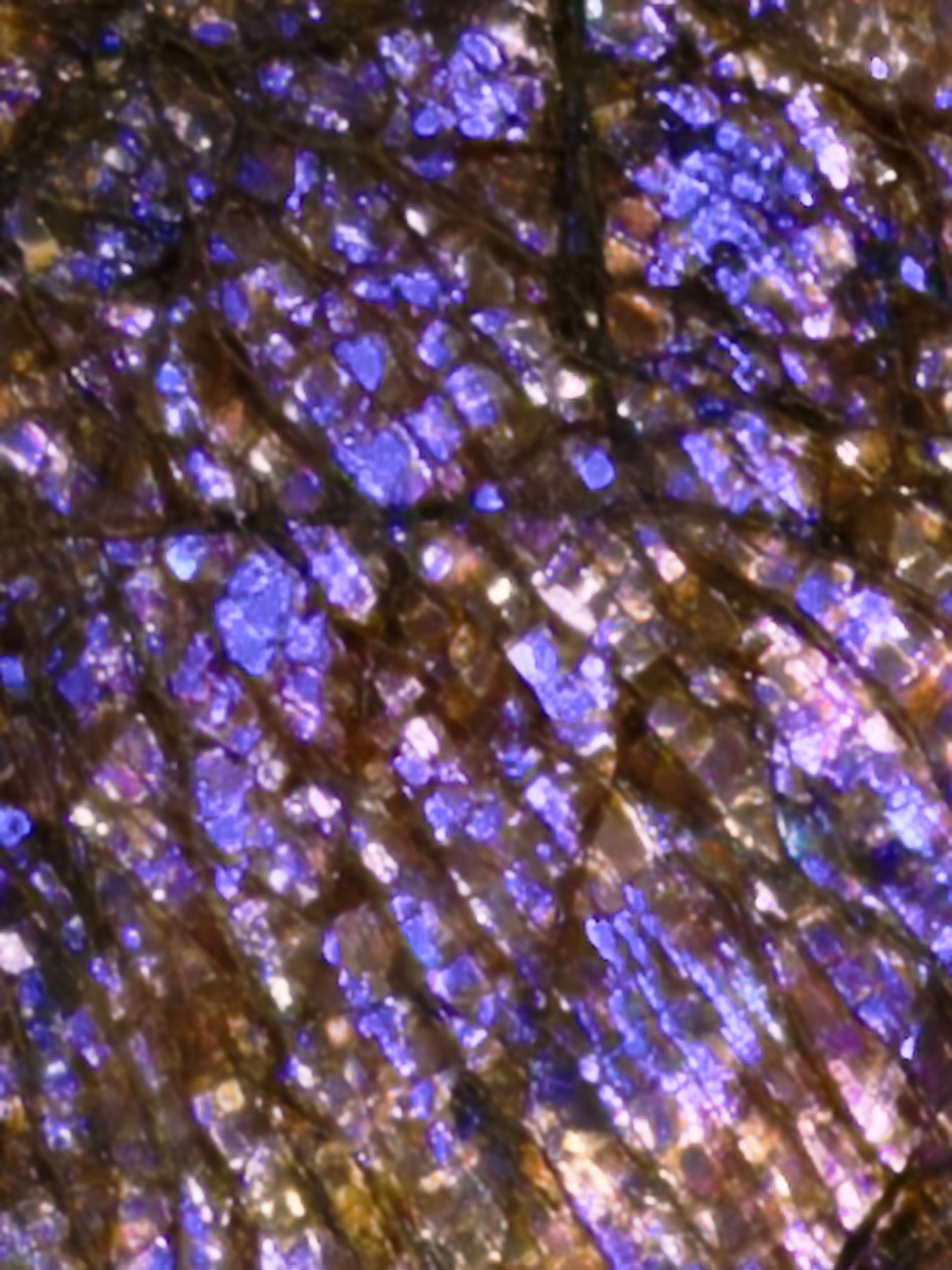
The characteristic “dragon’s skin” surface texture reflects microscopic fracturing of the nacre during burial and sediment compaction on the ancient seafloor. Although the original ammonite shell was coiled and curved in life, geological الضغط flattened the shell material prior to fossilization, preserving the nacre while erasing the shell’s original curvature. As a result, the precise size of the living ammonite cannot be reconstructed from this plate alone.
Ammolite is known almost exclusively from the Bearpaw Formation of southern Alberta and was formally recognized as a gemstone in 1981. Its formation required an unusually narrow set of chemical and sedimentary conditions, making high-quality specimens such as this one exceptionally rare.Create Date
December 26, 2025Update Date
September 12, 2026