Name/Title
Fossilized Hadrosaurid Skin (Family Hadrosauridae)Description
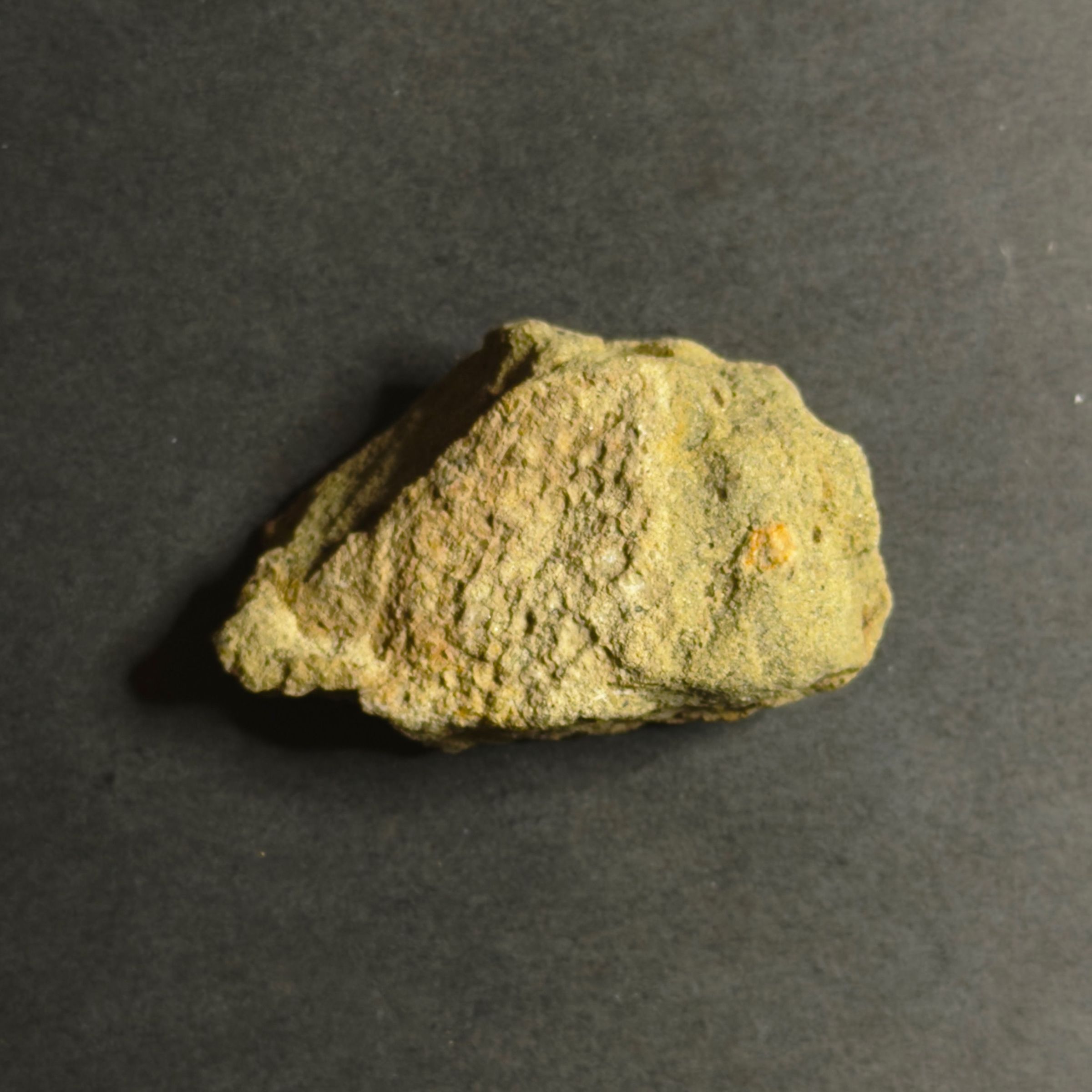
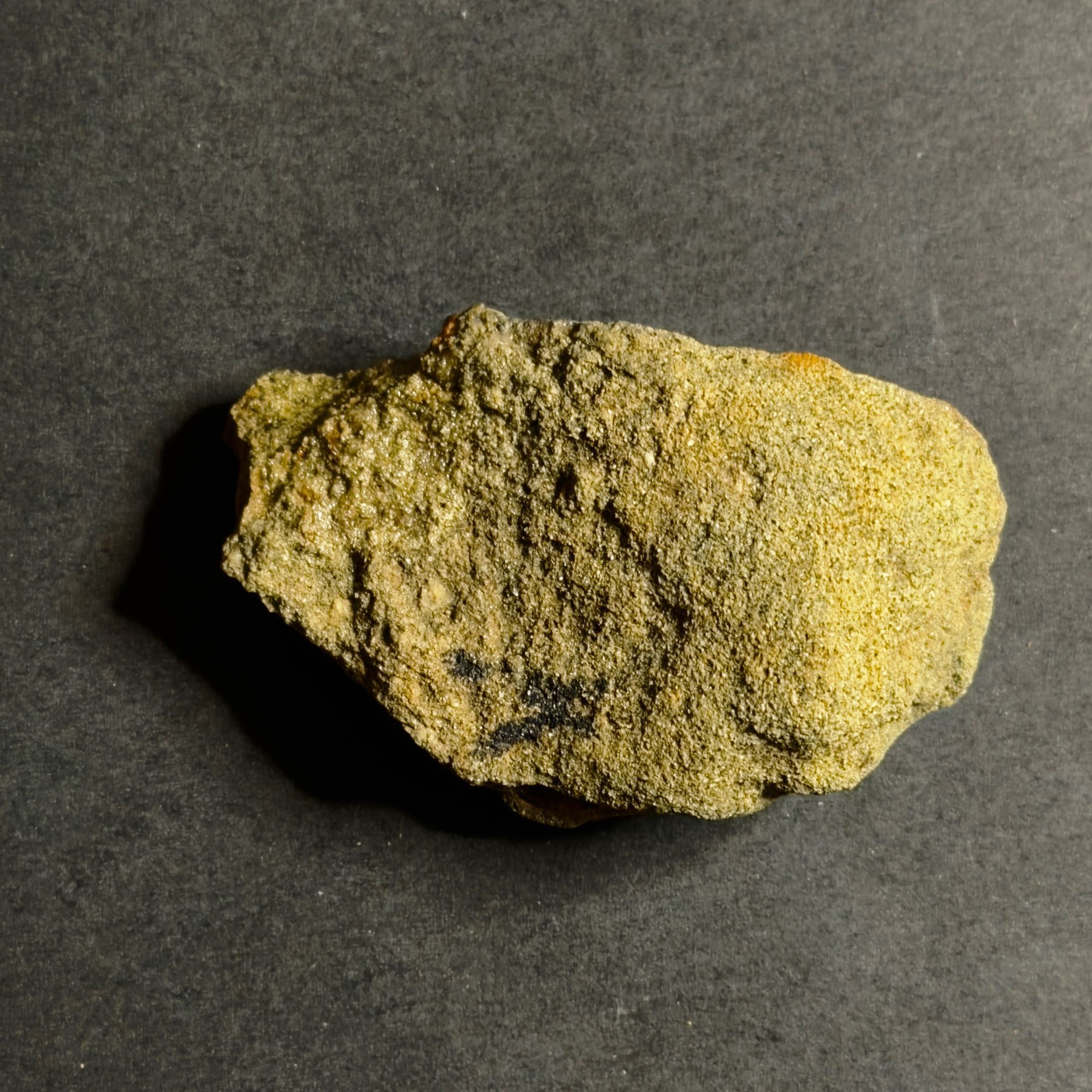
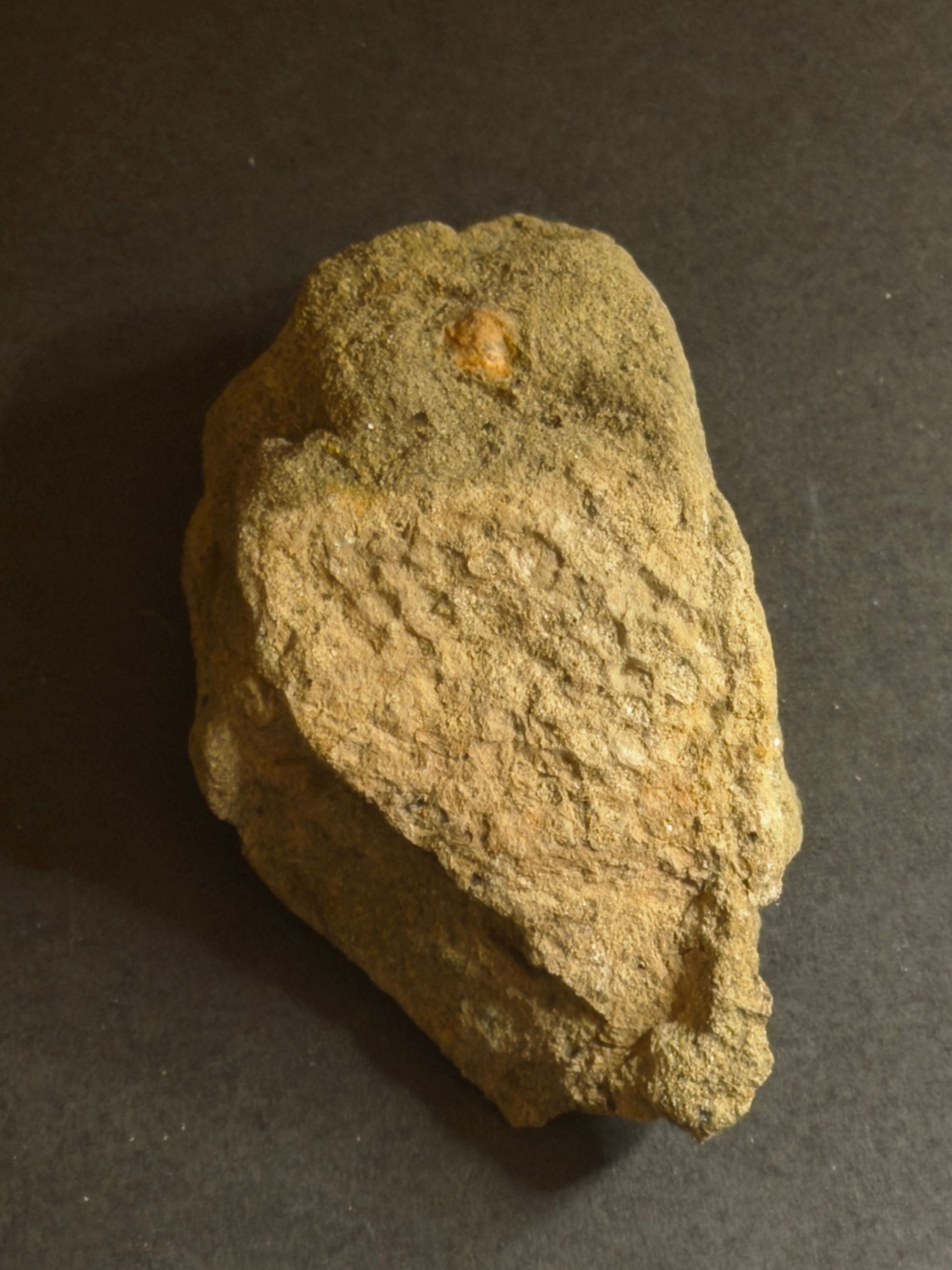
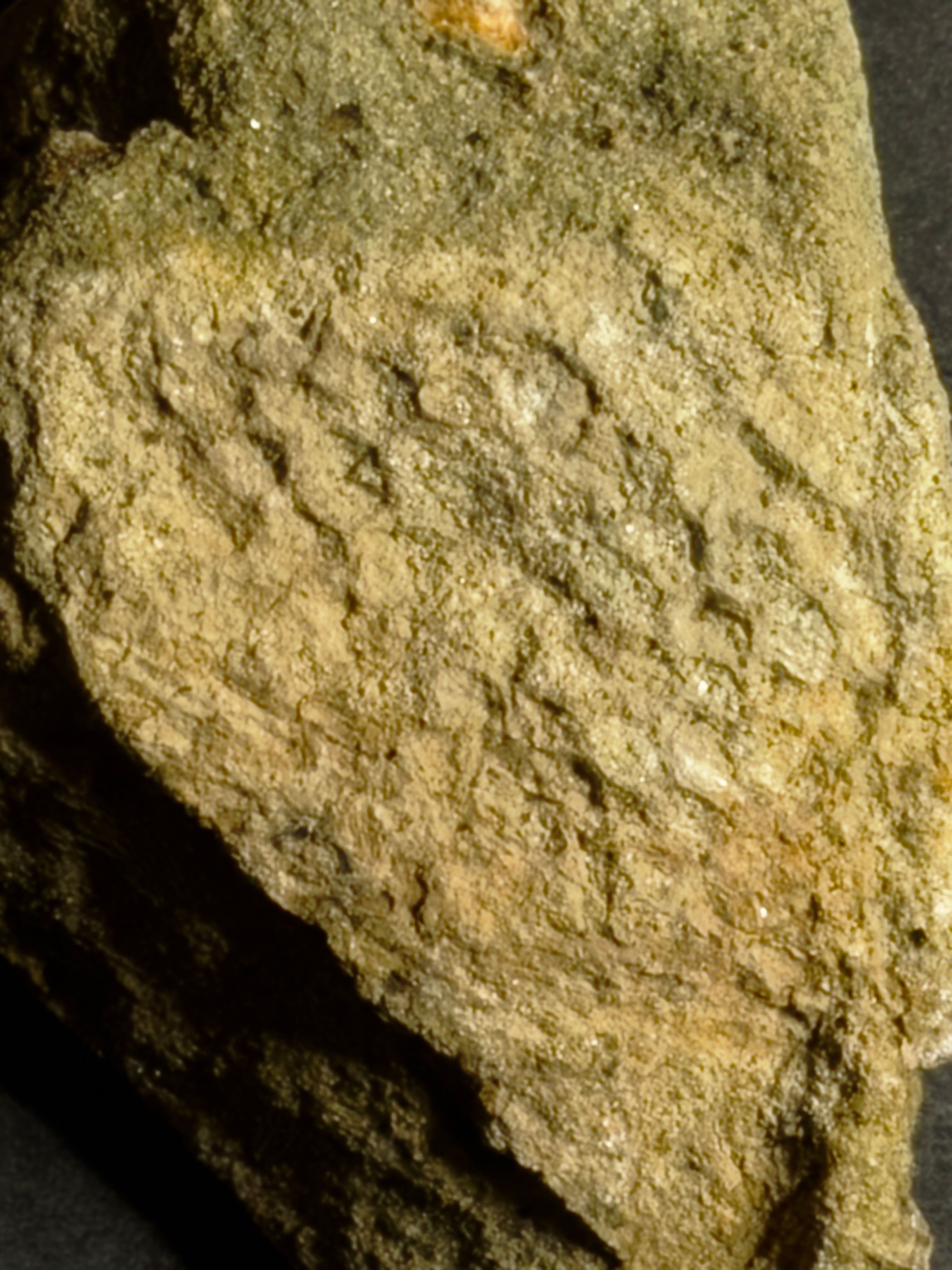
Fossilized Hadrosaurid Skin
Dinosaur integument impression
Late Cretaceous
This specimen preserves a rare impression of dinosaur skin attributed to a hadrosaurid, or “duck-billed” dinosaur, a diverse group of large, herbivorous dinosaurs that flourished during the Late Cretaceous Period. Unlike skeletal fossils, which record the internal framework of extinct animals, skin impressions offer direct evidence of external appearance—how dinosaurs actually looked in life.
The surface texture visible here reflects the characteristic mosaic of small, non-overlapping scales typical of hadrosaurids. Often described as “pebbly,” this pattern suggests a tough, flexible skin well suited to large-bodied terrestrial animals. Such impressions form only under exceptional conditions, when skin is rapidly buried by fine sediment before decay, allowing its surface details to be preserved as the surrounding material hardens into rock.
Hadrosaurid skin fossils have played an important role in overturning earlier assumptions that dinosaurs were uniformly reptilian or heavily armored. Instead, these specimens reveal a more nuanced picture of dinosaur integument, with regional variation in scale size and texture across the body. In some cases, skin impressions are found in association with skeletal remains, creating so-called “mummy” fossils that provide an unusually complete record of anatomy.
As a trace of soft tissue rarely preserved in the fossil record, this specimen offers an intimate glimpse into dinosaur biology and underscores how much of ancient life remains hidden unless geological conditions align with extraordinary precision.Create Date
October 12, 2025Update Date
September 12, 2026