Name/Title
Polished Dinosaur Bone (Dinosauria, indeterminate taxon)Description
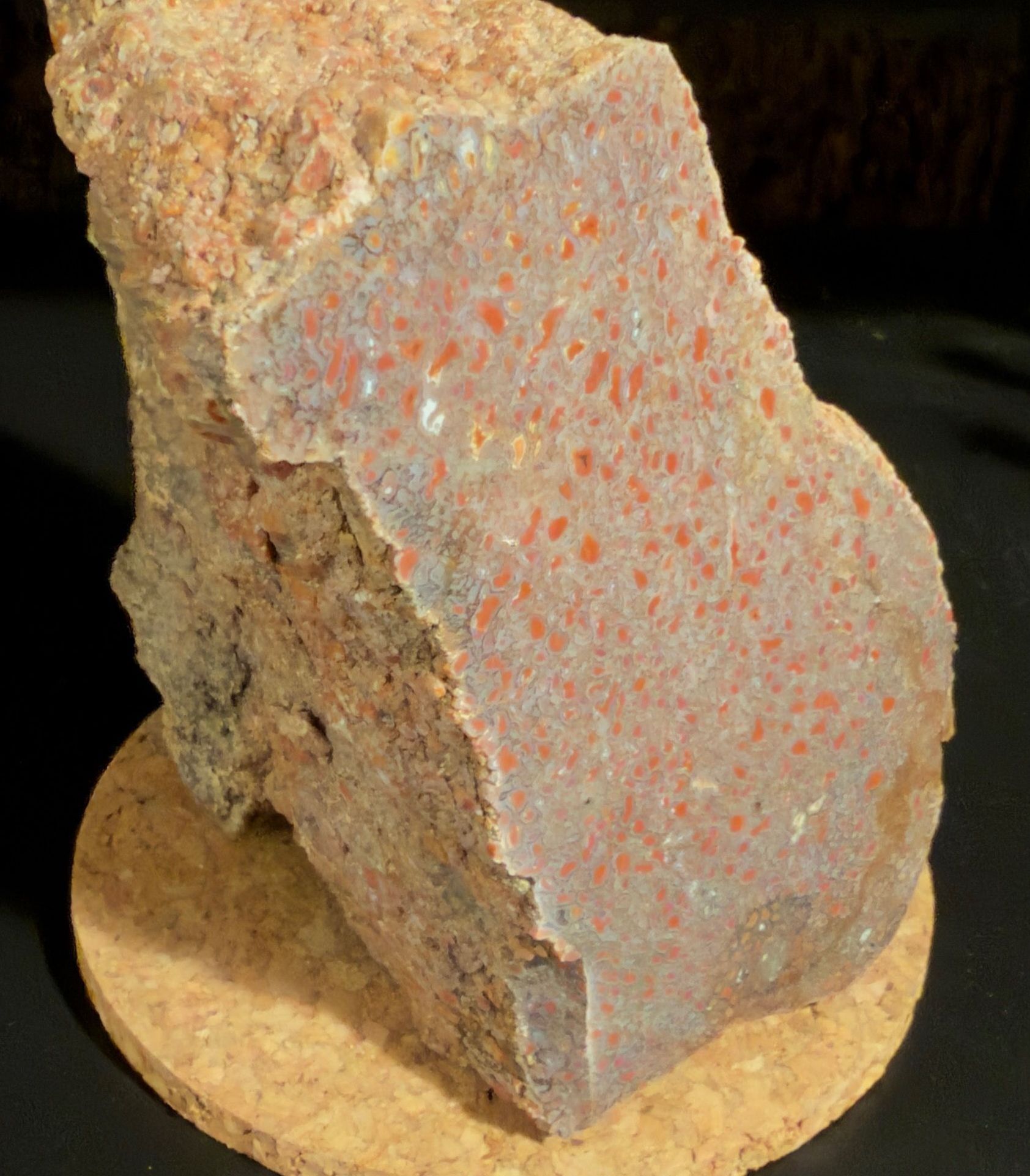
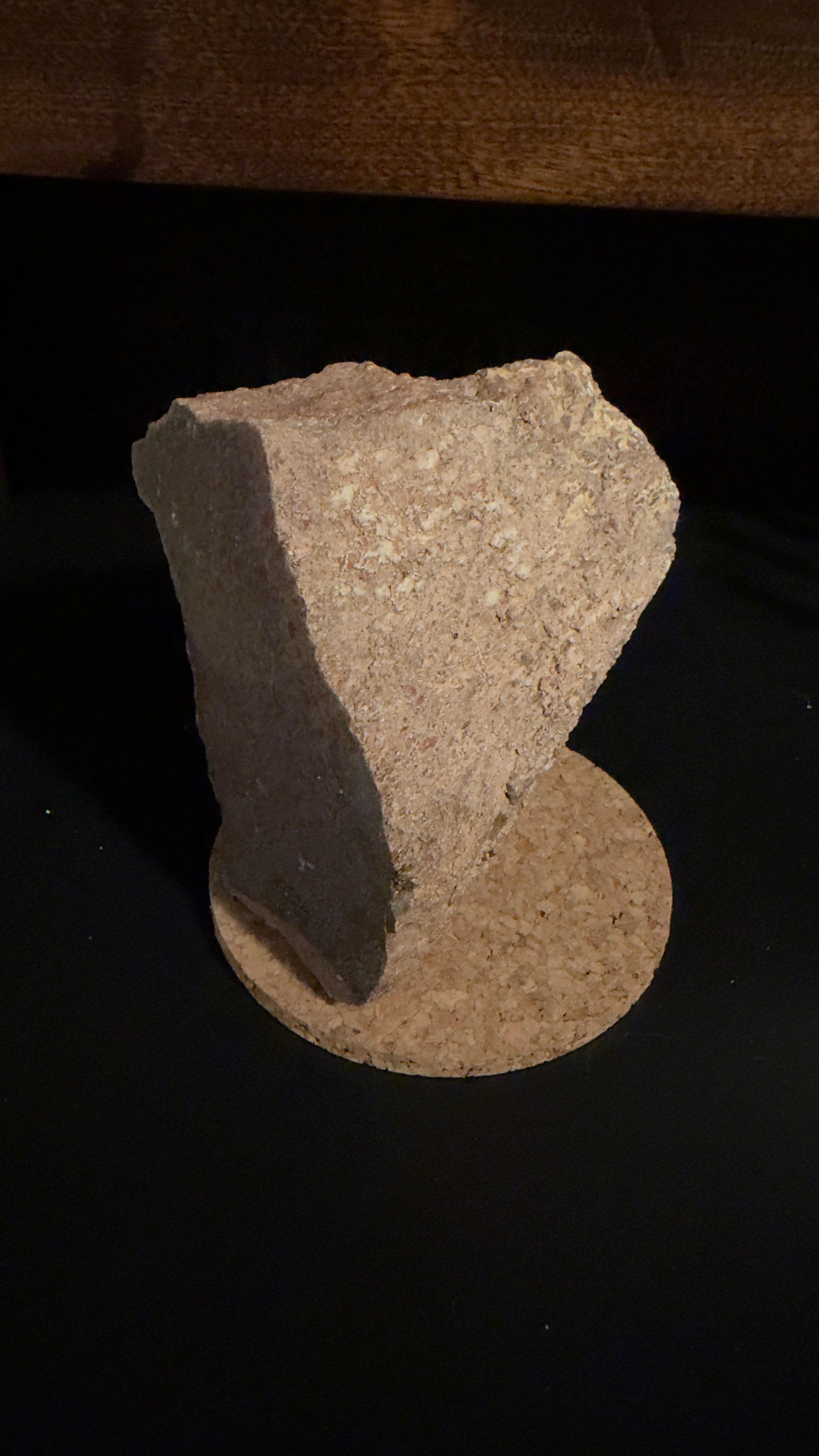
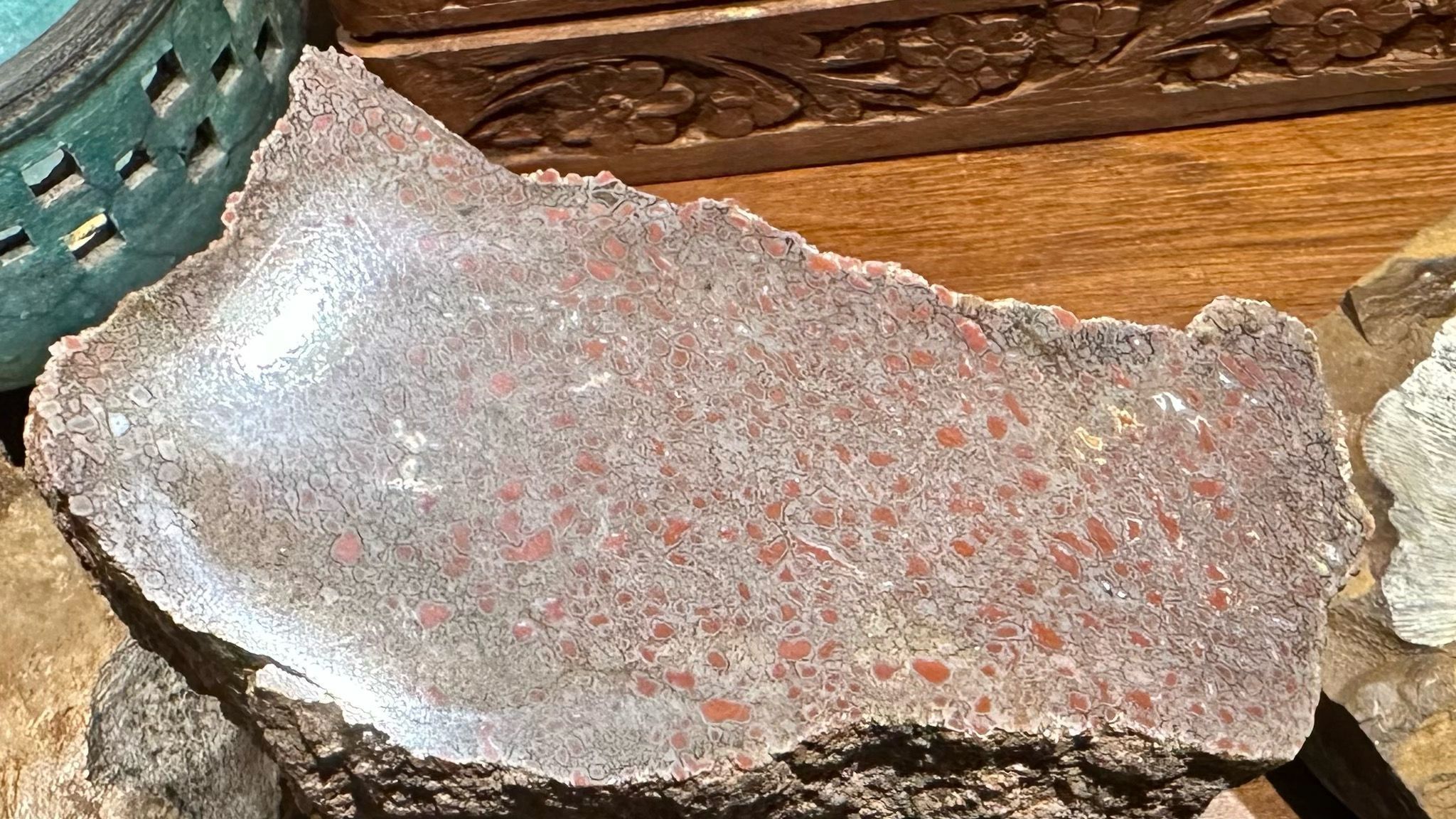
Polished Dinosaur Bone (“Gem Bone”)
Dinosauria, indeterminate taxon
Jurassic
Morrison Formation
Utah, United States
This specimen is a polished section of fossilized dinosaur bone from the Morrison Formation, a Late Jurassic deposit renowned for preserving some of the most iconic dinosaurs of North America. The term “gem bone” refers to dinosaur bone that has undergone mineral replacement—most commonly by silica—producing vivid internal patterning that can be revealed through cutting and polishing.
The polished face exposes the bone’s original cellular structure, visible as a dense mosaic of small cavities corresponding to vascular canals and bone cells. These spaces were gradually infilled by mineral-rich fluids during burial, replacing organic material while preserving microscopic anatomy. Subtle color variation across the surface reflects differences in mineral chemistry during fossilization rather than pigmentation in the living animal.
The Morrison Formation records river floodplains, lakes, and seasonal wetlands that once covered much of the western United States roughly 156–146 million years ago. Dinosaurs such as sauropods, stegosaurs, and large theropods inhabited these environments, and isolated bone fragments like this are common components of the formation’s fossil assemblage.
By polishing the specimen, its scientific structure is transformed into a visual object that bridges paleontology and lapidary practice. While no longer a diagnostic skeletal element, the piece offers a direct view into deep-time biological architecture and the geochemical processes that can turn bone into stone.
Dimensions: 4.28 × 4.15 × 2.46 inches (10.87 × 10.54 × 6.24 cm)Create Date
August 3, 2025Update Date
January 12, 2026