Name/Title
Fossil Ginkgo Leaf (Ginkgo cranei)Description
Fossil Ginkgo Leaf
Ginkgo cranei
Paleocene (ca. 66–56 million years ago)
Sentinel Butte Formation
Morton County, North Dakota, United States
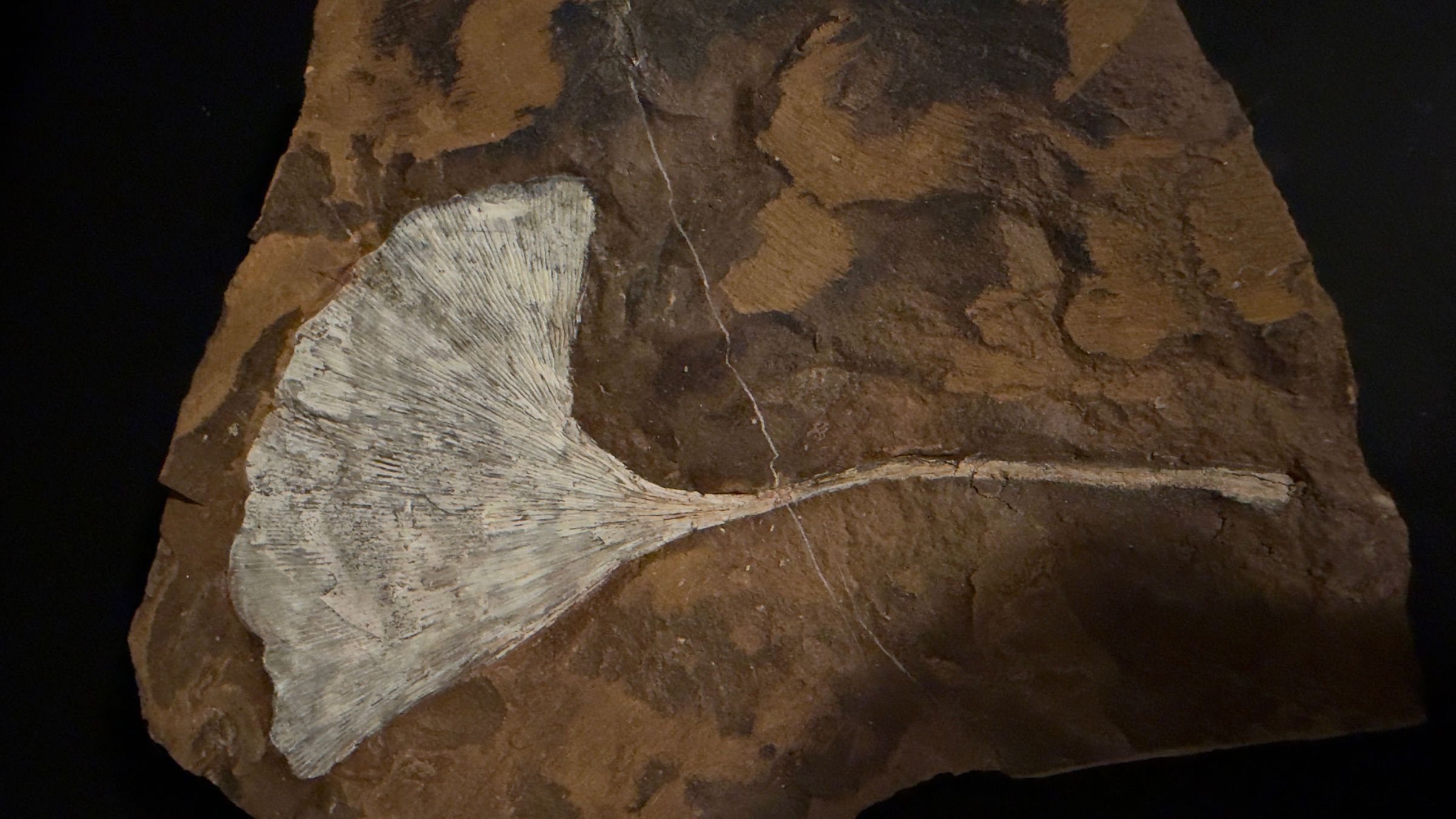
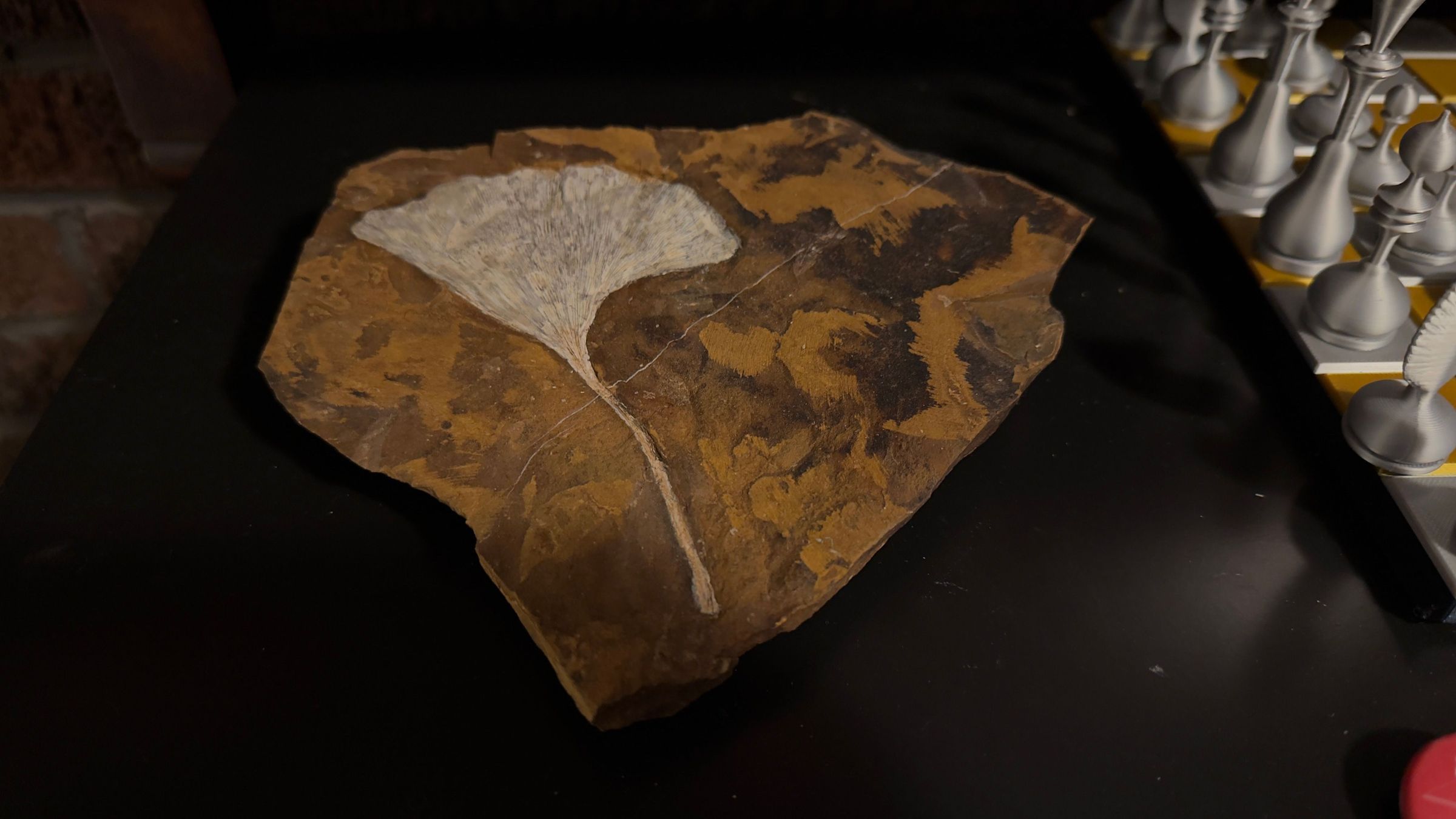
This specimen preserves a fossil leaf of Ginkgo cranei, an extinct species within the ancient ginkgo lineage. Ginkgoes are among the most evolutionarily conservative plants known, with a distinctive fan-shaped leaf form that has changed remarkably little for over 200 million years. The living species Ginkgo biloba—often called a “living fossil”—is the sole survivor of a once-diverse group.
The leaf displays the characteristic flared, fan-like blade with radiating veins that fork repeatedly from the base toward the margin. This venation pattern, clearly visible here, is diagnostic of ginkgoes and distinguishes them from most other seed plants. Preservation as a compression fossil captures both overall form and fine structural detail, reflecting rapid burial in fine-grained sediment.
During the Paleocene, the region that is now North Dakota supported warm, humid forests recovering after the end-Cretaceous mass extinction. The Sentinel Butte Formation records floodplain and swamp environments rich in plant life, including ginkgoes, dawn redwoods, and broadleaf angiosperms. Fossil leaves such as this provide critical evidence for reconstructing post-extinction climates and vegetation.
As a botanical fossil, this specimen links deep evolutionary time with the modern landscape: a leaf form familiar in city streets and temple gardens today, preserved from a forest that grew shortly after the age of dinosaurs came to an end.
Dimensions: 6.50 × 6.18 × 1.13 inches (16.50 × 15.70 × 2.86 cm)Create Date
August 3, 2025Update Date
January 12, 2026