Name/Title
Pterosaur Tooth (Pterosauria)Description
Pterosaur Tooth
Pterosauria (flying reptile; not a dinosaur)
Early–mid Cretaceous
Kem Kem Beds
Southeastern Morocco
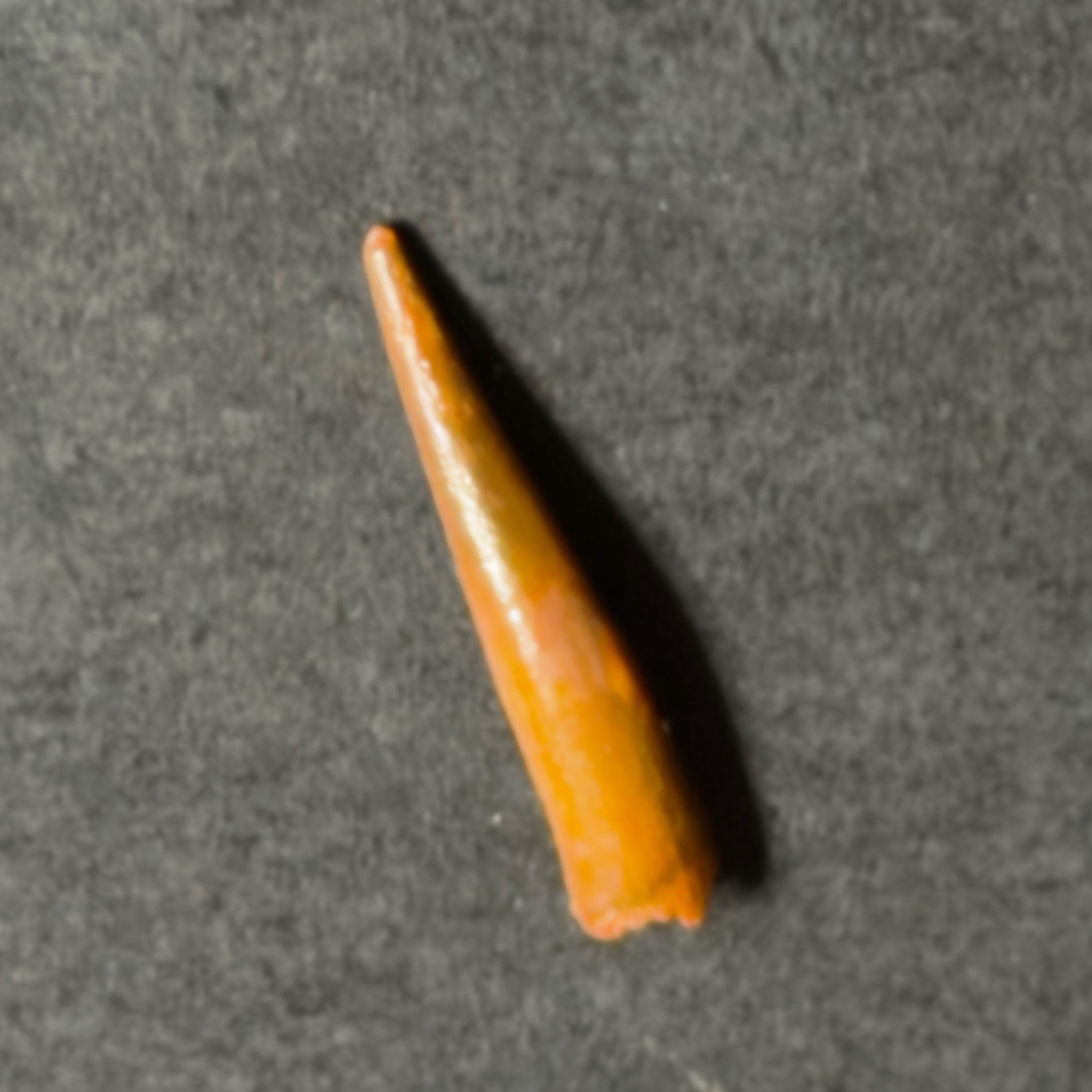
This specimen is an isolated pterosaur tooth recovered from the Kem Kem Beds of southeastern Morocco, a fossil-rich sequence of Cretaceous river and coastal deposits. Pterosaurs were flying reptiles that lived alongside dinosaurs but represent a distinct evolutionary lineage, adapted for powered flight with membranous wings supported by an elongated fourth finger.
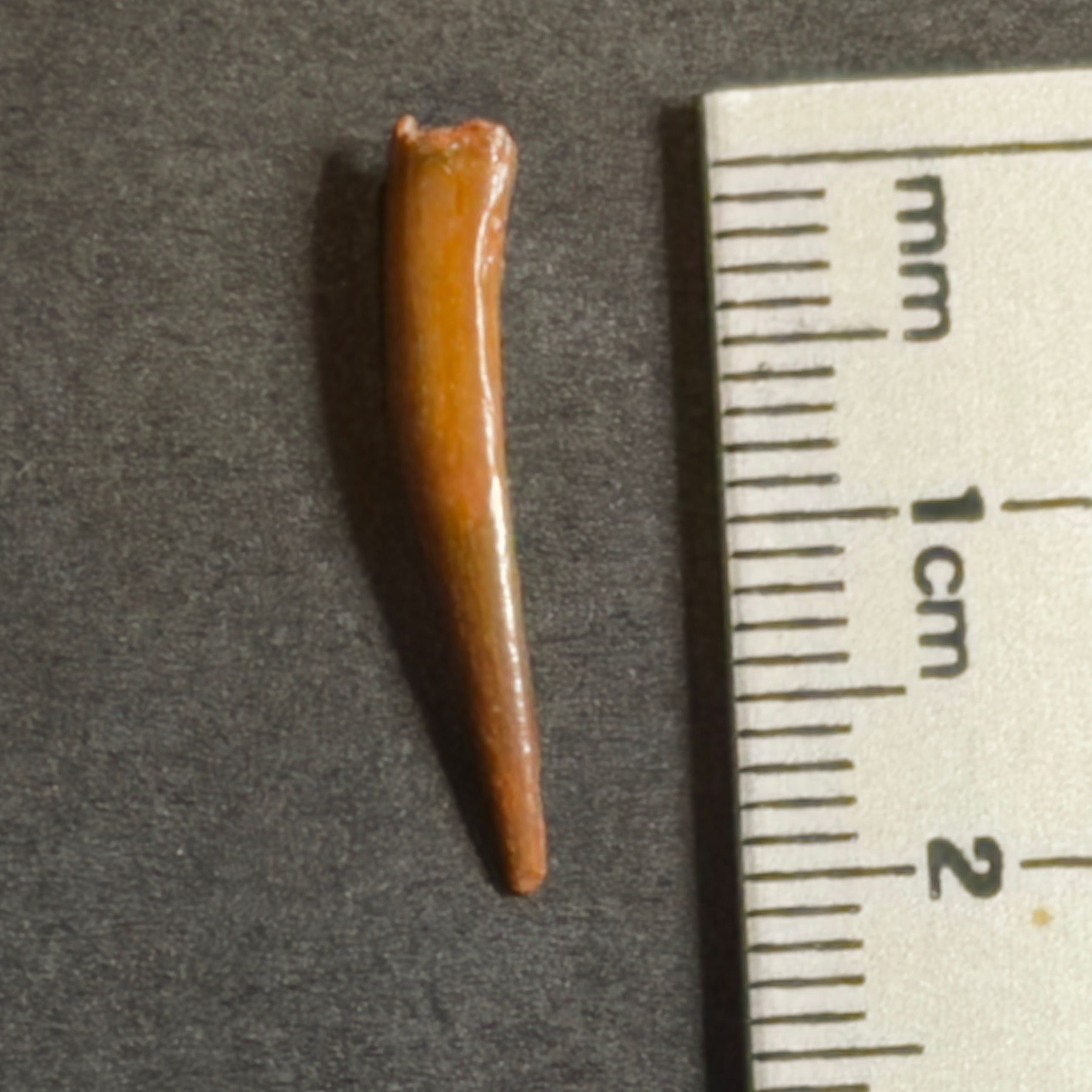
The tooth is slender, gently recurved, and sharply pointed—morphology consistent with piscivorous or small-prey-feeding pterosaurs that captured fish and other aquatic organisms near shorelines or over shallow water. Its smooth enamel surface and lack of serration distinguish it from theropod dinosaur teeth, which are typically laterally compressed and serrated. Isolated teeth such as this are among the most common pterosaur remains, as their lightweight skeletons were otherwise poorly suited to fossilization.
The Kem Kem Beds preserve a diverse assemblage of vertebrates, including fishes, crocodilians, non-avian dinosaurs, and pterosaurs, documenting a complex river-delta ecosystem along the southern margin of the ancient Tethys Sea. While isolated teeth rarely permit assignment to genus or species, they provide valuable evidence of pterosaur diversity and feeding ecology within these environments.
Purchased from a commercial fossil dealer, this specimen represents a common mode of modern fossil circulation. As a small but diagnostic element, it offers a tangible link to aerial predators of the Cretaceous skies and underscores the distinction between dinosaurs and their contemporaries that mastered flight.
Length: approximately 0.85 inches (2.16 cm)Create Date
August 21, 2025Update Date
September 12, 2026