Name/Title
CE 0100 - 0300 Roman Bronze Winged Phallic Pendant with Dual Suspension LoopsDescription
Roman Phallic Pendant (Fascinum)
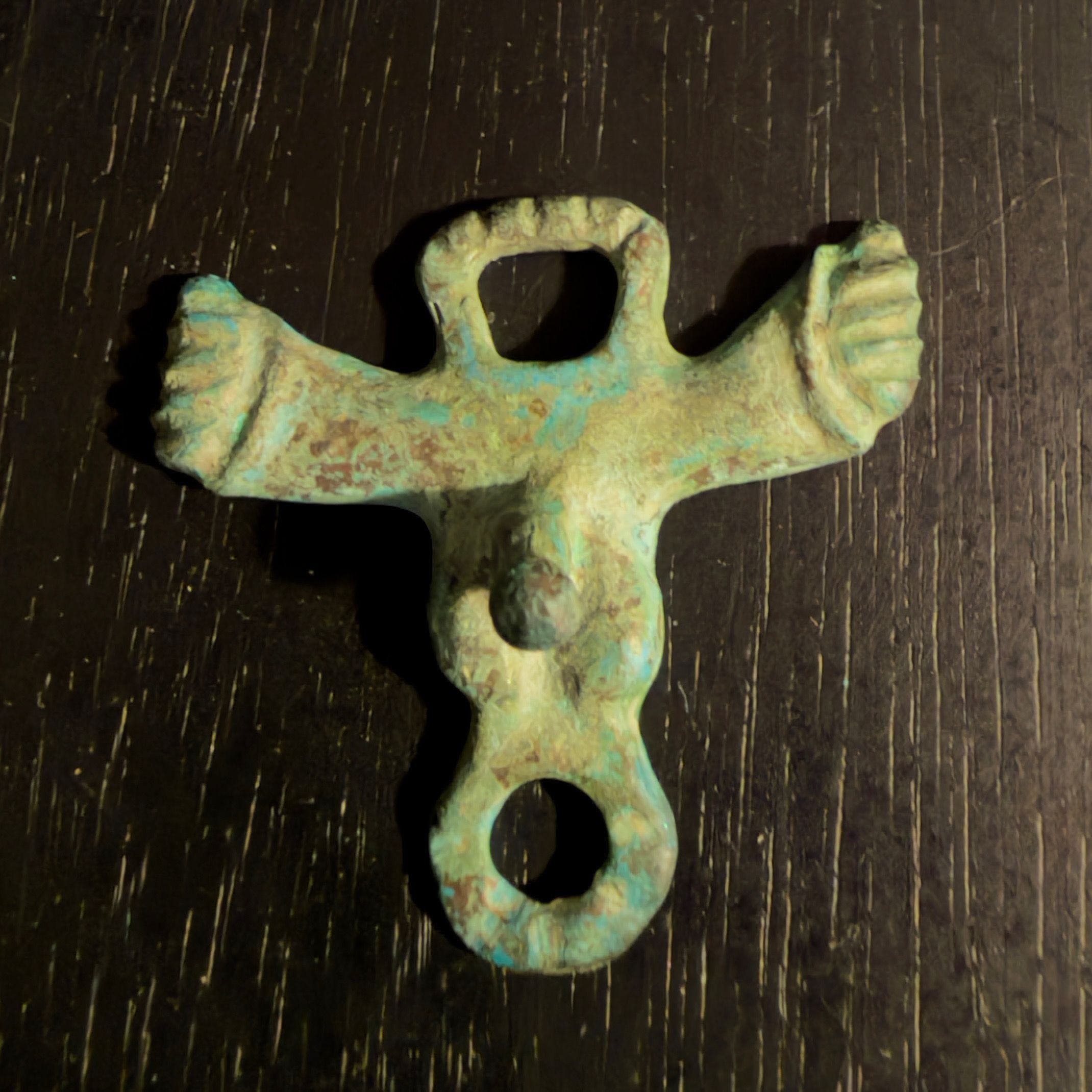
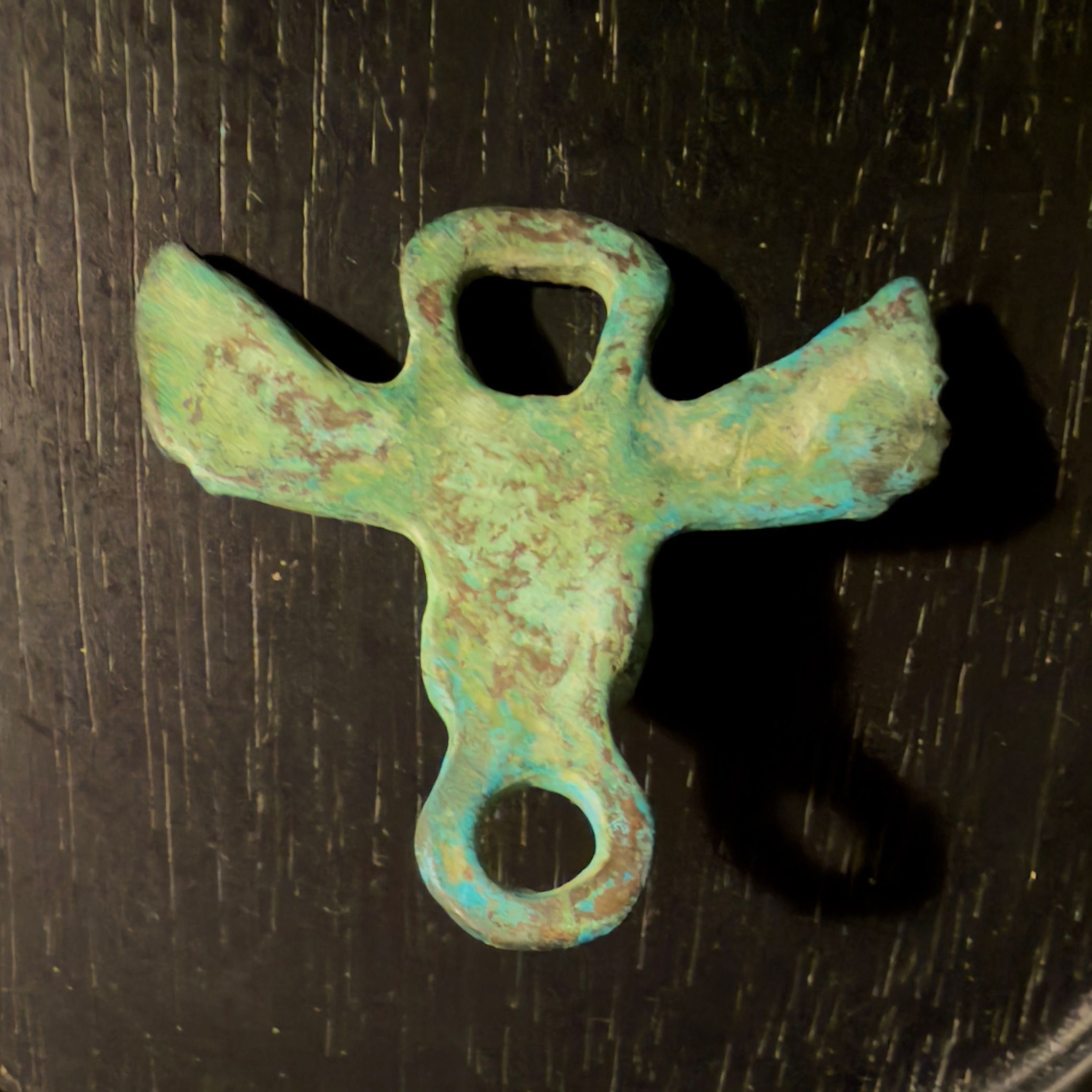
This object is a small cast bronze pendant in the form of a winged phallus (fascinum), a widely attested apotropaic motif in the Roman world. Such pendants were worn or suspended to ward off harm, envy, and misfortune, functioning within everyday protective practices rather than elite or exclusively ritual contexts. The form is consistent with examples distributed across the Roman Empire from roughly the 1st century BCE through the 3rd century CE, though precise regional attribution is not possible due to the ubiquity of the type. The piece appears intact with stable surface patina, consistent with burial and long-term environmental exposure.
⸻
Bronze Phallic Pendant
Roman Empire
2nd–3rd century CE
This bronze pendant takes the form of a stylized phallus, a widespread apotropaic symbol in Roman material culture. Such objects were worn on the body, attached to harnesses, or suspended in domestic spaces to ward off misfortune and the evil eye, while also invoking fertility, vitality, and protection.
The pendant is fully intact and retains a stable green patina consistent with long-term burial, preserving both its form and surface detail.
Material: Bronze
Weight: 14.20 g
Dimensions: 36 × 40 × 12 mm
Condition: Excellent; intact with original patinaMade/Created
Time Period
2nd Century, 3rd Century, 4th CenturyPlace
* Untyped Place
Roman EmpireNotes
Likely Origin:
* Roman Empire, western provinces or Italy
* Common production zones:
* Italy
* Gaul
* BritainDimensions
Dimension Description
Measurements (approximate):
• Width (across “wings”): ~3.5–4.0 cm
• Height (top to bottom loop): ~4.0–4.5 cm
• Thickness: ~0.5 cm
• Weight: Unknown (est. 10–20g)Create Date
August 4, 2025Update Date
April 27, 2026