Name/Title
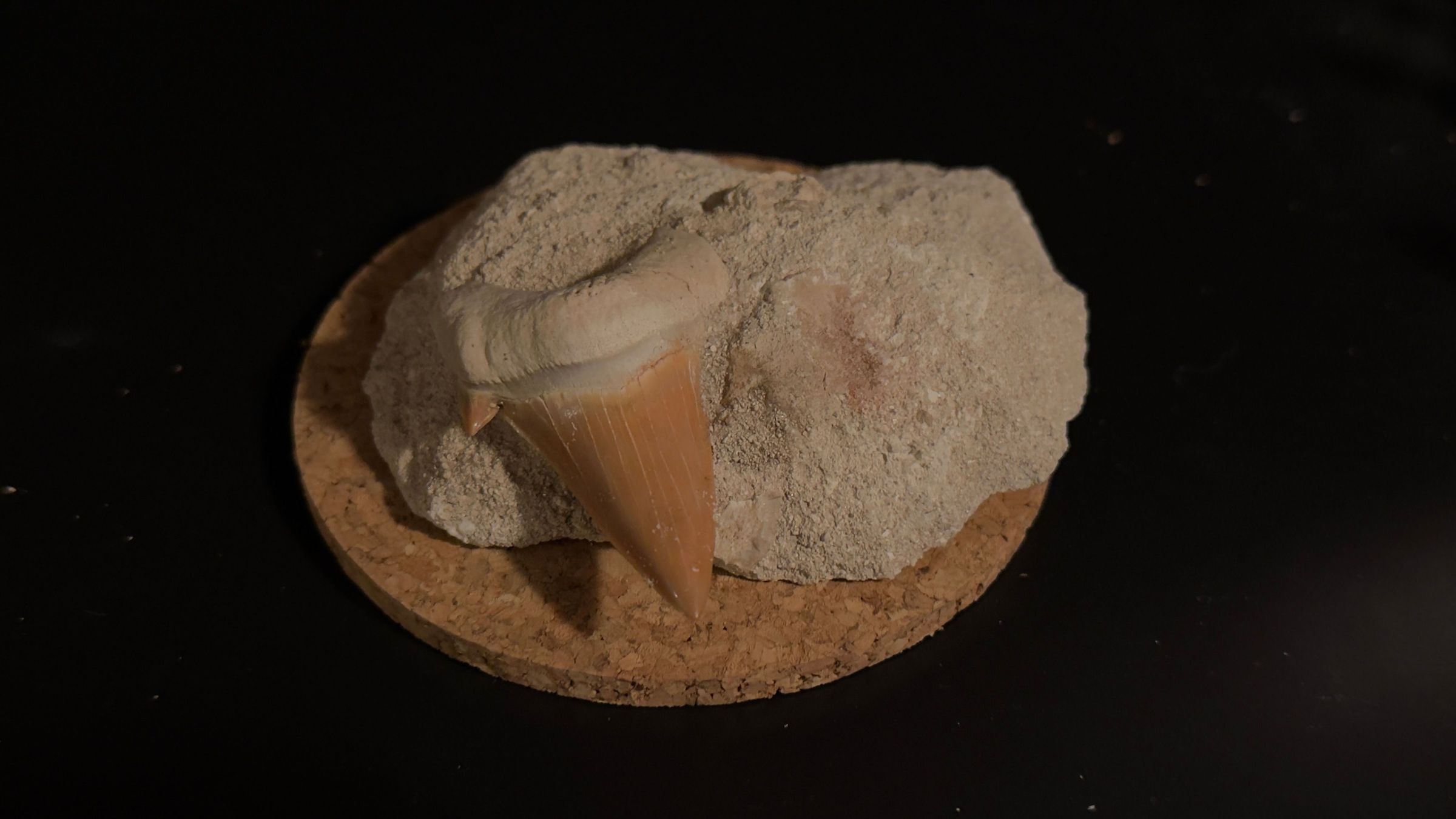
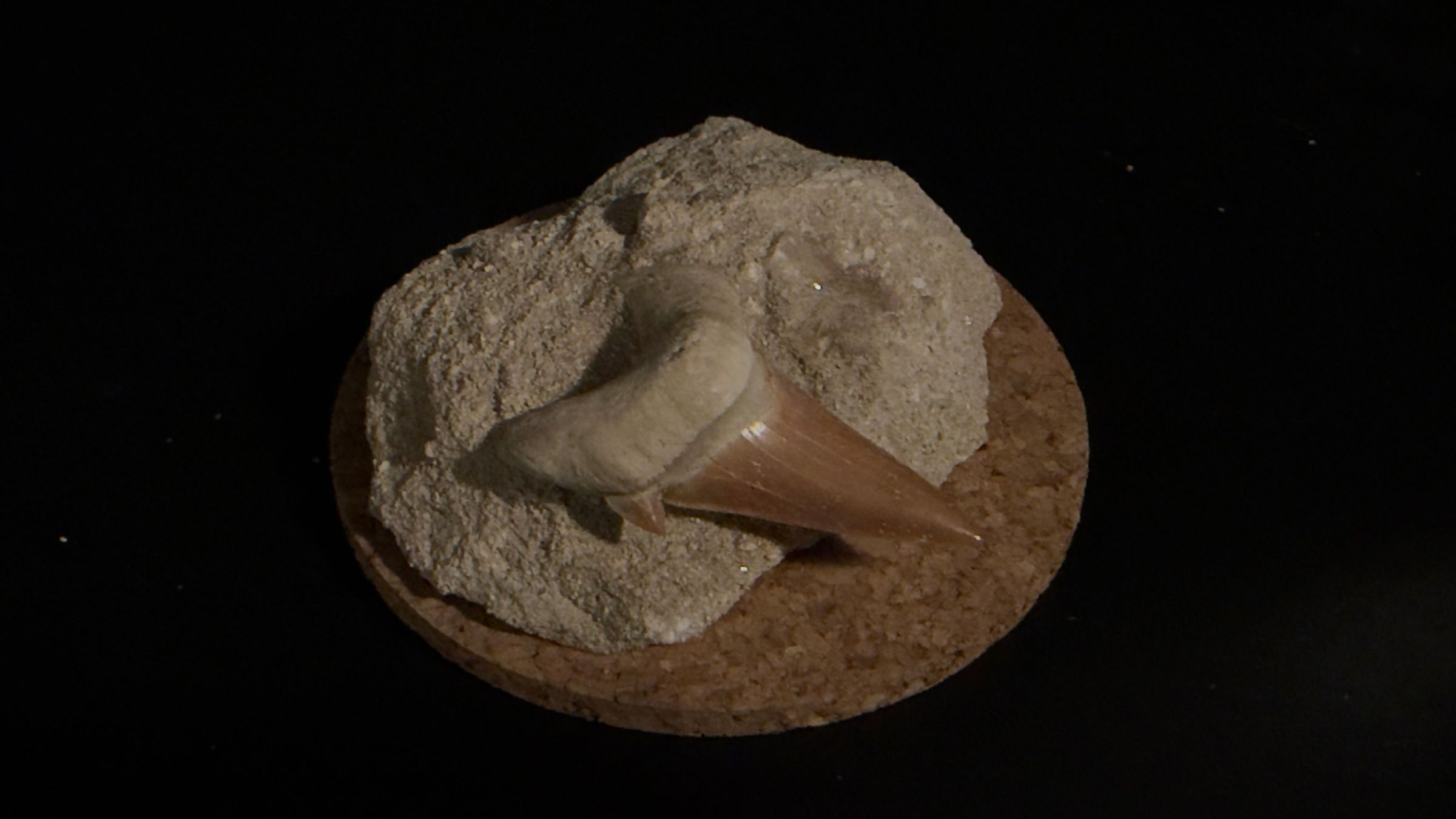
Fossilized Shark Tooth (Selachii, indeterminate genus)Description
Fossilized Shark Tooth
Selachii (sharks), indeterminate genus
Cretaceous
Morocco
This specimen preserves a fossilized shark tooth embedded in its original sedimentary matrix. The tooth’s tall, triangular crown and smooth cutting edges indicate a predatory shark adapted for seizing and slicing prey. Fine longitudinal striations and the glossy enamel surface reflect mineral replacement during fossilization, while the intact root provides evidence of minimal post-depositional transport.
Morocco is a major source of fossil shark teeth, particularly from Cretaceous marine deposits formed along the margins of the ancient Tethys Sea. These shallow, warm waters supported diverse shark assemblages whose teeth—continually shed and replaced during life—accumulated on the seafloor and were readily preserved. As a result, isolated teeth are among the most common and informative shark fossils.
Although assignment to a specific genus is not possible without additional diagnostic features, teeth such as this document the presence of large marine predators in North African seas tens of millions of years ago. They also illustrate an important aspect of shark biology: the continual production and loss of teeth, which paradoxically makes sharks far better represented in the fossil record than their largely cartilaginous skeletons would suggest.
As a compact yet striking fossil, this tooth offers a direct material link to ancient marine ecosystems and to Morocco’s long-standing role in the discovery and circulation of fossil remains.
(Matrix retained; species-level identification indeterminate without further comparative analysis.)Create Date
August 3, 2025Update Date
January 12, 2026