Name/Title
Spinosaurid Tooth (Family Spinosauridae)Description
Spinosaurid Tooth
Spinosaurus (family Spinosauridae)
Early–mid Cretaceous
Kem Kem Beds
Southeastern Morocco
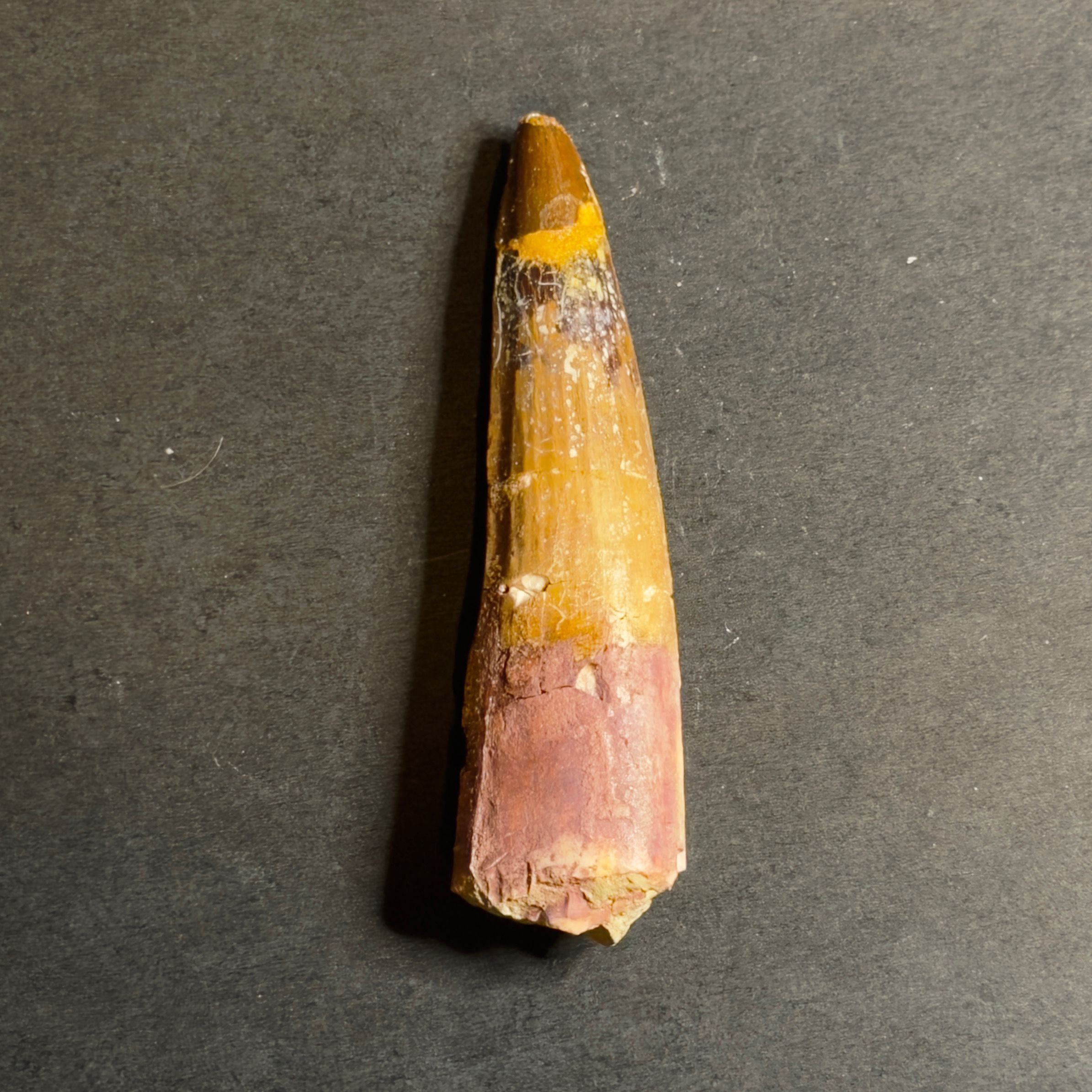
This specimen is a large spinosaurid tooth, attributable to Spinosaurus or a closely related member of the family Spinosauridae. Spinosaurids were distinctive theropod dinosaurs adapted to semi-aquatic lifestyles, with elongated skulls, conical teeth, and diets dominated by fish and other aquatic prey. Spinosaurus is notable as one of the largest known predatory dinosaurs, predating—and differing ecologically from—later apex predators such as Tyrannosaurus rex.
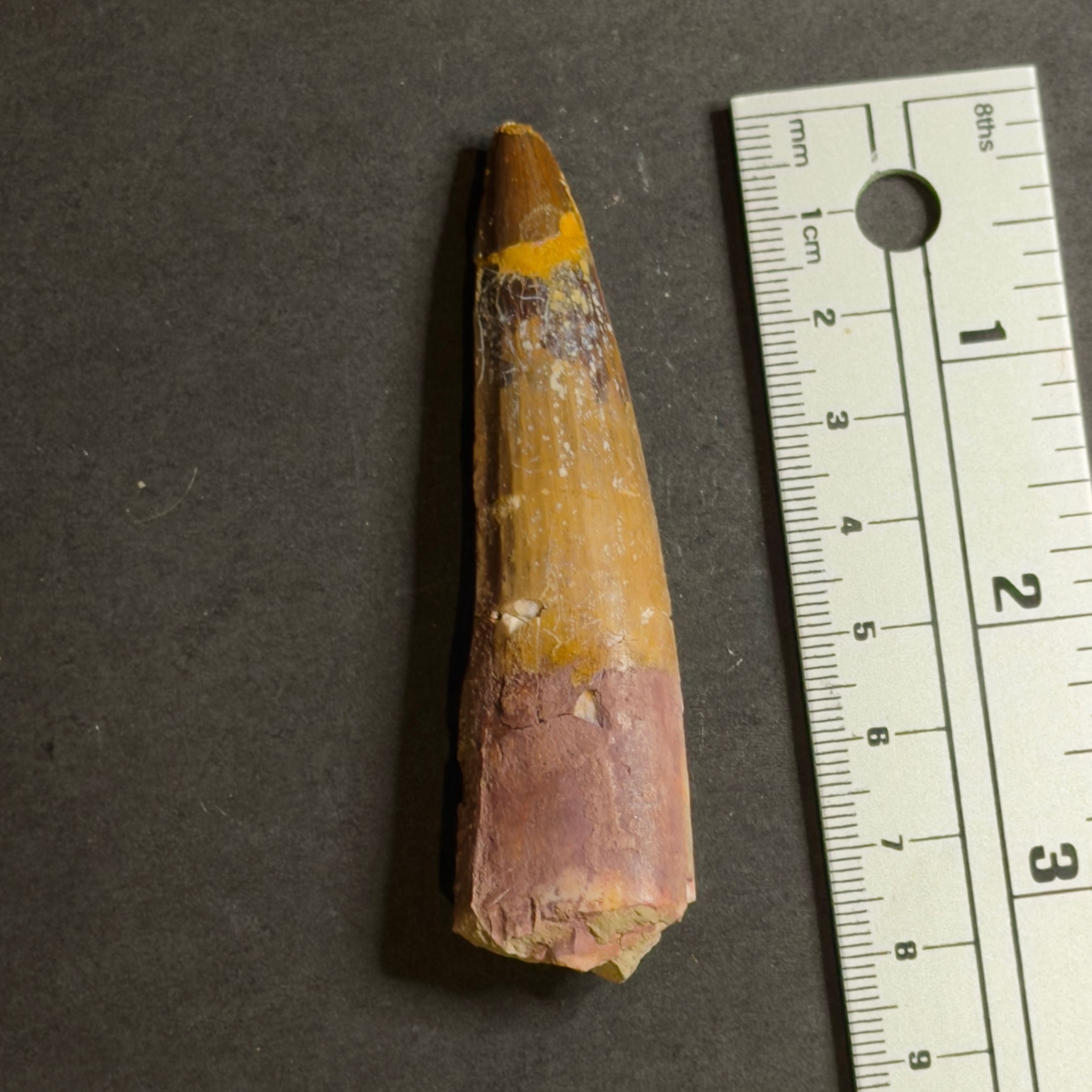
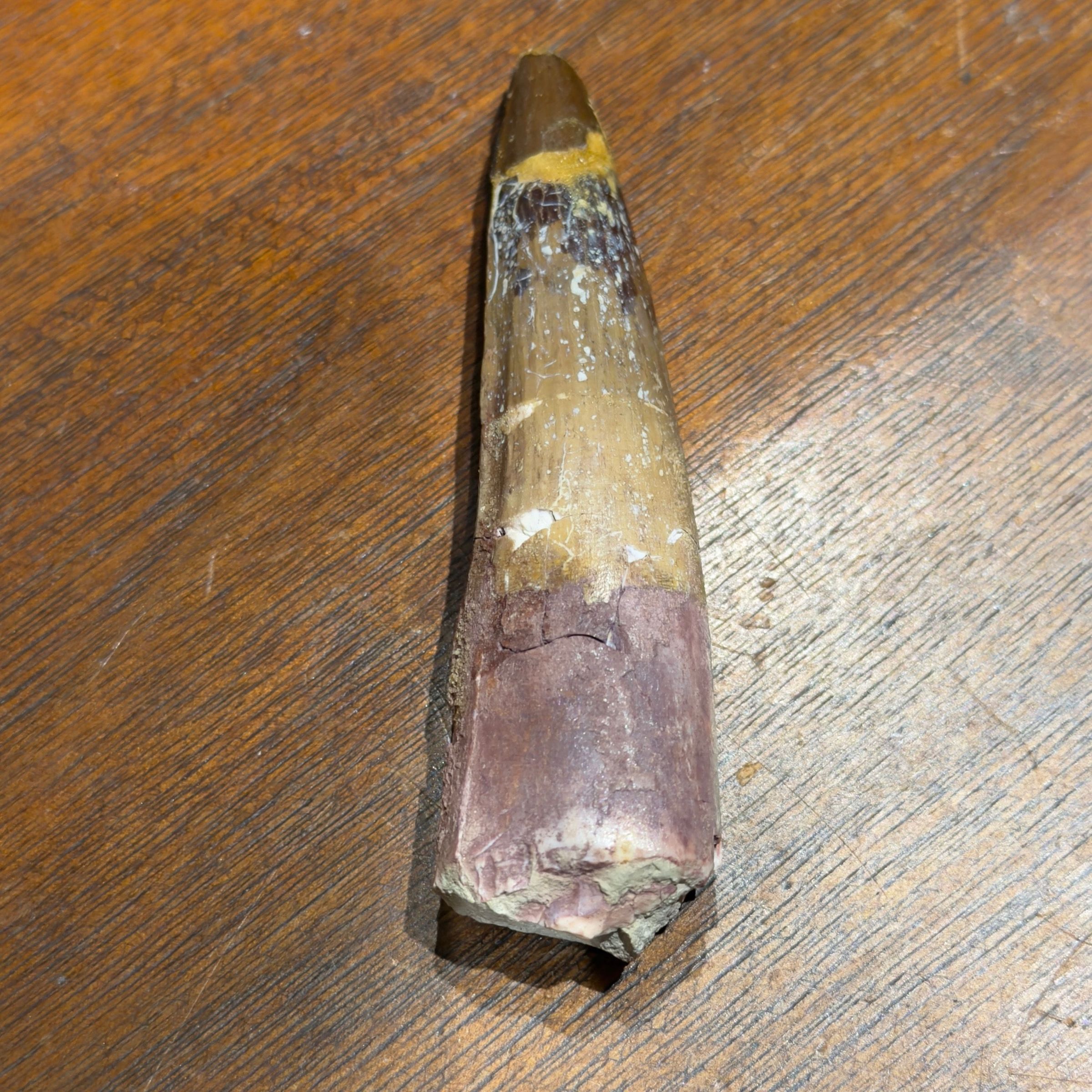
The tooth is elongate, conical, and only gently recurved, with a smooth enamel surface and little to no serration. These features contrast sharply with the blade-like, serrated teeth of most carnivorous dinosaurs and reflect an adaptation for grasping slippery prey rather than slicing flesh. Subtle color banding and surface wear record both burial conditions and post-depositional mineralization.
The Kem Kem Beds of southeastern Morocco preserve a rich assemblage of Cretaceous vertebrates deposited in riverine and coastal environments along the southern margin of the ancient Tethys Sea. Spinosaurid teeth are among the most frequently recovered dinosaur remains from these deposits, as their robust enamel survives transport and fossilization better than much of the skeleton.
Purchased through a commercial fossil vendor, this tooth exemplifies how isolated elements—recognized by distinctive morphology—can nevertheless anchor reconstructions of ancient animals and ecosystems. It offers a tangible connection to a lineage of large, fish-eating dinosaurs that occupied a unique ecological niche in Cretaceous North Africa.
Length: approximately 3 inches (7.6 cm)Create Date
August 21, 2025Update Date
September 12, 2026