Name/Title
Fossilized Dinosaur Bone Fragment (Triceratops horridus)Description
Fossilized Dinosaur Bone Fragment (Triceratops horridus)
Triceratops horridus
Late Cretaceous (ca. 68–66 million years ago)
Hell Creek Formation
Montana, United States
This specimen is a fossilized fragment of dinosaur bone attributed to Triceratops horridus, one of the most abundant and well-documented herbivorous dinosaurs of the Late Cretaceous in western North America. Triceratops was a large ceratopsian distinguished by its massive skull, three facial horns, and heavy frill, occupying floodplain environments alongside Tyrannosaurus rex and other terminal Cretaceous fauna.
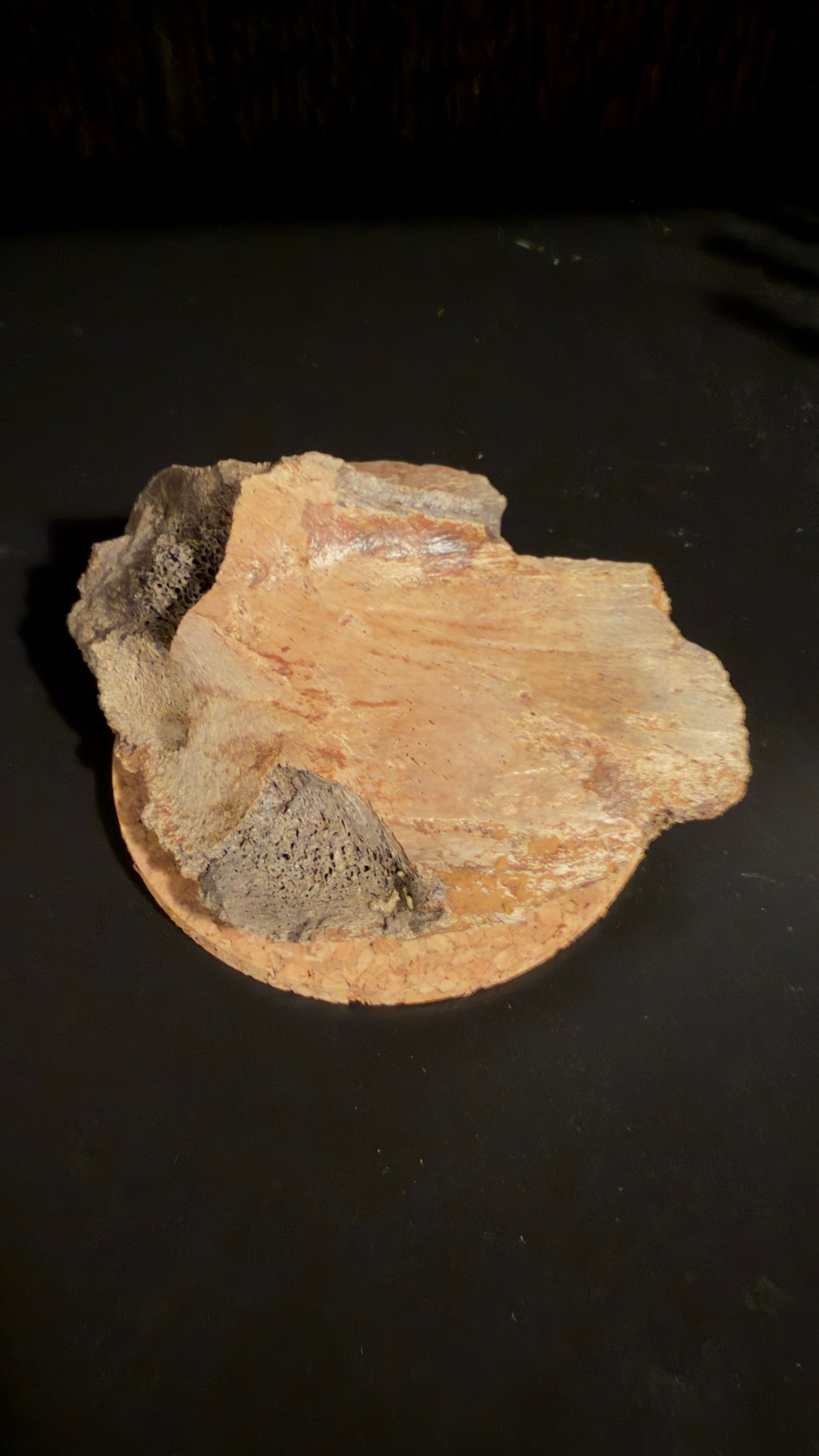
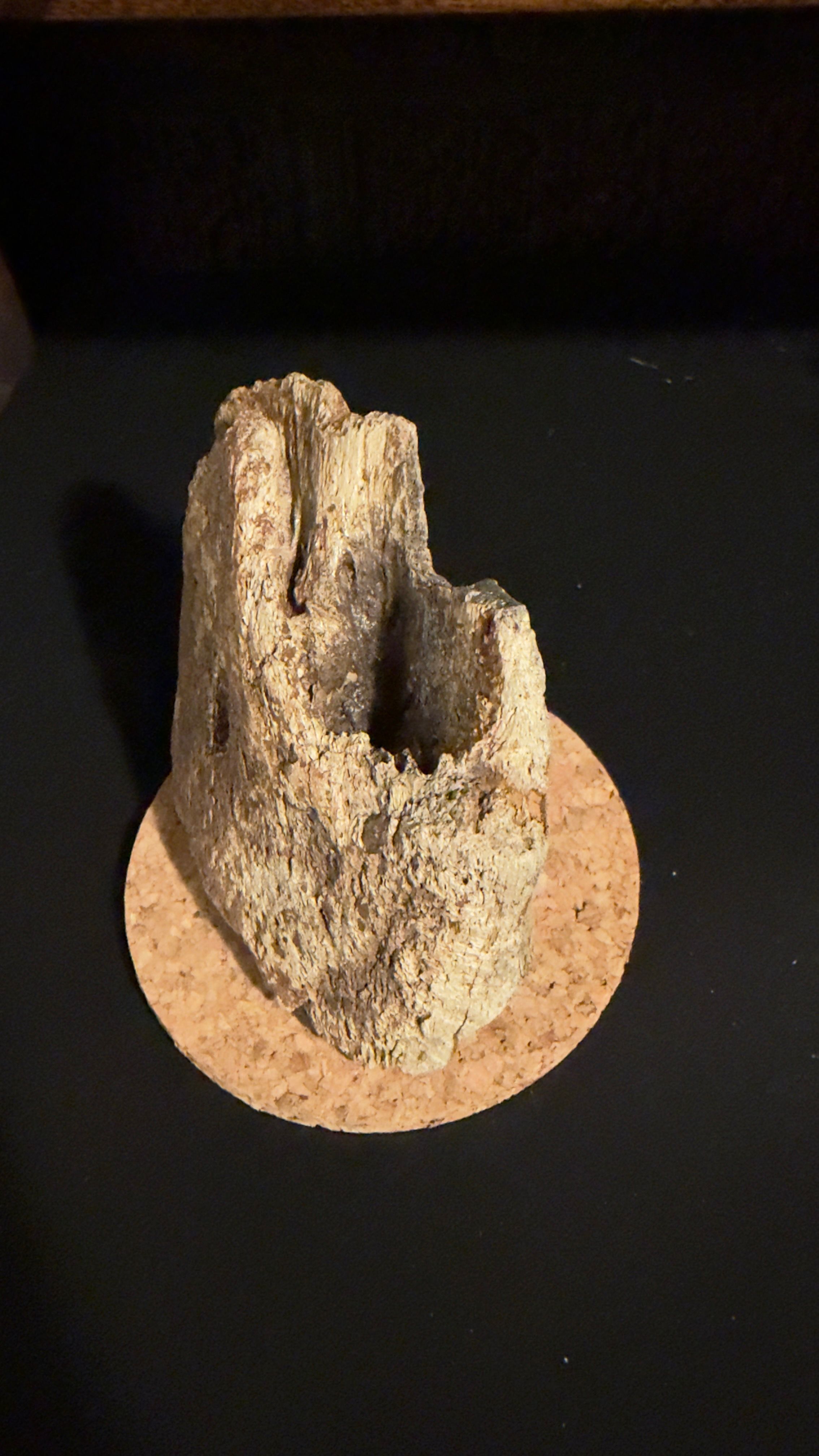
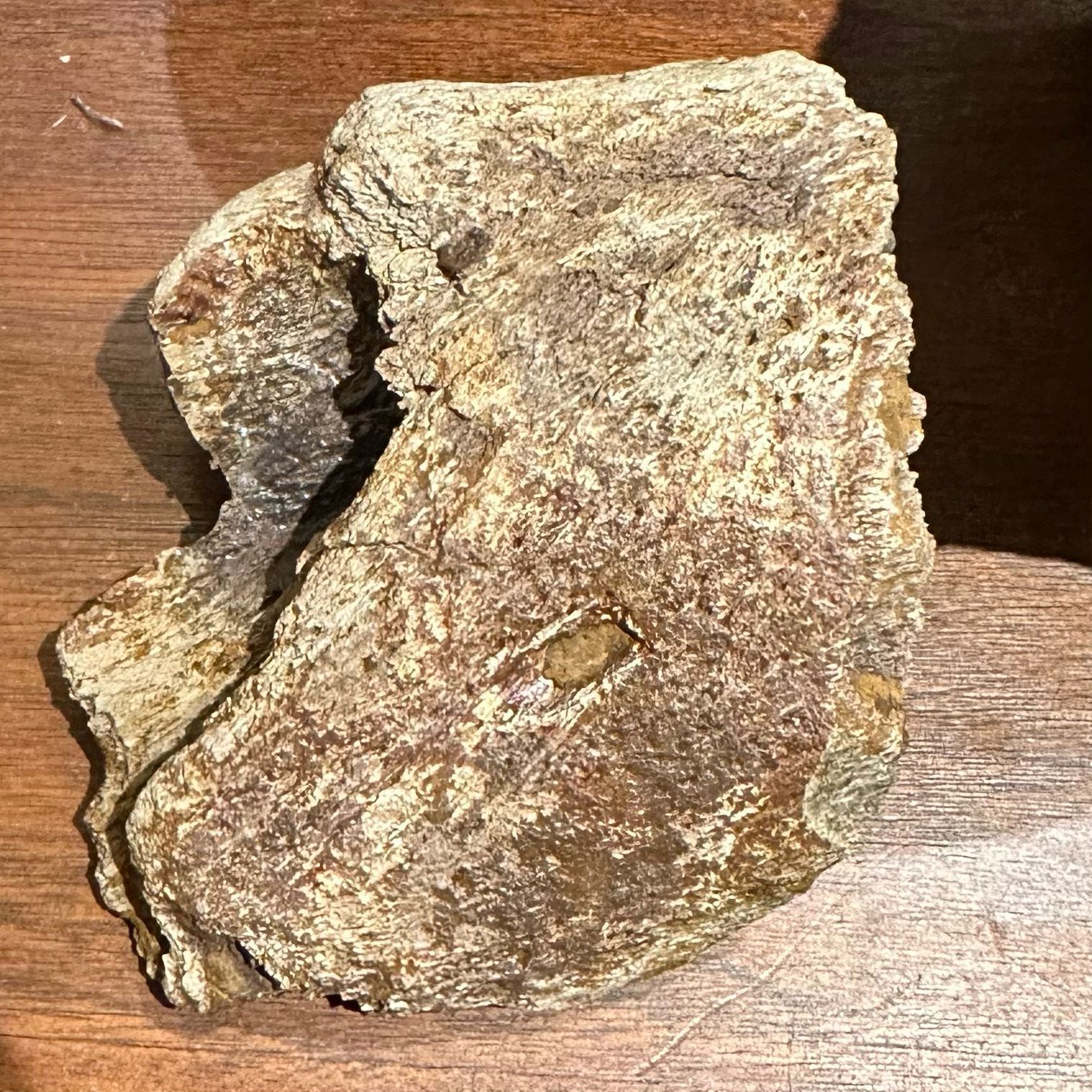
The bone fragment preserves dense cortical bone with visible fibrous texture and mineralized internal structure, reflecting replacement of original organic material during burial and diagenesis. Irregular fracture surfaces and differential coloration indicate post-mortem breakage and subsequent fossilization within fluvial sediments. While the fragment is not diagnostic to a specific skeletal element, its size, density, and texture are consistent with large ceratopsian body bone commonly recovered from Hell Creek deposits.
The Hell Creek Formation represents river channels, floodplains, and coastal lowlands formed during the final two million years of the Age of Dinosaurs. Fossils from this formation document the last diverse terrestrial ecosystems before the end-Cretaceous mass extinction. Fragmentary bones such as this are critical to understanding population abundance, bone transport, and taphonomic processes, even when they cannot be assigned to a particular bone in the skeleton.
Dimensions: 3.83 × 3.15 × 1.70 inches (9.74 × 8.00 × 4.32 cm)Create Date
August 3, 2025Update Date
January 12, 2026