Name/Title
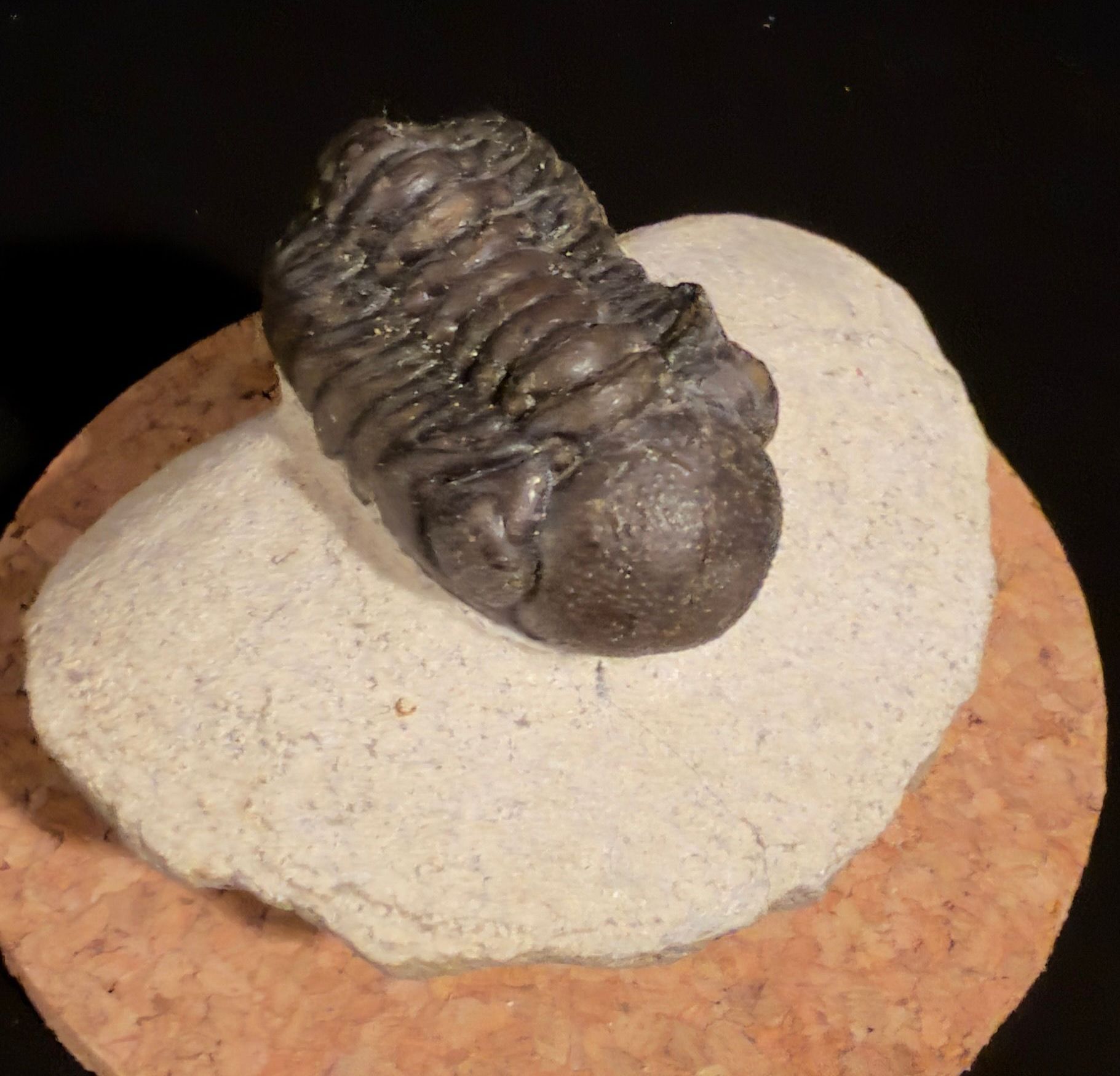
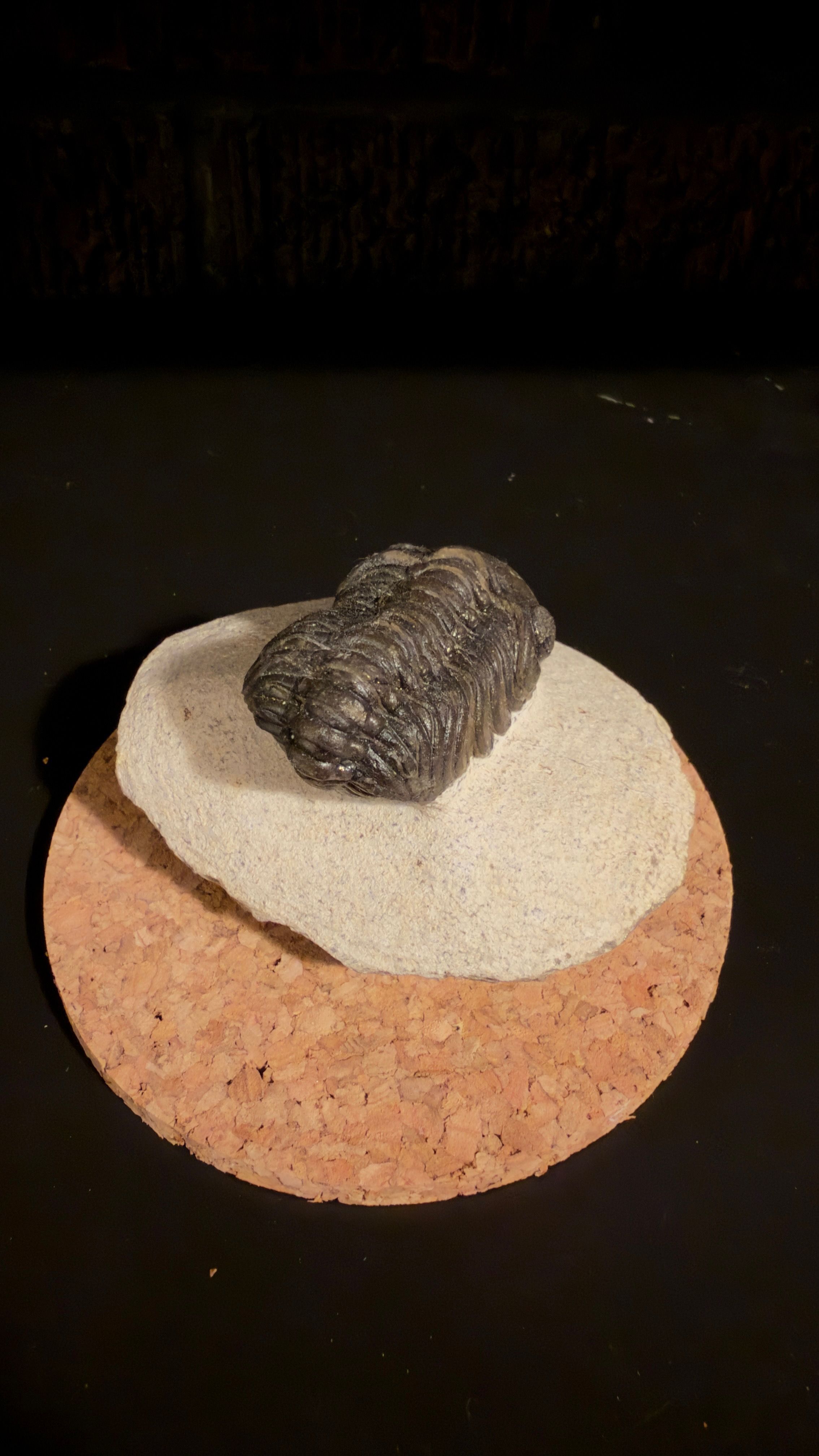
Fossilized Trilobite (Eldredgeops, formerly Phacops)Description
Trilobite Fossil
Eldredgeops (formerly Phacops)
Devonian (ca. 393–382 million years ago)
Morocco
This specimen is a fossil trilobite of the genus Eldredgeops, a well-known member of the phacopid trilobites that flourished during the Devonian Period. Trilobites were marine arthropods whose lineage spans more than 270 million years, making them among the most successful and diverse early animals in Earth’s history.
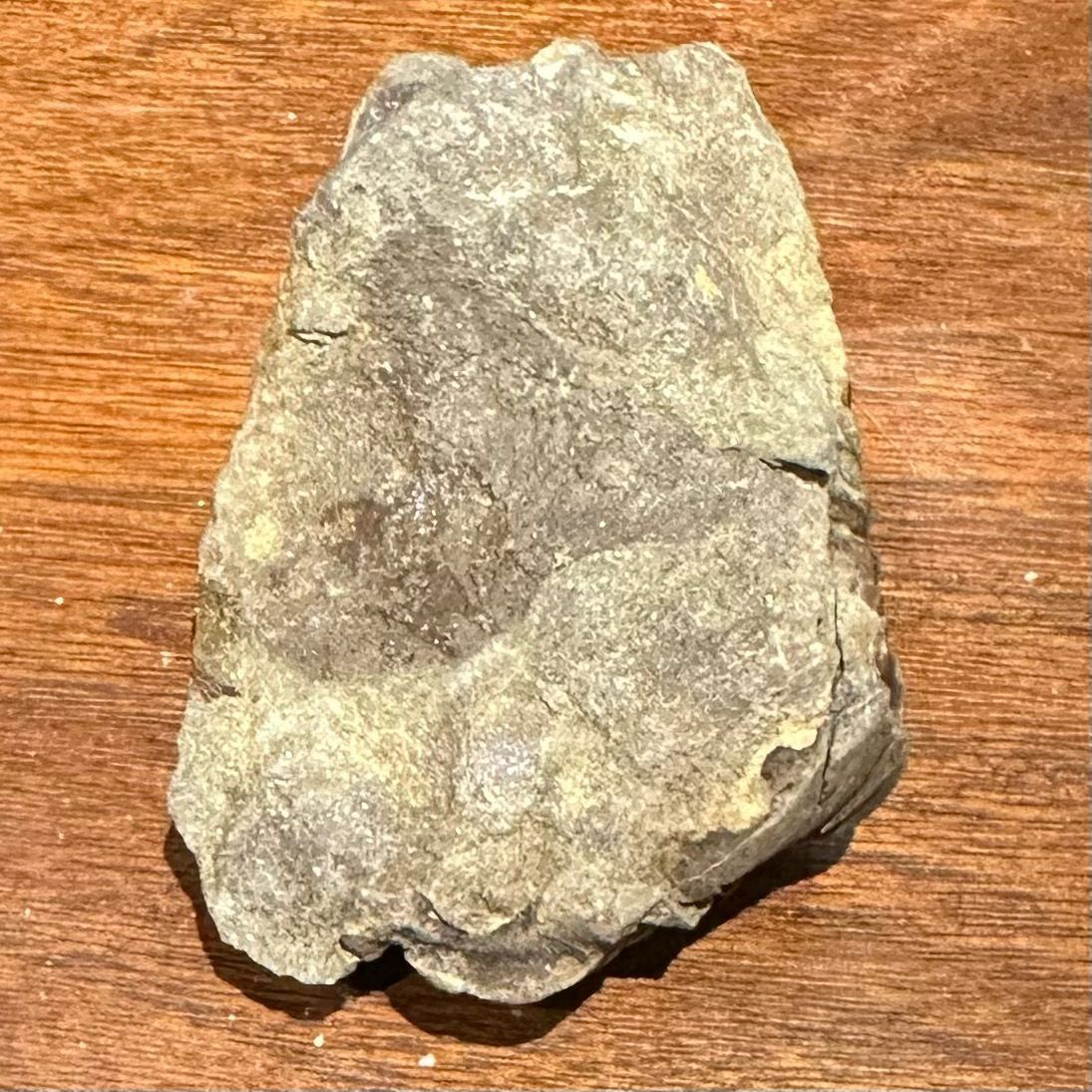
The fossil preserves the characteristic compact, strongly segmented body plan of phacopid trilobites, with a prominent cephalon (head), articulated thorax, and rounded pygidium (tail). Species of Eldredgeops are especially noted for their large, well-developed compound eyes, composed of individual calcite lenses—an advanced visual system for their time. Although the eyes are not fully exposed here, the overall morphology is consistent with enrollment behavior, in which the animal could curl tightly into a defensive ball when threatened.
During the Devonian, the region that is now Morocco lay beneath warm, shallow seas that supported diverse reef and soft-bottom communities. Trilobites such as Eldredgeops inhabited these environments alongside early fishes, corals, and brachiopods. Rapid burial in fine sediment contributed to the excellent preservation seen in many Moroccan trilobite fossils.
As a complete and three-dimensionally preserved example, this specimen illustrates both the anatomical sophistication of trilobites and their ecological importance in Paleozoic marine ecosystems. It offers a direct connection to a world that existed hundreds of millions of years before the first dinosaurs appeared.
Dimensions: 3.07 × 2.38 × 1.76 inches (7.81 × 6.05 × 4.46 cm)Create Date
August 3, 2025Update Date
March 1, 2026