Name/Title
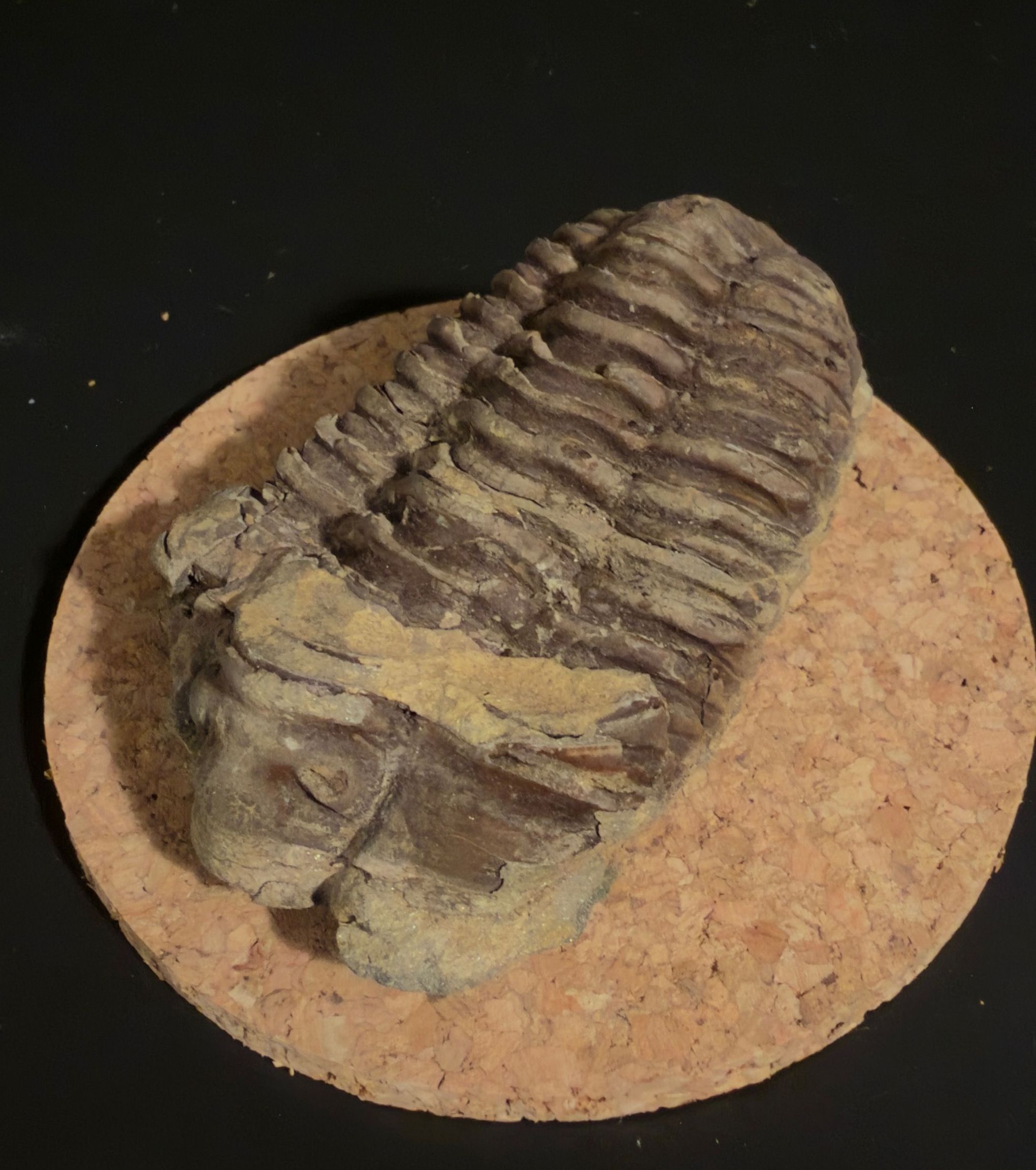
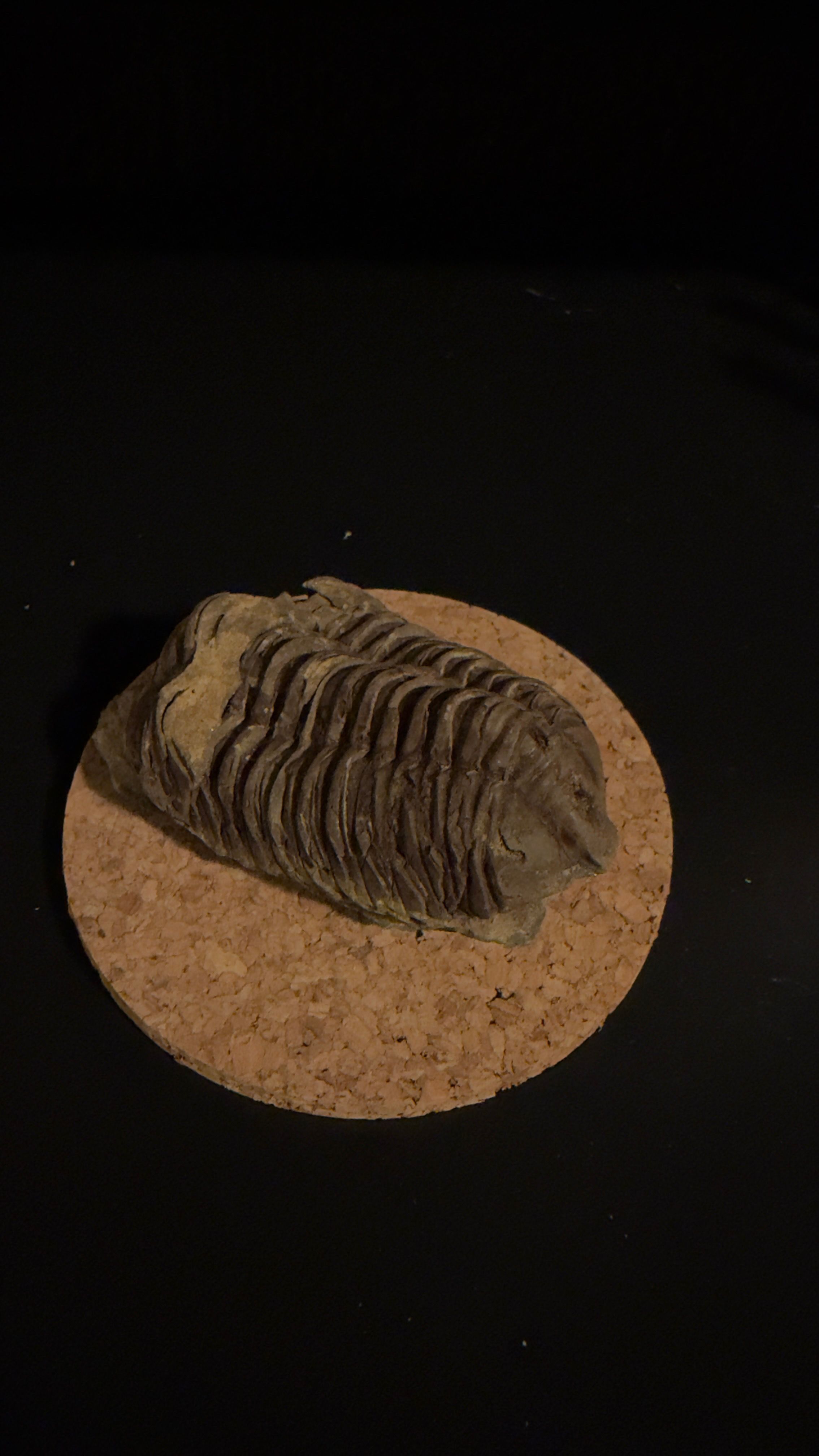
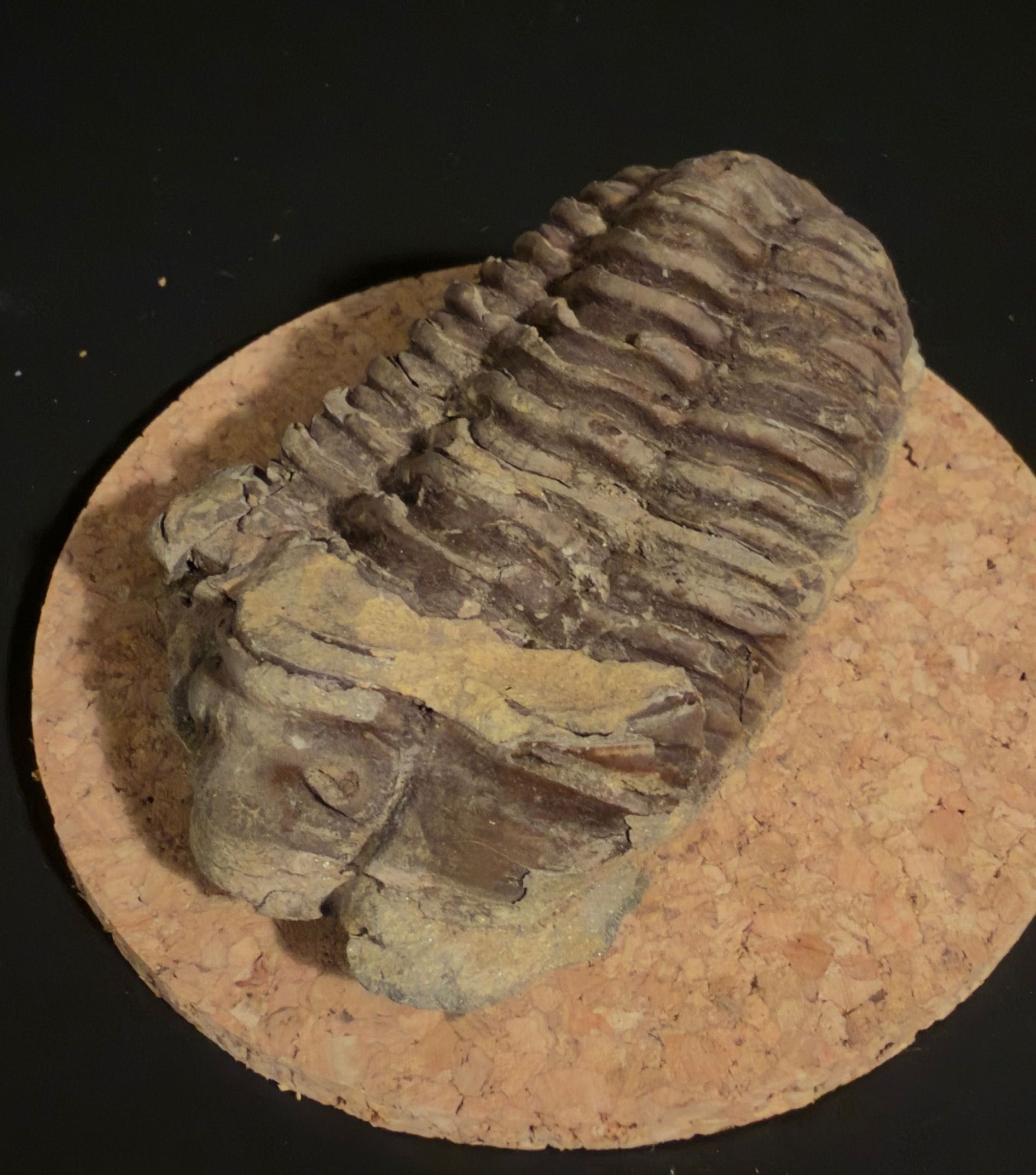
Fossilized Trilobite (Eldredgeops sp.)Description
Fossilized Trilobite (Phacops / Eldredgeops sp.)
Eldredgeops (formerly Phacops)
Devonian (ca. 393–382 million years ago)
Morocco
This specimen is a fossil trilobite belonging to the phacopid lineage commonly referred to as Phacops (now classified as Eldredgeops by many authors). Trilobites were extinct marine arthropods that thrived in Paleozoic seas for over 270 million years, occupying a wide range of ecological niches.
The fossil preserves a strongly convex body with well-defined segmentation and evidence of partial enrollment—a defensive behavior in which the trilobite curled its body to protect softer tissues. The robust cephalon and articulated thoracic segments are characteristic of phacopid trilobites, a group noted for their large compound eyes composed of individual calcite lenses (not fully exposed here due to preservation and orientation).
During the Devonian Period, the region that is now Morocco lay beneath warm, shallow seas that supported diverse reef and soft-bottom communities. These environments produced abundant trilobite fossils, many of which are preserved in fine-grained sedimentary rock. Moroccan phacopid trilobites are among the most frequently encountered complete trilobite specimens in both scientific and commercial contexts.
As preserved, this specimen provides a clear example of trilobite morphology and behavior, illustrating the segmented body plan and defensive strategies of one of the most successful early animal groups in Earth’s history.
Catalog annotation: Acquired from a street-side fossil vendor in Morocco; preparation appears minimal, with fossil preserved largely in natural matrix.Create Date
July 31, 2025Update Date
March 1, 2026