Name/Title
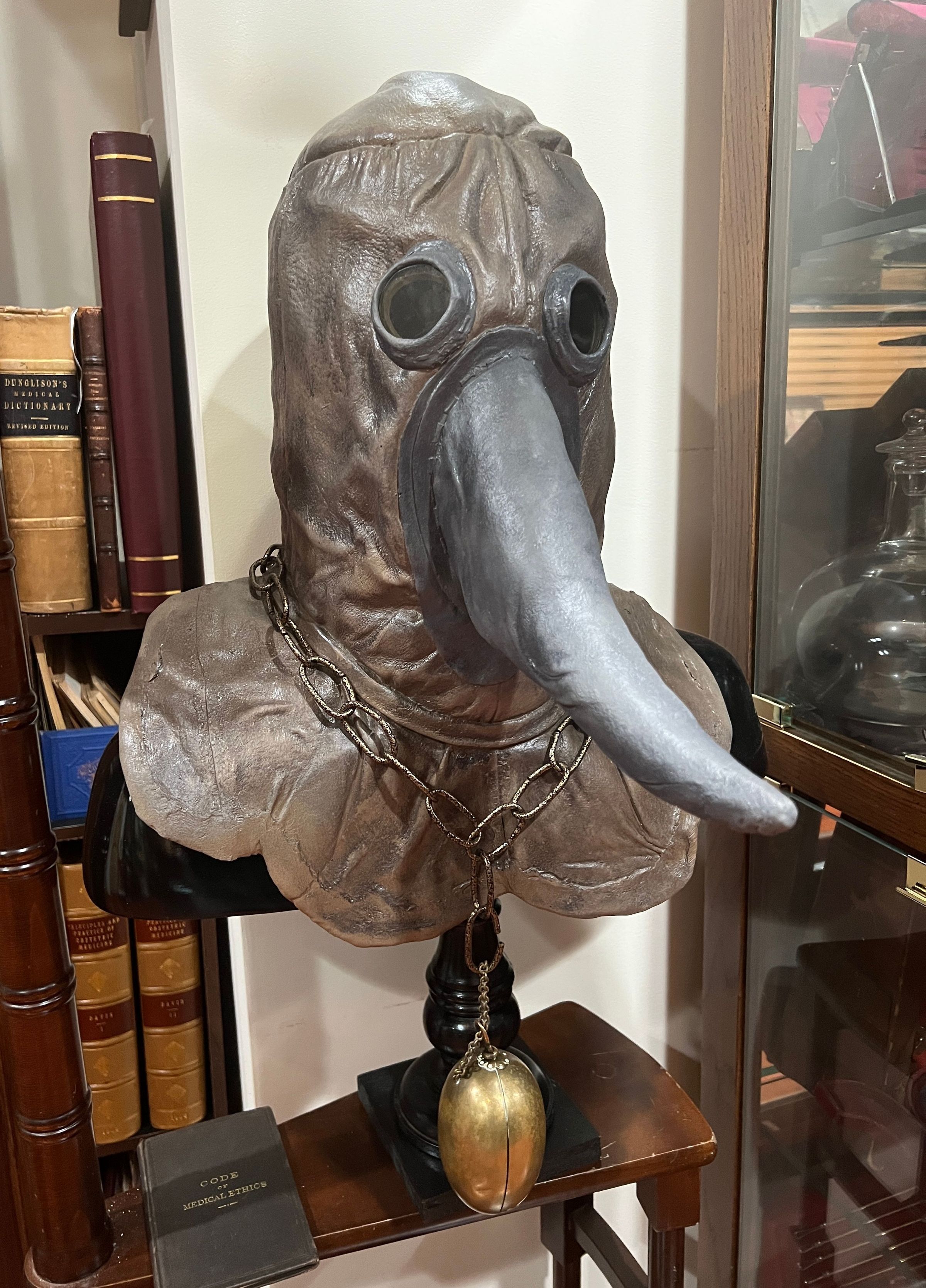
Plague mask and pomanderDescription
In the sixth century, more than one hundred million people died as a result of an infection caused by Pasteurella pestis, a bacterium transmitted to humans from fleas by way of infected rats. Up to 60 percent of those exposed lost their lives from the gangrene and sepsis that followed.
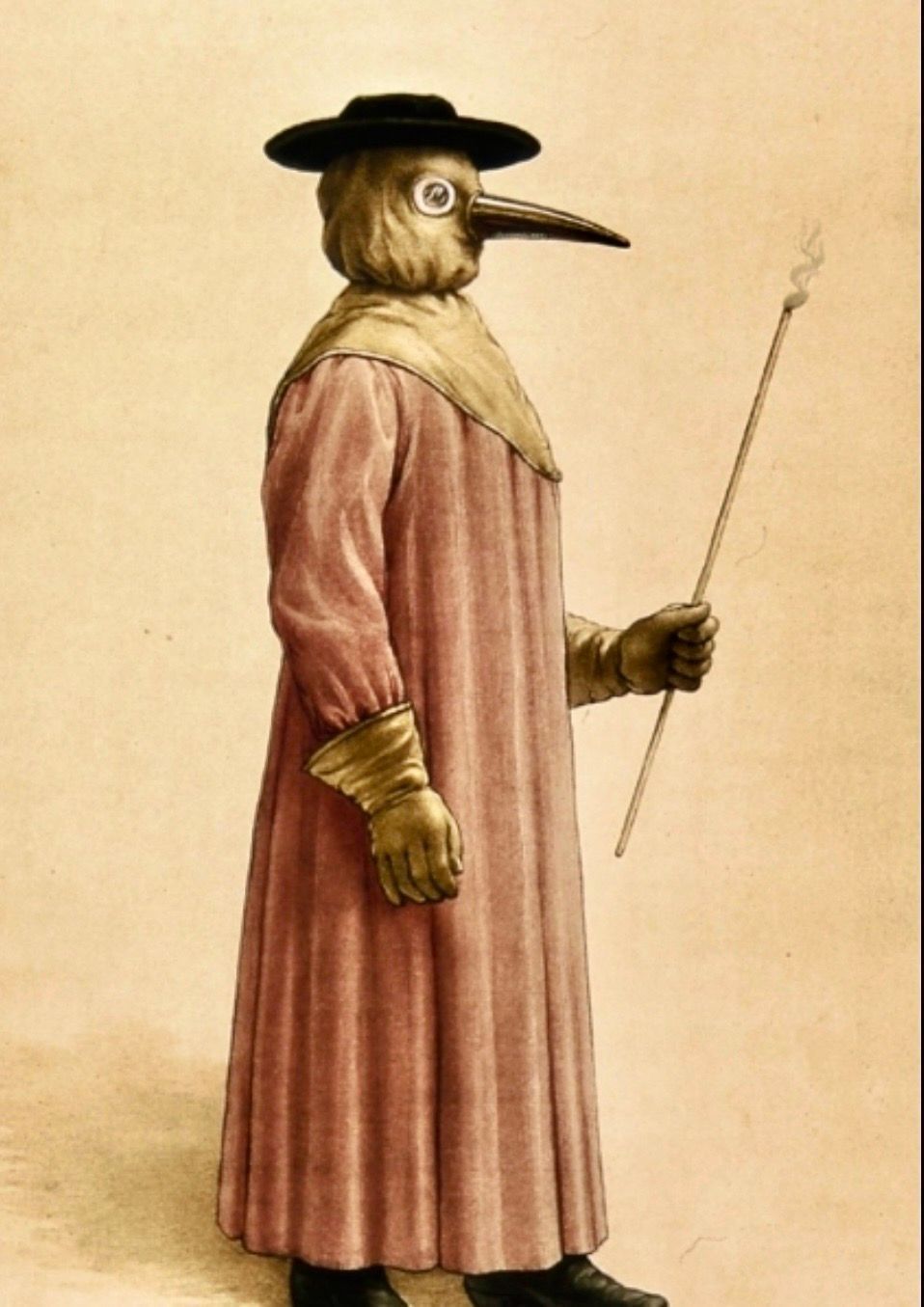
Physicians believed that the disease was spread by air so when treating victims they carried flowers in their pockets dissolved in vinegar along with the powder of cloves, cinnamon, incense and perfumed oils. This material was then placed in the long noses of masks they wore to protect themselves from contagion (and to hide the offensive odor of death).
Pomanders were containers that presumably protected wearers by way of the heavily scented materials within. This is a modern reproduction of a plague mask but the brass egg shaped pomander necklace is from the 16th century.
Below is The Triumph of Death (1562–1563), an oil on wood by Pieter Brueghel the Elder.Create Date
August 7, 2026Update Date
August 26, 2026